Rejoignez-nous pour un voyage dans le monde des livres!
Ajouter ce livre à l'électronique
Grey
Ecrivez un nouveau commentaire Default profile 50px
Grey
Abonnez-vous pour lire le livre complet ou lisez les premières pages gratuitement!
All characters reduced
Votes for Women - A Play in Three Acts - cover

Votes for Women - A Play in Three Acts

Elizabeth Robins

Maison d'édition: Good Press

  • 0
  • 0
  • 0

Synopsis

In "Votes for Women," Elizabeth Robins presents a compelling exploration of the suffragette movement, weaving together dramatic narratives with incisive political commentary. The play, written in the early 20th century, utilizes a realist style that reflects the fervent debates surrounding women's rights and the fight for suffrage in Britain. Robins skillfully employs dialogue to showcase the struggles, sacrifices, and triumphs of women as they challenge societal norms, thus situating the work within a crucial literary context that mirrors the broader cultural upheaval of the time. The play not only serves as a catalyst for conversation but also as a poignant reminder of the historical struggle for gender equality. Elizabeth Robins, an American-born writer and actress, became an influential figure in the British suffrage movement through her literary contributions and activism. Her experiences in the theater and her close association with suffragists enriched her understanding of the struggle for women's rights, motivating her passionate portrayal of the issue in her work. This dual identity as both artist and activist informs the depth and urgency present in "Votes for Women," imbuing it with authentic emotional resonance. This significant play is highly recommended for readers interested in feminist literature, social activism, and the intersection of art and politics. Robins'Äô work not only captures the spirit of her time but also invites contemporary reflections on the ongoing quest for gender equality, making it a vital read for anyone engaged in discussions about women's rights.
Disponible depuis: 12/10/2023.
Longueur d'impression: 70 pages.
D'autres livres qui pourraient vous intéresser

  • How to Be Productive - cover

    How to Be Productive

    Olivia Werner

    • 0
    • 0
    • 0
    [How to Be Productive] illuminates the subtle art of meaningful achievement through an intimate exploration of our relationship with time, energy, and purpose. Written with raw honesty and keen psychological insight, this guide dismantles conventional productivity wisdom, revealing instead a deeply personal approach to getting things done. Through lyrical prose that reads like a conversation with a trusted friend, the book challenges our cultural obsession with optimization and efficiency, proposing instead that true productivity emerges from understanding our natural rhythms, embracing our peculiarities, and creating systems that work with our inherent patterns rather than against them. From the quiet spaces between thoughts to the dance of resistance, each chapter weaves together practical wisdom with philosophical reflection, offering a revolutionary perspective on how we can create space for what truly matters in our lives.
    Voir livre
  • The Gambling Century - Commercial Gaming in Britain from Restoration to Regency - cover

    The Gambling Century -...

    John Eglin

    • 0
    • 0
    • 0
    Gambling captures as nothing else the drama of the "long eighteenth century" between the age of religious wars and the age of revolutions. The society that was confronted with games of chance pursued as commercial ventures also came to grips with unprecedented social mobility, floated by new wealth from new sources created fortunes from trade in sugar, cotton, ivory, silk, tea, or enslaved human beings. Likewise, play for money was prominent in the public imagination as money itself, deployed through an ever expanding and ever more sophisticated range of mechanisms, increasingly invaded public awareness, as when prospective spouses in period fiction were rated in terms of annual income as if they were municipal bonds. Similarly, the archetypal figure of the gambler captured the imagination of the public in fiction, media, and politics. At the same time, new interest in science, technology, engineering, and mathematics—encouraged and bankrolled by those in power—fostered a new and unprecedented appreciation for mathematical probability and its applications, opening the possibility that games of chance might be pursued as a profitable commercial venture. The Gambling Century focuses like no previous work on those who enabled, facilitated, and profited from gambling, as well as on efforts to regulate or outlaw it.
    Voir livre
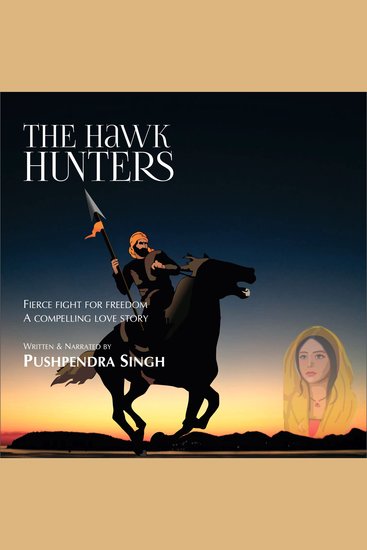
  • The Hawk Hunters - cover

    The Hawk Hunters

    Pushpendra Singh

    • 0
    • 0
    • 0
    "The Hawk Hunters", a novel set in 18th century Punjab, features the Sikhs’ resistance against Aurangzeb’s torrent of terror and torture. While a Sikh farmer-soldier is inexorably drawn into the fierce fight for freedom; he falls headlong in love with a Muslim noblewoman. Can their overwhelming love survive the tumultuous war?‘The Hawk Hunters’ highlights the conflict between humanitarian ideals and cynical exploitation of terror and subjugation as State Policy.
    Voir livre
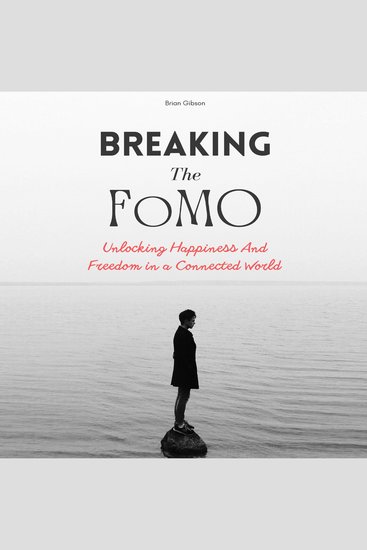
  • Breaking The FoMO - Unlocking Happiness And Freedom in a Connected World - cover

    Breaking The FoMO - Unlocking...

    Brian Gibson

    • 0
    • 0
    • 0
    This audiobook is narrated by an AI Voice.   
    Breaking The FoMO: Unlocking Happiness And Freedom in a Connected World is a transformative guide that empowers you to break free from the grip of the Fear of Missing Out (FoMO) and discover true happiness and freedom in today's digitally connected world. This book provides practical strategies, eye-opening insights, and transformative exercises to help you reclaim your life, find balance, and cultivate genuine connections. From recognizing and managing FoMO triggers to setting realistic expectations and creating healthy boundaries with technology, this guide offers a roadmap to navigate the digital landscape while prioritizing your well-being. Unlock the joy of missing out and embrace a life of authenticity, presence, and fulfillment with Breaking The FoMO.
    Voir livre
  • Black on Both Sides - A Racial History of Trans Identity - cover

    Black on Both Sides - A Racial...

    C. Riley Snorton

    • 0
    • 0
    • 0
    The story of Christine Jorgensen, America's first prominent transsexual, narrated trans embodiment in the postwar era. Her celebrity, however, has obscured other mid-century trans narratives. Their erasure from trans history masks the ways race has figured prominently in the construction and representation of transgender subjects. In Black on Both Sides, C. Riley Snorton identifies multiple intersections between blackness and transness from the mid-nineteenth century to present-day anti-black and anti-trans legislation and violence. 


    Drawing on a varied archive of materials, Snorton attends to how slavery and the production of racialized gender provided the foundations for an understanding of gender as mutable. In tracing the genealogies of blackness and transness, Snorton follows multiple trajectories, from the medical experiments conducted on enslaved black women to the negation of blackness. 


    Revealing instances of personal sovereignty among blacks in the antebellum North that were mapped in terms of "cross dressing" and black literary works that express black men's access to the "female within," Black on Both Sides concludes with a reading of the fate of Phillip DeVine, who was murdered alongside Brandon Teena in 1993. Reconstructing these trajectories furthers our capacities to conceive more livable black and trans worlds.
    Voir livre
  • Redefining Racism - How Racism Became "Power + Prejudice" - cover

    Redefining Racism - How Racism...

    Joseph (Jake) Klein

    • 0
    • 0
    • 0
    Have you heard that racism requires more than just prejudice, but also “power”? 
    Have you been told the dictionary definition of racism isn’t correct? 
    Where did this all come from? And why is it being taught at your school or workplace? 
    The rabbit hole goes deeper than you might have imagined. Joseph (Jake) Klein’s Redefining Racism tells the story of the group of radical white “anti-racist” corporate and high-school educators who in the late 1960s and early 70s, taking inspiration from the anti-integrationist Marxist-Leninist Stokely Carmichael, funded by an organization seeking to pay off rioters to stop, and using manipulative techniques developed in part by U.S. intelligence’s director of the “psychological warfare center for the Far East,” created and spread the “Power + Prejudice” redefinition. And the late famed crack-addicted serial bank robber “Zombie Bandit” played a role too. 
    In tracing the history of this redefinition, Redefining Racism also tells the story of the origins of “Racism Awareness Training,” today frequently called “diversity training,” in the tradition of Robin DiAngelo and White Fragility that have taken American corporations, schools, and universities by storm. 
    Redefining Racism is the definitive rebuttal for why racism is not best defined as “Power + Prejudice” and a damning origin story for much of the modern so-called “anti-racist” movement, reminding us why the best way to be an anti-racist is to look at the content of one’s character and not the color of their skin. 
    “For anyone genuinely committed to realizing an American future where race, racism, and ‘anti-racism,’ cease to be the tools used to divide us, this is an indispensable text. With Redefining Racism, Jake Klein has provided a national service.” — Thomas Chatterton Williams, author of Self-Portrait in Black and White and Losing My Cool
    Voir livre