Rejoignez-nous pour un voyage dans le monde des livres!
Ajouter ce livre à l'électronique
Grey
Ecrivez un nouveau commentaire Default profile 50px
Grey
Abonnez-vous pour lire le livre complet ou lisez les premières pages gratuitement!
All characters reduced
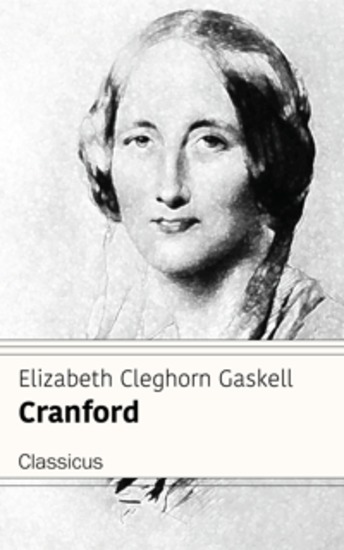
Cranford (Classicus Edition) - cover

Cranford (Classicus Edition)

Elizabeth Cleghorn Gaskell

Maison d'édition: Classicus

  • 0
  • 0
  • 0

Synopsis

Elizabeth Cleghorn Gaskell’s Cranford is a charming and heartfelt portrayal of village life in early Victorian England. First published in 1853, this beloved classic immerses readers in the quaint town of Cranford, where social etiquette, modest comforts, and gentle gossip shape the daily lives of its residents. With wit and warmth, Gaskell masterfully captures the spirit of a close-knit community bound by tradition and friendship.     At the heart of Cranford are the formidable yet kind-hearted women who hold the village together. Led by the gentle and steadfast Miss Matty Jenkyns, they face life’s challenges with grace, humor, and quiet resilience. Whether coping with financial hardships, supporting neighbors in need, or adjusting to unexpected changes, the women of Cranford embody strength and compassion. Gaskell’s keen eye for detail and her affectionate portrayal of human nature make every character feel real and relatable, creating a vivid tapestry of village life.     Though the story is lighthearted and often humorous, Cranford subtly addresses themes of social change and class distinction as the industrial age begins to alter rural traditions. Gaskell’s nuanced storytelling not only highlights the small joys and sorrows of village living but also reflects on the enduring power of kindness and community in the face of change. This Classicus edition preserves the beauty and warmth of Gaskell’s writing, offering modern readers a timeless escape into a world where simple pleasures and human connection prevail.
Disponible depuis: 24/03/2025.

D'autres livres qui pourraient vous intéresser

  • Jewish Language and Literature - The Impact of Yiddish Hebrew and Other Languages - cover

    Jewish Language and Literature -...

    Joseph Arston

    • 0
    • 0
    • 0
    The origins of Jewish language and literature are deeply intertwined with the history of the Jewish people, shaped by centuries of cultural exchange, migration, and adaptation. At the heart of Jewish literary tradition lies the Hebrew language, whose roots stretch back to the ancient world. Hebrew, as the language of the Bible, forms the foundation of Jewish thought, identity, and religious practice. The earliest examples of Hebrew literature can be found in the sacred texts of the Torah, where the stories, laws, and teachings of the Jewish people are recorded. These texts, passed down through generations, have remained central to Jewish life and continue to be a source of literary and theological inspiration. 
    In addition to Hebrew, other languages played an important role in the development of Jewish language and literature. Aramaic, a Semitic language closely related to Hebrew, became widespread during the Babylonian exile and remained influential for centuries. Aramaic is the language of significant portions of the Talmud and other rabbinic writings, shaping Jewish legal and philosophical thought. Over time, Jewish communities across the globe adopted the languages of the regions they inhabited, which further contributed to the diversity of Jewish literary expression. 
    The emergence of Yiddish, a language born in the Jewish communities of Eastern Europe, marked a significant shift in Jewish linguistic and literary culture. Yiddish, a Germanic language enriched with Hebrew, Aramaic, and Slavic elements, became the vernacular of millions of Ashkenazi Jews. It allowed for the creation of a vibrant body of literature, including plays, novels, and poetry, that expressed the daily lives, struggles, and aspirations of Jewish communities. Yiddish literature flourished in the 19th and early 20th centuries, with writers such as Sholem Aleichem, Isaac Bashevis Singer, and I.L. Peretz capturing the complexities of Jewish life through their works.
    Voir livre
  • China's Foreign Policy Contradictions - Lessons from China's R2P Hong Kong and WTO Policy - cover

    China's Foreign Policy...

    Tim Nicholas Ruhlig

    • 0
    • 0
    • 0
    Throughout the post–Mao reform era, China has championed the principle of sovereign state control, which holds that states should not intervene in the affairs of other states. Yet as Tim Nicholas Rühlig argues in China's Foreign Policy Contradictions, in recent years they have not actually acted this way. Chinese foreign policy actions fail to match up with official rhetoric, and these inconsistencies—in combination with China's growing power—will have dramatic effects on the future shape of international order. 


    To explain these contradictions, Rühlig draws from in-depth interviews with party-state officials to explain the foreign policy dynamics and processes of the normally opaque Chinese party-state. He demonstrates how different sources of the Chinese Communist Party's domestic legitimacy compete within the complex and highly fragmented Chinese party-state, resulting in contradictory foreign policies. He focuses on three issue areas: international human rights law and "responsibility to protect" (R2P); China's role in World Trade Organization (WTO) policymaking; and China's evolving relationship with Hong Kong. 


    In this work, Rühlig shows not only why China's foreign policy is so inconsistent, but why it is likely to contribute to a more particularistic, plural, and fragmented international order in the years to come.
    Voir livre
  • Rediscovering the Lost Stories of America's Black Elite - Uncover America's Black Elite! Dive into compelling audio lessons and rediscover forgotten histories - cover

    Rediscovering the Lost Stories...

    Jasper Finchley

    • 0
    • 0
    • 0
    Rediscovering the Lost Stories of America's Black Elite 
    ⭐⭐ Simplified Audio Guide ⭐⭐ 
    Are you eager to delve into the fascinating history and untold narratives of America's Black aristocracy? 
    Looking for a comprehensive guide that offers all the necessary elements to uncover the rich legacy of America's Black elite? 
    Your search ends here! 
    This guide serves as your definitive companion for deepening your understanding, developing a profound appreciation, and engaging with the intricate histories of America's Black nobility. Get ready for a journey of enlightenment. 
    Updated for the latest discoveries and insights. 
    Key features of this enriched guide: 
    - Profound revelations about the untold narratives of America's Black aristocracy 
    - Detailed exploration of the pioneering figures and landmark events 
    - Effective strategies for engaging with historical stories and connecting them to the present 
    Our guide distinguishes itself through comprehensive coverage, essential for a full grasp of America's Black elite's history. Concepts aren't merely mentioned; they are examined with depth and accuracy. 
    Please note that this guide is not affiliated with any official historical associations and is purely an independent resource for your learning. 
    Designed with a clear structure and easy-to-understand language, our guide ensures smooth transitions between topics. Say goodbye to dense academic jargon and welcome clear, precise, and thoroughly researched content. 
    So, why wait? Click the BUY NOW button, secure your guide, and begin your journey to rediscovering America's Black elite!
    Voir livre
  • Baruch Spinoza - God Nature and the Ethics of Reason - cover

    Baruch Spinoza - God Nature and...

    Hector Davidson

    • 0
    • 0
    • 0
    Baruch Spinoza's philosophy is a comprehensive system that integrates metaphysics, epistemology, ethics, and political theory into a unified framework. Central to his thought is the idea of God and nature as a single, infinite substance, which Spinoza refers to as "Deus sive Natura" (God or Nature). This concept encapsulates his pantheistic view that everything that exists is a part of this one, all-encompassing reality. 
      
    Metaphysics and Substance 
      
    Spinoza's metaphysical framework revolves around the notion of substance monism. He argues that there is only one substance in the universe, which is both God and nature. This substance possesses an infinite number of attributes, with thought and extension being the two that humans can comprehend. Everything that exists, according to Spinoza, is a mode or manifestation of this single substance. This idea challenges traditional theistic views by rejecting the notion of a personal, transcendent God who is separate from the world. 
      
    Epistemology and Knowledge 
      
    In epistemology, Spinoza emphasizes the role of reason and intuitive knowledge in understanding the nature of reality. He distinguishes between different types of knowledge: imagination, reason, and intuition. Imaginative knowledge, based on sensory experience and inadequate ideas, is unreliable and often leads to confusion. Rational knowledge, which arises from understanding the necessary connections between ideas, is more accurate. The highest form of knowledge, according to Spinoza, is intuitive knowledge—an immediate, direct understanding of the essence of things.
    Voir livre
  • The Shy Assassin - The Inspiring Story of Cyril 'Frank' Babbage Battle of Britain Spitfire Ace turned D-Day Mosquito Pilot - cover

    The Shy Assassin - The Inspiring...

    Air Marshal G.A. 'Black' Robertson

    • 0
    • 0
    • 0
    One of the few RAF aircrew to play a central part in two of the Second World War's most momentous events, the Battle of Britain and D-Day, Cyril 'Frank' Babbage was a survivor. He wasn't just an immensely skilled pilot; he was also blessed with extraordinary good fortune. 
     
    Babbage's image shot to national prominence in late-August 1940, briefly becoming the face of 'The Few'. Photographs appeared in the press of him stepping out of a rowing boat on Bognor beach. There he was met by a small crowd who'd seen him rescued by fishermen after bailing out. He'd been shot down by a German fighter, but only after disposing of another one first. Babbage's fascinating wartime experiences are complimented brilliantly by the stories of those who crossed his path, famous names like Amy Johnson and Douglas Bader as well as countless other unsung heroes. Many of the latter were youngsters he served with all too briefly.Between his contrasting operational tours Babbage spent time as a flying instructor, insulated to a degree against the ravages of war. Wing Commander C. F. Babbage DFM, AE retired in the summer of 1964. Like so many of his ilk, he owed his final years of peacetime service to the sacrifices of others—others like those brave men with whom he flew, but who enjoyed less than their own share of good luck.
    Voir livre
  • Who Are the Russians? - cover

    Who Are the Russians?

    Alla Sergueeva

    • 0
    • 0
    • 0
    “An exceptional study. The author of the book has had the audacity to approach Russian chaos... armed with her desire to prove that the country is by no means a madhouse but simply an immense space, difficult to access for the outsider who is unfamiliar with Russian traditions, history and mentality.” Lyubova Klobukova, Izvestia. 
     
    “Alla Sergueeva’s book is highly topical. The author loves Russia, cares about its people, is proud of its history, culture and science.” Vladimir Nogovsky, Russian Thought.
     
    Should a foreigner accept an invitation to the Russian baths? How many glasses of vodka should you drink in one go before trying to refuse? Why do Russians endure life at great sacrifice? What is “Russian happiness” made of? And above all, what’s new in 21st-century Russia?
    Over the past fifteen years, the “mysterious Slavic soul” has undergone unprecedented metamorphosis. It was time to draw up an exhaustive inventory of the new way of life and psychology of the Russians.
    Voir livre