Rejoignez-nous pour un voyage dans le monde des livres!
Ajouter ce livre à l'électronique
Grey
Ecrivez un nouveau commentaire Default profile 50px
Grey
Abonnez-vous pour lire le livre complet ou lisez les premières pages gratuitement!
All characters reduced
Scissors and Precision - cover

Scissors and Precision

Elian Wildgrove

Traducteur A AI

Maison d'édition: Publifye

  • 0
  • 0
  • 0

Synopsis

Scissors and Precision explores the surprisingly rich history of scissors, revealing how this seemingly simple tool reflects broader trends in technology and human innovation. The book traces the evolution of cutting tools from rudimentary beginnings to high-precision instruments, detailing innovations in engineering design, materials science, and ergonomics. Early scissor-like devices weren't always pivoted; some were spring-operated shears. The book uniquely illuminates history through the lens of a common object. 

 
The book examines scissors' journey across historical periods and cultures, analyzing materials used in their construction, like bronze, iron, and advanced alloys, and explaining how properties affect performance. Blade geometry and pivot mechanisms are explored, highlighting the engineering intricacies. Progressing through chapters, the study moves from ancient metalworking to modern surgical applications, showing how scissor technology adapts to meet evolving societal needs.
Disponible depuis: 27/02/2025.
Longueur d'impression: 60 pages.
D'autres livres qui pourraient vous intéresser

  • Dead Wake: Book Summary & Analysis - cover

    Dead Wake: Book Summary & Analysis

    Briefly Summaries

    • 0
    • 0
    • 0
    This is a concise summary and analysis of Dead Wake, by Erik Larson. It is not the original book and is not affiliated with or endorsed by Erik Larson. Ideal for those seeking a quick and insightful overview.
     
    In this gripping historical narrative, the tragic sinking of the Lusitania comes to life with vivid detail and meticulous research. As World War I rages, the luxury ocean liner embarks on its fateful journey across the Atlantic, unaware of the deadly threat lurking beneath the waves. Through the perspectives of passengers, crew members, and military strategists on both sides of the conflict, this compelling account reveals the political tensions, human stories, and crucial missteps that led to one of the most infamous maritime disasters in history. A masterful blend of suspense and historical insight, this book captures the dramatic final voyage of the Lusitania and its lasting impact on global events.
    Voir livre
  • A Climate of Truth - Why We Need It and How To Get It - cover

    A Climate of Truth - Why We Need...

    Mike Berners-Lee

    • 0
    • 0
    • 0
    We have most of the technology we need to combat the climate crisis – and most people want to see more action.
     
    But after three decades of climate COPs, our global emissions are worse than ever. And we are accelerating into a Polycrisis of climate, food security, biodiversity, pollution, inequality and more. What, exactly, has been holding us back?
    What will it take for us to do better?
    In the search for answers that have been so elusive to date, Mike Berners-Lee looks at the challenge from new angles. He stands further back to gain perspective; he digs deeper under the surface to see the root causes; he joins up every element of the challenge; and he learns lessons from our failures of the past. He uses all these insights to identify the single point of greatest leverage for those seeking the systemic change we so desperately need. A Climate of Truth spells out why, if humanity is to thrive in the decades ahead, the most critical step is to raise standards of honesty in our politics, our media and our businesses. Not only is this possible, but each of us can have radically more impact on the issues we care about by turning our attention to this simple principle. 
    Anyone asking, ‘What can each of us do right now to help?’ will find inspiration in this practical and important book.
    Voir livre
  • The Mindful College Student - How to Succeed Boost Well-Being & Build the Life You Want at University & Beyond - cover

    The Mindful College Student -...

    PhD Eric B. Loucks, MD Judson A....

    • 0
    • 0
    • 0
    College is a time of transition. It's a time for learning and preparing to make your own way in the world. But if you're like many teens and young adults, the thought of leaving home and being on your own in a new place can also be intimidating—even overwhelming. That's why you need a solid foundation to help you manage stress, stay focused, and maintain healthy habits—in body, mind, and spirit. 


    Grounded in evidence-based mindfulness, The Mindful College Student will help you cultivate the cognitive and emotional skills you need to increase well-being and reach your highest aspirations. You'll also learn positive coping strategies for dealing with stress, sadness, and anxiety—including diet, fitness, and sleep habits. Most importantly, you'll discover three core self-regulation skills to help steer you toward the life you want: self-awareness, attention control, and emotion regulation. 


    Get ready to take on the world with this fun and informative guide, filled with everything you need to face all of the challenges of college life—and beyond!
    Voir livre
  • Pharmanomics - How Big Pharma Destroys Global Health - cover

    Pharmanomics - How Big Pharma...

    Nick Dearden

    • 0
    • 0
    • 0
    In Pharmanomics, investigative journalist Nick Dearden digs down into the way we produce our medicines and finds that Big Pharma is failing us, with catastrophic consequences. 


    Big Pharma is more interested in profit than health. This was made clear as governments rushed to produce vaccines during the Covid pandemic. Behind the much-trumpeted scientific breakthroughs, major companies found new ways of gouging billions from governments in the West while abandoning the Global South. But this is only the latest episode in a long history of financializing medicine—from Purdue's rapacious marketing of highly addictive OxyContin through Martin Shkreli's hiking the price of a lifesaving drug to the 4.5 million South Africans needlessly deprived of HIV/AIDS medication. 


    Since the 1990s, Big Pharma has gone out of its way to protect its property through the patent system. As a result, the business has focused not on researching new medicines but on building monopolies. This system has helped restructure our economy away from invention and production in order to benefit financial markets. It has fundamentally reshaped the relationship between richer and poorer countries, as the access to new medicines and the permission to manufacture them is ruthlessly policed. In response, Dearden offers a pathway to a fairer, safer system for all.
    Voir livre
  • Riding with Cochise - The Apache Story of America's Longest War - cover

    Riding with Cochise - The Apache...

    Steve Price

    • 0
    • 0
    • 0
    Riding With Cochise brings the violent drama of the American Southwest to life through the eyes of the legendary Apache chieftain Cochise and three other tribal leaders. Relying largely on the oral histories told by relatives of these great warriors as well as personal diaries of others who were involved, veteran author Steve Price takes listeners deep into the Cochise Stronghold, through Massacre Canyon, and across Apache Pass. You'll sit beside the campfires of Tom Jeffords, the only white man Cochise ever fully trusted, and touch the faded stone walls of Fort Craig, the rock cairns at Dragoon Springs, and the cottonwoods at Ojo Caliente. You'll be with General George Crook and Lt. Charles Gatewood as they pursue Geronimo through New Mexico, Arizona and even into Mexico's Sierra Madre, and learn how a handful of Apache warriors could disappear into open desert, ride and sleep on horseback, and outwit thousands of American and Mexican troops for months at a time. Thoroughly researched and written in easy but fast-paced storytelling style, Riding With Cochise presents a sweeping history of how one Native American tribe fought desperately to keep its land and its culture in the face of America's westward expansion known as Manifest Destiny, then spent twenty-seven years in exile and captivity before finally being allowed to return to their beloved homeland.
    Voir livre
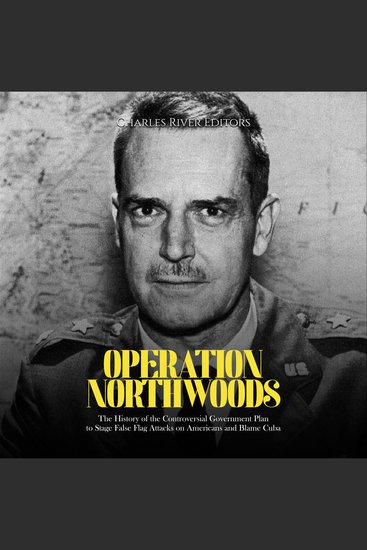
  • Operation Northwoods: The History of the Controversial Government Plan to Stage False Flag Attacks on Americans and Blame Cuba - cover

    Operation Northwoods: The...

    Editors Charles River

    • 0
    • 0
    • 0
    Throughout the history of warfare, the practice of placing blame on innocent parties in order to justify attacking them has been a constant feature. In the 20th century, this practice began to be commonly referred to as a “false flag” operation. The essence of a false flag scenario is that it is conducted by one party or government and “made to appear as though another party sponsored it.”[1] In informal legal terminology, the practice is commonly referred to as a “stitch up”[2] or “setup.”[3] The modern use of this action based on deceit originated in the 16th century, typically when ships displayed the flags of a neutral or enemy country to hide their identities. 
    	The severity of false flag operations moves in tandem with the perceived danger. In the late 20th century, the Soviet Union constituted an ongoing threat to the United States, ideologically and militarily. When Fidel Castro, a Soviet sympathizer, came to power in Cuba in 1959, the presence of a communist extension of Soviet influence so near American shores caused great discomfort to the U.S. government. 
    	Some of the Cold War’s tensest moments involved Cuba, including the Bay of Pigs invasion and the Cuban Missile Crisis, amply demonstrating that throughout the early 1960s, alarmed individuals within the American government believed that the only way to handle Castro was by immediate elimination and a takeover of Cuba. They were pitted against more nuanced points of view held by others within the Kennedy administration. The Pentagon was of the general mind that in such a perilous environment, military decision-making should come to the front and civilians should withdraw, even the White House. Diplomacy was seen as being of little use by the Joint Chiefs of Staff against an encroaching Soviet superpower led by a political street fighter and his puppet situated just off the coast of Florida. 	This charged atmosphere would lead to one of the most controversial proposals in history.
    Voir livre