Begleiten Sie uns auf eine literarische Weltreise!
Buch zum Bücherregal hinzufügen
Grey
Einen neuen Kommentar schreiben Default profile 50px
Grey
Jetzt das ganze Buch im Abo oder die ersten Seiten gratis lesen!
All characters reduced
Radio Station Shutdowns - cover

Radio Station Shutdowns

Elian Wildgrove

Übersetzer A AI

Verlag: Publifye

  • 0
  • 0
  • 0

Beschreibung

Radio Station Shutdowns explores the decline of radio stations, examining the economic challenges and regulatory shifts impacting the media industry. The book highlights how terrestrial radio, once a dominant form of mass media, faces increasing pressure from digital disruption and declining advertising revenue. A key insight is the disproportionate impact of these forces on smaller, independent, and community broadcasters, threatening the diversity of voices and local content.

 
The book analyzes the history of radio, dissects the financial instability caused by competition from online streaming, and presents case studies of station closures. It also delves into government regulations, such as spectrum allocation, and their influence on the radio landscape. By combining industry reports and interviews, Radio Station Shutdowns offers a unique perspective on the challenges facing radio broadcasting. The book progresses from radio's early days through to possible adaptation strategies for the digital age.
Verfügbar seit: 31.03.2025.
Drucklänge: 67 Seiten.
Weitere Bücher, die Sie mögen werden

  • Food and Drink in the Greco-Roman World: The History of Eating and Drinking in Ancient Greece and Rome - cover

    Food and Drink in the...

    Editors Charles River

    • 0
    • 0
    • 0
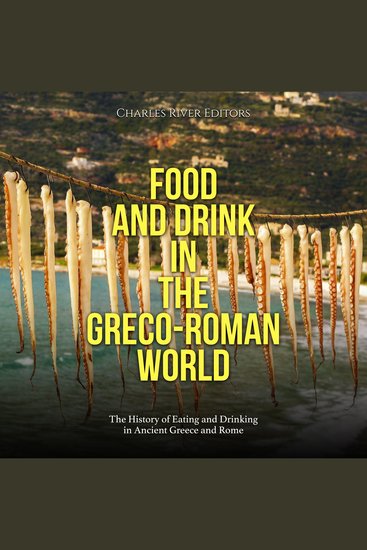
    The social importance placed on food and wine in the Greek world was even more pronounced and had profound consequences for the rest of the world. As one modern historian aptly put it, “How classical Athens was fed is not a matter of marginal importance. Nothing less than the material base of a brilliant civilization is at issue.” Indeed, it was through the ability to create a food surplus that the ancient Greeks were able to establish their poleis and, from these, go on to develop the political and social structures that built the backbone of Western Civilization. Drinking for pleasure, as opposed to simply meeting the body´s requirement for hydration, was so crucial in Greece that a couple historians noted, “In a way, the study of the classics is the study of the consumption of alcohol.” While this assertion is an oversimplification, there is no doubt that alcohol played a crucial role in the evolution of Greek culture. 
    Indulgence is at the heart of modern perceptions of eating and drinking for the ancient Romans. The majority of primary sources depicting food and drink that have survived show rich patricians reclining at a table loaded with exotic foods, and Roman diners are often depicted as gorging themselves over numerous courses served over many hours. Of course, the history of eating and drinking for the wider population within the more than 1,000-year span of the empire was somewhat different. What the richest ate was markedly different from the fare on offer to their slaves, and between these two extremes, there were numerous socioeconomic groups whose eating and drinking habits varied enormously. Moreover, since the Roman Empire encompassed much of Europe and the Middle East, the different kinds of food and drinks available in Rome were vast.
    Zum Buch
  • The Yellow-Lighted Bookshop - A Memoir a History - cover

    The Yellow-Lighted Bookshop - A...

    Lewis Buzbee

    • 0
    • 0
    • 0
    A book can open an entire world of experience or provide a recipe for meatloaf. Either is wonderful to Lewis Buzbee, who has spent much of his life in bookstores as a bookseller, a sales representative, and a customer. In The Yellow-Lighted Bookshop, Buzbee celebrates the unique experience of the bookstore—the smell and touch of books, getting lost in the deep canyons of shelves, and the silent community of readers. He shares his passion for books, which began with ordering through The Weekly Reader in gradeschool. Interwoven throughout is a fascinating historical account of the bookseller trade—from the great Alexandria library with an estimated one million papyrus scrolls to Sylvia Beach's famous Paris bookstore, Shakespeare & Co., that led to the extraordinary effort to publish and sell James Joyce's Ulysses during the 1920s.Rich with anecdotes, Buzbee offers a delightful look at bookstores past and present. For those who relish the enduring pleasures of spending an afternoon finding just the right book, The Yellow-Lighted Bookshop is the perfect choice.
    Zum Buch
  • Charles Wheeler - Witness to the Twentieth Century - A Life in News Foreword by Christiane Amanpour - cover

    Charles Wheeler - Witness to the...

    Shirin Wheeler

    • 0
    • 0
    • 0
    A look at the major events of the twentieth century through the eyes of the man who witnessed it all: celebrated BBC foreign correspondent Charles Wheeler. This audiobook is narrated by his daughter, Shirin Wheeler, and features original audio from Charles' broadcasting days. Charles Wheeler, the BBC's longest-serving foreign correspondent, was one of Britain's greatest news reporters. For more than four decades, he reported for radio and television from most of the world's trouble spots. Present at many of the key episodes of the twentieth century, he had - as a BBC manager noted after the shooting of George Wallace, Presidential candidate and Governor of Alabama, on 15 May 1972, 'a knack of being in the right place at the right time'.  It was typical of Charles that he ran towards the sound of the gunshot while the crowd was running in the opposite direction.Wheeler's investigative skill and sense of judgement made him one of the most authoritative reporters of his generation. But what was it like to have been witness to the events that shaped our modern world? In this book - part memoir, part history, part reflection - his daughter, Shirin Wheeler, examines her father's journalistic legacy and brings her personal knowledge to bear on the project. She will tell the story of her father: a patient listener and forensic interrogator who was driven by curiosity and passion to report and expose injustice, and above all to give a voice to people ignored or unheard by many.
    Zum Buch
  • The Ramayana - cover

    The Ramayana

    Valmiki Muni

    • 0
    • 0
    • 0
    "What Rama says once he carries out; there is no looking back.” Rama to Kaikeyi “Only the timid and the weak leave things to destiny but the strong never bank on destiny or luck.” Lakshmana to RamaThe epic poem, by Maharishi Valmiki Muni, narrates the life of Lord Rama, a legendary prince of Ayodhya city in the kingdom of Kosala. The epic follows his fourteen-year exile to the forest urged by his father King Dasharatha, on the request of Rama's stepmother Kaikeyi. He traveled across forests in the Indian subcontinent with his wife Sita and brother Lakshmana. Rama endured the kidnapping of Sita by Ravana – the demon king of Lanka, which resulted in a great war; and Rama's eventual return to Ayodhya to be crowned king amidst jubilation and celebration. The Ramayana is one of the ancient epics in world literature consisting of nearly 24,000 verses. It is considered to be the Adi-kavya (first poem) depicting the duties of relationships, portraying ideal characters like the ideal father, ideal servant, ideal brother, ideal husband and ideal king. The Ramayana was an important influence on later Sanskrit poetry and Vedic life and culture. There are many versions of Ramayana in Indian languages, besides Buddhist, Sikh, and Jain adaptations. There are also Cambodian (Reamker), Indonesian, Filipino, Thai (Ramakien), Lao, Burmese and Malay versions of the iconic tale.
    Zum Buch
  • Palace of Deception - Museum Men and the Rise of Scientific Racism - cover

    Palace of Deception - Museum Men...

    Darrin Lunde

    • 0
    • 0
    • 0
    From 1908 to 1933, the American Museum of Natural History launched more scientific field expeditions than at any other time in its existence. Sponsoring lavish trips to Africa and Central Asia, the museum filled its halls with artifacts and an aura of adventure, supported by some of New York City's most prominent men. All the while, the museum's then president, Henry Fairfield Osborn, attempted to use his adventurers' expeditions to fulfill a personal agenda: to propagate his belief in racial hierarchy. 
     
    Palace of Deception uncovers the complicated legacy of three iconic figures of the American Museum: the preeminent explorer Roy Chapman Andrews; Carl Akeley, the pioneering taxidermist; and Osborn, the museum's president. Darrin Lunde tells the story of the American's Museum foundational years. Lunde also shows how the achievements of the museum's adventurers were used to introduce residents of New York to a version of the natural world endorsed by the museum's leader. 
     
    Palace of Deception recreates some of the most celebrated, globe-trotting journeys from natural history's heyday. It also traces the larger, racially infused milieu that underwrote the golden age of exploration, uncovering the simmering anxieties about race behind the era's greatest adventures. It is a legacy that still haunts natural history institutions today.
    Zum Buch
  • The Hebrew Saga - cover

    The Hebrew Saga

    Gershon Rubin

    • 0
    • 0
    • 0
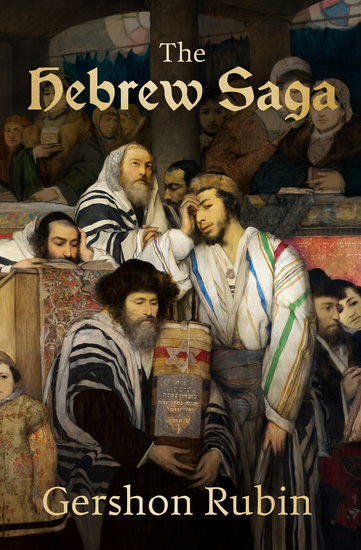
    A personal and philosophical meditation on the Hebrew Bible, its stories, and its sages.In this volume, Gershon Rubin attempts to draw the secrets of the antediluvian world into the modern day. Through the lens of a lifetime of spiritual learning, he explores the ancient saga of creation, Adam and Eve, and the generations to come after. As Rubin states by way of introduction to The Hebrew Saga, “My first name, Gershon, is similar to the Greek word geron (old man). Thus through my ‘geronoscope,’ I view the over-four-thousand-year-long written history of the Hebrew nation, which resulted in the origination of this my world-view, or world outlook.”
    Zum Buch