Begleiten Sie uns auf eine literarische Weltreise!
Buch zum Bücherregal hinzufügen
Grey
Einen neuen Kommentar schreiben Default profile 50px
Grey
Jetzt das ganze Buch im Abo oder die ersten Seiten gratis lesen!
All characters reduced
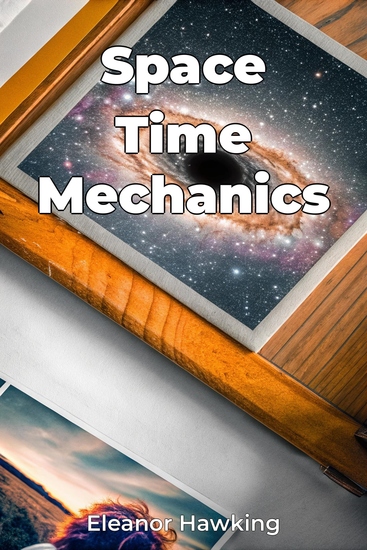
Space Time Mechanics - cover

Space Time Mechanics

Eleanor Hawking

Übersetzer A AI

Verlag: Publifye

  • 0
  • 0
  • 0

Beschreibung

Space Time Mechanics explores the revolutionary concepts of relativity and spacetime, challenging our intuitive understanding of the cosmos. It reveals how space and time are intertwined, influenced by gravity and motion, and fundamentally linked to the distribution of matter and energy. The book provides tools for quantitative analysis, going beyond popular science accounts, and illustrates how understanding spacetime is crucial for astrophysics, cosmology, and technologies like satellite navigation. For example, relativistic corrections are essential for accurate GPS positioning. The book revisits the historical context of Einstein's theories, examining the limitations of Newtonian mechanics and pivotal experiments. It then presents special relativity, the mathematics of spacetime (including tensor calculus and Riemannian geometry), and general relativity, covering black holes, gravitational waves, and cosmological models. Evidence is drawn from theoretical derivations, experimental results (like the bending of starlight), and astrophysical data. It offers a blend of conceptual explanations and mathematical rigor, making it valuable for students, researchers, and scientifically inclined readers.
Verfügbar seit: 13.02.2025.
Drucklänge: 85 Seiten.

Weitere Bücher, die Sie mögen werden

  • The Revolutionary Self - Social Change and the Emergence of the Modern Individual 1770-1800 - cover

    The Revolutionary Self - Social...

    Lynn Hunt

    • 0
    • 0
    • 0
    An illuminating exploration of the tensions between self and society in the age of revolutions. 


    The eighteenth century was a time of cultural friction: individuals began to assert greater independence and there was a new emphasis on social equality. In this surprising history, Lynn Hunt examines women's expanding societal roles, such as using tea to facilitate conversation between the sexes in Britain. In France, women also pushed boundaries by becoming artists, and printmakers' satiric takes on the elite gave the lower classes a chance to laugh at the upper classes and imagine the potential of political upheaval. Hunt also explores how promotion in French revolutionary armies was based on men's singular capabilities, rather than noble blood, and how the invention of financial instruments such as life insurance and national debt related to a changing idea of national identity. Wide-ranging and thought-provoking, The Revolutionary Self is a fascinating exploration of the conflict between individualism and the group ties that continues to shape our lives today.
    Zum Buch
  • Litigating the Pandemic - Disaster Cascades in Court - cover

    Litigating the Pandemic -...

    Susan M. Sterett

    • 0
    • 0
    • 0
    As officials scrambled in 2020 to manage the spread of COVID, the reverberations of the crisis reached well beyond immediate public health concerns. The governance problems that emerged in the pandemic would be problems in other climate-related disasters, too. 


    Many of these governance problems wound up in court. Businesses filed insurance claims for lost commerce; when the claims were denied, some companies sued. As state governments ordered closures and otherwise tried to adapt, interest organizations that had long sought to limit government authority challenged them in court. Political officials railed against litigation they argued would stop businesses from reopening. The United States, like other countries, governs partly through litigation, and litigation is one way of seeing the multiple governance failures during the pandemic. 


    Drawing on databases of cases filed, news reports, and other sources, Susan M. Sterett argues that governing during the pandemic must include the human institutions intertwined with the effects of the virus. Those institutions reveal problems well beyond the reach of technical expertise. Failures in private insurance as a way of governing risk, conflicts about the primacy of religion, government authority, and health, are problems that predated the pandemic and will persist in future disasters.
    Zum Buch
  • The Theory of Moral Sentiments - cover

    The Theory of Moral Sentiments

    Adam Smith

    • 0
    • 0
    • 0
    "The Theory of Moral Sentiments" is a book written by Adam Smith, a Scottish philosopher and economist who lived from 1723 to 1790. First published in 1759, the book is considered one of the most important works in the field of moral philosophy. 
    In the book, Smith explores the nature of morality and the role of sympathy and empathy in human interactions. He argues that human beings are naturally inclined to feel sympathy for others, and that this sympathy forms the basis of moral judgments. He also discusses the concept of the "impartial spectator," an imagined observer who helps us to judge the morality of our own actions. 
    Smith's ideas in "The Theory of Moral Sentiments" have had a profound impact on fields beyond moral philosophy, including economics and political theory. In his later work, "The Wealth of Nations," Smith developed his ideas on the nature of markets and the division of labor, which have become foundational concepts in modern economics. 
    Overall, "The Theory of Moral Sentiments" is a key work in the development of Western moral philosophy, and is still widely studied and debated today.
    Zum Buch
  • The Audiobook Revolution - Harnessing AI for Cheap Fast and Exceptional Narration - cover

    The Audiobook Revolution -...

    Jack Pemberton

    • 0
    • 0
    • 0
    Demystifying AI in Audiobook Production: The Guide to Affordable, High-Quality Narration 
     
    Dive into the fascinating world of audiobooks and artificial intelligence with our groundbreaking guide, "The Audiobook Revolution: Harnessing AI for Cheap, Fast, and Exceptional Narration." This comprehensive book takes you through the seismic shift occurring in the audiobook industry due to the advent of AI. 
     
    Explore the audiobook boom and why AI plays an increasingly central role. Delve into the evolution of AI in audio technology, its benefits, and the advanced features it brings to audiobook narration. Get to grips with the text-to-speech engines and other tools integral to AI narration. 
    Master the art and science of AI narration. Learn how to prepare your text for AI narration, choose the right AI voice, or even clone your own voice for a personalized touch. With hands-on guidance, ensure consistency and quality in AI narration for an exceptional listening experience. 
     
    Discover the benefits of AI in terms of cost and time efficiencies, backed by real-life case studies. Navigate the audiobook distribution landscape, from understanding major retailers to strategies for multi-retailer distribution and revenue considerations. 
     
    Boost your marketing with effective strategies tailored to audiobooks and leverage the unique AI angle. Learn how to maximize exposure across retailers to reach more listeners and increase sales. 
    Finally, take a glimpse into the future of AI and audiobooks. Discover emerging trends, potential challenges, and the continuing revolution in the audiobook industry. 
     
    Unleash the potential of AI in your audiobook projects. Whether you're a writer, publisher, or tech enthusiast, "The Audiobook Revolution" is your indispensable guide to the exciting fusion of technology and storytelling. Join the revolution today!
    Zum Buch
  • The Russian Famine of 1921-1922 - Aftermath of War and Revolution - cover

    The Russian Famine of 1921-1922...

    Sarah Willards

    • 0
    • 0
    • 0
    The Russian Famine of 1921-1922 did not occur in isolation; it was the result of a complex set of conditions that had been building over several years, particularly following the immense strain caused by World War I and the subsequent Russian Revolution. In the years leading up to the famine, the Russian Empire had been subjected to a series of crises, both external and internal, that would lead to an agricultural disaster of unprecedented proportions. 
    World War I, which had raged from 1914 to 1918, devastated Russia. The country’s military and civilian populations were ravaged by the conflict, and the war placed immense pressure on the economy. Agriculture, which was the backbone of Russia’s economy, was particularly affected. Many of the country’s able-bodied men had been conscripted into the army, leaving the fields untended and the production of food drastically reduced. Additionally, the war led to widespread shortages of basic supplies such as fuel, equipment, and fertilizers. The agricultural sector, already fragile, was further crippled by the lack of resources, leaving the country’s population vulnerable to the consequences of famine. 
    The Russian Revolution of 1917, which brought the Bolsheviks to power, intensified the situation. The overthrow of the Romanov dynasty and the subsequent civil war between the Red and White factions created further instability. The Bolsheviks, under the leadership of Vladimir Lenin, implemented policies that would have significant implications for food production. War Communism, introduced as an emergency measure, included grain requisitioning from the peasantry to supply the Red Army and urban centers. However, these policies were deeply unpopular and led to widespread resentment. The forced seizure of grain and foodstuffs left many rural areas without enough resources to sustain their own populations, further exacerbating food shortages.
    Zum Buch
  • The Sphinx and Its Significance - Mysteries of Egypt's Guardian - cover

    The Sphinx and Its Significance...

    Omar Khalil

    • 0
    • 0
    • 0
    The Great Sphinx of Giza is one of the most iconic and enigmatic monuments in the world. It stands as a symbol of ancient Egypt's grandeur, captivating historians, archaeologists, and tourists alike. The monument, which lies near the pyramids of Giza, is a colossal limestone statue with the body of a lion and the head of a human, believed to represent the Pharaoh Khafre. Its massive size and mysterious features have sparked fascination and numerous theories about its purpose, creation, and significance throughout history. 
    The origins of the Sphinx are shrouded in mystery, with its construction dating back to the Old Kingdom of Egypt, around 2500 BCE. Some scholars believe that the Sphinx was carved during the reign of Pharaoh Khafre, who also commissioned the construction of the second pyramid at Giza. Others propose that the monument predates Khafre's reign, possibly dating back to the reign of his father, Pharaoh Sneferu. While the precise dating remains uncertain, the Sphinx is undoubtedly a product of Egypt's architectural and artistic achievements, built to withstand the test of time. 
    The significance of the Sphinx in ancient Egyptian culture is multifaceted. In Egyptian mythology, lions were often associated with strength, power, and protection. The body of the lion, combined with the human head, symbolizes the union of human intelligence and animal strength, a combination that represented the ideal qualities of a ruler. The Sphinx’s location near the pyramids further emphasizes its role as a guardian, watching over the tombs of the pharaohs and ensuring their safe passage into the afterlife. The monument also reflects the Egyptians' reverence for their gods and the divine authority bestowed upon their rulers.
    Zum Buch