Join us on a literary world trip!
Add this book to bookshelf
Grey
Write a new comment Default profile 50px
Grey
Subscribe to read the full book or read the first pages for free!
All characters reduced
Miss Billy's Decision - cover

Miss Billy's Decision

Eleanor H. Porter

Publisher: DigiCat

  • 0
  • 0
  • 0

Summary

In "Miss Billy's Decision," Eleanor H. Porter weaves a captivating narrative that explores the complexities of youthful uncertainty and the journey towards self-discovery. Set in the early 20th century, the novel combines elements of romance, adventure, and moral dilemmas, reflecting the societal expectations of women during this transformative period. Porter's prose is characterized by its warmth and compassion, and her ability to create endearing characters allows readers to intimately engage with Miss Billy as she confronts the vivacity of life choices and the impact of her decisions on those around her. Eleanor H. Porter, celebrated for her ability to resonate with the emotions of young women, draws on her experiences and the societal constraints of her time. Known for infusing her works with both charm and moral insight, Porter cultivated a rich understanding of the women's struggles and aspirations that permeate her literary creations. Her personal journey, coupled with her keen observation of human relationships, informs the character of Miss Billy, making the story both relatable and inspiring. "Miss Billy's Decision" is a must-read for those interested in early American literature and the evolving role of women in society. This novel not only provides entertainment but also stimulates thought about personal agency and the significance of making choices that align with one's true self. Readers seeking a heartwarming yet intellectually engaging work will find profound insights and delightful storytelling in Porter's masterful narrative.
Available since: 11/21/2022.
Print length: 245 pages.

Other books that might interest you

  • Captains Courageous - cover

    Captains Courageous

    Rudyard Kipling

    • 0
    • 0
    • 0
    This wonderful classic combines three unbeatable elements: a sea story, lively and dynamic characters, and a protagonist who undergoes a transformation. 
    Harvey Cheyne is the pampered son of a multimillionaire who falls off an ocean liner and is rescued by a small fishing boat. After being punched in the nose by the captain of the small vessel for smart-mouthing him, Harvey quickly learns respect, toughness, and gratitude. He steps up from self-centeredness into the difficult but fulfilling realm of self-reliance and unselfishness. 
    A popular favorite since its first publication in 1897, the novel remains a classic story of youthful initiation and a lively tribute to the author's famous code of bravery, loyalty, and honor among men.
    Show book
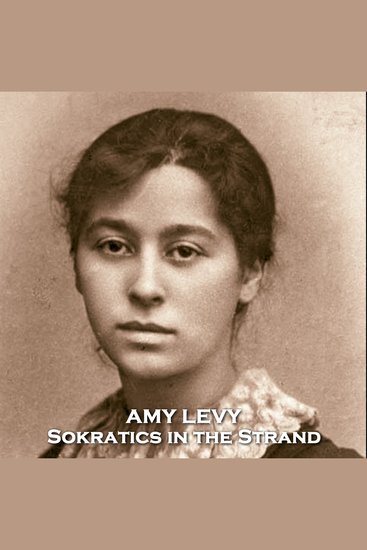
  • Sokratics in the Strand - From their pens to your ears genius in every story - cover

    Sokratics in the Strand - From...

    Amy Levy

    • 0
    • 0
    • 0
    Amy Levy was born in London, England in 1861, the second of seven in a fairly wealthy Anglo-Jewish family. The children read and participated in secular literary activities and became firmly integrated into Victorian life. 
    Her education was at Brighton High School, Brighton, before studies at Newnham College, Cambridge; she was the first Jewish student when she arrived in 1879, but left after four terms. 
    Amy’s writing career began early; her poem ‘Ida Grey’ appeared when she was only fourteen. Her acclaimed short stories ‘Cohen of Trinity’ and ‘Wise in Their Generation,’ were published by Oscar Wilde in his magazine ‘Women's World’. 
    Her poetic writings reveal feminist concerns; ‘Xantippe and Other Verses’, from 1881 includes a poem in the voice of Socrates's wife. ‘A Minor Poet and Other Verse’ from 1884 comprises of dramatic monologues and lyric poems. 
    In 1886, Amy began a series of essays on Jewish culture and literature for the Jewish Chronicle, including ‘The Ghetto at Florence’, ‘The Jew in Fiction’, ‘Jewish Humour’ and ‘Jewish Children’. 
    That same year while travelling in Florence she met the writer Vernon Lee. It is generally assumed they fell in love and this inspired the poem ‘To Vernon Lee’. 
    Her first novel ‘Romance of a Shop’, written in 1888 is based on four sisters who experience the pleasures and hardships of running a London business during the 1880s. This was followed by Reuben Sachs (also 1888) and concerned with Jewish identity and mores in the England of her time and was somewhat controversial. 
    Her final book of poems, ‘A London Plane-Tree’ from 1889, shows the beginnings of the influence of French symbolism. 
    Despite many friendships and an active life, Amy suffered for many years with serious depressions and this, together with her growing deafness, led her to commit suicide by inhaling carbon monoxide on September 10th, 1889. She was 27.
    Show book
  • A Little Joke - From their pens to your ears genius in every story - cover

    A Little Joke - From their pens...

    Anthony Hope

    • 0
    • 0
    • 0
    Sir Anthony Hope Hawkins was born on 9th February 1863 in Clapton, London.  
    He was educated at St John's School, Leatherhead, Marlborough College and Balliol College, Oxford.  Hope trained as a lawyer and barrister and was called to the Bar by the Middle Temple in 1887. Despite what was thought to be a promising legal career he had literary ambitions and wrote in his spare time. 
    His early works appeared in various periodicals of the day but for his first book ‘A Man of Mark’ (1890), with no publisher interested, he published with his own resources.  
    More novels and short stories followed, including the mildly successful ‘Mr Witt's Widow’ in 1892. Hope even found time to run as the Liberal candidate for Wycombe in the election that same year but was unsuccessful. 
    His first major literary success came with ‘The Dolly Dialogues’, a collection of previously published magazine pieces followed very quickly by his instant classic, ‘The Prisoner of Zenda’. He now gave up the vestiges of his legal career to pursue writing full-time. 
    Despite never again reaching the same pinnacle of success he was popular and wrote prolifically across novels, plays and of course, short stories though his writing output rapidly diminished after the war. 
    In 1918 he was knighted for his contribution to propaganda efforts during World War I.  
    His short stories are delicate, mannered and often surprising with their wit, humour and interplay of characters who say one thing and usually mean another.  He was very definitely a writer of escapist rather than serious fare but they are no less enjoyable for that. 
    Anthony Hope died of throat cancer on 8th July 1933 at his country home, Heath Farm at Walton-on-the-Hill in Surrey. He was 70.
    Show book
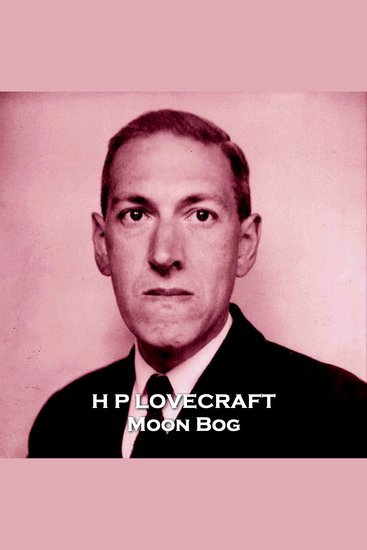
  • Moon Bog - From their pens to your ears genius in every story - cover

    Moon Bog - From their pens to...

    HP Lovecraft

    • 0
    • 0
    • 0
    Howard Phillips Lovecraft is among the greatest American masters of fantasy and the supernatural.  
    Born in 1890, a native of Providence, Rhode Island, his health was uncertain from childhood and he led a sheltered early life. His semi-invalidism enabled him to read omnivorously, and as a shy imaginative child he began to invent what would in his adult life become a whole macabre fantastic world of his own, peopled by creatures out of his own weird imagination.  
    As an adult he was retiring, almost a recluse. Tall, thin and pale, but with bright alert eyes, he was much given to wandering his native city in the dark hours of the night, and he became a devoted student of its antiquities.  
    Although he began to write early he had nothing published until he was in his twenties. He set many of his stories around the imaginary town of Arkham, and invented an entire mythology of his own, its core being the demoniac cult of Cthulhu, based on the lore or legend that the world was at one time inhabited by another race who, in practising black magic, lost their foothold or were expelled, yet live on outside, ever ready to take possession of this earth again. 
    Since his early death in 1937 his stories have continued to attract attention and praise from an ever-growing audience.
    Show book
  • Julia Ried: Listening and Led - cover

    Julia Ried: Listening and Led

    Isabella "Pansy" Alden

    • 0
    • 0
    • 0
    Continuing the charming tales of the Ried family, younger sister Julia now embarks on her own journey of overcoming temptation, making tough choices, and finding her way on the path to true faith and love. Facing exceptional and difficult situations with her family, Julia sets out at a young age to find ways to support herself and her ailing mother. However, she becomes distracted and entrapped by the new frivolities and friendships around her. The young Julia must learn the value of eternal treasures over temporal joys and uncover who her true friends and spiritual examples in life are.  This series, published by ONE Audiobooks, seeks to produce Classic Christian titles read by handpicked audiobook narrators. ONE takes great care to cast these titles with readers who will provide an unmatched listening experience for these important works.
    Show book
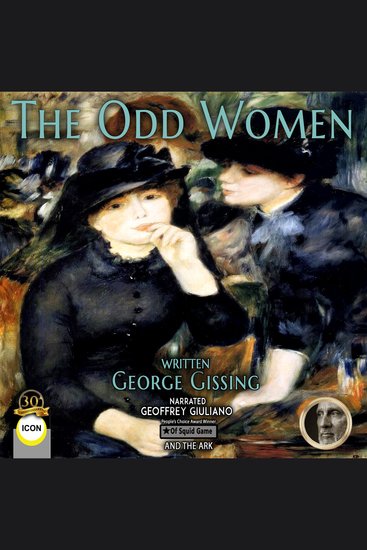
  • The Odd Women - cover

    The Odd Women

    George Gissing

    • 0
    • 0
    • 0
    Before he was 21 George Gissing conceived the ambition of writing a long series of novels, somewhat in the manner of Balzac, whom he admired. The first of these, Workers in the Dawn, appeared in 1880, to be followed by 21 others. Between 1886 and 1895 he published one or more novels every year. He also wrote Charles Dickens: A Critical Study (1898), a perceptive piece of literary criticism. 
     
    Gissing's work has a good deal of documentary interest for its detailed and accurate accounts of lower-middle-class London life. On the social position and psychology of women, he is particularly acute: The Odd Women is a powerful study of female frustration. He did not lack human sympathies, but his obvious contempt for so many of his characters reflects an artistic limitation. Gissing was deeply critical, in an almost wholly negative way, of contemporary society. Of his novels, New Grub Street, considered by some critics to be his only great book, is unique in its merciless analysis of the compromises required by the literary life. 
     
    Gissing's 1893 novel takes on the 19th century "Woman Question" by looking at themes of feminism, marriage, and love. The novel raises these issues through the lives of several contrasting women: Mary Barfoot, a feminist philanthropist who helps train women for careers; her close friend Rhoda Nunn, who believes marriage is a disastrous choice for women; and Monica Madden, who starts out as one of their protegees but chooses to marry a seemingly kind older man. As Monica experiences the challenges of married life, Rhoda finds herself drawn to Mary's cousin, the charming but apparently profligate Everard
    Show book