Begleiten Sie uns auf eine literarische Weltreise!
Buch zum Bücherregal hinzufügen
Grey
Einen neuen Kommentar schreiben Default profile 50px
Grey
Jetzt das ganze Buch im Abo oder die ersten Seiten gratis lesen!
All characters reduced
Peter - cover

Peter

E.F. Benson

Verlag: DigiCat

  • 0
  • 0
  • 0

Beschreibung

E. F. Benson's "Peter" is a keenly observant exploration of the intricacies of human relationships and the transformative power of friendship. Set against the backdrop of early 20th-century England, the novel employs a lyrical, yet straightforward narrative style that reflects Benson's adeptness at character development and social commentary. The story follows the titular character, Peter, as he navigates the complexities of love, ambition, and identity, ultimately presenting a rich tapestry of interconnected lives that resonates with readers familiar with the socio-cultural nuances of the Edwardian era. Benson's use of irony and humor adds a layered depth, elevating the narrative beyond a mere tale of personal struggle to a broader reflection on societal norms and expectations. E. F. Benson (1867-1940) was a notable figure in the literary world, renowned for his insightful observations on social customs and his ability to weave intricate plots. Growing up in an influential family, Benson's personal experiences, including his time spent in academia and his exposure to diverse social circles, greatly informed his writing. "Peter" is a testament to his literary prowess, showcasing his signature blend of wit and poignancy, which not only captures the zeitgeist of his time but also resonates with universal themes of humanity. This thoughtful and richly layered novel is highly recommended for readers seeking a profound exploration of character and society. Benson's exploration of personal and interpersonal dynamics offers timeless insights, making "Peter" a valuable addition to any literary collection. Those who appreciate nuanced storytelling will find in this work an enduring relevance that echoes through the halls of literary history.
Verfügbar seit: 16.09.2022.
Drucklänge: 222 Seiten.
Weitere Bücher, die Sie mögen werden

  • The Cossacks - cover

    The Cossacks

    Leo Tolstoy

    • 0
    • 0
    • 0
    "The Cossacks live not by the dictates of the world but by a code woven from their own history and way of life."
    
    Published in 1883 and set in the Caucasus, The Cossacks follows the journey of Dmitry Andreich Olenin, a young nobleman who, disillusioned with his privileged life and a failed love affair, leaves Moscow on a quest to find meaning and serenity among the people of the Caucasus. He embarks on a journey southward and eventually joins a regiment stationed in mountainous Cossack country, where he takes part in the daily life of a Cossack village and encounters cultural tensions between the Russian troops and the local Cossacks, who have a complex relationship marked by historical enmity.
    
    The novel explores themes of love, identity, and the stark contrasts between different ways of life, inviting the audience to reflect on the complexities of human relationships and cultural understanding.
    Leo Tolstoy (1828–1910) was a Russian novelist, philosopher, and social reformer, widely regarded as one of the greatest writers of all time. He is best known for his epic novels War and Peace and Anna Karenina, both celebrated for their intricate character development and profound exploration of moral dilemmas and human nature. In his later years, Tolstoy experienced a spiritual awakening which led him to reject materialism and embrace a life of simplicity, seeking to align his life with his beliefs about non-violence and compassion. Tolstoy's legacy endures not only through his literary masterpieces but also through his profound impact on literature and philosophy.
    Zum Buch
  • The Trespasser - cover

    The Trespasser

    D.H. Lawrence

    • 0
    • 0
    • 0
    The Trespasser, D. H. Lawrence's second novel, foreshadowed the passion of Lady Chatterley's Lover.Helena Verden, a young woman in her late twenties, and Siegmund MacNair, her violin teacher, are in love. But there is more than one obstacle on their road to happiness. Siegmund is a married man with children, and Helena is full of inhibitions. They spend a week together on the Isle of Wight, their passion remaining unrequited. When they return to London, Siegmund faces a deadlock. Tormented by his family's bitter reproaches, he is nonetheless unable to desert them for Helena. His solution to his dilemma turns a woman's longing for love into tragedy.Lawrence based his novel on the true-life experiences of his friend Helen Corke, as revealed in her diaries.
    Zum Buch
  • October Vagabonds - cover

    October Vagabonds

    Richard le Gallienne

    • 0
    • 0
    • 0
    Two friends set out on foot at the edge of autumn, trading the noise of the city for quiet roads and golden leaves. With no fixed destination, they walk through the backroads of upstate New York, staying in small inns, visiting country towns, and living on simple pleasures. 
    Along the way, they reflect on poetry, friendship, freedom, and the joy of slowing down. October Vagabonds is part travel memoir, part celebration of nature, and part quiet rebellion against the rush of modern life. 
    This is a story for those who dream of wandering, who long for crisp air and fire-lit nights, and who find meaning in moments that ask nothing in return. 
    Perfect for fans of lyrical prose, slow travel, and stories that value stillness over spectacle.
    Zum Buch
  • Candide - The Classic Tale - cover

    Candide - The Classic Tale

    Voltaire

    • 0
    • 0
    • 0
    Candide is characterized by its tone as well as by its erratic, fantastical, and fast-moving plot. A picaresque novel with a story similar to that of a more serious coming-of-age narrative, it parodies many adventure and romance clichés, the struggles of which are caricatured in a tone that is bitter and matter-of-fact. Still, the events discussed are often based on historical happenings, such as the Seven Years' War and the 1755 Lisbon earthquake. As philosophers of Voltaire's day contended with the problem of evil, so does Candide in this short theological novel, albeit more directly and humorously. Voltaire ridicules religion, theologians, governments, armies, philosophies, and philosophers. Through Candide, he assaults Leibniz and his optimism. 
     
    Candide has enjoyed both great success and great scandal. Immediately after its secretive publication, the book was widely banned to the public because it contained religious blasphemy, political sedition, and intellectual hostility hidden under a thin veil of naïveté. However, with its sharp wit and insightful portrayal of the human condition, the novel has since inspired many later authors and artists to mimic and adapt it. Today, Candide is considered as Voltaire's magnum opus and is often listed as part of the Western canon. It is among the most frequently taught works of French literature. The British poet and literary critic Martin Seymour-Smith listed Candide as one of the 100 most influential books ever written.
    Zum Buch
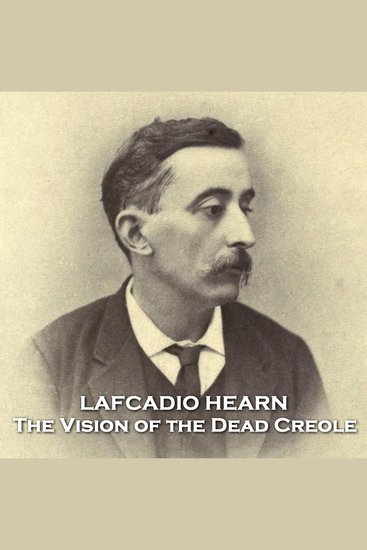
  • The Vision of the Dead Creole - From their pens to your ears genius in every story - cover

    The Vision of the Dead Creole -...

    Lafcadio Hearn

    • 0
    • 0
    • 0
    Lafcadio Hearn was born on the 27th June 1850 on the Ionian isle of Levkás in Greece to a British Army officer and a Greek Mother. 
    His father, fearing for his career prospects at being married to a Greek Orthodox wife, sent them to Dublin whilst he continued to advance his career with further postings.  Life there was difficult for mother and son.  His father returned, wounded and traumatised, when Lafcadio was three.  He annulled the marriage and she remarried but had to give up care of Lafcadio to her sister-in law.   
    After brief periods for Catholic education in England and France he emigrated to Ohio in the United States when he was 19, taking on a series of casual jobs before embarking on a career as a journalist, publishing poems and essays in Cincinnati.  It was whilst here that he began a side-line in translating, starting with Gautier and Flaubert.  He married in 1874 to a 20 year old African-American woman in violation of Ohio's anti-miscegenation law.  The marriage soon failed. 
    In 1877 he relocated to New Orleans to write on a variety of themes before picking up a two year assignment from Harper’s to write in the West Indies, where he also wrote his first novel. 
    In 1890 Harper’s sent him to Japan.  Here he left journalism and took the remarkable decision to become a schoolteacher in the north of Japan.   Enraptured by the culture he was driven to explain it in various Western publications to those who had little, if any, knowledge of its culture.  Within the year he had fallen in love with, and married, a high-born Japanese lady, together they would have four children.   
    In 1895 he became a Japanese national and took the name Koizumi Yakumo, Koizumi being his wife’s family name. 
    The following few years, whilst a professor of Literature at the Imperial University of Japan, were his most creative and admired period.   
    Lafcadio Hearn died of heart failure on the 26th of September 1904, in Tokyo, Japan shortly before leaving to deliver a series of lectures at Cornell University in New York State.  He was 54.
    Zum Buch
  • A Terribly Strange Bed - cover

    A Terribly Strange Bed

    Wilkie Collins

    • 0
    • 0
    • 0
    🎬 Experience the atmospheric visual edition of this tale by searching "Jonathan Dunne Horror" on YouTube. 
    Title: A Terribly Strange Bed 
    Series Name: Timeless Terrors 
    Series Entry: 141 
    Author: Wilkie Collins 
    Narrator: Jonathan Dunne 
    Original Publication: 1852 
    Public Domain: Yes 
    Description: 
    A Terribly Strange Bed is a masterful early tale of suspense and paranoia from Wilkie Collins, blending psychological dread with the lurking menace of unseen conspiracy. After an evening of reckless gambling in the shadowed underworld of Paris, an unsuspecting young Englishman finds himself swept along by sudden fortune into the company of charming — yet deeply unsettling — strangers. 
    Flush with winnings and too exhausted to question his luck, he accepts an invitation to spend the night in an unfamiliar house. At first, the room appears luxurious, even welcoming. But beneath the velvet drapery and candlelit elegance lies something profoundly wrong — a creeping sense of danger that slowly tightens around him as the night deepens. 
    What begins as unease soon becomes a waking nightmare, as the young man discovers that his richly furnished chamber conceals a horrifying secret designed with cold precision and deadly intent. 
    Collins builds unbearable tension from the ordinary details of a quiet room, transforming comfort into terror and sleep into a trap. In this claustrophobic battle between awareness and oblivion, survival depends on recognizing the danger before the darkness closes in forever.
    Zum Buch