Begleiten Sie uns auf eine literarische Weltreise!
Buch zum Bücherregal hinzufügen
Grey
Einen neuen Kommentar schreiben Default profile 50px
Grey
Jetzt das ganze Buch im Abo oder die ersten Seiten gratis lesen!
All characters reduced
Volcanoes: Past and Present - cover

Volcanoes: Past and Present

Edward Hull

Verlag: DigiCat

  • 0
  • 0
  • 0

Beschreibung

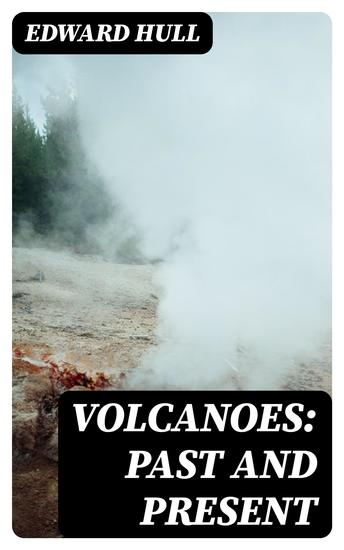
In "Volcanoes: Past and Present," Edward Hull presents a comprehensive exploration of volcanic activity throughout geological time, merging anecdotal observations with rigorous scientific inquiry. The book is distinguished by its clear prose and vivid illustrations, which guide readers through the complexities of volcanic forms, eruptions, and their profound impacts on Earth's landscapes and ecosystems. Hull's narrative deftly situates volcanic phenomena within a wider literary context, drawing connections to cultural and historical perceptions of volcanoes, while grounding his observations in contemporary geological research. Edward Hull, a prominent geologist of the 19th century, was deeply influenced by the transformative power of natural landscapes during his formative years. His extensive travels and studies in regions afflicted by volcanic activity, including Italy and Iceland, fueled his fascination with these geological wonders. Hull's background not only equipped him with the scientific acumen required for such an ambitious work but also fostered in him a sense of urgency about understanding and communicating the intricate realities of volcanic phenomena to a broader audience. "Volcanoes: Past and Present" is essential reading for both geology enthusiasts and those curious about the volatile forces that shape our planet. Hull's insightful synthesis of historical and contemporary volcanic activity provides an engaging resource for understanding natural disasters' unpredictable nature, making this book a valuable addition to anyone's library.
Verfügbar seit: 01.08.2022.
Drucklänge: 204 Seiten.
Weitere Bücher, die Sie mögen werden

  • Useless Sleep Trivia That Will Put You to Sleep Fast - cover

    Useless Sleep Trivia That Will...

    Calmy Heart

    • 0
    • 0
    • 0
    Tired of sleepless nights and restless tossing? Useless Sleep Trivia That Will Put You to Sleep Fast is here to save the day—or rather, your night! This audiobook is packed with the most random, quirky, and utterly useless trivia designed to entertain just enough to quiet your overactive mind. From bizarre facts about historical sleep customs to fascinating tidbits about dreams and yawns, this collection of trivia is the ultimate relaxation tool. 
    Delivered in a calm and soothing voice, this audiobook takes your mind off stress and gently leads you into the world of peaceful sleep. It’s the perfect way to wind down after a long day without staring at your phone or counting sheep for hours. Each useless fact is like a lullaby for your thoughts, keeping your mind light and free of worries. 
    Whether you're an insomniac, an overthinker, or just someone who loves a bit of quirky entertainment before bed, this audiobook is your ticket to fast, stress-free sleep. Don’t let another sleepless night steal your rest. Hit play, relax, and let the trivia take you to dreamland.
    Zum Buch
  • Mesoamerican Astronomy: The History of Celestial Observations Made by the Maya Aztec and Inca - cover

    Mesoamerican Astronomy: The...

    Editors Charles River

    • 0
    • 0
    • 0
    For the Maya, astronomy was not a purely scientific pursuit but intimately linked to religious, mythological, and ideological elements that were of the highest importance. The celestial realm held a sacred nature, as did the many gods and goddesses that dwelt there, so for all Mesoamerican cultures, astronomy was a fundamental part of their everyday lives. Thus, astronomy was present in their calendars, religion, and even agriculture, and in close relation to astronomy, the concept of time was also an essential part of their worldview.  
    The Aztec recorded many of the astronomical events they observed in codices and hieroglyphic inscriptions, but the main evidence of their deep astronomical knowledge comes from their calendar system. This information was then used to plan the orientation of buildings and ceremonial centers, which were aligned to sunrises or sunsets corresponding to special dates, such as solstices or equinoxes. Observational calendars were also used to schedule agricultural activities, as well as rituals, festivals, and celebrations. 
    Though the Spanish physically conquered them in quick fashion, the culture and legacy of the Inca Empire has continued to endure throughout the centuries in both Europe and South America, due in no small part to the fact they were one of the most advanced and sophisticated cultures on the continent. The sun was the main element present in the Inca worldview, so Inti, the sun god, was worshipped above all others and, even though the different parts of the empire were allowed to practice their individual beliefs, they were encouraged to venerate the sun. The connection with the sun even extended to their kings since they were considered to be the sons of the sun. Naturally, this meant astronomy was a key component of the Incas’ beliefs, and in addition to the sun, the Inca observed the moon, stars, constellations, and some planets, all of which became integral parts of their cosmology.
    Zum Buch
  • Oath and Law - cover

    Oath and Law

    Hippocrates

    • 0
    • 0
    • 0
    The Oath and Law by Hippocrates is a document that outlines the ethical code of conduct for medical professionals. The oath is a pledge to uphold the highest standards of care for patients, and the law is a set of guidelines for how physicians should behave. The oath and law are designed to protect patients and ensure that they receive the best possible care. Read in English, unabridged.
    Zum Buch
  • The Age of Reason - cover

    The Age of Reason

    Thomas Paine

    • 0
    • 0
    • 0
    "Thomas Paine's "The Age of Reason" is a thought-provoking work that both defends Deism and challenges the world's major monotheistic religions. Let's delve into its fascinating aspects:    Overview:  "The Age of Reason" is a book by English and American political activist Thomas Paine.  It argues for the philosophical position of deism, which emphasizes reason, natural religion, and skepticism toward institutionalized religion.  The book was published in three parts: in 1794, 1795, and 1807.  While it became a best-seller in the United States, British audiences received it with more hostility due to fears of increased political radicalism after the French Revolution.  Key Themes:  Deism: Paine's work follows in the tradition of 18th-century British deism. Deists advocated for free rational inquiry, religious toleration, and an end to religious persecution.  Natural Law: Deists believed that all things in the universe, including God, must obey the laws of nature. They rejected miraculous accounts and insisted on reason and rationality.  Bible Critique: Paine challenges the legitimacy of the Bible, viewing it as an ordinary piece of literature rather than a divinely-inspired text.  Appealing Style: By presenting deistic arguments in an engaging and irreverent style, Paine made deism accessible to the masses.  "The Age of Reason" remains a significant work that shaped intellectual discourse and inspired free thinkers."
    Zum Buch
  • Brainwave Sleep Sounds 2-in-1 - 40 Hz Brainwave Therapy & White Noise for Memory Focus and Deep Rest - cover

    Brainwave Sleep Sounds 2-in-1 -...

    Sleeptime Publications

    • 0
    • 0
    • 0
    Boost Your Brain & Sleep Better—Two Powerful Sound Therapies in One Audiobook. 
    Struggling with mental fog, restless sleep, or constant distractions? This 2-in-1 audiobook combines 40 Hz brainwave therapy and white noise to enhance cognitive function, improve focus, and promote deep, uninterrupted rest.Two Proven Sound Therapies—One Powerful Solution.40 Hz Brainwave Therapy – Linked to memory, learning, and neural health, this frequency helps strengthen brain connections. Research in the Journal of Alzheimer’s Disease found that 40 Hz sound waves improve memory and cognitive function.White Noise – Creates a consistent sound environment that masks background noise and promotes deep sleep. Research in The Journal of Cognitive Neuroscience found that white noise stabilizes sleep, while Scientific Reports confirms that nature-based white noise reduces stress and lowers cortisol levels.Simply Press Play and Let the Sounds Work for You. 
    Inside you’ll experience:✅ 40 Hz brainwave therapy and white noise for enhanced focus and deep sleep✅ Scientifically backed sound therapy to support memory and mental clarity✅ A natural way to block distractions and reduce stress✅ A deeply immersive sound experience to help you wake up refreshedStrengthen Your Mind and Sleep Better—Effortlessly. 
    Sharpen your focus and improve your rest with this brain-boosting sound therapy. Press play now and let the power of 40 Hz and white noise transform your sleep.
    Zum Buch
  • Better Not Burn Your Toast - The Science of Food and Health - cover

    Better Not Burn Your Toast - The...

    Dr. Joe Schwarcz

    • 0
    • 0
    • 0
    If you have an appetite for digestible science, you will find plenty of tasty morsels here. 


    Discover why some people see red over red food dyes, why Sherlock Holmes was interested in jellyfish, why King George III was plagued with purple urine, and why phrenology is a pseudoscience. You will learn about the links between the Pope, Lionel Messi, and yerba mate, Harry Potter and the mandrake root, and how Bicycle Day came to commemorate the first use of LSD. Have you ever wondered whether negative ions have positive effects, if memory supplements work, if performance-enhancing supplements really enhance performance, or if taurine in Red Bull is a lot of bull? Look no further. Are you confused about ultra-processed foods, free radicals, calcium propionate in your daily bread, endocrine disruptors, preservatives, rejuvenation, aspartame, Ozempic, Oxycontin, or whether you can eat to beat disease? You've come to the right place. 


    You will also find out why Woody Allen's "orgasmatron" in Sleeper was a parody of an actual device created by Wilhelm Reich, how time-restricted eating works, why kimchi traveled to outer space, and where not to stick a magnesium rod. Then, of course, you will also discover why you should not burn your toast!
    Zum Buch