Rejoignez-nous pour un voyage dans le monde des livres!
Ajouter ce livre à l'électronique
Grey
Ecrivez un nouveau commentaire Default profile 50px
Grey
Abonnez-vous pour lire le livre complet ou lisez les premières pages gratuitement!
All characters reduced
Gettysburg Oration - Enriched edition - cover

Gettysburg Oration - Enriched edition

Edward Everett

Maison d'édition: DigiCat

  • 0
  • 0
  • 0

Synopsis

In his Gettysburg Oration, delivered on November 19, 1863, Edward Everett crafts a profound meditation on the significance of the Battle of Gettysburg and the broader implications of the American Civil War. With a style that artfully intertwines eloquence and rhetoric, Everett's address echoes the traditions of classic oratory while embedding itself within the frameworks of 19th-century American nationalism. He masterfully employs historical reference, with poignant reflections on sacrifice and unity, framing the address not only as a remembrance of fallen soldiers but also as a call to preserve the nation and its ideals of democracy. Edward Everett was a preeminent orator, academic, and politician of his time, having served as a U.S. Senator and the Governor of Massachusetts. His extensive background in literature, divinity, and politics informed his thoughts on national identity and duty. The oration was delivered during a time of immense turmoil in America, reflecting Everett's profound commitment to the Union and his wish to inspire a collective resolve among a fractured populace. I highly recommend the Gettysburg Oration to anyone interested in American history, oratory, and the themes of sacrifice and unity. Everett's words resonate with timeless wisdom and offer important insights into the struggles that shaped the nation.

In this enriched edition, we have carefully created added value for your reading experience:
- A succinct Introduction situates the work's timeless appeal and themes.
- The Synopsis outlines the central plot, highlighting key developments without spoiling critical twists.
- A detailed Historical Context immerses you in the era's events and influences that shaped the writing.
- A thorough Analysis dissects symbols, motifs, and character arcs to unearth underlying meanings.
- Reflection questions prompt you to engage personally with the work's messages, connecting them to modern life.
- Hand‐picked Memorable Quotes shine a spotlight on moments of literary brilliance.
- Interactive footnotes clarify unusual references, historical allusions, and archaic phrases for an effortless, more informed read.
Disponible depuis: 10/08/2022.
Longueur d'impression: 37 pages.
D'autres livres qui pourraient vous intéresser

  • The Golden Age - Trade Art and Movements during the Dutch Golden Age - cover

    The Golden Age - Trade Art and...

    Kelly Mass

    • 0
    • 0
    • 0
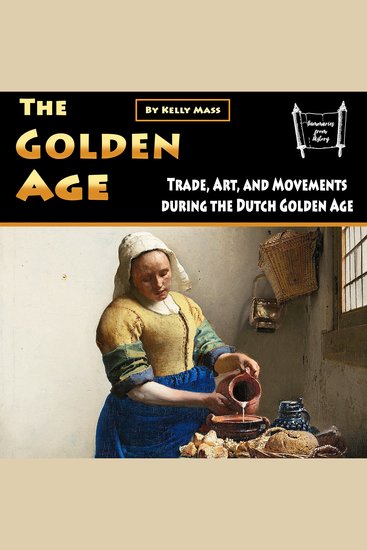
    The Netherlands had a great century in the 1600s, until it all ended about three-fourths along the way. Trading was all around, business was good. Their vast empire that reached across the world made money from spices, raw materials, metals, and so much more, with an extensive network of ships, merchants, and an entire army fleet. 
    The Dutch Golden Era was a time in Dutch history varying circa from 1588 (the start of the Dutch Republic) to 1672 (the "Catastrophe Year"), throughout which Dutch trade, science, and art, and the Dutch armed force, were amongst the world's best. The Eighty Years' War, which ended in 1648, controls the first area. Throughout the Dutch Republic, the Golden era lasted till the end of the century, when pricey fights like the Franco-Dutch War and the War of the Spanish Succession stimulated financial decrease. 
    K. W. Swart, a historian, has called the Netherlands' change into the world's leading maritime and financial power the "Dutch Wonder." 
    In this book, you will learn all you need to know about this gigantic superpower that ruled a big part of the world for nearly an entire century: The Dutch Empire.
    Voir livre
  • Rethinking the Police - An Officer's Confession and the Pathway to Reform - cover

    Rethinking the Police - An...

    Daniel Reinhardt

    • 0
    • 0
    • 0
    A former officer grapples with the reality of our broken police culture 


    Our society has long been stuck in cultural and ideological battles about police brutality and the police force's broken relationship with our communities. Rethinking the Police promises to start a more hopeful conversation. 


    Daniel Reinhardt spent twenty-four years as a police officer near Cleveland, Ohio. He was long unaware of the ways the culture of the police department was shaping him, but gradually, through his own experiences as a police officer and through the mentorship of Black Christians in his life, his eyes were opened to a difficult truth: police brutality against racial minorities was endemic to the culture of the system itself. 


    In Rethinking the Police, Reinhardt lays out a history of policing in the United States, showing how it developed a culture of dehumanization, systemic racism, and brutality. But Reinhardt doesn't stop there: he offers a new model of policing based not in dominance and control but in a culture of servant leadership, with concrete suggestions for procedural justice and community policing.
    Voir livre
  • The Power of Black Excellence - HBCUs and the Fight for American Democracy - cover

    The Power of Black Excellence -...

    Deondra Rose

    • 0
    • 0
    • 0
    From their founding, Historically Black Colleges and Universities (HBCUs) educated as many as 90 percent of Black college students in the United States. Although many are aware of the significance of HBCUs in expanding Black Americans' educational opportunities, much less attention has been paid to the vital role that they have played in expanding American democracy. 


    In The Power of Black Excellence, Deondra Rose provides an authoritative history of HBCUs and the unique role they have played in shaping American democracy since 1865. Drawing on over six years of deep research, Rose brings into view the historic impact that government support for HBCUs has had on the American political landscape, arguing that they have been essential for not only empowering Black citizens but also reshaping the distribution of political power in the United States. Today, HBCUs remain extremely important, as evidenced by the outsized number of black political leaders—including Kamala Harris—who attended them. Rose stresses that policymakers promote democracy itself when they support HBCUs and their unique approach to postsecondary education, which includes a commitment to helping students develop politically empowering skills, promoting political leadership, and fostering a commitment to service.
    Voir livre
  • Reconciling - A Lifelong Struggle to Belong - cover

    Reconciling - A Lifelong...

    Scott Steedman, Larry Grant

    • 0
    • 0
    • 0
    It's taken most of Larry Grant's long life for his extraordinary heritage to be appreciated. He was born in a hop field outside Vancouver in 1936, the son of a Musqueam cultural leader and an immigrant from a village in Guangdong, China. In 1940, when the Indian agent discovered that their mother had married a non-status man, Larry and his two siblings were stripped of their status. With one stroke of the pen, they were disenfranchised—no longer recognized as Indigenous. 
     
    Reconciling is a series of conversations between Larry and writer Scott Steedman as they visit pivotal geographical places together. Larry tells the story of his life, including his thoughts on reconciliation and the path forward for First Nations and Canada. His life echoes the barely known story of Vancouver and spans key events of the last two centuries, including Chinese immigration and the Head Tax, the ravages of residential school and now Indigenous revival and the accompanying change in worldview. 
     
    When Larry talks about reconciliation, he uses the verb reconciling, an ongoing, unfinished process we're all going through. "I have been reconciling my whole life, with my inner self," he explains. "To not belong was forced upon me by the colonial society that surrounded me. But reconciling with myself is part of all that."
    Voir livre
  • Eastern Civilization: A Captivating Guide to Ancient Chinese Japanese and Indian Civilizations Buddhism Medieval Asia and Modern Times - cover

    Eastern Civilization: A...

    Captivating History

    • 0
    • 0
    • 0
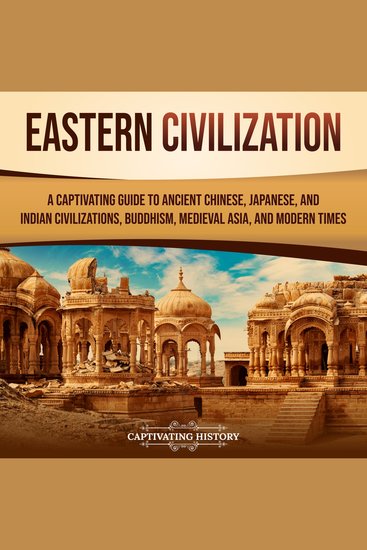
    Embark on an Unparalleled Journey Through the Rich Tapestry of Eastern Civilization!  
    Discover the Cradle of Intellectual Thought: From the mystical valleys of the Indus to the imperial courts of Japan, "Eastern Civilization" unravels the vibrant histories of India, China, and Japan. This captivating guide is your window into the ancient worlds that shaped modern thought. 
    Unearth Hidden Gems of History:Witness the birth of profound religions like Hinduism, Buddhism, and Confucianism.Explore the intricacies of Japan’s samurai culture and the strategic depths of Chinese philosophy.Delve into the transformative eras of colonialism and imperialism, and see how these civilizations evolved into their contemporary forms. 
    A Fusion of Past and Present:See the past come alive with tales of wars, cultural exchanges, and philosophical debates.Understand how the legacies of these great civilizations continue to resonate in today's global culture. 
    This Audiobook Offers:In-depth analysis of the Eastern intellectual and cultural movements.Fascinating stories of power, religion, and art that shaped billions of lives.A unique perspective on the interconnectedness of Eastern civilizations. 
    For Whom? Whether you're a history aficionado, a student of cultures, or a curious mind eager to explore the East's rich heritage, this audiobook is your perfect companion. 
    Click “Add to Cart” and embark on a journey through time, exploring the wonders of Eastern civilization. Your intellectual odyssey awaits!
    Voir livre
  • Direct Perception is Freedom - Bombay (Mumbai) 1971 - Public Talk 2 - cover

    Direct Perception is Freedom -...

    Jiddu Krishnamurti

    • 0
    • 0
    • 0
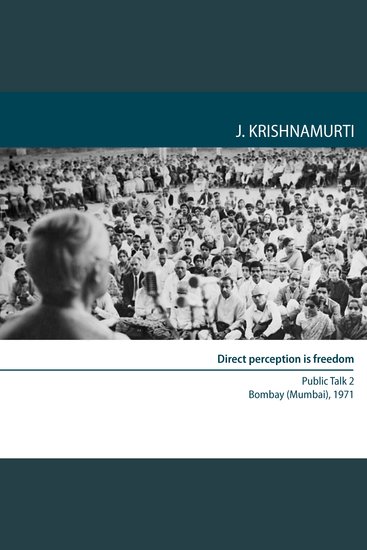
    ". Direct perception is freedom - 10 February 1971 
    • Can the mind living in this world ever be free, not only superficially but 
    profoundly, at the very root of its existence? 
    • ‘Freedom from’ is an abstraction, but freedom in observing ‘what is’ and going 
    beyond it is actual freedom. 
    How do I observe greed? Do I observe it as an outsider looking in or do I observe it without the observer? 
    Without the mind being free you cannot live in order. 
    Q: Three years have passed; I have no energy to be aware of my reactions. Q: Can we seek God through observation?"
    Voir livre