Rejoignez-nous pour un voyage dans le monde des livres!
Ajouter ce livre à l'électronique
Grey
Ecrivez un nouveau commentaire Default profile 50px
Grey
Abonnez-vous pour lire le livre complet ou lisez les premières pages gratuitement!
All characters reduced
A short history of the Norman Conquest of England - cover

A short history of the Norman Conquest of England

Edward A. Freeman

Maison d'édition: Passerino

  • 0
  • 0
  • 0

Synopsis

The Norman Conquest (or the Conquest) was the 11th-century invasion and occupation of England by an army made up of thousands of Normans, Bretons, Flemish, and French troops, all led by the Duke of Normandy, later styled William the Conqueror.

William's claim to the English throne derived from his familial relationship with the childless Anglo-Saxon king Edward the Confessor, who may have encouraged William's hopes for the throne. Edward died in January 1066 and was succeeded by his brother-in-law Harold Godwinson. The Norwegian king Harald Hardrada invaded northern England in September 1066 and was victorious at the Battle of Fulford on 20 September, but Godwinson's army defeated and killed Hardrada at the Battle of Stamford Bridge on 25 September. Three days later on 28 September, William's invasion force of thousands of men and hundreds of ships landed at Pevensey in Sussex in southern England. Harold marched south to oppose him, leaving a significant portion of his army in the north. Harold's army confronted William's invaders on 14 October at the Battle of Hastings. William's force defeated Harold, who was killed in the engagement, and William became king.

Edward Augustus Freeman (2 August 1823 – 16 March 1892) was an English historian, architectural artist, and Liberal politician during the late-19th-century heyday of Prime Minister of the United Kingdom William Gladstone, as well as a one-time candidate for Parliament. He held the position of Regius Professor of Modern History at Oxford, where he tutored Arthur Evans; later he and Evans were activists in the Balkan uprising of Bosnia and Herzegovina (1874–1878) against the Ottoman Empire. After the marriage of his daughter Margaret to Evans, he and Evans collaborated on the fourth volume of his History of Sicily. He was a prolific writer, publishing 239 distinct works. One of his best known is his magnum opus, The History of the Norman Conquest of England (published in 6 volumes, 1867–1879). Both he and Margaret died before Evans purchased the land from which he would excavate the Palace of Knossos.
Disponible depuis: 16/09/2022.
D'autres livres qui pourraient vous intéresser

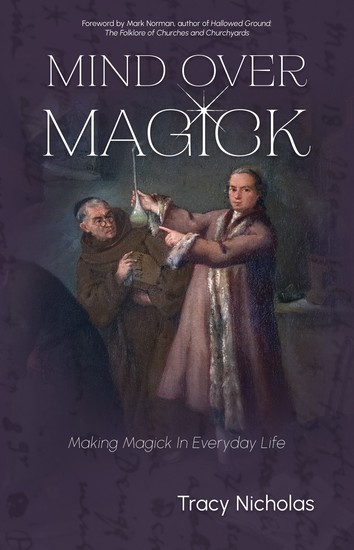
  • Mind Over Magick - Making Magick in Everyday Life - cover

    Mind Over Magick - Making Magick...

    Tracy Nicholas

    • 0
    • 0
    • 0
    How do we know if magick is real? Wherever you find people, there are stories about magick. Some are myth or folklore, others are tales meant to thrill and intrigue us, and others still are accounts of actual magick, real spirits, and the energetic properties of our natural world. The question is whether or not any of it is true. Mind Over Magick by Tracy Nicholas tackles this complicated—and often personal—inquiry by picking apart what we know, what we don’t know, and what we can’t possibly know, leaving us with an evidence-based case for the existence of magick in our world. She demonstrates many instances:How the placebo effect shows us that we can heal our bodies with no mechanical interventionHow all living beings as well as the earth, stars, and planets have electromagnetic fields that interact on a regular basis and affect one anotherHow multiple animals and insects, such as the platypus or bees, can detect the energy around themThrough a mix of philosophy, science, and common sense, Mind Over Magick examines what we can infer about magick from what we already know to be true. Nicholas identifies the psychological need to believe in a magick that supernaturally fixes all of our problems without discounting the reality that magick is accessible to us all.
    Voir livre
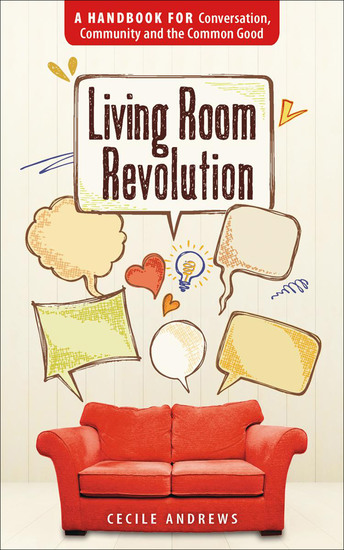
  • Living Room Revolution - A Handbook for Conversation Community and the Common Good - cover

    Living Room Revolution - A...

    Cecile Andrews

    • 0
    • 1
    • 0
    The author of The Circle of Simplicity “joyfully invites us to discover a robust and real personal expansion with each other as we remake our society” (Mark Lakeman, cofounder, The City Repair Project). 
     
    Every man for himself! For too long we have lived in a competitive, consumer-oriented culture, destroying the well-being of people and the planet. We believe that money brings happiness, yet all too often, the opposite is true. The pursuit of wealth at any cost corrupts our values and diminishes our lives. The resulting inequality breaks down social cohesion and generates envy, bitterness, and resentment. Greed breeds more greed. 
     
    Living Room Revolution refutes the notion that selfishness is at the root of human nature. Research shows that people—given the right circumstances—can be caring, nurturing and collaborative. Presented with the opportunity, they gravitate toward actions and policies embodying empathy, fairness, and trust instead of competition, fear, and greed. The regeneration of social ties and the sense of caring and purpose that comes from creating community drive this essential transformation. 
     
    At the heart of this movement is the ancient art of conversation. Living Room Revolution provides a practical toolkit of concrete strategies to facilitate personal and social change by bringing people together in community and conversation. 
     
    The heart of happiness is joining with others in good talk and laughter. Each person can make a difference, and it can all start in your own living room! 
     
    “Small groups. Study circles. Stop ’n chats. House parties. Movie nights. Online sharing. Bring people together, and you never know what kind of fuse you’ll ignite for change.” —Wanda Urbanska, author of The Heart of Simple Living
    Voir livre
  • The Discovery of Eldorado - cover

    The Discovery of Eldorado

    Stefan Zweig

    • 0
    • 0
    • 0
    1834: Johann August Sutter, a cloth merchant residing in Burgdorf in the canton of Bern in Switzerland, fraudulently went bankrupt and was subsequently wanted by the warrant. To escape the authorities, Suter emigrated to the United States and became the richest man in the world as an entrepreneur. A lot of gold is found on his land in California and from then on, the gold hunters dispute his property rights. Ultimately, Suter looses all his fortunes.
    Voir livre
  • The Dragons and the Snakes - How the Rest Learned to Fight the West - cover

    The Dragons and the Snakes - How...

    David Kilcullen

    • 0
    • 0
    • 0
    Just a few years ago, people spoke of the US as a hyperpower—a titan stalking the world stage with more relative power than any empire in history. Yet as early as 1993, CIA director James Woolsey pointed out that although Western powers had "slain a large dragon" by defeating the Soviet Union in the Cold War, they now faced a "variety of poisonous snakes." 


    In The Dragons and the Snakes, the eminent soldier-scholar David Kilcullen asks how, and what, opponents of the West have learned during the last quarter-century of conflict. Applying a combination of evolutionary theory and detailed field observation, he explains what happened to the "snakes"-non-state threats including terrorists and guerrillas-and the "dragons"-state-based competitors such as Russia and China. He explores how enemies learn under conditions of conflict, and examines how Western dominance over a very particular form of warfare since the Cold War has created a fitness landscape that forces adversaries to adapt in ways that present serious new challenges to America and its allies. Within the world's contemporary conflict zones, Kilcullen argues, state and non-state threats have increasingly come to resemble each other, with states adopting non-state techniques and non-state actors now able to access levels of precision and lethal weapon systems once only available to governments.
    Voir livre
  • Narcissistic Abuse Recovery - Healing After Emotional or Mental Trauma Calming the Storm Get Back Confidence Self-Esteem Mental Toughness with NLP CBT Empath Skills Crystals Chakra Meditation - cover

    Narcissistic Abuse Recovery -...

    Debbie Walker

    • 0
    • 0
    • 0
    Have you ever suffered from mental or emotional abuse? Have you lost self-esteem and confidence after an emotional, mental or psychological trauma? Have you ever been in a toxic relationship but didn't know how to get out? Then keep reading... 
    The truth is, many of us, at one time or another, find ourselves trapped in situations—whether at work, at home, or at our favorite hangout spots—where we struggle with our relationship with abusive people.In this audiobook, you'll learn: 
    • Narcissistic abuse: 7 signs you shouldn't ignore (including gaslighting and dark psychology tactics) 
    • 10 signs you're a victim (including narcissistic victim syndrome or NVS) 
    • 4 key stages of healing after codependency and emotional manipulation 
    • Cognitive behavioral therapy (CBT) for healing 
    • Crystal healing, chakras meditation and visualization techniques 
    • Steps to rebuild self-confidence, self-esteem, and self-love 
    • Ways to break up toxic people and end codependent relationships to create new, healthy ones 
    • How to win new friends with neuro-linguistic programming (NLP) 
    • Setting healthy boundaries with a narcissistic ex 
    • Ways to prevent future abuse from narcissists, manipulators, and gaslighters  
    Even if you think you can't get out of these painful situations, the simple but powerful techniques in this audiobook will guide you step by step to heal and improve your well-being.This audiobook can help you (or a loved one) transform your life. Get your copy now and start your journey to freedom!
    Voir livre
  • Sam Houston and Santa Anna: The Controversial History of the Texas Revolution’s Leaders - cover

    Sam Houston and Santa Anna: The...

    Charles River Editors

    • 0
    • 0
    • 0
    More than most men in history, Sam Houston was a contradictory individual. He was born in the United States while George Washington was in office, and in an era when the native people who were gradually being subjugated were considered savages, he called them friends and even lived among them. He was abandoned by his first wife and, after suffering the sting of divorce, married again in the manner of his native family, only to abandon his Indian bride to return to life among his own people. In the interim, he fought for their rights in the halls of government, defending them even as he obtained favor in the eyes of one of their worst enemies. He seemed to have the right mix of charm and grit to make a successful life with him and their large family. 
    	Though he was born and raised elsewhere, Houston is considered one of Texas’ truest sons, and during his life he fought for its independence from Mexico and then for its submission to the United States. He owned slaves himself but spent his entire political career fighting against the spread of “the American cancer” to the West. Then, when his beloved state seceded from the Union, he not only opposed secession but sacrificed his own position to protest it, only to turn around and support the Confederacy during the last years of his life.  
    The butcher of the Alamo and Goliad. The traitor who sold half of Mexico. The Napoleon of the West. Mr. Fifteen Nails. The Mother Country’s seducer. Almost 150 years after his death, a lot of name-calling is still being directed towards Antonio López de Santa Anna, president of Mexico 11 times in the 19th century, and today, the vast majority of his compatriots consider him the greatest traitor in history. It was not like that in his day; actually, there had never been a more popular man in Mexico, or anyone more eulogized and essential than General Santa Anna. In life he was the most famous - and infamous - Mexican general and politician. 
    Voir livre