Rejoignez-nous pour un voyage dans le monde des livres!
Ajouter ce livre à l'électronique
Grey
Ecrivez un nouveau commentaire Default profile 50px
Grey
Abonnez-vous pour lire le livre complet ou lisez les premières pages gratuitement!
All characters reduced
Cimarron - cover

Cimarron

Edna Ferber

Maison d'édition: The Essentials

  • 0
  • 0
  • 0

Synopsis

Cimarron is Edna Ferber's sweeping novel of the American frontier and the making of modern society. Set during the Oklahoma land rush and its aftermath, the novel follows the Cravat family as they navigate ambition, displacement, and moral compromise in a rapidly changing territory where law, ownership, and identity are still being defined.

At the center of the novel is the tension between idealism and reality. Public progress—new towns, newspapers, courts, and businesses—emerges alongside private failures, broken relationships, and unacknowledged injustice. Ferber presents the frontier not as myth, but as a social experiment shaped by power, exclusion, and endurance.

Broad in scope yet attentive to personal cost, Cimarron examines how nations are formed through both vision and violence. Clear-eyed and unsentimental, the novel remains a foundational work of American historical fiction, capturing the construction of order out of expansion and uncertainty.
Disponible depuis: 07/02/2026.
Longueur d'impression: 371 pages.
D'autres livres qui pourraient vous intéresser

  • More Tish - cover

    More Tish

    Mary Roberts Rinehart

    • 0
    • 0
    • 0
    Mary Roberts Rinehart wrote 6 books about the elderly Letitia (Tish) Carberry and the escapades she gets her elderly lady cronies into.  The series led to a 1942 movie with Marjorie Main.  This particular book, the third in the series, was written after Mary's stint as a war correspondent in Belgium during the first World War.  Summary by ToddHW.
    Voir livre
  • The Weeds - cover

    The Weeds

    Katy Simpson Smith

    • 0
    • 0
    • 0
    A Mississippi woman pushes through the ruin of the Roman Colosseum, searching for plants. She has escaped her life, apprenticed herself to catalog all the species growing in this place. Crawling along the stones, she wonders how she has landed here, a reluctant botanist amid a snarl of tourists in comfortable sandals. She hunts for a scientific agenda and a direction of her own. In 1854, a woman pushes through the jungle of the Roman Colosseum, searching for plants. As punishment for her misbehavior, she has been indentured to the English botanist Richard Deakin, for whom she will compile a flora. She is a thief, and she must find new ways to use her hands. If only the woman she loves weren’t on a boat, with a husband. But love isn’t always possible. She logs 420 species. Through a list of seemingly minor plants and their uses?medical, agricultural, culinary?these women calculate intangible threats: a changing climate, the cost of knowledge, and the ways repeated violence can upend women’s lives. They must forge their own small acts of defiance and slip through whatever cracks they find. How can anyone survive? Lush, intoxicating, and teeming with mischief, The Weeds is a tense, mesmerizing page-turner about science and survival, the roles women are given and have taken from them, and the lives they make for themselves.
    Voir livre
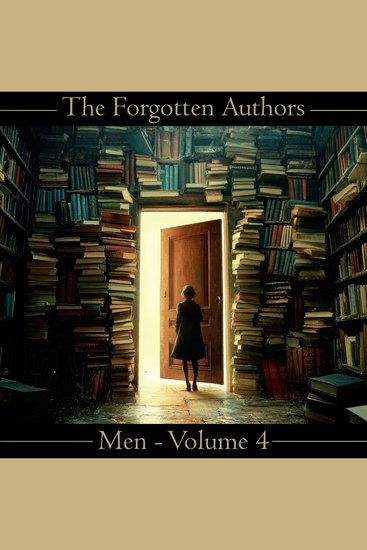
  • Forgotten Authors The - Men - Volume 4 - W G Kelly to William Mudford - cover

    Forgotten Authors The - Men -...

    Vladimir Korolenko, Charles...

    • 0
    • 0
    • 0
    Throughout the long centuries of human history is the want, and the need, to share information, to exchange ideas and for that knowledge and experience, for curiosity and learning, to be the basis of a civil society. 
    In literature the ambition is much narrower.  In order to be known, to be popular, you had to be published.  And for that people had to know you existed and your ideas worth reading.  Obviously for most of humanity’s time people couldn’t read and texts couldn’t be published in any great number. 
    In the 15th Century Gutenberg’s printing press began the revolution to address the second and by the 19th century had gathered pace with startling speed and mass distribution.  Education for the many was brought in to help people understand more of their world and, with new skills, how to have a better place within it.  Now, if the powers that owned the presses and means of distribution agreed an audience would now be able to avail themselves of your ideas, your printed words.  
    Sadly, in the thirst for the new, the recent and the past fell from sight, relegated to dark corners and dusty shelves.   
    But the printed word is rarely without someone, somewhere busying themselves through piles of papers and books rediscovering what a good story is, whatever its age. 
    In this volume we offer up a small selection of those talents whose time has now come again.
    Voir livre
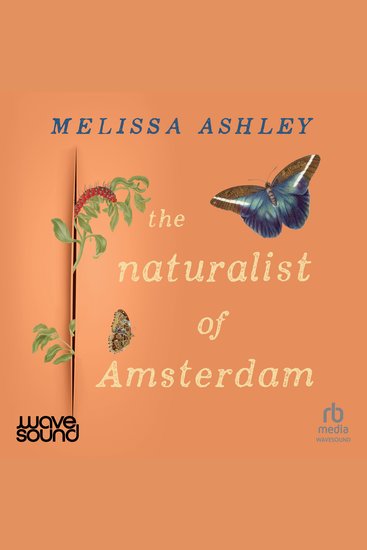
  • The Naturalist of Amsterdam - cover

    The Naturalist of Amsterdam

    Melissa Ashley

    • 0
    • 0
    • 0
    Amsterdam, at the turn of the 18th century. For as long as she can remember, Dorothea Graff has lived in service to her mother, Maria Sibyilla Merian, one of the greatest naturalists in Europe. But as she collects insects and colours illustrations for Maria’s world-famous publications, Dorothea longs for a life that is truly her own. 
    When Maria becomes entranced by the plant and insect life of Suriname, she is determined to record it for herself, taking Dorothea with her. All the family’s savings are ploughed into the dangerous expedition, but greatness is never achieved without sacrifice. The Metamorphosis of the Insects of Suriname will be Maria’s masterpiece, but ensuring its legacy – and her own survival – will become her daughter’s burden. When offered a chance of happiness, will Dorothea have the courage to take it, and risk everything her mother built? 
    From the jungles of South America to the bustling artists’ studios of Amsterdam, The Naturalist of Amsterdam gives voice to the long-ignored women who shaped our understanding of the natural world – both the artists and those who made their work possible.
    Voir livre
  • Moby Dick - cover

    Moby Dick

    Herman Melville

    • 0
    • 0
    • 0
    Dive into the epic masterpiece Moby-Dick by Herman Melville, a cornerstone of American literature that transcends the tale of a vengeful sea captain and his white whale adversary. From the iconic opening line, "Call me Ishmael," Melville unfolds a narrative rich in adventure, philosophical depth, and a profound exploration of the human condition. 
    Discover a world where every chapter navigates the tumultuous seas of ambition, nature, and the thin line between sanity and madness. Join Ishmael, Captain Ahab, and the crew of the Pequod in a relentless pursuit that is more than a hunt for the legendary Moby Dick—it's an odyssey into the heart of human obsession. 
    Melville's Moby-Dick is not just a novel; it's an experience—a blend of thrilling maritime adventure and introspective wisdom, rendered in language that captivates and challenges the reader. Regarded by William Faulkner and D.H. Lawrence as one of the greatest works ever penned, its enduring allure promises a reading journey that is as vast and deep as the ocean itself. 
    Step aboard the Pequod with Moby-Dick and let Melville's masterpiece take you on a voyage that explores the uncharted waters of the soul. 
    This audiobook was narrated and produced by RAM Studios, where humans and artificial intelligence collaborate to create an excellent listening experience. (The reading is done primarily by AI)
    Voir livre
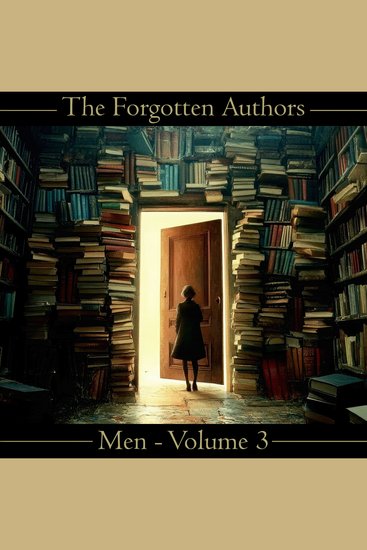
  • Forgotten Authors The - Men - Volume 3 - Théophile Gautier to Mór Jókai - cover

    Forgotten Authors The - Men -...

    Théophile Gauthier, Perceval...

    • 0
    • 0
    • 0
    Throughout the long centuries of human history is the want, and the need, to share information, to exchange ideas and for that knowledge and experience, for curiosity and learning, to be the basis of a civil society. 
    In literature the ambition is much narrower.  In order to be known, to be popular, you had to be published.  And for that people had to know you existed and your ideas worth reading.  Obviously for most of humanity’s time people couldn’t read and texts couldn’t be published in any great number. 
    In the 15th Century Gutenberg’s printing press began the revolution to address the second and by the 19th century had gathered pace with startling speed and mass distribution.  Education for the many was brought in to help people understand more of their world and, with new skills, how to have a better place within it.  Now, if the powers that owned the presses and means of distribution agreed an audience would now be able to avail themselves of your ideas, your printed words.  
    Sadly, in the thirst for the new, the recent and the past fell from sight, relegated to dark corners and dusty shelves.   
    But the printed word is rarely without someone, somewhere busying themselves through piles of papers and books rediscovering what a good story is, whatever its age. 
    In this volume we offer up a small selection of those talents whose time has now come again.
    Voir livre