Begleiten Sie uns auf eine literarische Weltreise!
Buch zum Bücherregal hinzufügen
Grey
Einen neuen Kommentar schreiben Default profile 50px
Grey
Jetzt das ganze Buch im Abo oder die ersten Seiten gratis lesen!
All characters reduced
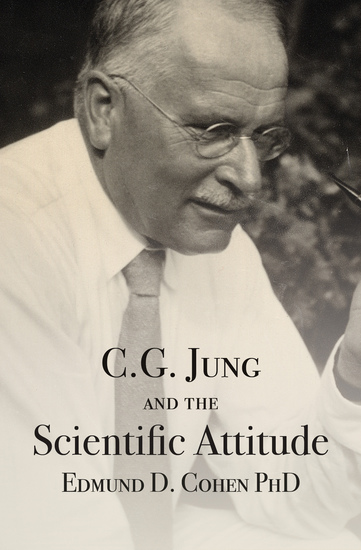
C G Jung and the Scientific Attitude - cover

Wir entschuldigen uns! Der Herausgeber (oder Autor) hat uns beauftragt, dieses Buch aus unserem Katalog zu entfernen. Aber kein Grund zur Sorge, Sie haben noch mehr als 500.000 andere Bücher zur Auswahl!

C G Jung and the Scientific Attitude

Edmund D. Cohen

Verlag: Philosophical Library/Open Road

  • 0
  • 0
  • 0

Beschreibung

This probing study of the pioneering psychologist dispels many of the popular misconceptions about his work. Though Carl Jung is well known as one of the great pioneers of psychology and psychoanalysis, there are many persistent misconceptions about his work and legacy. Jungian psychology is rigorously scientific, yet its critics dismiss it as obscure and mystical. In C. G. Jung and the Scientific Attitude, Edmund D. Cohen sheds light on significant aspects of Jung’s work that academic psychology has previously all but overlooked.  Though Jung’s productivity spanned more than fifty years, his reputation rests largely on statements he made early in his career—statements upon which he later improved. In this fascinating and enlightening analysis, Cohen explores these statements and the misunderstandings they have caused. He also looks at the many paradoxes of Jungian psychology, showing that what first appears to be merely contradictory turn out to reveal a deeper meaning.
Verfügbar seit: 06.12.2022.
Drucklänge: 155 Seiten.

Weitere Bücher, die Sie mögen werden

  • Stay Here - Uncovering God's Plan to Restore Your Mental Health - cover

    Stay Here - Uncovering God's...

    Jacob Coyne

    • 0
    • 0
    • 0
    Please stay. The world is so much better with you in it. 
     
    Every forty seconds, someone takes his or her life. Anxiety, depression, and suicide are at all-time highs--and they're stealing our sons, daughters, friends, and spouses. 
     
    With tender passion and bold hope, Jacob Coyne, founder of Stay Here, infuses life into the dark corners of mental health. Giving hurting souls a reason to live, he shows not only how Jesus brings life to the full, but also how anyone--regardless of their past or pain--can find healing, including how to 
     
    · attack our anxiety and calm our storms; 
    · defeat depression and live with a sound mind; 
    · overcome intrusive suicidal thoughts and enjoy life; and 
    · transform pain, trauma, suicidal thoughts, and addictions into purpose. 
     
    It's okay to not be okay--but you don't have to stay that way. It's time to shine the hope of Christ into the darkness and witness His love transform broken souls into living, breathing signs to live.
    Zum Buch
  • A Good Dose of Dhamma - For Meditators When They Are Ill - cover

    A Good Dose of Dhamma - For...

    Tan Acharn Kor Khao-suan-luang

    • 0
    • 0
    • 0
    This is an audiobook of Bodhi Leaves No.136 by Tan Acharn Kor Khao-suan-luang (Upāsikā Kee Ñāṇayon), 'A Good Dose of Dhamma: For Meditators WhenThey Are Ill' found in the Pariyatti Edition of Collected Bodhi Leaves Vol. V. Translated from the Thai by Thanissaro Bhikkhu. 
     
    Excerpt from Chapter 1 
    "Normally, illness is something we all have, but the type of illness where you can still do your work isn’t recognised as illness. It is called the normal human state all over the world. Yet really, when the body is in its normal state, it is still ill in and of itself. People in general are simply unaware of the fact that there is the deterioration of physical and mental phenomena, continually, from moment to moment. 
    The way people get carried away with their thoughts and preoccupations while they’re still strong enough to do this and do that: that’s really complacency. They’re no match at all for people lying in bed ill.People lying in bed ill are lucky because they have the opportunity to do nothing but contemplate stress and pain. Their minds don’t take up anything else, don’t go anywhere else. They can contemplate pain at all times—and let go of pain at all times as well."
    Zum Buch
  • Sophist - A Deep Inquiry into Falsehood Language and Reality – Plato’s Study of the Nature of Being - cover

    Sophist - A Deep Inquiry into...

    Plato, Tim Zengerink

    • 0
    • 0
    • 0
    What if deception had a logic of its own? 
    In Sophist, Plato dares to tackle the concept of falsehood—not as error, but as something that seems to exist within language and thought. Through a dense but gripping dialogue between the Eleatic Stranger and Theaetetus, the discussion exposes the tricks of sophistry, the instability of language, and the paradox of how “what is not” can still be spoken of and understood. 
    This modernized audiobook delivers one of Plato’s most intellectually daring texts with clarity and precision. Perfect for thinkers, scholars, and seekers of truth. 
    What you’ll discover inside: 
    •	A bold philosophical exploration of non-being, falsehood, and the metaphysics of language 
    •	A deep critique of sophistry, appearance, and rhetorical manipulation 
    •	Plato’s method of division—used to isolate philosophical concepts with surgical accuracy 
    •	A readable, listener-friendly adaptation of one of Plato’s most abstract and influential works 
    If you want to unravel the logic behind illusion and sharpen your understanding of truth, Sophist is essential listening.
    Zum Buch
  • Mastering Our Emotions - Biblical Principles for Emotional Health - cover

    Mastering Our Emotions -...

    Kevin Chapman

    • 0
    • 0
    • 0
    Emotions are a gift from God—yes, even the "bad" ones.
    Anxiety can keep us up at night. Anger can cause us to fly off the handle. Sadness can drain us of energy. Shame can isolate us. Emotions like these are powerful. They can tax our relationships and distress our souls. No amount of sheer willpower or good intentions are sufficient to overcome them.
    But God has a good purpose for these core emotions he created. By integrating biblical truth, evidence-based insights from psychology, and spiritual practices, we can move from being mastered by these emotions to living in emotional maturity. Psychologist Kevin Chapman draws on his therapeutic expertise to invite us into a deeper understanding of our own thinking patterns, emotional triggers, and avoidance behaviors—all viewed through the lens of scriptural truth and God's power to change lives.
    In Mastering Our Emotions you'll find
    
    - exercises
    - worksheets
    - Scripture readings, and
    - reflection prompts
    to help you work through challenges and develop new skills.
    Rather than simply reacting to negative emotions in unhealthy ways, with God's help you can experience emotional transformation.
    Zum Buch
  • The Inevitable Revolution - cover

    The Inevitable Revolution

    Leo Tolstoy

    • 0
    • 0
    • 0
    The Inevitable Revolution is an essay about abolishing the law of violence and replacing it with the law of love. It is a text on civil disobedience, pacifism, and anarchism, and it is Tolstoy's last non-fiction work detailing his final opinions on political, economic, and religious issues.
    
    In it, he criticizes prisons, parliaments, wars, conscription, capitalism, theft, revolutionary violence, and taxes, and praises Christianity's message of love as the solution to these problems; although he also recognizes the law of love in other religions. Tolstoy asked people not to directly commit any violence, not to take part in violence, and not to approve of violence.
    Zum Buch
  • Rwandan Genocide - Hutus Tutsis and United Nations Soldiers - cover

    Rwandan Genocide - Hutus Tutsis...

    Kelly Mass

    • 0
    • 0
    • 0
    I guess during the time I was struggling with middle school peers and worried about what other girls thought of my clothes, something nasty happened approximately 6,500 miles away, which is only an 8-hour flight from where I used to live. Who would have thought that even in the 90s, such atrocities would be committed? The movie Hotel Rwanda has depicted some sad displays of human cruelty, although the brutality of it has mostly been censored for the sake of wider audiences. When you read the descriptions of the Rwandan genocide, and try to imagine the scope of the death toll and methods being used to commit the war crimes, you can’t help but feel deeply saddened and disgusted by what human people are capable of. 
    Throughout the Rwandan Civil War, between April seventh and July fifteenth, 1994, the Rwandan genocide happened. Equipped militias murdered members of the Tutsi minority ethnic group, and some moderate Hutu and Twa, throughout about 100 days. According to the most regularly accepted academic estimates, between 500,000 and 800,000 Tutsis passed away. The death toll (consisting of Hutu and Twa casualties) is approximated to be around 1,100,000. 
    How did all of this happen? How did it get so far? And happened during and after this short time period, in which so many lives were claimed? Let’s find out in this comprehensive book about the 1994 Rwandan genocide.
    Zum Buch