Begleiten Sie uns auf eine literarische Weltreise!
Buch zum Bücherregal hinzufügen
Grey
Einen neuen Kommentar schreiben Default profile 50px
Grey
Jetzt das ganze Buch im Abo oder die ersten Seiten gratis lesen!
All characters reduced
On Conciliation with America - cover

On Conciliation with America

Edmund Burke

Verlag: DigiCat

  • 0
  • 0
  • 0

Beschreibung

In "On Conciliation with America," Edmund Burke articulates a compelling argument for understanding and reconciling with the American colonies during the escalating tensions leading to the Revolutionary War. Written in 1775, Burke employs eloquent rhetoric and philosophical reasoning, drawing on classical traditions and Enlightenment principles to advocate for a conciliatory approach rather than conflict. The text exemplifies Burke's literary style, characterized by its eloquence and emotional appeal, as he navigates the complexities of governance and colonial autonomy, ultimately calling for an acknowledgment of shared values and mutual respect between Britain and America. Edmund Burke, a prominent Irish statesman and philosopher, is often regarded as a forerunner of modern conservatism. His extensive political career and interest in social justice and governance deeply influenced his writing. Witnessing the early seeds of rebellion in America, Burke felt a profound sense of duty to address the British Parliament on the need for understanding, reflecting his belief in the importance of moderation and the underlying principles of liberty, justice, and order. "On Conciliation with America" remains a pivotal read for anyone interested in the foundations of political philosophy and the historical context of American independence. Burke's insights not only resonate with contemporary discussions on governance and civil society but also serve as a reminder of the power of dialogue in the face of division.
Verfügbar seit: 22.11.2022.
Drucklänge: 24 Seiten.
Weitere Bücher, die Sie mögen werden

  • From Myths to Monuments - The Story of Ancient Greece - cover

    From Myths to Monuments - The...

    P Agrawal

    • 0
    • 0
    • 0
    This audiobook is narrated by an AI Voice.   
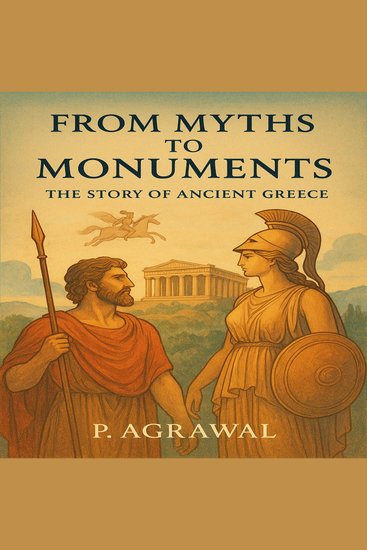
    From Myths to Monuments: The Story of Ancient Greece offers a captivating journey through the heart of one of the most influential civilizations in history. This book explores the profound legacy of Ancient Greece, tracing its origins from the mythic tales of gods and heroes to the lasting monuments of philosophy, art, and democracy that continue to shape our modern world. 
    In this richly illustrated and thoughtfully researched narrative, readers will discover the ancient myths that formed the bedrock of Greek culture, the rise of the city-state, and the flourishing of democracy in Athens. The book delves into the lives of everyday Greeks, the architectural wonders they created, and the philosophical inquiries that revolutionized Western thought. From the spectacular temples of Delphi and Olympia to the intellectual legacy of Socrates, Plato, and Aristotle, From Myths to Monuments illuminates how the Greeks' exploration of human nature, morality, and governance laid the groundwork for much of Western civilization. 
    This work also takes readers through the tumultuous wars and the sweeping conquests of Alexander the Great, culminating in the Hellenistic Age—a time of cross-cultural exchange that forever altered the course of history. Through vivid storytelling and in-depth analysis, this book reveals how Ancient Greece’s artistic, political, and intellectual achievements continue to influence contemporary thought, culture, and society. 
    From Myths to Monuments is an essential read for anyone interested in the enduring legacy of Ancient Greece and its indelible mark on the modern world.
    Zum Buch
  • Triggers of Peace - cover

    Triggers of Peace

    Solomon Aurelius

    • 0
    • 0
    • 0
    Triggers of Peace By Solomon Aurelius 
    In a world overflowing with stress, anxiety, and constant distractions, finding true peace can feel impossible. 
    But what if the peace you seek has always been within reach? 
    In Triggers of Peace, author Solomon Aurelius offers a profound yet practical guide to cultivating inner tranquility amidst life's chaos. Drawing on a blend of ancient wisdom and modern practices, this book takes you on a transformative journey through twelve pathways that lead to calm, healing, and emotional freedom. 
    Explore the power of: 
    Mindfulness meditation to quiet your mind and connect with the present. 
    Prayer as a source of spiritual grounding and personal clarity. 
    Nature and its capacity to restore balance and perspective. 
    Physical movement, including yoga and sports, as a release for stress and tension. 
    Forgiveness, as the ultimate path to inner freedom and emotional healing. 
    In these pages, you'll discover that peace is not a distant goal but a state of being that you can access at any moment. Whether through reflection, movement, or compassion, Triggers of Peace empowers you to break free from the burdens of stress and embrace a life filled with balance, clarity, and joy.
    Zum Buch
  • Fall of the Third Reich The: The Decisions and Battles that Spelled Doom for Nazi Germany - cover

    Fall of the Third Reich The: The...

    Phaistos Publishers

    • 0
    • 0
    • 0
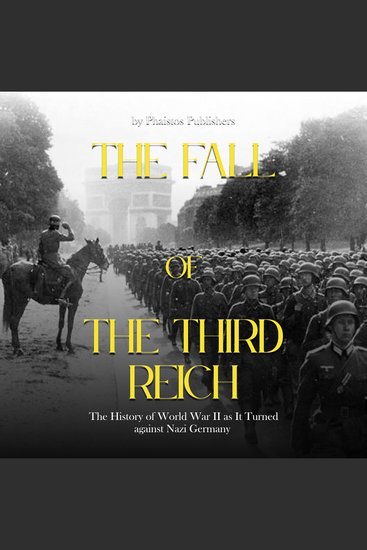
    Few events have had a greater impact on human history than the ascension to power of the Nazi Party in Germany in January 1933. This was no coup: the party gained some power via democratic elections, although once it was established, it quickly took absolute control over all aspects of the state. Other parties were outlawed, and further elections were deemed “unnecessary.” 
    However, Germany’s image as a nation united under one man and committed to expansion through the application of science and technology was in reality an illusion. Nazi Germany was wracked by internal dissent, a chaotic system of rule and a leader who was willing to ignore the economic and resource needs of his nation. By the end of 1941, Germany appeared to be unassailable. Most of its European enemies had either been defeated or seemed to be on the point of defeat. The almost unbroken string of spectacular successes enjoyed by the German Army and air force suggested to many that these were simply unbeatable. Within less than four years, Germany had been utterly defeated, Hitler was dead and Germany itself was occupied by foreign armies. 
    The factors that led to this sudden and complete collapse had been present from the very beginning of the Nazi regime, but they had been hidden by early success in the face of uncertain and vacillating adversaries. In retrospect, we can clearly see that the fall of the Third Reich was probably inevitable, though it would shake Europe to its foundations, bring about an entirely new world order, and involve the deaths of tens of millions of people.
    Zum Buch
  • Benin Empire - Art Warfare and the Kingdom of Bronze - cover

    Benin Empire - Art Warfare and...

    Rolf Hedger

    • 0
    • 0
    • 0
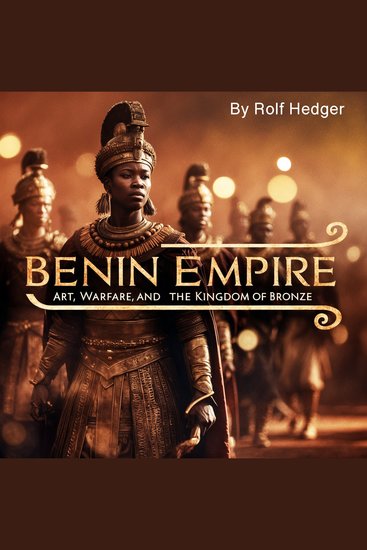
    The Benin Empire, one of the most powerful and influential kingdoms in West Africa, flourished for over 1,000 years. Its capital, Benin City, located in present-day southern Nigeria, was an epicenter of art, culture, and political power. The empire’s historical significance extends beyond its impressive architectural feats, remarkable artistry, and military prowess, as it was also a hub of trade and diplomacy. 
    The origins of the Benin Empire can be traced back to the early 11th century, with a history deeply intertwined with the Kingdom of Ife, from which the Benin people are believed to have descended. The development of the kingdom was largely shaped by its early rulers, the Obas, whose leadership and vision helped lay the foundation for the Benin Empire. The Benin monarchy, a vital institution in the kingdom, solidified the rule of the Obas and their divine connection to the people. 
    At its peak, the Benin Empire extended its influence over a vast region in West Africa, establishing a complex political and social structure. The monarchy not only commanded political and military power but also served as a central force in religious and cultural life. The empire was renowned for its rich heritage in art, including the world-famous Benin Bronzes, which showcased the advanced craftsmanship and symbolic significance of Benin artisans. These bronzes, intricate sculptures, and plaques, which depicted scenes of royalty, warriors, and historical events, remain symbols of the empire’s grandeur.
    Zum Buch
  • Maya Civilization - Pyramids Astronomy and the Rise and Fall of Mesoamerican Power - cover

    Maya Civilization - Pyramids...

    Rolf Hedger

    • 0
    • 0
    • 0
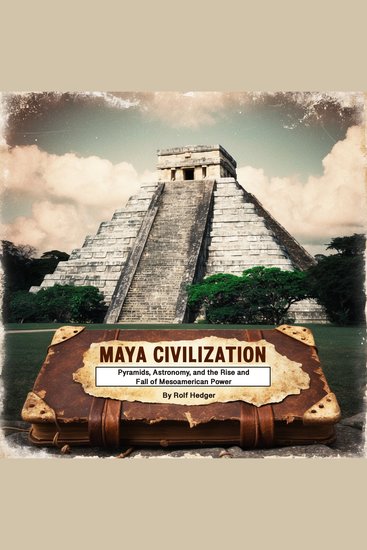
    The Maya civilization emerged from the fertile lands of Mesoamerica, where early agricultural societies gradually developed into one of the most advanced cultures of the ancient world. Long before the rise of monumental cities and towering pyramids, the ancestors of the Maya lived in small villages, relying on farming, hunting, and fishing for sustenance. Corn, or maize, became the cornerstone of their diet and played a central role in their mythology, economy, and daily life. Over time, these early settlements expanded, evolving into complex societies with trade networks, religious practices, and political hierarchies. 
    The roots of Maya civilization can be traced back to the Preclassic period, around 2000 BCE. During this time, small communities scattered across present-day southern Mexico, Guatemala, Belize, Honduras, and El Salvador began cultivating staple crops such as maize, beans, squash, and chili peppers. As agricultural techniques improved, populations grew, leading to the formation of larger settlements. Villages transitioned into regional centers, where early forms of leadership and governance emerged. These developments set the stage for the sophisticated city-states that would later define the Maya world. 
    The Maya were not isolated in their cultural development. They shared Mesoamerica with other influential civilizations, most notably the Olmecs, who thrived along the Gulf Coast of Mexico. The Olmecs, often considered the “mother culture” of Mesoamerica, left a lasting impact on the Maya through their artistic styles, religious beliefs, and ceremonial architecture. The colossal stone heads of the Olmecs, their early writing systems, and their concept of a sacred ballgame were all absorbed and adapted by the Maya. This exchange of ideas helped shape the foundations of Maya civilization, leading to the rise of the first great Maya cities.
    Zum Buch
  • Human Aura The - Astral Colors and Thought Forms - cover

    Human Aura The - Astral Colors...

    William Walker Atkinson

    • 0
    • 0
    • 0
    "The Human Aura - Astral Colors and Thought Forms" by William Walker Atkinson is a classic work that delves into the mystical concept of the human aura, exploring its nature, colors, and the thought forms it generates. Atkinson, a prolific writer on esoteric and metaphysical topics, offers insights into how the aura reflects an individual's thoughts, emotions, and spiritual state. Through detailed descriptions and explanations, he guides readers on understanding and interpreting the subtle energies surrounding the human body.
    Zum Buch