Rejoignez-nous pour un voyage dans le monde des livres!
Ajouter ce livre à l'électronique
Grey
Ecrivez un nouveau commentaire Default profile 50px
Grey
Abonnez-vous pour lire le livre complet ou lisez les premières pages gratuitement!
All characters reduced
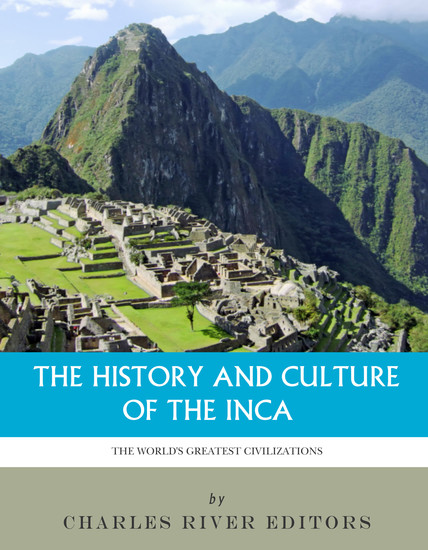
The World’s Greatest Civilizations - The History and Culture of the Inca - cover

The World’s Greatest Civilizations - The History and Culture of the Inca

Editors Charles River

Maison d'édition: Charles River Editors

  • 0
  • 0
  • 0

Synopsis

During the Age of Exploration, Native American tribes fell victim to European conquerors seeking legendary cities made of gold and other riches, attempts that were often being made in vain. And yet, of all the empires that were conquered across the continent, the one that continues to be most intimately associated with legends of gold and hidden riches is the Inca Empire. The Inca Empire, which flourished in modern day Peru and along the west coast of South America, was the largest Native American empire in pre-Columbian America until Pizarro and the Spanish conquistadors conquered them in the 16th century. What ultimately sealed their doom was the rumor that huge amounts of gold were available in regions south of the Andes Mountains.
 
Though the Spanish physically conquered them in quick fashion, the culture and legacy of the Inca Empire has continued to endure throughout the centuries in both Europe and South America, due in no small part to the fact they were one of the most advanced and sophisticated cultures on the continent. Like the Aztecs, the Spanish burned much of the Inca’s extant writings, but it is estimated that as many as 35 million once fell under their banner, and the empire’s administrative skills were so sharp that they kept accurate census records. Their religion, organization, and laws were also effectively centralized and tied to the rulers of the empire, and their military mobilization would have made the ancient Spartans proud. After the Spanish conquest, several rebellions in the area attempted to reestablish the proud Inca Empire over the next two centuries, all while famous Europeans like Voltaire glorified the Inca Empire in optimistic artistic portrayals.
 
The mystique and aura of the Inca continue to fascinate the world today, and nowhere is this more prominent than at Macchu Picchu, which was “lost” for over 300 years and remains the subject of intense debate among historians. The magnificent ruins and the inability of historians to crack the code used for the Inca’s few surviving written records all continue to add to the mystery and interest in the Inca civilization.
 
The World’s Greatest Civilizations: The History and Culture of the Inca comprehensively covers the culture and history of pre-Columbian America’s largest empire. Along with pictures of Inca art, clothing and ruins, this book describes the Inca’s lives, religion, cities, and empire, in an attempt to better understand the once dominant but still mysterious civilization.
Disponible depuis: 05/05/2025.
Longueur d'impression: 35 pages.

D'autres livres qui pourraient vous intéresser

  • Richard Sorge and the Cambridge Five: The History of the Soviet Union’s Most Important Foreign Spies during World War II - cover

    Richard Sorge and the Cambridge...

    Charles River Editors

    • 0
    • 0
    • 0
    Soviet Russia followed a philosophy demanding international, global revolution – which, in practice, often resembled conquest by any means available, direct or indirect. While the Soviets never hesitated to use naked force when it seemed advisable, or when compelled to it by outside attack, they made intensive use of covert operations – spying, assassination, bribery, infiltration of governments and educational systems, the deployment of agents provocateur and “agitprop” – in an effort to weaken other nations from within or possibly cause takeover by a friendly revolutionary regime.  
    Soviet agents operated in all European countries and others, but their main efforts naturally focused on the strongest potential rivals – Germany, the United States, and Great Britain. Intelligent, persistent, and ruthless, the Soviets succeeded in recruiting a considerable number of agents, including men from the British ruling class. 
    Their activities enabled the Soviets to capture and execute hundreds, if not thousands, of the opponents of their regime along with numbers of British agents. The men responsible for this unprecedented leaking of life-or-death information would enter history as the Cambridge Five – though in fact, they may have been only the core of a much larger group.  
    Occasionally, a spy will be so successful that they are able to place themselves in a position where they have access to information at the highest levels, secrets that really can change the course of world events. Sometimes, these spies may even be as handsome, charming, charismatic, and bold as their fictional counterparts.	One such spy was a man named Richard Sorge. Experiencing the horrors of World War I at first-hand turned Sorge into an ardent communist, after which he worked as a spy for the USSR in Germany, China, and Japan before and during World War II. He obtained vital military and political secrets and maintained his cover for over nine years.
    Voir livre
  • Aksumite Empire - Ethiopia's Ancient Power and the First Christian Kingdom - cover

    Aksumite Empire - Ethiopia's...

    Rolf Hedger

    • 0
    • 0
    • 0
    The Aksumite Empire was one of the most significant and influential civilizations of ancient Africa. Emerging around the first century AD, it became a powerful and sophisticated state that played a crucial role in connecting diverse cultures and trade networks across continents. Its strategic location, bridging the Red Sea and the interior of the African continent, allowed Aksum to flourish as both a political and economic hub, facilitating exchanges between the Mediterranean world, the Arabian Peninsula, and beyond. 
    At the heart of Aksum’s success was its remarkable ability to integrate various cultural and economic influences. The empire was not only a center for commerce but also a melting pot of traditions, languages, and beliefs. This rich cultural mosaic is reflected in its unique art, architecture, and inscriptions, which have provided modern scholars with invaluable insights into the life and achievements of this ancient society. The monuments and stelae scattered across the landscape serve as enduring testaments to the empire's power and its sophisticated understanding of both artistry and engineering. 
    The rise of Aksum was deeply intertwined with the development of its political structures and the establishment of a centralized administration. Early rulers of the empire forged alliances through both diplomacy and military might, thereby securing their territories against external threats and internal discord. As the state grew in power, it adopted innovative approaches to governance that balanced traditional practices with the demands of a rapidly expanding empire. These innovations laid the groundwork for what would later be recognized as the first Christian kingdom in Africa.
    Voir livre
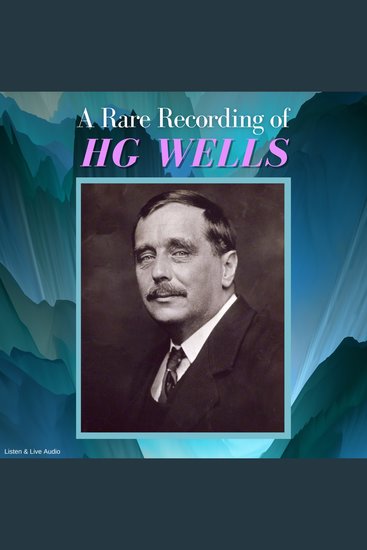
  • A Rare Recording of HG Wells - cover

    A Rare Recording of HG Wells

    H G Wells

    • 0
    • 0
    • 0
    Herbert George Wells (September 21, 1866 - August 13, 1946), better known as H. G. Wells, was an English writer most famous today for his science fiction novels The Time Machine, The War of the Worlds, The Invisible Man, The First Men in the Moon and The Island of Dr Moreau. He was a prolific writer of both fiction and non-fiction, and produced works in many genres, including contemporary novels, history, and social commentary.
    Voir livre
  • The Betrayal - How Mitch McConnell and the Senate Republicans Abandoned America - cover

    The Betrayal - How Mitch...

    Ari Shapiro

    • 0
    • 0
    • 0
    In two previous highly regarded books on the US Senate, Ira Shapiro chronicled the institution from its apogee in the 1970s through its decline in the decades since. Now, Shapiro turns his gaze to how the Senate responded to the challenges posed by the Trump administration and its prospects under President Biden. The Founding Fathers gave the US Senate many functions, but it had one fundamental responsibility—its raison d'etre: to provide the check against a dangerous president who threatened our democracy. Two hundred and thirty years later, when Donald Trump, a potential authoritarian, finally reached the White House, the Senate should have served as both America's first and last lines of defense. Instead, we had the nightmare scenario: today's Senate, reduced through a long period of decline to a hyper-partisan, gridlocked shadow of its former self, was unable to meet its fundamental responsibility. Shapiro documents the pivotal challenges facing the Senate during the Trump administration, arguing that the body's failure to provide leadership represents the most catastrophic failure of government in American history. The last section covers the Senate's performance during President Biden's first year in office and looks forward to the 2022 Senate elections and beyond.
    Voir livre
  • The Abolitionist’s Journal - Memories of an American Antislavery Family - cover

    The Abolitionist’s Journal -...

    James D. Richardson

    • 0
    • 0
    • 0
    Over the course of more than twenty years, James D. Richardson and his wife, Lori, retraced the steps of his ancestor, George Richardson (1824–1911), across nine states, uncovering letters, diaries, and more memoirs hidden away. Their journey brought them to the brink of the racial divide in America, revealing how his great-great-grandfather Richardson played a role in the Underground Railroad, served as a chaplain to a Black Union regiment in the Civil War, and founded a college in Texas for the formerly enslaved. 


    In narrating this compelling life, The Abolitionist's Journal explores the weight of the past as well as the pull of one's ancestral history. The author raises questions about why this fervent commitment to the emancipation of African Americans was nearly forgotten by his family, exploring the racial attitudes in the author's upbringing and the ingrained racism that still plagues our nation today. 


    As America confronts a generational reckoning on race, these important perspectives add a layer to our larger national story.
    Voir livre
  • After Everest - 'The last innocent adventure' Ian Morris - The Lama who Conquered Everest - cover

    After Everest - 'The last...

    Tenzing Norgay

    • 0
    • 0
    • 0
    On 29 May 1953 Tenzing Norgay and Edmund Hillary conquered Everest.Before it had claimed the lives of dozens of climbers, including George Leigh Mallory in 1924. Norgay, the descendant of generations of yak herders, was destined to become a Lama, but his love for the mountains was that much stronger and he ran away from his Buddhist monastery. He had but one dream despite the deaths of many mountaineers: to conquer Everest. For thirty years expeditions had been struggling to scale its fiendishly difficult icy slopes until he and Hillary finally succeeded. His memoir is a unique and eloquent tribute to Zen and the art of mountain climbing.
    Voir livre