Rejoignez-nous pour un voyage dans le monde des livres!
Ajouter ce livre à l'électronique
Grey
Ecrivez un nouveau commentaire Default profile 50px
Grey
Abonnez-vous pour lire le livre complet ou lisez les premières pages gratuitement!
All characters reduced
The United States in World War II - The History and Legacy of American Involvement in the War - cover

The United States in World War II - The History and Legacy of American Involvement in the War

Editors Charles River

Maison d'édition: Charles River Editors

  • 0
  • 0
  • 0

Synopsis

All Americans are familiar with the “day that will live in infamy.” At 9:30 a.m. on Sunday, December 7, 1941, Pearl Harbor, the advanced base of the United States Navy’s Pacific Fleet, was ablaze. It had been smashed by aircraft launched by the carriers of the Imperial Japanese Navy. All eight battleships had been sunk or badly damaged, 350 aircraft had been knocked out, and over 2,000 Americans lay dead. Indelible images of the USS Arizona exploding and the USS Oklahoma capsizing and floating upside down have been ingrained in the American conscience ever since. In less than an hour and a half the Japanese had almost wiped out America’s entire naval presence in the Pacific.
 
The United States began 1942 determined to avenge Pearl Harbor, but the Allies, now including the Soviet Union by necessity, did not agree on the war strategy.  In 1941, both the Germans and British moved armies into North Africa, where Italy had already tried and failed to reach the Suez Canal.  The British sought American help in North Africa, where British General Bernard Montgomery was fighting the legendary “Desert Fox,” General Erwin Rommel.  At the same time, Stalin was desperate for Allied action on the European continent that could free up the pressure on the besieged Soviets. 
 
President Roosevelt had a consequential decision to make, and he eventually decided to land American forces on North Africa to assist the British against Rommel, much to Stalin’s chagrin.  While the Americans and British could merely harass the Germans with air power and naval forces in the Atlantic, Stalin’s Red Army had to take Hitler’s best shots in Russia throughout 1942.  But the Red Army’s tenuous hold continued to cripple the Nazi war machine while buying the other Allies precious time.
 
As it turned out, Roosevelt’s decision to first fight in North Africa would make an Allied invasion of the European continent possible in 1943.  As Rommel pushed east, he now had to worry about American forces to his west.  The Allies eventually gained the upper hand across North Africa after the battle at El Alamein near the end of 1942 that all but forced the Germans to quit the theater without achieving their objectives. 
 
With the Axis forced out of North Africa, the Allies had freed up its North African forces for an invasion of Western Europe.  Moreover, with North Africa as a potential staging around for that invasion, the Germans had to prepare for the possibility of the Allies invading not only from Britain but also from North Africa.  The Allies would make that decision in early 1943.
 
Despite fighting in North Africa and the Atlantic, the United States still had the resources and manpower to fight the Japanese in the Pacific.  Though the Japanese had crippled the American fleet at Pearl Harbor, its distance from Japan made an invasion of Pearl Harbor impossible, and Japan had not severely damaged important infrastructure.  Thus, the United States was able to quickly rebuild a fleet, still stationed at Pearl Harbor right in the heart of the Pacific.  This forward location allowed the United States to immediately push deeply into the Pacific theater.
 
In fact, the turning point in the Pacific theater took place in 1942 near Midway Island.  The Japanese had moved a sizable fleet intending to occupy Midway Island and draw the American navy near.  Instead, American aircraft flying from three aircraft carriers that had been away from Pearl Harbor in December 1941 got a bearing on the Japanese fleet and sunk four Japanese aircraft carriers, permanently crippling Japan’s navy.  The Battle of Midway was the first naval battle in history where the enemy fleets never saw or came into contact with each other.
 
Thus, 1942 ended with the Allies turning the tide in the Pacific and North Africa, giving them momentum entering 1943.  
Disponible depuis: 01/05/2025.
Longueur d'impression: 849 pages.

D'autres livres qui pourraient vous intéresser

  • How Black History Can Save Your Life - From the Talk to George Floyd Everything You Need to Know to Deescalate a Racist Situation - cover

    How Black History Can Save Your...

    MA Ernest Crim III

    • 0
    • 0
    • 0
    Ernest Crim III reveals how understanding African American black history is not just about the past—it's essential for navigating the present. From uncovering overlooked black history facts to sharing powerful black history stories, Crim demonstrates why black history for adults is more relevant than ever. The book explores why black history is American history, and how real history of America includes the triumphs, struggles, and contributions of black Americans. 
     
    Inside, you'll find: practical strategies for teaching black history in classrooms, at home, and in your community; black history educational insights that make complex topics accessible for all listeners; curated black history information and stories that go beyond textbooks, including unsung heroes and pivotal moments; clear explanations of black history facts that challenge common myths and broaden your perspective; discussion of racism in America, with recommended books on racism in America for deeper learning; and personal reflections and real-life applications, showing how learning and sharing black history can foster resilience, empathy, and positive action. 
     
    Whether you're an educator, student, parent, or lifelong learner, How Black History Can Save Your Life is your essential resource for understanding and teaching black history for adults.
    Voir livre
  • Relaxing Sounds Of Brown Noise - Sleep Study Focus Tinnitus ADHD - The Brown Noise Collection - cover

    Relaxing Sounds Of Brown Noise -...

    Brown Noise Studios Switzerland

    • 0
    • 0
    • 0
    By popular request, here is a premium collection (XXL-bundle) of our most soothing brown noise sounds, combined with binaural beats. The relaxing brown noise soundscapes are great for helping you sleep, study or focus. Sometimes the key to relaxation is simple! 
     
    Block out distractions and create a peaceful ambience with this 12+ hours brown noise audiobook. 
     
    WHAT YOU GET: 
     
    1. Dreamy Brown Noise For Deep Sleep (75 min.) 
    2. Bloodstream - Pulsating Brown Noise For Study & Focus (70 min.) 
    3. Soft Ventilation For Deep Sleep (60 min.) 
    4. Smoothed Brown Noise for Stress Relief, Relaxation & Sleeping (60 min.) 
    5. Deep Dive - Brown Noise - Underwater Ambiance (45 min.) 
    6. Cosmic Brown Noise For Tinnitus (60 min.) 
    7. Awesome Fan Sound For Deep Sleep (60 min.) 
    8. Warm Brown Noise For ADHD (60 min.) 
    9. Brown Noise - Ambient Sound Blocker (70 min.) 
    10. Ultra Soft Brown Noise With Piano Whispers (80 min.) 
    11. Best Brown Noise For Studying (30 min.) 
    12. Propeller Plane In Flight - "Natural" Brown Noise (35 min.) 
    13. UnderWater Meditation - Deep Sea Brown Noise (60 min.) 
    14. Black Noise - Low Frequency Brown Noise (60 min.) 
    15. Black Noise & Long Warm Bass Tones For Relaxation (60 min.) 
     
    Listening to "Brown Noise" instantly ensures considerable inner peace and can also have a very helpful effect on tinnitus. Can't wait for your audiobook to arrive? Download it now!
    Voir livre
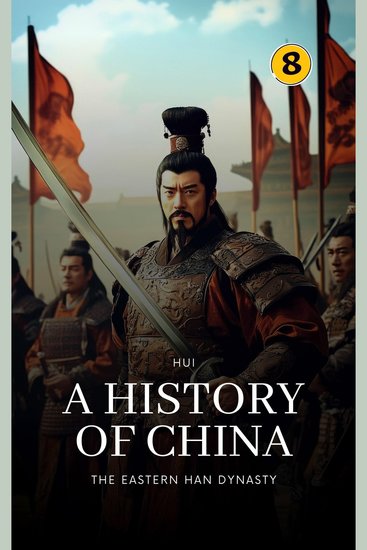
  • Eastern Han Dynasty The: A History of China - cover

    Eastern Han Dynasty The: A...

    Hui Wang

    • 0
    • 0
    • 0
    The Eastern Han Dynasty: A History of China, PART ONE takes you on an unforgettable journey through one of China's most transformative eras. Once fractured by war, the Han Empire finds hope in Liu Xiu—a noble who rises through chaos to become Emperor Guangwu of Han. But claiming the throne is only the beginning. To rebuild an empire torn apart, he must outmaneuver rivals, crush rebellions, and restore order. 
    From the fall of the Chimei Army to the eruption of the Three Rebellions, Liu Xiu's reign is marked by endless trials. Allies become threats, and loyalty is tested—especially for Wei Xiao, a trusted officer with dangerous ambitions. Meanwhile, the empire expands into Longyou and sets its sights on resource-rich Shu, where political intrigue runs deep. 
    Military legends like General Ma Yuan rise, shaping China's future with brilliant campaigns. As peace returns, loyal ministers help rebuild the government. But power shifts within the court, and when the crown prince unexpectedly steps down, the influential Yin Family begins to dominate the throne's inner circle. 
    A new era begins with Emperor Ming, who faces his own battles—reforms, alliances, and unrest. Yet Han is no longer limited by borders. Ban Chao’s bold expeditions to the Western Regions spark a wave of imperial ambition, paving the way for the rise of a new conqueror who will take Han’s influence farther than ever before. 
    This is not just a chronicle of events—it's a sweeping epic of ambition, war, strategy, and legacy. If you’re drawn to tales of empire-building, battlefield brilliance, and court intrigue, The Eastern Han Dynasty: Part One is a journey you won’t want to miss.
    Voir livre
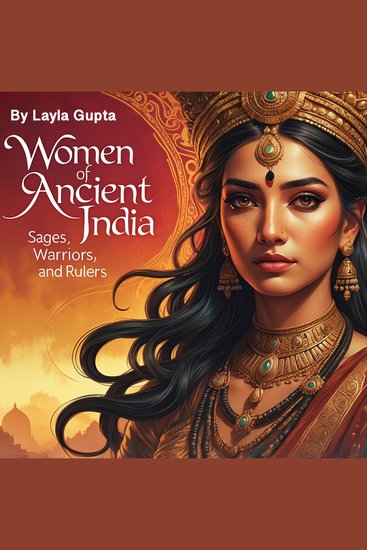
  • Women of Ancient India - Sages Warriors and Rulers - cover

    Women of Ancient India - Sages...

    Layla Gupta

    • 0
    • 0
    • 0
    Women in Ancient Indian mythology hold significant and multifaceted roles, often embodying both nurturing and destructive forces within the cosmic and earthly realms. These divine figures are central to the very fabric of the ancient Indian worldview, illustrating the depth and complexity of feminine energy. In these mythologies, women are not just passive characters but active, powerful beings who shape the universe, challenge societal norms, and assert their authority in the divine order. 
    One of the most notable representations of female power in Indian mythology is through goddesses. The concept of Shakti, or divine feminine energy, permeates many Hindu myths and is embodied by goddesses such as Durga, Lakshmi, and Saraswati. Durga, for instance, is a warrior goddess who symbolizes the victory of good over evil. She is often depicted riding a lion or tiger, wielding weapons in multiple hands, signifying her multifarious power and strength. Durga's myth tells of her battle with the demon Mahishasura, where she not only defeats him but also restores cosmic balance. This story symbolizes the resilience and power of feminine energy, which is integral to the maintenance of order in the universe. 
    Lakshmi, the goddess of wealth, prosperity, and beauty, represents another facet of feminine influence. While her power is associated with material and spiritual wealth, her role is not passive. Lakshmi’s mythology highlights her active involvement in ensuring prosperity and well-being, both on a personal and societal level. She is often depicted as a source of light, standing on a lotus, symbolizing purity and the abundance that follows divine favor.
    Voir livre
  • United Kingdom - Historical Facts and Incidents in England and Ireland - cover

    United Kingdom - Historical...

    Kelly Mass

    • 0
    • 0
    • 0
    This is a book with 6 different topics, all related to the history of Great Britain. The topics are the following: 
    Horatio Nelson 
    The British Raj 
    The Cathars 
    The Great Fire of London 
    Partition of Ireland 
    The Irish Potato Famine
    Voir livre
  • The Kybalion - The lips of wisdom are closed except to the ears of understanding - cover

    The Kybalion - The lips of...

    Three Initiates

    • 0
    • 0
    • 0
    Step into the world of Hermetic philosophy with 'The Kybalion', an audiobook that explores the timeless wisdom of the ancient Hermetic masters. Written in the early 20th century, 'The Kybalion' remains one of the most influential works on the Hermetic philosophy, offering profound insights into the nature of reality, the workings of the universe, and the human experience. 
    Narrated by the talented Thomas Blackwood, this audiobook is part of 'The Sound of Wisdom' series by The Sounding Page, a collection of audiobooks that explores the world's spiritual and philosophical traditions. In 'The Kybalion', Blackwood brings the text to life with his skillful and insightful narration, guiding listeners through the complex teachings of the Hermetic philosophy with clarity and precision. 
    Through 'The Kybalion', listeners will discover the seven principles of Hermetic philosophy, which include the principle of mentalism, the principle of correspondence, the principle of vibration, and the principle of polarity, among others. These principles offer a powerful framework for understanding the workings of the universe, and for cultivating a deeper sense of meaning and purpose in our lives. 
    Whether you are new to Hermetic philosophy or a seasoned practitioner, 'The Kybalion' offers a profound and transformative listening experience, inviting you to explore the deeper truths of the universe and uncover the wisdom that lies within us all. 
    So join us on this journey of self-discovery and personal growth, and discover the timeless wisdom of Hermetic philosophy with 'The Kybalion', part of 'The Sound of Wisdom' series by The Sounding Page.
    Voir livre