Begleiten Sie uns auf eine literarische Weltreise!
Buch zum Bücherregal hinzufügen
Grey
Einen neuen Kommentar schreiben Default profile 50px
Grey
Jetzt das ganze Buch im Abo oder die ersten Seiten gratis lesen!
All characters reduced
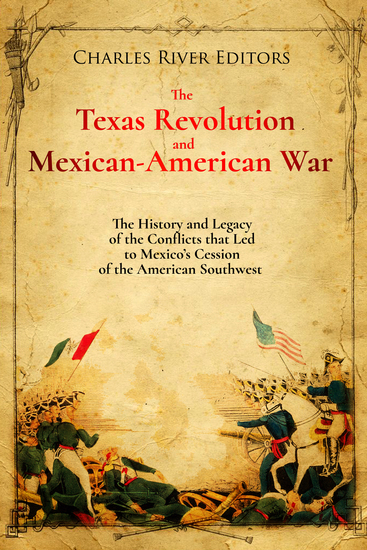
The Texas Revolution and Mexican-American War - The History and Legacy of the Conflicts that Led to Mexico’s Cession of the American Southwest - cover

The Texas Revolution and Mexican-American War - The History and Legacy of the Conflicts that Led to Mexico’s Cession of the American Southwest

Editors Charles River

Verlag: Charles River Editors

  • 0
  • 0
  • 0

Beschreibung

When various revolutions mostly forced the Europeans out of the continent, Texas ceased to belong to Spain and France to become a part of the Mexican Empire; later it was an independent country, and currently one of the 50 states of the United States. During a short period, rebellious Texas again separated from the U.S. to join the Confederate States of America with other secessionist states.
 
Of course, the most important war of all for Texas came in the early 19th century, and the common story heard in America is about rebellion against intolerance, oppression and Mexican cruelty. The Battle of the Alamo in particular, surrounded by legend and testimonies of heroism, is a textbook example of the fight for freedom, comparable to the Jewish defenders during the Roman siege at Masada. The words "martyrs" and "Mexican tyranny" are almost always present in the recounts, and “Remember the Alamo!” is both a slogan of self-glorification and martyrdom that remains one of the most famous phrases in America.
 
Naturally, this typical account is portrayed through rose-colored glasses. As in every story, everything depends on which side readers are positioned and whose histories they´re reading. The Texas Revolution certainly pursued freedom, but not for the tired, poor and huddled masses yearning to breathe free, the homeless or the wretched refuse of alien shores; it was rather the freedom to suck in land from a weak country and to preserve slavery in the cotton fields, added to enthusiasm for cheap land and inexhaustible natural resources.
 
The policy of manifest destiny increased tensions with Mexico in the 1840s. Mexico's northern half formed the western border of the territory bought in the Louisiana Purchase. Naturally, notions of the United States expanding to the Pacific Ocean alarmed Mexico, which held what is today the west coast of the United States.
 
However, Mexico first came to regard American expansion as a serious problem with the immigration of Americans into its northeastern territory. These Americans declared independence from Mexico and created a nation in the Mexican province of Texas. After winning independence in 1836, Texas became an independent republic.
 
Texas formally asked to be annexed by the United States in 1845. This annexation angered the Mexican government, which still considered Texas to be part of its territory. Mexico had previously warned that the annexation of Texas would cause Mexico to declare war on the United States.
 
When the annexation bill was passed by Congress, it included an additional provocation to Mexico: it claimed that the southern border of Texas was the Rio Grande. The actual territory controlled by the Republic of Texas did not extend nearly to the Rio Grande, and this border would represent a further loss of territory to the United States.
 
When a Mexican patrol attacked American cavalry in the disputed area north of the Rio Grande, President Polk went to Congress for a declaration of war. The declaration passed on May 13, 1846. The war against Mexico was unpopular with the opposition Whig party, especially in the North. Opponents of the war denounced it as a war of aggression, and denied that there had been a valid reason for war.
 
Small American military units were quickly able to occupy key points in California, including San Francisco and Los Angeles. Although California was sparsely populated, some Mexican inhabitants formed an effective resistance which was eventually put down in 1847 by American reinforcements. Subsequently, a larger American army was sent to invade central Mexico, and managed to capture the Mexican capital, Mexico City, on September 13, 1847. Although a large Mexican army was still fighting American forces in northeast Mexico and Texas, news of the capital falling caused it to retreat to try to retake the capital. After the defeat of the last Mexican army, major hostilities ended.
Verfügbar seit: 04.05.2025.
Drucklänge: 115 Seiten.

Weitere Bücher, die Sie mögen werden

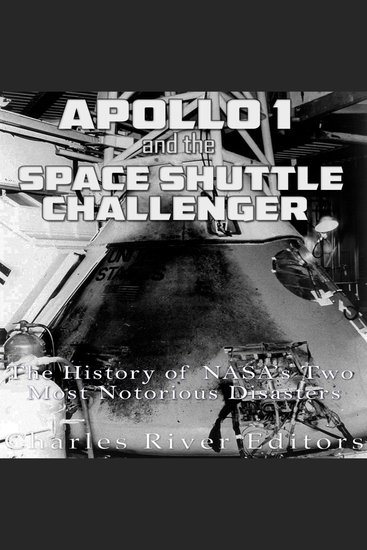
  • Apollo 1 and the Space Shuttle Challenger: The History of NASA’s Two Most Notorious Disasters - cover

    Apollo 1 and the Space Shuttle...

    Editors Charles River

    • 0
    • 0
    • 0
    As Apollo 11’s name suggests, there were actually a number of Apollo missions that came before, many of which included testing the rockets and different orbital and lunar modules in orbit. In fact, it wasn’t until Apollo 8 that a manned vehicle was sent towards the Moon and back, and before that mission, the most famous Apollo mission was Apollo 1, albeit for all the wrong reasons.  
    There were no delusions regarding the dangers of manned space travel, but they were brought home on January 27, 1967, when all three astronauts were killed by a fire that ignited in the cabin during a launch rehearsal. To this day, there is still debate over what ignited the fire, but the disaster made clear that the modules being used by NASA had a series of fatal flaws. After the Apollo 1 tragedy, NASA changed its plans by first running a series of unmanned missions to test the Saturn rockets and the different modules throughout 1967 and early 1968. and it would not be until Apollo 7 launched about 20 months after the disaster that NASA dared to conduct another manned mission.  
    	On the morning of January 28, 1986, the Space Shuttle Challenger launched for the 10th time, beginning mission STS-51-L. Space shuttles had already successfully completed 24 missions, and no American spacecraft had ever failed to reach orbit during an official mission. On this mission, the Challenger was carrying a satellite for the Tracking and Data Relay Satellites system, which was to be deployed in orbit. The crew included Ronald McNair, who had already been the second African-American in space, and Ellison Onizuka, who had already been the first Asian-American astronaut in space. But the highlight of the mission was to be the “NASA Teacher in Space Project,” in which a civilian teacher would give teaching lessons to his or her class while onboard the space shuttle.
    Zum Buch
  • Learn Portuguese while you sleep - 1000 essential nouns - cover

    Learn Portuguese while you sleep...

    1000-words.com

    • 0
    • 0
    • 0
    This audiobook is narrated by an AI Voice.   
    Learn Portuguese anytime, anywhere — while you sleep, drive, walk, study, or work out. 1000 Words is your calm and immersive way to master Portuguese through audio.  
    Each episode helps you expand your vocabulary, improve pronunciation, and understand real Portuguese — without stress, screens, or interruptions.  
    In this audiobook, you’ll hear 1000 essential Portuguese nouns, clearly spoken with English translations.  
    Perfect for beginners, travelers, and language lovers who want to absorb Portuguese naturally through repeated listening.  
    Listen in bed, at the gym, in the car, or during your daily routine — every minute helps you grow your Portuguese effortlessly.  
    🌙 Relax. Focus. Learn Portuguese anywhere.  
    For more content, games and exclusive video lessons, visit 👉 ⁠1000-words.com⁠. 
    Also available as an iPhone and Android app.
    Zum Buch
  • The Psychology of Misinformation - cover

    The Psychology of Misinformation

    Sander van der Linden, Jon...

    • 0
    • 0
    • 0
    King Charles III is Dracula's distant cousin. Governments are hiding information about UFOs. COVID-19 came from outer space. These sound like absurd statements, but some are true, and others are misinformation. But what exactly is misinformation? Who believes and spreads things that aren't true, and why? What solutions do we have available, and how well do they work? This book answers all these questions and more. Tackling the science of misinformation from its evolutionary origins to its role in the internet era, this book translates rigorous research on misleading information into a comprehensive and jargon-free explanation. Whether you are a student, researcher, policymaker, or changemaker, you will discover an accessible analysis on human belief in today's world and expert advice on how to prevent deception.
    Zum Buch
  • The Power of Days - A Story of Resilience Dignity and the Fight for Women's Equity - cover

    The Power of Days - A Story of...

    Celeste Mergens

    • 0
    • 0
    • 0
    In 2008, Celeste Mergens was working with an overcrowded orphanage on the outskirts of Nairobi, Kenya, when she learned that menstruating girls sat on cardboard in their rooms for several days each month. 


    This set into motion a simple idea—combining a washable, long-lasting pad with taboo-breaking education—that became a catalyst for an unlikely global movement for equity. 


    Written in short, evocative chapters, The Power of Days tells the story of Mergens's quest to rally a global response to elevate menstrual health, increase universal access to menstrual supplies, shatter stigma through education, and advocate for global policy change. Raised in poverty by a mentally ill parent, Mergens learned early on that building the life she wanted would take equal parts determination and humility, traits that led her to create the kinds of inclusive conversations and solutions she is known for around the globe. 


    The challenges Mergens faced and the lessons she learned, personally and professionally, and the triumphs and resourcefulness of leaders all over the globe are illuminating to all who wish to make a difference and create a more equitable world. 


    This enhanced audio recording features an audio-exclusive Q&A between Days for Girls cofounders Celeste and Don Mergens.
    Zum Buch
  • The Search - The life of a mountain rescue search dog team - cover

    The Search - The life of a...

    Paul Besley

    • 0
    • 0
    • 0
    Coming from a working-class background, Paul Besley knew the worst and best of life in a Yorkshire steel town. He had always been drawn to the solitude of the hills, but that life nearly ended when a fall while hillwalking left him critically injured and alone in the mountains of the Lake District. Paul was found and brought to safety by a mountain rescue team. This was the trigger for him to transform his life, first by joining his local team, then by finding Scout, his very own Border collie puppy, and training him to become a mountain rescue search dog.
    In The Search, Paul writes with humour and honesty as we follow him and Scout through their complex training, with searches and rescue incidents sometimes tragic and often funny. Paul's demons and headstrong characters threaten to derail them, until his past finally catches up with him and his life inescapably unravels. It's up to Scout to keep an eye on him now as Paul tries to build the best life he can.
    Zum Buch
  • Anglo-Saxons and the Jutes The: The History and Legacy of the European Groups that Settled Britain in the Middle Ages - cover

    Anglo-Saxons and the Jutes The:...

    Editors Charles River

    • 0
    • 0
    • 0
    As the Western Roman Empire collapsed in the late 5th century, Hadrian’s Wall was abandoned and Roman control of the area broke down.  
    Little is known of this period of British history, but soon the Anglo-Saxons – who had been harassing the Saxon Shore as pirates – showed up and began to settle the land, creating a patchwork of little kingdoms and starting a new era of British history. Several early medieval historians, writing well after the events, said the Anglo-Saxons were invited to Britain to defend the region from the northern tribes and ended up taking over. However they came to control most of England, the Anglo-Saxons became the dominant power in the region for nearly 500 years, and the strength of their cultural influence could be felt even after William the Conqueror won the Battle of Hastings and became the first Norman ruler on the island. The efforts to consolidate his rule in England were complicated from the start, both due to external enemies and those jockeying for his position while he was still alive, but the Normans would manage just barely to cling to power over England, and William remains the last foreign conqueror of the island.  
    The Jutes were so closely related to the Angles and Saxons that the nature of their existence has been, and continues to be, the subject of scholarly debates. Although historians and archaeologists have identified a Germanic tribe known as the Jutes that migrated to England at the same time as the Angles and Saxons, the attempt to distinguish them from the other tribes has been questioned. Either way, once the Jutes landed in England, they immediately distinguished themselves from the Angles and Saxons by carving out kingdoms in the regions of Kent and the Isle of Wight. From these two locations, the Jutes not only carried on many of their pre-migration cultural traditions but also adopted some of the new, unifying European traditions, particularly Christianity.
    Zum Buch