Rejoignez-nous pour un voyage dans le monde des livres!
Ajouter ce livre à l'électronique
Grey
Ecrivez un nouveau commentaire Default profile 50px
Grey
Abonnez-vous pour lire le livre complet ou lisez les premières pages gratuitement!
All characters reduced
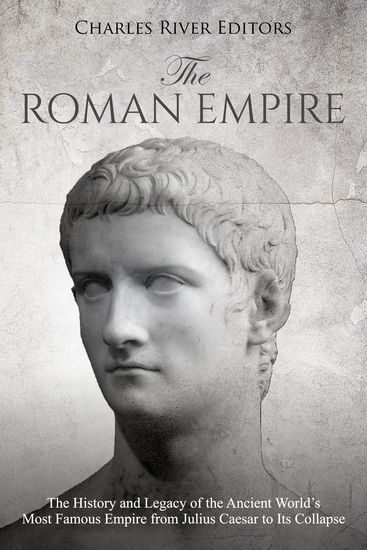
The Roman Empire - The History and Legacy of the Ancient World’s Most Famous Empire from Julius Caesar to Its Collapse - cover

The Roman Empire - The History and Legacy of the Ancient World’s Most Famous Empire from Julius Caesar to Its Collapse

Editors Charles River

Maison d'édition: Charles River Editors

  • 0
  • 0
  • 0

Synopsis

The importance of Gaius Julius Caesar Augustus (or as he was known from birth, Gaius Octavius “Octavian” Thurinus) to the course of Western history is hard to overstate. His life, his rise to power, his political, and his social and military achievements all laid the foundations for the creation of an empire which would endure for almost five centuries, and whose traditions, laws, architecture and art continue to influence much of Europe and the world today. Octavian was the first true Roman Emperor, and the first man since the Etruscan Tarquins five centuries earlier to establish a successful hereditary ruling dynasty in what had been a proud Republic for over half a millennium. He was a canny strategist, an excellent orator, a fine writer, a generous patron of the arts and enthusiastic promoter of public works, but above all he was a master politician. Octavian’s great-uncle (and adoptive father) Julius Caesar was a great general, and his rival Mark Antony was a great soldier, but as a politician Octavian outmatched them all.
 
Certainly, like all men, Octavian had his defects. Like many of the most successful politicians, he could connive, plot and prevaricate with the best of them, and he made full use of the emotional pull that his late beloved great-uncle had over the legions during the course of his rise to power. His justice was also famously heavy-handed, and he was not known for his mercy towards those he defeated in battle or marginalized political opponents. Yet despite all this, he still stands in bronze on Rome’s Via dei Fori Imperiali to this day, along with the likes of Caesar, Hadrian, Trajan and Marcus Aurelius, and he is forever immortalized in all Western calendars as the patron of the month of August, which was dedicated to him when he was deified, following his death, as Divus Augustus.
 
Like his adoptive father before him, Octavian is one of those figures whom it is difficult to know exactly what to make of, because he appears, even at a distance, to be larger than life. Yet the amount of personal correspondence and contemporary writings penned by Octavian himself, as well as his friends, associates, and rivals, helps form a clear picture of the man behind the bronze statue. Indeed, he was the ruler who found Rome a city of bricks and left it a city of marble.
 
One of the most overlooked emperors was also one of the first, and he lived in chaotic times. Tiberius was born in 42 BCE, just as the Roman Republic was dissolving and a new Roman imperial power structure emerged under Octavian, who became Rome’s first emperor as Caesar Augustus. Tiberius’s life soon became caught up with Augustus’s as the emperor worked to found and establish a dynasty, but it is unclear if Tiberius ever really wanted to be part of Augustus’s plans or inherit imperial power - Tiberius was known as a man who schemed and planned, but he was also a scholar and showed a marked desire throughout his life to retreat and escape the demands of power. Partially due to this continual tension, Tiberius’s life is enigmatic in many ways.
 
Tiberius championed the Republic and seemed to desire its return, yet his acceptance of imperial power and his reign solidified Rome’s transition to an empire. He was a skilled general who showed concern for the well-being of his troops, and he displayed a remarkable patience as a military tactician. After he rose to become emperor in 14 CE, he ruled for over 22 years, which would be the longest reign of a Roman emperor over the next 100 years, but he remained suspicious of everyone and eventually chose the wrong person to trust, being eventually misled and betrayed by a man whom he thought was his closest friend. When he finally died, aged and lonely, he had become so hated that crowds celebrated his death.
Disponible depuis: 01/05/2025.
Longueur d'impression: 348 pages.


D'autres livres qui pourraient vous intéresser

  • Apartheid - Britain’s Bastard Child - cover

    Apartheid - Britain’s Bastard Child

    Helene Opperman Lewis

    • 0
    • 0
    • 0
    "What cannot be contained, mourned, and worked through in one generation is transmitted, for the most part unconsciously, as affect, mission, and task to the next generation...the fate of repression and dissociation is enactment." 
    Howard Stein, Ph.D. 
    Psychohistorian, Psychoanalyst. Professor Emeritus, University of Oklahoma Health Science Centre.
    Voir livre
  • American Monsters: The History of America’s Most Persistent Urban Tales about Strange Birds Serpents and Wolfmen - cover

    American Monsters: The History...

    Editors Charles River

    • 0
    • 0
    • 0
    People have always been fascinated with the hidden, the mysterious, and the unexplained. Every society has its tall tales and ghost stories, its odd legends, and heroes. Also, every society has its stories of strange beasts, dangerous or benign, that live in the twilight world between the everyday and the legendary. Through most of history, people have been closely tied to nature, hunting in forests and having an intimate knowledge of the animals in their regions. So-called “primitive” peoples were walking encyclopedias of the natural world, and yet most believed there were more creatures lurking in those woods than the ones they usually encountered. Even as the world becomes more connected, the belief in strange creatures continues as strong as ever. 
    	As a result, in one sense it shouldn’t be surprising that people across the United States have reported seeing weird cryptids, including giant birds, sea serpents, wolfmen, and a creature so bizarre it defies any rational classification. The only thing these monsters have in common is that all have been seen regularly and reported by seemingly sober, rational witnesses in the United States, even as conventional science suggests these monsters cannot exist and that all the sightings are mistakes, misidentifications, or hoaxes.  
    	In some cases, this may be true, but in others, it’s harder to accept. For example, one story about a 10-year-old boy being carried off by a giant bird was witnessed by several other people. Likewise, the Gloucester sea serpent seen by hundreds of people and carefully and scientifically investigated, and during one week in 1909, hundreds if not thousands of people reported seeing the Jersey Devil. Sightings of wolf-like creatures walking on two legs have been reported for more than 100 years. 
    Voir livre
  • A Measure Short of War - A Brief History of Great Power Subversion - cover

    A Measure Short of War - A Brief...

    William C. Wohlforth, Jill Kastner

    • 0
    • 0
    • 0
    In 2016, the United States was stunned by evidence of Russian meddling in the US presidential elections. But it shouldn't have been. Subversion—domestic interference to undermine or manipulate a rival—is as old as statecraft itself. The basic idea would have been familiar to Sun Tzu, Thucydides, Elizabeth I, or Bismarck. 


    It came as a surprise in 2016 because the sole superpower had fallen asleep at the wheel. But what's really new? Have we entered a new age of vulnerability? To answer these questions, and to protect ourselves against future subversion, we need a clear-eyed understanding of what it is and how it works. 


    In A Measure Short of War, Jill Kastner and William C. Wohlforth provide just that, taking the listener on a compelling ride through the history of subversion, exploring two thousand years of mischief and manipulation to illustrate subversion's allure, its operational possibilities, and the means for fighting back against it. With vivid examples from the ancient world, the great-power rivalries of the nineteenth century, epic Cold War struggles, and more, A Measure Short of War shows how prior technological revolutions opened up new avenues for subversion, and how some democracies have been fatally weakened by foreign subverters while others have artfully defended themselves—and their democratic principles.
    Voir livre
  • How to Deal with a Narcissist: Strategies for Managing Toxic Relationships - Practical Tips for Protecting Your Mental Health - cover

    How to Deal with a Narcissist:...

    Emily Scott

    • 0
    • 0
    • 0
    For anyone facing the difficulties of a narcissistic relationship, "How to Deal with a Narcissist: Strategies for Managing Toxic Relationships—Practical Tips for Protecting Your Mental Health" is an indispensable resource. Dealing with the emotional manipulation, control, and poisonous dynamics of a narcissist in a personal or familial relationship can leave you feeling exhausted, bewildered, and helpless. This book offers helpful advice on how to spot narcissistic behaviors, establish and uphold boundaries, resolve conflicts amicably, and safeguard your mental and emotional health. 
    This thorough book will teach you how to recognize the telltale indicators of narcissistic behavior, comprehend the effects it has on your mind and self-esteem, and acquire the skills you need to remove yourself or end the relationship safely. You'll also get advice on how to mend from narcissistic abuse, reestablish your sense of value, and get help from a specialist to ensure long-term recovery. 
    With compassion and knowledge, "How to Deal with a Narcissist" gives you the tools you need to end the destructive cycle, take back control of your life, and cultivate happier, more satisfying relationships. This book provides the tools and support you need to succeed, whether you are leaving a narcissistic relationship or are in the middle of one and need to cope.
    Voir livre
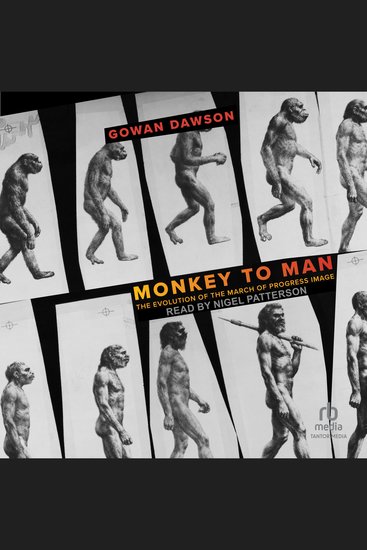
  • Monkey to Man - The Evolution of the March of Progress Image - cover

    Monkey to Man - The Evolution of...

    Gowan Dawson

    • 0
    • 0
    • 0
    The first book to examine the iconic depiction of evolution, the "march of progress," and its role in shaping our understanding of how humans evolved 


    We are all familiar with the "march of progress," the representation of evolution that depicts a series of apelike creatures becoming progressively taller and more erect before finally reaching the upright human form. Its emphasis on linear progress has had a decisive impact on public understanding of evolution, yet the image contradicts modern scientific conceptions of evolution as complex and branching. 


    This book is the first to examine the origins and history of this ubiquitous and hugely consequential illustration. In a story spanning more than a century, from Victorian Britain to America in the Space Age, Gowan Dawson traces the interconnected histories of the two most important versions of the image: the frontispiece to Thomas Henry Huxley's Evidence as to Man's Place in Nature (1863) and "The Road to Homo Sapiens," a fold-out illustration in the bestselling book Early Man (1965). Dawson explores how the recurring appearances of this image pointed to shifting scientific and public perspectives on human evolution, as well as indicated novel artistic approaches, and advancements in technology.
    Voir livre
  • On the Improvement of the Understanding - cover

    On the Improvement of the...

    Benedict Spinosa

    • 0
    • 0
    • 0
    Benedict Spinoza's 'On the Improvement of the Understanding' is a philosophical treatise guiding readers toward a clear and rational comprehension of the world. Emphasizing reason and ethics, Spinoza challenges traditional beliefs, advocating for intellectual freedom. This foundational work explores the nature of knowledge, paving the way for a profound understanding of reality and the human mind, making it an enduring contribution to philosophy and critical thought. Read in English, unabridged.
    Voir livre