Rejoignez-nous pour un voyage dans le monde des livres!
Ajouter ce livre à l'électronique
Grey
Ecrivez un nouveau commentaire Default profile 50px
Grey
Abonnez-vous pour lire le livre complet ou lisez les premières pages gratuitement!
All characters reduced
The Overland Campaign - The Battles of the Wilderness Spotsylvania Court House North Anna and Cold Harbor - cover

The Overland Campaign - The Battles of the Wilderness Spotsylvania Court House North Anna and Cold Harbor

Editors Charles River

Maison d'édition: Charles River Editors

  • 0
  • 0
  • 0

Synopsis

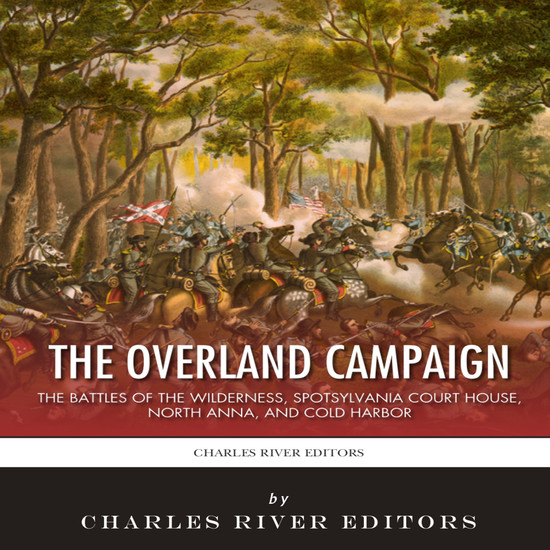
With Robert E. Lee’s Army of Northern Virginia continuing to frustrate the Union Army of the Potomac’s attempts to take Richmond in 1862 and 1863, President Lincoln shook things up by turning command of all the armies of the United States to Ulysses S. Grant in March 1864. , Lee had won stunning victories at battles like Chancellorsville and Second Bull Run by going on the offensive and taking the strategic initiative, but Grant and Lincoln had no intention of letting him do so anymore. Attaching himself to the Army of the Potomac, Grant ordered Army of the Potomac commander George Meade, "Lee's army is your objective point. Wherever Lee goes, there you will go also."


From May 5-7, the two most famous generals of the Civil War squared off for the first time. The 100,000 strong Army of the Potomac was double the size of Lee’s hardened but battered Army of Northern Virginia. It was a similar position to the one George McClellan had in 1862 and Joe Hooker had in 1863, and Grant’s first attack, at the Battle of the Wilderness, followed a similar pattern. Nevertheless, Lee proved more than capable on the defensive.
 
The Battle of the Wilderness was fought so close to where the Battle of Chancellorsville took place a year earlier that soldiers encountered skeletons that had been buried in shallow graves in 1863. Moreover, the  woods were so thick that neither side could actually see who they were shooting at, and whole brigades at times got lost in the forest. Both armies sustained heavy casualties while Grant kept attempting to move the fighting to a setting more to his advantage, but the heavy forest made coordinated movements almost impossible.
 
On May 5 and May 6, both armies attempted desperate attacks and counterattacks to strike a knockout blow, but they were ultimately unable to dislodge each other. Given the terrain and the nature of the fighting, it was one of the most horrendous battles of the war, with some wounded men literally burning to death in fires ignited by the battle that sparked the nearby underbrush and spread rapidly. The defending Confederates technically won a tactical victory by holding their ground, but they did so at a staggering cost, inflicting 17,000 casualties on the Army of the Potomac and suffering 11,000 of their own.
 
On May 7, Grant disengaged his army from the battle. His objective had been frustrated by Lee’s skillful defense, the same position as Hooker at Chancellorsville, McClellan on the Virginian Peninsula, and Burnside after Fredericksburg. His men got the familiar dreadful feeling that they would retreat back toward Washington, as they had too many times before. This time, however, Grant made the fateful decision to keep moving south, inspiring his men by telling them that he was prepared to “fight it out on this line if it takes all Summer.” The Battle of the Wilderness would only be the beginning of the Overland Campaign, not the end of it.
 
The Overland Campaign comprehensively covers the campaign and the events that led up to the battle, the fighting itself, and the aftermath of the battle. Accounts of the battle by important participants are also included, along with maps of the battle and pictures of important people, places, and events. You will learn about the Wilderness like you never have before.
Disponible depuis: 02/05/2025.
Longueur d'impression: 130 pages.

D'autres livres qui pourraient vous intéresser

  • Your Mind and How to Use It - A Manual of Practical Psychology - cover

    Your Mind and How to Use It - A...

    William Walker Atkinson

    • 0
    • 0
    • 0
    Your Mind and How to Use It by William Walker Atkinson is an influential text in the history of self-help literature. It explores the connection between consciousness and the physical world, utilizing a cognitive approach that emphasizes mental discipline as a means of cultivating success and personal growth. The book offers readers practical advice on developing mental habits and skills, such as goal setting, concentration, visualization, and suggestion, to help them realize their ambitions in life. Read in English, unabridged.
    Voir livre
  • Healing Your Inner Child - Transformative CBT Methods to Overcome Abandonment Trauma Heal From Childhood Emotional Neglect and Find Inner Peace - cover

    Healing Your Inner Child -...

    Daniel Hill

    • 0
    • 0
    • 0
    Do you often feel like a part of you is still trapped in the past, unable to move forward?  
    Are you haunted by feelings of abandonment or emotional neglect from your childhood?  
    Does this lingering pain impact your relationships, self-esteem, or everyday happiness?  
    You might be wondering why it's so hard to shake off these feelings, despite your best efforts. I know how deeply these wounds can run and how they can cast a shadow over your life. But I also know that it's possible to heal and find peace. You're not alone in this journey. 
    Does any of these situations sound familiar? 
    - You feel a persistent sense of loss or emptiness, as if something crucial is missing from your life. 
    - Childhood memories of being ignored, unloved, or unsupported frequently resurface, affecting your current state of mind. 
    - There's a constant battle with low self-esteem and feelings of unworthiness. 
    - You find yourself repeating unhealthy patterns in your personal and professional life. 
    - Intimacy feels challenging or frightening due to past emotional neglect. 
    Here's a little sneak preview of what you’ll get: 
    - Three Ways That You Were Made to Feel Unsafe as a Child 
    - What Happens When the Inner Child Is Wounded? 
    - The Unsafe Messages That Kids Are Exposed To 
    - How to Develop a Relationship With Your Inner Child in Two Easy Steps 
    - 5 Easy Steps to Heal Trauma 
    - Reparenting's Four Pillars and How to Get Started 
    - Cognitive Behavioral Therapy to Address Trauma and Fear of Abandonment 
    - How to Overcome Childhood Emotional Neglect 
    - The Three Elements of Emotion 
    - Trauma Bonding: How to Heal from ItYour path to healing and inner peace is just a click away. Don't let the shadows of the past dictate your future. 
    Voir livre
  • Churchill's War - How Winston Churchill Led Britain through Its Darkest Hours - cover

    Churchill's War - How Winston...

    Sage Winters

    • 0
    • 0
    • 0
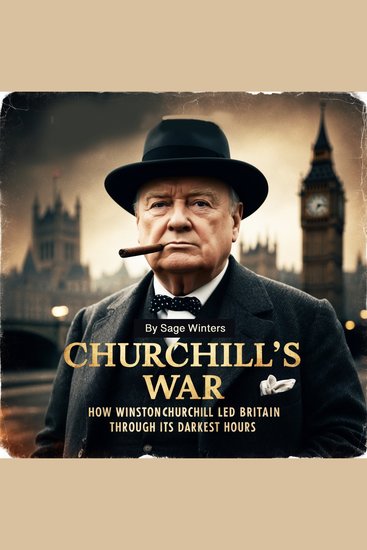
    Winston Churchill is remembered as one of history’s most formidable leaders, a man whose unwavering resolve and stirring oratory inspired a beleaguered nation to withstand its darkest hour. Rising to prominence during one of humanity’s most perilous times, Churchill’s leadership during World War II not only shaped the fate of Britain but left an indelible mark on the global landscape. His life and career encapsulate the qualities of resilience, vision, and adaptability that are crucial during moments of profound crisis.  
      
    Born into an aristocratic family in 1874, Churchill's early life was one of privilege, yet his path to greatness was anything but guaranteed. Despite academic struggles and initial failures, he demonstrated remarkable tenacity, carving out a career as a soldier, journalist, and eventually a politician. His varied experiences—whether charging on horseback in colonial campaigns or reporting from the frontlines—imbued him with a deep understanding of courage and strategy, traits that would serve him well in the years to come.  
      
    Churchill’s rise to the role of wartime Prime Minister was far from linear. By the late 1930s, his political career seemed to be in decline. His outspoken criticism of appeasement policies and his relentless warnings about Adolf Hitler’s ambitions rendered him an isolated figure, often dismissed as a relic of an earlier age. Yet, as Europe hurtled toward war, Churchill’s foresight and defiance became assets too valuable to ignore. In 1940, as Nazi Germany’s forces swept across the continent, Churchill was called upon to lead. 
    Voir livre
  • Nana Said Don't Drink That - cover

    Nana Said Don't Drink That

    Aroara

    • 0
    • 0
    • 0
    Another lesson learned from Nana in Nana Said "That drink is for Grown folks". Discussions about alcohol and drinking. The Nana Said series focuses on lessons intended for kids, but thought provoking for parents.
    Voir livre
  • Slave Girls: The Shrinking Girl - cover

    Slave Girls: The Shrinking Girl

    Louise Allen

    • 0
    • 0
    • 0
    Slave Girls, a new series by bestselling author Louise Allen, reveals a shocking modern-day scandal of County Lines – the single most dangerous form of systematic child abuse prevalent today.
    Voir livre
  • The patriotic poems of Walt Whitman - cover

    The patriotic poems of Walt Whitman

    Walt Whitman

    • 0
    • 0
    • 0
    What does patriotism sound like when it speaks from the soul?
    
    The Patriotic Poems of Walt Whitman brings together powerful verses that celebrate the ideals, struggles, and spirit of the United States. Written during times of national growth, conflict, and reflection, these poems capture Whitman's deep belief in democracy, unity, and the dignity of ordinary people.
    
    From the rhythms of marching soldiers to quiet moments of national mourning, Whitman's poetry gives voice to both pride and sacrifice. His free-verse style, bold imagery, and inclusive vision transformed poetry and shaped the way America understood itself.
    
    This collection highlights Whitman's most stirring patriotic works, offering readers an inspiring journey through American identity, freedom, and resilience.
    
    Inside this eBook, you'll explore:
    
    Poems inspired by the American Civil War and national unity
    
    Themes of liberty, democracy, and collective identity
    
    Whitman's revolutionary free-verse style
    
    A poetic tribute to the American people and their ideals
    
    Widely studied and deeply influential, Whitman's patriotic poetry continues to resonate with readers who seek meaning in history, nationhood, and shared humanity.
    
    Celebrate the voice that sang of America. Buy now and experience the patriotic poetry of one of the nation's greatest writers.
    Voir livre