Begleiten Sie uns auf eine literarische Weltreise!
Buch zum Bücherregal hinzufügen
Grey
Einen neuen Kommentar schreiben Default profile 50px
Grey
Jetzt das ganze Buch im Abo oder die ersten Seiten gratis lesen!
All characters reduced
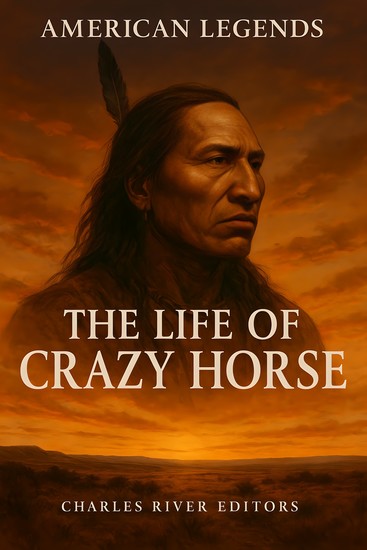
The Life of Crazy Horse - cover

The Life of Crazy Horse

Editors Charles River

Verlag: Charles River Editors

  • 0
  • 0
  • 0

Beschreibung

"Upon suffering beyond suffering: the Red Nation shall rise again and it shall be a blessing for a sick world. A world filled with broken promises, selfishness and separations. A world longing for light again. I see a time of Seven Generations when all the colors of mankind will gather under the Sacred Tree of Life and the whole Earth will become one circle again.” – Crazy Horse
 
A lot of ink has been spilled covering the lives of history’s most influential figures, but how much of the forest is lost for the trees? In Charles River Editors’ American Legends series, readers can get caught up to speed on the lives of America’s most important men and women in the time it takes to finish a commute, while learning interesting facts long forgotten or never known.
 
As he lay dying, Tashunke Witco, whose name is literally translated as “His Horse is Spirited” or “His Horse is Crazy,” refused to be placed on an army cot, and he insisted upon being placed on the floor. He had spent his life avoiding white people whenever possible, and after he died, his cousin Touch the Clouds pointed to the blanket covering the dead Chief’s body and said, “This is the lodge of Crazy Horse.”
 
Throughout his life, Tashunke Witco tried to live the life his people had enjoyed for centuries. He never signed a treaty with the U.S. government and was never photographed, largely because he wanted to avoid contact with the settlers encroaching further west upon Native American lands. By staying away from white settlements and military forts, he thus avoided the places where a photographer might be lurking. As the great Lakota leaders surrendered to the U.S. military or were killed, they became symbols of the qualities and character of their people. Red Cloud is often referred to as a symbol of Lakota concession. Sitting Bull is considered symbolic of Lakota spirituality. Crazy Horse, because he delayed surrender and never entered into treaty agreements with the U.S. military, became a symbol of Lakota resistance.
 
Crazy Horse may have fervently wished to avoid white settlers, but he’s a Native American icon today because of the inability to do so. Like Geronimo in the Southwest and Sitting Bull on the Plains, Crazy Horse was a chief who fought in several skirmishes against settlers and U.S. forces during the 1860s, and he became one of the most famous Native Americans in American history because of one fateful confrontation with whites: the legendary Battle of the Little Bighorn, during which an estimated 2,000 Lakota and Cheyenne warriors routed and then annihilated the 7th U.S. Cavalry led by George Custer. That disaster led the American government to double down on its efforts to “pacify” the Plains, and by the end of the decade many of them had surrendered and been moved onto a reservation. Like Sitting Bull, Crazy Horse tried to avoid surrendering for as long as he could, and both suffered a controversial death.  
 
American Legends: The Life of Crazy Horse chronicles the amazing life of the Lakota leader who defiantly fought to save his people’s homeland, but it also humanizes the man who became one of the most famous Native Americans in American history. Along with pictures of important people, places, and events, you will learn about Crazy Horse like you never have before, in no time at all.
 
 
Verfügbar seit: 21.06.2025.
Drucklänge: 43 Seiten.
Weitere Bücher, die Sie mögen werden

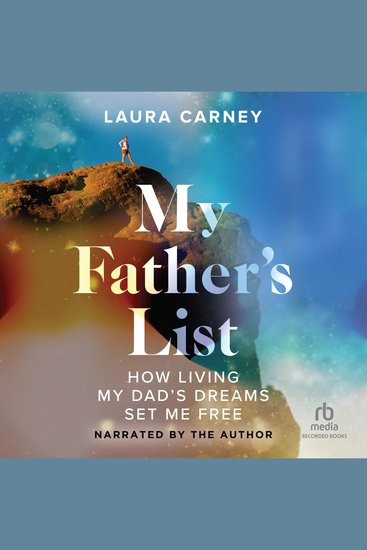
  • My Father's List - How Living My Dad's Dreams Set Me Free - cover

    My Father's List - How Living My...

    Laura Carney

    • 0
    • 0
    • 0
    On the cusp of middle age, a newlywed journalist discovers and finishes the bucket list of her late free-spirited father. 
     
    Fifty-four adventures in six years. That’s what thirty-eight-year-old journalist Laura Carney embarked on when she discovered her late father Mick’s bucket list. 
     
    Killed in a car crash when Laura was twenty-five, Mick seemed lost forever. My Father’s List is the story of how one woman—with the help of family, friends, and even strangers—found the courage to go after her own dreams after realizing those of a beloved yet mysterious  
    man. This is a story about secrets—and the freedom we feel when we learn to trust again: in life, in love, and in a father’s lessons on how to fully live.
    Zum Buch
  • A Diagnosis of Death - From their pens to your ears genius in every story - cover

    A Diagnosis of Death - From...

    Ambrose Bierce

    • 0
    • 0
    • 0
    Ambrose Gwinnett Bierce was born on 24th June 1842 at Horse Cave Creek in Meigs County, Ohio. His parents were poor but they introduced him to literature at an early age, instilling in him a deep appreciation of books, the written word and the elegance of language.  
    Growing up in Koscuisko County, Indiana poverty and religion were defining features of his childhood, and he would later describe his parents as “unwashed savages” and fanatically religious, showing him little affection but always quick to punish. He came to resent religion, and his introduction to literature appears to be their only positive effect. 
    At age 15 Bierce left home to become a printer’s devil, mixing ink and fetching type at The Northern Indian, a small Ohio paper. Falsely accused of theft he returned to his farm and spent time sending out work in the hopes of being published. 
    His Uncle Lucius advised he be sent to the Kentucky Military Institute. A year later he was commissioned as an Officer.  As the Civil War started Bierce enlisted in the 9th Indiana Infantry Regiment.  
    In April 1862 Bierce fought at the Battle of Shiloh, an experience which, though terrifying, became the source of several short stories. Two years later he sustained a serious head wound and was off duty for several months. He was discharged in early 1865.  
    A later expedition to inspect military outposts across the Great Plains took him all the way to San Francisco. He remained there to become involved with publishing and editing and to marry, Mary Ellen on Christmas Day 1871.  They had a child, Day, the following year.  
    In 1872 the family moved to England for 3 years where he wrote for Fun magazine. His son, Leigh, was born, and first book, ‘The Fiend’s Delight’, was published.  
    They returned to San Francisco and to work for a number of papers where he gained admiration for his crime reporting. In 1887 he began a column at the William Randolph Hearst’s San Francisco Examiner.  
    Bierce’s marriage fell apart when he discovered compromising letters to his wife from a secret admirer. The following year, 1889 his son Day committed suicide, depressed by romantic rejection. 
    In 1891 Bierce wrote and published the collection of 26 short stories which included ‘An Occurrence at Owl Creek Bridge’.  Success and further works including poetry followed.  
    Bierce with Hearst’s resources helped uncover a financial plot by a railroad to turn 130 million dollars of loans into a handout. Confronted by the railroad and asked to name his price Bierce answered “my price is $130 million dollars. If, when you are ready to pay, I happen to be out of town, you may hand it over to my friend, the Treasurer of the United States”.  
    He now began his first foray as a fabulist, publishing ‘Fantastic Fables’ in 1899.  But tragedy again struck two years later when his second son Leigh died of pneumonia relating to his alcoholism.  
    He continued to write short stories and poetry and also published ‘The Devil’s Dictionary’.  
    At the age of 71, in 1913 Bierce departed from Washington, D.C., for a tour of the battlefields where he had fought during the civil war. At the city of Chihuahua he wrote his last known communication, a letter to a friend. It’s closing words were “as to me, I leave here tomorrow for an unknown destination,” Ambrose Bierce then vanished without trace.
    Zum Buch
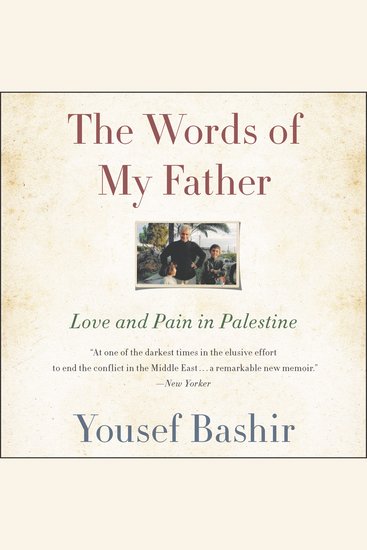
  • The Words of My Father - Love and Pain in Palestine - cover

    The Words of My Father - Love...

    Anonym

    • 0
    • 0
    • 0
    A Palestinian-American activist recalls his adolescence in Gaza during the Second Intifada, and how he made a strong commitment to peace in the face of devastating brutality in this moving, candid, and transformative memoir that reminds us of the importance of looking beyond prejudice, anger, and fear. 
    Yousef Bashir’s story begins in Gaza, on a verdant ten-acre farm beside an Israeli settlement and military base. When the soccer-mad Yousef was eleven, the Second Intifada exploded. First came the shooting, then the occupation. Ordered to leave their family home, Yousef’s father refused, even when the Israeli soldiers moved in, seizing the top two floors. For five long years, three generations of the Bashir family were virtual prisoners in their own home. Despite this, Yousef’s father—a respected Palestinian schoolteacher whose belief in coexisting peacefully with his Israeli neighbors was unshakeable—treated the soldiers as honored guests. His commitment to peace was absolute.  
    Though Yousef’s family attracted international media attention, and received letters of support from around the world, Yousef witnessed the destruction of his home, his neighborhood, and the happy life he had known with growing frustration and confusion. For the first time he wondered if his father’s belief in peace was justified and whether he was strong enough—or even wanted—to follow his example. At fifteen, that doubt was tested. Standing in his front yard with his father and three United Nations observers, he was shot in the spine by an Israeli soldier, leaving him in a wheelchair, paralyzed from the waist down, for a year. 
    While an Israeli soldier shot him, it was Israeli doctors who saved Yousef and helped him eventually learn to walk again. In the wake of that experience, Yousef was forced to reckon with the words of his father. And like the generous, empathetic man who raised him, he too became an outspoken activist for peace. 
    Amid the tragedy of the ongoing Middle Eastern conflict, The Words of My Father is a powerful tale of moral awakening and a fraught, ferocious, and profound relationship between a son and his father. Bashir's story and the ideals of peace and empathy it upholds are a soothing balm for these dangerous and troubled times, and a reminder that love and compassion are a gift—and a choice. 
    Supplemental enhancement PDF accompanies the audiobook.
    Zum Buch
  • Summary of Adharanand Finns’s Running with the Kenyans - cover

    Summary of Adharanand Finns’s...

    Falcon Press

    • 0
    • 0
    • 0
    Buy now to get the main key ideas from Adharanand Finns’s Running with the Kenyans 
      
    Kenyans have been dominating the world running scene for decades. In Running with the Kenyans (2010), Adharanand Finn tells how he and his family left England for an adventure in Kenya, the land of running. Finn was always a natural runner, and he was fascinated by the superiority of Kenyan runners. In Kenya, he met many talented runners and formed a team with them. Ultimately, they decided to run the challenging Lewa Marathon together. Finn didn’t uncover all the secrets to the Kenyans’ success, but he shares what he did learn to help other runners improve too.
    Zum Buch
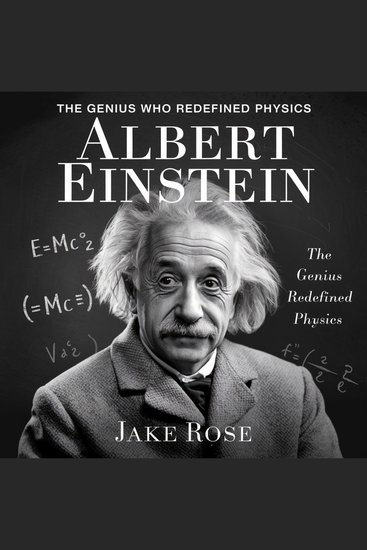
  • Albert Einstein – The Genius Who Redefined Physics - The Life Discoveries and Legacy of the World’s Most Influential Scientist - cover

    Albert Einstein – The Genius Who...

    Jake Rose

    • 0
    • 0
    • 0
    Albert Einstein was not just a scientist—he was a revolutionary thinker who changed the way we understand the universe. From his groundbreaking theory of relativity to his contributions in quantum mechanics, Einstein’s genius reshaped modern physics and left a lasting impact on science and humanity. 
    This audiobook takes you through his early struggles, scientific breakthroughs, and personal life, revealing the man behind the equations. How did Einstein’s ideas influence everything from atomic energy to space exploration? What made him one of history’s most recognizable and influential figures? 
    Albert Einstein – The Genius Who Redefined Physics is a must-listen for science lovers, history enthusiasts, and those fascinated by brilliant minds that changed the world.
    Zum Buch
  • Men I'm Not Married To and Women I'm Not Married To - Unabridged - cover

    Men I'm Not Married To and Women...

    Dorothy Parker, Franklin P. Adams

    • 0
    • 0
    • 0
    Literary cohorts and members of the famous Algonquin Round Table, Dorothy Parker and Franklin P. Adams wrote these two short books to humorously contrast the experiences of both men and women meeting, dating...and then deciding NOT to marry various men and women in their lives. Adams - a renowned wit and celebrated newspaper columnist - helped to launch Parker's career and they enjoyed a decades-long friendship.  These two works are presented here in their original and unabridged format.
    Zum Buch