Begleiten Sie uns auf eine literarische Weltreise!
Buch zum Bücherregal hinzufügen
Grey
Einen neuen Kommentar schreiben Default profile 50px
Grey
Jetzt das ganze Buch im Abo oder die ersten Seiten gratis lesen!
All characters reduced
The Life and Legacy of Wild Bill Hickok - cover

The Life and Legacy of Wild Bill Hickok

Editors Charles River

Verlag: Charles River Editors

  • 0
  • 0
  • 0

Beschreibung

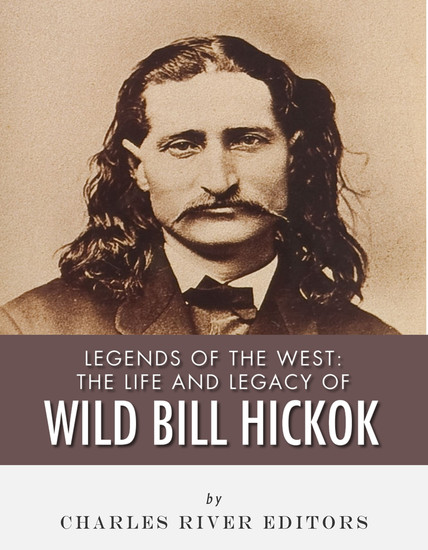
"Wild Bill was a strange character. Add to this figure a costume blending the immaculate neatness of the dandy with the extravagant taste and style of a frontiersman, you have Wild Bill, the most famous scout on the Plains."" – General George Custer
 
Space may be the final frontier, but no frontier has ever captured the American imagination like the “Wild West”, which still evokes images of dusty cowboys, outlaws, gunfights, gamblers, and barroom brawls over 100 years after the West was settled. A constant fixture in American pop culture, the 19th century American West continues to be vividly and colorful portrayed not just as a place but as a state of mind. In Charles River Editors’ Legends of the West series, readers can get caught up to speed on the lives of America’s most famous frontier figures in the time it takes to finish a commute, while learning interesting facts long forgotten or never known.
 
In many ways, the narrative of the Wild West has endured more as legend than reality, and a perfect example of that can be found in the legend of James Butler Hickok (1837-1876), forever known as “Wild Bill”. Indeed, separating fact from fiction when it comes to the life of Wild Bill is nearly impossible, something due in great measure to the fact that the man himself exaggerated his own adventures or fabricated stories altogether. When he was killed while playing poker in the mining South Dakotan outpost of Deadwood, he put Deadwood on the map and ensured both his place and his poker hand’s place in legend.
 
The best known aspects of Hickok’s life hardly distinguish him from other famous Westerners. Like so many others, Hickok headed west as a fugitive of justice, yet that didn’t prevent him from becoming a frontier lawman in Kansas, like Wyatt Earp. Hickok also became well known in the West for being a professional gambler and a remarkably quick draw who proved quite deadly in shootouts, like Doc Holliday.
 
What made Hickok stand out from so many of his day was that he was both successful at what he did and he managed to cultivate his own legend through tales of his exploits. By the mid-1870s, Hickok was notorious enough that he went out of his way to play cards with his back to the wall so he could see anyone approaching him. On one of the few occasions he did not, August 2, 1876, he was shot in the back of the head by Jack McCall while holding two pair, Aces and Eights (all black), now known as the Dead Man’s Hand.
 
Whether Hickok’s legacy would have endured without his legendary death is anyone’s guess, but by becoming the first well known Westerner to die with his boots on, he immediately became the West’s first hero. Hickok and his life story became the subject of countless “dime store” novels which cast him in larger than life roles loosely based on his adventures or entirely made up. Once Wild Bill became a fixture of American pop culture, he stayed there, and he continues to be depicted in television, movies, and the like.
Verfügbar seit: 28.05.2025.
Drucklänge: 63 Seiten.
Weitere Bücher, die Sie mögen werden

  • Rise Fall and Rebirth of Chicago The: The History and Legacy of America’s Third Largest City - cover

    Rise Fall and Rebirth of Chicago...

    Editors Charles River

    • 0
    • 0
    • 0
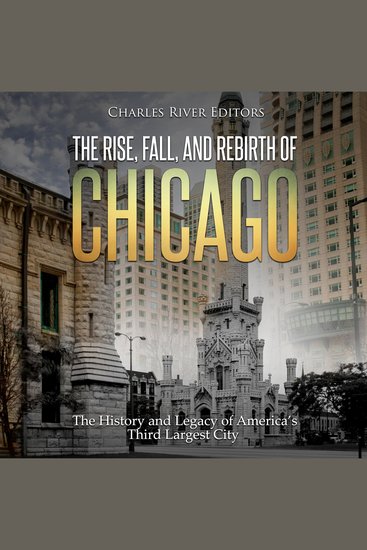
    Though it started as a 300 person settlement in 1832, Chicago’s location near the Great Lakes and its access to the Mississippi River turned it into a major trading city overnight. The city became even more important when railroads were constructed to connect the country, making it the first major city in the “West” during the mid-19th century. By 1871, the original 300 person settlement was now home to about 300,000 people, and Chicago had become the first major city built by Americans rather than European colonial powers  
    	Thus, it had taken less than 40 years for the new settlement of 300 to become a city of nearly 300,000, but it only took two days in 1871 for much of it to be destroyed. On the night of October 8, 1871, a blaze in the southwestern section of Chicago began to burn out of control. The popular legend is that a cow in Mrs. Catherine O’Leary’s barn had kicked over a lantern and started a fire. The story blaming the cow was a colorful fabrication, but the fire itself was very real, lasting almost two whole days and devouring several square miles of the city. The fire was so powerful that firefighters could not put it out, due to dry conditions, stiff winds, and the fact the city was mostly made of wood. 
    	Walking around Chicago today, it’s easy to forget about its past as a rural frontier. That’s due in no small part to the way Chicago responded to the Great Fire of 1871. Immediately after the fire, Chicago encouraged inhabitants and architects to build over the ruins, spurring creative architecture with elaborate designs. Architects descended upon the city for the opportunity to rebuild the area, and over the next few decades they had rebuilt Chicago with the country’s most modern architecture and monuments.  
    	Chicago recovered well enough within 20 years to win the right to host the World’s Fair in 1893.
    Zum Buch
  • A Sudden Clash of Thunder - Talks on Zen Stories - cover

    A Sudden Clash of Thunder -...

    Osho

    • 0
    • 0
    • 0
    According to Osho, laughter is "the very essence of Zen". And while the theme of these talks is that meditation - watching, remaining alert and aware - is the path to self-realization, Osho encourages us first to "be happy, and meditation will follow".
    Through Zen stories, jokes and answers to questions, Osho highlights our conditioning - our learned social and cultural behavior and beliefs - as the barrier to our natural state of happiness.
    Wielding his words like a humorous, compassionate Zen stick, Osho shows us how we can begin to recognize our conditioning and see that it is not the same as our authentic self.
    "This is the whole effort of all the masters: to create a sudden clash of thunder so those who are fast asleep can be awakened." (Osho)
    
    - Truth and Knowledge
    - Center and Periphery
    - From Accidental to Essential
    - Real Love
    - The Real Self
    - The Paradox of Love
    - Only the Gold
    - Compassion, Love, and Sex
    - The Laughing Buddha
    - Toward Nothingness
    © & ℗1976 OSHO International Foundation
    Zum Buch
  • Arameans The: The History of the Influential Semitic Group that Settled in the Levant during the Iron Age - cover

    Arameans The: The History of the...

    Editors Charles River

    • 0
    • 0
    • 0
    When the Late Bronze Age system of the Near East collapsed around the year 1200 BCE, the empires and kingdoms that had ruled the region for hundreds of years were replaced by new dynasties and peoples. In some cases – such as in Egypt, Assyria, and Babylon – new dynasties came to power that followed the culture and styles of previous generations. However, alongside them new ethnic groups also came to power, some of whom took advantage of the general chaos following the Bronze Age collapse to migrate to the region. Some of these new waves of migrants entered the Near East from Europe via the Mediterranean Sea and Anatolia, while others came from Arabia. They all brought with them new weapons, ideas, and plenty of new people that eventually helped establish a new, early Iron Age order in the Near East. Among these new groups that came to prominence in the early Iron Age Near East, the Arameans were arguably the most important. 
    	The Arameans entered the historical record just after the collapse of the Bronze Age, and although they were once thought to be one of the factors in the Bronze Age collapse, most scholars now see them as taking advantage of the situation more than bringing it about. Once the Arameans entered the Levant and Mesopotamia, they influenced their new homes to varying degrees, ranging from having little influence in southern Mesopotamia to being a major geopolitical player in the inland Levant. An examination of Aramean history and culture reveals that the Arameans were a people who were not so easy to define, as they had no central leadership, and they often adopted the cultural attributes of their neighbors. With that said, historians, archaeologists, and philologists have identified a definite Aramean culture that at times played a major role in the wider cultural events of the Near East.
    Zum Buch
  • How to Recognize Toxic Thought Patterns - cover

    How to Recognize Toxic Thought...

    Olivia Werner

    • 0
    • 0
    • 0
    [How to Recognize Toxic Thought Patterns] delves deep into the intricate landscape of human consciousness, offering a lyrical and unflinching exploration of the ways our minds create and sustain patterns that both protect and constrain us. Through prose that mirrors the fluid, cyclical nature of thought itself, this illuminating work examines how toxic patterns disguise themselves as rationality, presenting as logical conclusions while quietly undermining our sense of self. Like a skilled cartographer mapping uncharted territory, the book traces the subtle ways these thought patterns weave themselves into the fabric of our daily existence, emerging in the spaces between breaths, in the gaps between messages, in the quiet moments before sleep. With its innovative approach to mental awareness, the work stands apart in its ability to capture the poetry of psychological experience while offering practical insights into the nature of toxic thinking, making the invisible visible through carefully crafted metaphors and precise psychological observation.
    Zum Buch
  • World According to Star Wars - cover

    World According to Star Wars

    Anonym

    • 0
    • 0
    • 0
    ""Star Wars is the ultimate mythological tale of our age, a hero's journey that is a tribute to the beauty of human freedom as well as an exploration of its dark complexities. In this gem of a book, the brilliant Cass Sunstein uses the series to explore profound questions about being a parent, a child, and a human. It will change the way you think about your own journey, and it might even make you pick up the phone and call your dad.""  – Walter Isaacson 
    A deeply original celebration of George Lucas’s masterpiece as it relates to history, presidential politics, law, economics, fatherhood, and culture by Harvard legal scholar and former White House advisor. 
    There’s Santa Claus, Shakespeare, Mickey Mouse, The Bible, and then there’s Star Wars. Nothing quite compares to sitting with down with a young child and hearing the sound of John Williams’ score as those beloved golden letters fill the screen. In this fun, erudite and often moving book, Cass R. Sunstein explores the lessons of Star Wars as they relate to childhood, fathers, the Dark Side, rebellion, and redemption. As it turns out, Star Wars also has a lot to teach us about constitutional law, economics, and political uprisings. 
    In rich detail, Sunstein tells story of the films’ wildly unanticipated success and what it has to say about why some things succeed while others fail. Ultimately, Sunstein argues, Star Wars is about the freedom of choice and our never-ending ability to make the right decision when the chips are down. Written with buoyant prose and considerable heart, The World According to Star Wars shines new light on the most beloved story of our time.
    Zum Buch
  • Louder Than Words - Take Your Career from Average to Exceptional with the Hidden Power of Nonverbal Intelligence - cover

    Louder Than Words - Take Your...

    Anonym

    • 0
    • 0
    • 0
    International bestselling author and behavior expert Joe Navarro helps you successfully navigate the business world by understanding what your boss and coworkers are really thinking.  
    Why is it that some people have all the elements of success—education, skills, integrity, motivation—but can't seem to move from effectiveness to excellence in their careers? Behavior expert Joe Navarro reveals the long-sought answer. Louder Than Words teaches how to master nonverbal intelligence, the ability to interpret and use nonverbal signals—in poker terms, "tells"—in business to assess and influence others. 
    Drawing on his decades in the behavioral sciences, Navarro shows how to use his simple yet powerful "comfort/discomfort" model to decode what's really being said at meetings, interviews, negotiations, presentations, business meals, and more, including the casual exchanges that often impact decisions and reputations. 
    Jump-start your career as you discover how to: 


      Read body language to understand what clients, coworkers, interviewers, or interviewees are thinking, feeling, or intending, and discern nonverbal cues of concern, disagreement, or doubt—even over the phone  Master the all-important first impression and use settings, seating, and gestures to inspire and captivate  Recognize habits that send the wrong message, from nail biting to wearing inappropriate attire—and see what posture, work practices, workspaces, and even electronic habits say about people  Become culturally aware and gender-sensitive, from best handshake practices to personal space preferences  Learn what the "comfort dividend" can do for you and your business  Explore how the concept of "curbside appeal" applies to you and your business, and can mean the difference between average and exceptional 
    Use Louder Than Words to close the deal, keep your customers, secure new ones, and lead your company with confidence. For job seekers looking to stand out from the pack, this book is your get-back-to-work bible.
    Zum Buch