Begleiten Sie uns auf eine literarische Weltreise!
Buch zum Bücherregal hinzufügen
Grey
Einen neuen Kommentar schreiben Default profile 50px
Grey
Jetzt das ganze Buch im Abo oder die ersten Seiten gratis lesen!
All characters reduced
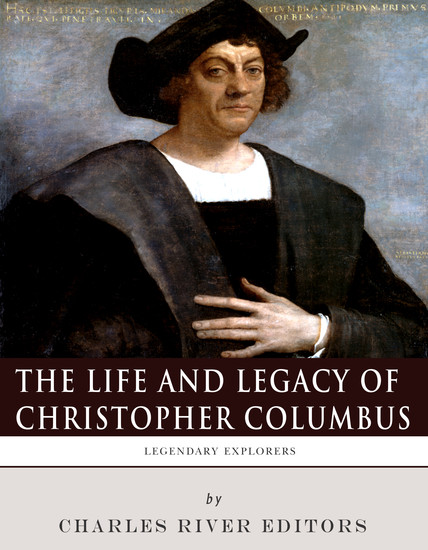
The Life and Legacy of Christopher Columbus - cover

The Life and Legacy of Christopher Columbus

Editors Charles River

Verlag: Charles River Editors

  • 0
  • 0
  • 0

Beschreibung

“At two o'clock in the morning the land was discovered…As I saw that they were very friendly to us, and perceived that they could be much more easily converted to our holy faith by gentle means than by force, I presented them with some red caps, and strings of beads to wear upon the neck, and many other trifles of small value, wherewith they were much delighted, and became wonderfully attached to us.” – Christopher Columbus’s diary, October 11-12, 1492
 
A lot of ink has been spilled covering the lives of history’s most influential figures, but how much of the forest is lost for the trees? The Age of Exploration and the explorers who set out on their history-making expeditions left many legacies and profoundly influenced history around the world. The voyages of men like Columbus and the conquests of men like Cortes escalated tensions between the European nations, initiated imperialistic empires on a global scale, helped birth the United States, and ensured that the wars in the 20th century were truly world wars. In Charles River Editors’ Legendary Explorers series, readers can get caught up to speed on the lives of the most important explorers of history in the time it takes to finish a commute, while learning interesting facts long forgotten or never known.
 
The most seminal event of the last millennium might also be its most controversial. As schoolchildren have been taught for over 500 years, “In 1492 Columbus sailed the ocean blue.” In October of that year, the Italian Christopher Columbus immortalized himself by landing in the New World and beginning the process of European settlement in the Americas for Spain, bringing the Age of Exploration to a new hemisphere with him. Ironically, the Italian had led a Spanish expedition, in part because the Portugese rejected his offers in the belief that sailing west to Asia would take too long.
 
Columbus had better luck with the Spanish royalty, successfully persuading Queen Isabella to commission his expedition. In August 1492, Columbus set west for India at the helm of the Nina, Pinta and Santa Maria. Befitting a legendary trip, the journey was star-crossed from the beginning. The Pinta’s rudder broke early on, and just days into the journey Columbus’ compass stopped pointing due north and started pointing to the Earth’s magnetic north pole, something the Europeans knew nothing about. Columbus knew that the uncertainty of the expedition’s destination made his crew nervous, so he hid his compass’ “malfunction” from his crew.  Additionally, after 30 days of sailing, the expedition still had not sighted land, so Columbus started lying to his crew about the distance they sailed each day, telling them they had sailed fewer miles than they actually had so as not to scare them even more. 
 
On October 7, 1492, the three ships spotted flocks of birds, suggesting land was nearby, so Columbus followed the direction in which the birds flew. On the night of October 11, the expedition sighted land, and when Columbus came ashore the following day in the Bahamas, he thought he was in Japan, but the natives he came into contact with belied the descriptions of the people and lands of Asia as wealthy and resourceful. Instead, the bewildered Columbus would note in his journal that the natives painted their bodies, wore no clothes and had primitive weapons, leading him to the conclusion they would be easily converted to Catholicism. When he set sail for home in January 1493, he brought several imprisoned natives back to Spain with him.
 
Everyone agrees that Columbus’s discovery of the New World was one of the turning points in history, but agreements over his legacy end there. Although his other three voyages to the New World were far less successful and largely overlooked in the narrative of his life, Columbus became such a towering figure in Western history that the United States’ capital was named after George Washington and him.  
Verfügbar seit: 03.06.2025.
Drucklänge: 50 Seiten.

Weitere Bücher, die Sie mögen werden

  • Tenth Army Commander - The World War II Diary of Simon Bolivar Buckner Jr - cover

    Tenth Army Commander - The World...

    Christopher L. Kolakowski

    • 0
    • 0
    • 0
    Finalist, 2024 Army Historical Foundation Distinguished Writing Awards"...an outstanding volume, which is extremely beneficial for two key reasons. First, it adds significantly to one’s understanding of the Battle of Okinawa and to the operations of the Alaska Defense Command. Second, it provides readers with an opportunity to become acquainted or to greatly improve their understanding of Buckner." — Military Review
    
    Simon Bolivar Buckner Jr. was a major figure of the Pacific War, both for his command in Alaska and in his key role heading Tenth Army during the Battle of Okinawa in the spring of 1945. Buckner was the senior U.S. officer killed by enemy fire in World War II when Japanese artillery cut him down on June 18, 1945, one month shy of his 59th birthday. The shelling ended a remarkable life – son of a Confederate Lieutenant General and governor of Kentucky, the “Child of the Democracy” in the 1896 Presidential election campaign, educated at West Point, myriad service as a student and instructor at various Army posts and schools from 1917 to 1936, command in Alaska from 1940 to 1944, and ultimately of Tenth Army from 1944 to his death.
    
    General Buckner kept a diary covering the period from January 1, 1944 to June 17, 1945, which has never been fully published until now. Buckner made notes every day, often in great detail; his chief of staff thought Buckner wanted to write a memoir after the war, but the papers were scattered after his death. In addition to the Okinawa material, Buckner’s diaries discuss his departure from Alaska and service in Hawaii as Tenth Army commander. Topics include his daily life in wartime Hawaii, troop training, comments on war events, gossip, notes on his travels to Guam and the Philippines, and his role in the Smith vs Smith controversy after the Battle of Saipan. The diary text is augmented by letters from General Buckner to his wife Adele during March to June 1945, and a letter from the Tenth Army Chief of Staff to Adele detailing Buckner's death.
    
    Tenth Army Commander is an important account from a too-long-silent voice among Pacific War leaders.
    Zum Buch
  • Summary: The Rise and Fall of the Third Reich - A History of Nazi Germany by William L Shirer: Key Takeaways Summary & Analysis Included - cover

    Summary: The Rise and Fall of...

    Brooks Bryant

    • 0
    • 0
    • 0
    Disclaimer: This book is not the official, but a summary & it does not accompany the official. 
    Unveil the dark corridors of history as you explore the meticulously researched summary of William L. Shirer's landmark work, 'The Rise and Fall of the Third Reich.' Understand how a nation succumbed to the magnetism of a maniac, how the dream of prosperity turned into a nightmare of warfare and genocide. 
    Our condensed version of Shirer's monumental narrative captures the grim realities of Adolf Hitler’s rise to power, the ensuing terror of Nazi rule, and the cataclysmic downfall of a regime that almost consumed the world. Shirer's book serves as both a cautionary tale and a record of one of the darkest chapters in human history. 
    Decades of careful journalism and first-hand experience have been distilled into a summary that retains the gravity of its source material while being accessible to a modern audience. Here, the complexities of political maneuvering, military strategy, and social dynamics are brought to light in a compelling read that's both informative and chilling. 
    Discover how an empire built on cruelty and deceit crumbled under its own weight, leaving behind lessons that are as relevant today as they were over half a century ago. A must-read for anyone seeking to understand the mechanics of tyranny and the variables that allow it to flourish.
    Zum Buch
  • You Don't Need Therapy - 7 Steps to Sort Your Sh*t Out - cover

    You Don't Need Therapy - 7 Steps...

    Alan Lucas

    • 0
    • 0
    • 0
    The Sort Your Self Out system (The SYSO System) is a one-stop self-improvement system that can be applied wherever you are on your journey. You can change your life by following 7 simple steps and the book's 70 practical exercises help you DO the changing, rather than just read about it. 
    You'll learn how to expand your awareness, manage your mind, take charge of your emotions, meet your needs in healthy ways, have a crystal-clear philosophy for the purpose of your life, understand that everything is interconnected, and how to make your life more enjoyable by enhancing the lives of others. You'll light up and lighten up, leading more from your heart than your ego, being focused on feeling fulfilled by being useful. By following the steps, you will change the filter through which you experience life and by changing the filter, everything will look different.
    Zum Buch
  • Rewriting the History of the Black Death - Unveiling the Truth Behind Medieval Misconceptions - cover

    Rewriting the History of the...

    John Harpoon

    • 0
    • 0
    • 0
    The Black Death, one of the most devastating pandemics in human history, left an indelible mark on the medieval world. From the mid-14th century, this catastrophic event wiped out an estimated one-third of Europe's population, with ramifications extending far beyond the immediate loss of life. Its legacy endures, not only in historical accounts but also in the cultural, social, and economic transformations it triggered. 
      
    The pandemic’s unparalleled scale of mortality created a sense of collective trauma that shaped the mindset of medieval society. Fear, uncertainty, and grief were pervasive, leading to widespread shifts in religious devotion and philosophical thought. For some, the plague strengthened their faith, prompting public acts of penance and increased church attendance. For others, it inspired skepticism about religious authority, paving the way for future reforms and dissent. This dual response reflects the Black Death's role as both a destroyer of tradition and a catalyst for change. 
      
    Economically, the pandemic dramatically altered the medieval labor market. The decimation of the population led to acute labor shortages, forcing landowners to offer better wages and conditions to retain workers. This shift empowered peasants and contributed to the gradual erosion of the feudal system, giving rise to a nascent middle class. The newfound leverage of laborers sowed the seeds of social mobility, challenging the rigid hierarchies that had long defined medieval life.
    Zum Buch
  • A Pedagogy of Kindness - cover

    A Pedagogy of Kindness

    Catherine J. Denial

    • 0
    • 0
    • 0
    Academia is not, by and large, a kind place. Individualism and competition are what count. But without kindness at its core, Catherine Denial suggests, higher education fails students and instructors—and its mission—in critical ways. 


    Part manifesto, part teaching memoir, part how-to guide, A Pedagogy of Kindness urges higher education to get aggressive about instituting kindness, which Denial distinguishes from niceness. Having suffered beneath the weight of just "getting along," instructors need to shift every part of what they do to prioritizing care and compassion—for students as well as for themselves. 


    A Pedagogy of Kindness articulates a fresh vision for teaching, one that focuses on ensuring justice, believing people, and believing in people. Offering evidence-based insights and drawing from her own rich experiences as a professor, Denial offers practical tips for reshaping syllabi, assessing student performance, and creating trust and belonging in the classroom. Her suggestions for concrete, scalable actions  outline nothing less than a transformational discipline—one in which, together, we create bright new spaces, rooted in compassion, in which all engaged in teaching and learning might thrive.
    Zum Buch
  • Willie Willie Harry Stee: An Epically Short History of Our Kings and Queens - cover

    Willie Willie Harry Stee: An...

    Charlie Higson

    • 0
    • 0
    • 0
    A Waterstones Best History Book 2025 
    ‘Learned, entertaining and highly approachable’ BOB MORTIMER 
    ‘A treat’ ALICE LOXTON 
    ‘Five stars from me…’ AL MURRAY 
    An unmissable collaboration between two comedy legends – an irresistible, family-friendly deep dive into the murky lives of the British monarchy. 
    Willie, Willie, Harry, Stee, Harry, Dick, John, Harry three. One, two, three Neds, Richard Two, Henries, four, five, six, then who? 
    Charlie Higson has always been fascinated by the story of the monarchy: from the b*stardly to the benevolent, the brilliant to the brutal. In this wonderful new book, using the famous rhyme he learned at school as his trusty guide, Charlie takes us through the history of this bizarre and long-lasting institution, introducing readers to every single ruler since poor Harold got it in the eye at the Battle of Hastings (or did he?). 
    Who were all these people, and what did they do? It’s all here. Bloody treachery? Check. Unruly incest? Check. A couple of Cromwells? Check. The War of Jenkins Ear? Sadly, for Robert Jenkins, check. 
    A rip-roaring journey that takes in the Normans, Plantagenets, Tudors, Stuarts, Hanoverians and Windsors, not to mention the infamous Blois (how can we forget them?), Willie, Willie, Harry, Stee is an utterly engrossing and grossly entertaining guide to who ruled when and whether they were any good at it. 
    Pre-order your copy of the latest non-fiction biography from Sunday Times bestselling author, Charlie Higson. His exploration of mediaeval and renaissance Europe is a top-performing deep dive into Britain's royalty. 
    For fans of Cgp Books (KS3 History Complete Revision & Practice ) 
    HarperCollins 2025
    Zum Buch