Rejoignez-nous pour un voyage dans le monde des livres!
Ajouter ce livre à l'électronique
Grey
Ecrivez un nouveau commentaire Default profile 50px
Grey
Abonnez-vous pour lire le livre complet ou lisez les premières pages gratuitement!
All characters reduced
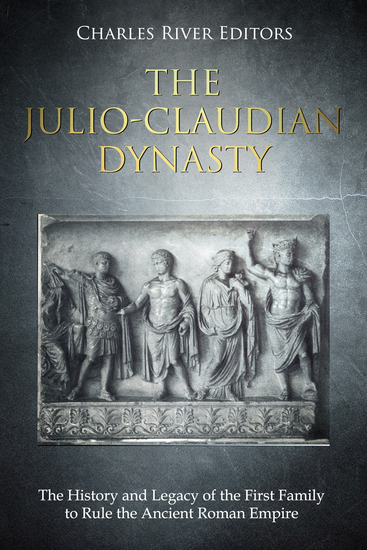
The Julio-Claudian Dynasty - The History and Legacy of the First Family to Rule the Ancient Roman Empire - cover

The Julio-Claudian Dynasty - The History and Legacy of the First Family to Rule the Ancient Roman Empire

Editors Charles River

Maison d'édition: Charles River Editors

  • 0
  • 0
  • 0

Synopsis

The importance of Gaius Julius Caesar Augustus (or as he was known from birth, Gaius Octavius “Octavian” Thurinus) to the course of Western history is hard to overstate. His life, his rise to power, his political, and his social and military achievements all laid the foundations for the creation of an empire which would endure for almost five centuries, and whose traditions, laws, architecture and art continue to influence much of Europe and the world today. Octavian was the first true Roman Emperor, and the first man since the Etruscan Tarquins five centuries earlier to establish a successful hereditary ruling dynasty in what had been a proud Republic for over half a millennium. He was a canny strategist, an excellent orator, a fine writer, a generous patron of the arts and enthusiastic promoter of public works, but above all he was a master politician. Octavian’s great-uncle (and adoptive father) Julius Caesar was a great general, and his rival Mark Antony was a great soldier, but as a politician Octavian outmatched them all.
 
Certainly, like all men, Octavian had his defects. Like many of the most successful politicians, he could connive, plot and prevaricate with the best of them, and he made full use of the emotional pull that his late beloved great-uncle had over the legions during the course of his rise to power. His justice was also famously heavy-handed, and he was not known for his mercy towards those he defeated in battle or marginalized political opponents. Yet despite all this, he still stands in bronze on Rome’s Via dei Fori Imperiali to this day, along with the likes of Caesar, Hadrian, Trajan and Marcus Aurelius, and he is forever immortalized in all Western calendars as the patron of the month of August, which was dedicated to him when he was deified, following his death, as Divus Augustus.
 
Like his adoptive father before him, Octavian is one of those figures whom it is difficult to know exactly what to make of, because he appears, even at a distance, to be larger than life. Yet the amount of personal correspondence and contemporary writings penned by Octavian himself, as well as his friends, associates, and rivals, helps form a clear picture of the man behind the bronze statue. Indeed, he was the ruler who found Rome a city of bricks and left it a city of marble.
 
One of the most overlooked emperors was also one of the first, and he lived in chaotic times. Tiberius was born in 42 BCE, just as the Roman Republic was dissolving and a new Roman imperial power structure emerged under Octavian, who became Rome’s first emperor as Caesar Augustus. Tiberius’s life soon became caught up with Augustus’s as the emperor worked to found and establish a dynasty, but it is unclear if Tiberius ever really wanted to be part of Augustus’s plans or inherit imperial power - Tiberius was known as a man who schemed and planned, but he was also a scholar and showed a marked desire throughout his life to retreat and escape the demands of power. Partially due to this continual tension, Tiberius’s life is enigmatic in many ways.
 
Tiberius championed the Republic and seemed to desire its return, yet his acceptance of imperial power and his reign solidified Rome’s transition to an empire. He was a skilled general who showed concern for the well-being of his troops, and he displayed a remarkable patience as a military tactician. After he rose to become emperor in 14 CE, he ruled for over 22 years, which would be the longest reign of a Roman emperor over the next 100 years, but he remained suspicious of everyone and eventually chose the wrong person to trust, being eventually misled and betrayed by a man whom he thought was his closest friend. When he finally died, aged and lonely, he had become so hated that crowds celebrated his death.
Disponible depuis: 01/05/2025.
Longueur d'impression: 165 pages.

D'autres livres qui pourraient vous intéresser

  • Pandemic Reckoning: Unmasking the Failures of Public Health - "Transform your comprehension of public health—immerse yourself in thought-provoking audio from 'Pandemic Reckoning' today!" - cover

    Pandemic Reckoning: Unmasking...

    Orson Brackley

    • 0
    • 0
    • 0
    Pandemic Reckoning: Unmasking the Failures of Public Health 
    ⭐⭐ Simplified Audio Guide with Explanations ⭐⭐ 
    Are you ready to advance your understanding of public health and uncover the crucial lessons learned during the pandemic? 
    Search no more!  
    This audiobook is your ultimate guide to exploring the critical insights on mental health and resilience amid public health crises. With this knowledge, you will be empowered to engage in meaningful discussions and apply what you've learned. 
    Updated for the latest insights and findings. 
    Key features of this comprehensive resource: 
    - In-depth examination of the failures of public health during the pandemic 
    - Thorough explanations of mental health implications during crises 
    - Effective strategies for resilience and coping 
    Our audiobook sets itself apart by providing extensive coverage of topics essential for grasping the complexities of public health failures. Each concept is examined with care, ensuring a deep understanding. 
    This is an independent resource, not affiliated with any official health organization, created solely for your benefit. 
    Crafted with a clear structure and accessible language, "Pandemic Reckoning" guarantees seamless flow between ideas. Say goodbye to complicated jargon; embrace clear, precise, and insightful content. 
    So, why hesitate? Click the BUY NOW button, secure your copy, and embark on a journey to enhanced awareness about public health failures!
    Voir livre
  • First Crusade The: The History of the Christian Church’s Initial Campaign in the Holy Land - cover

    First Crusade The: The History...

    Charles River Editors

    • 0
    • 0
    • 0
    Of the many campaigns during the Middle Ages, few are as remarkable or seemingly impossible to win at the start as the First Crusade (1095-99), and the true crowning achievement of that crusade, which resulted in two centuries of Western European Christian states in the Middle East and the permanent firing of the European imagination, was the conquest of Jerusalem on July 15, 1099 after three weeks of siege. That victorious siege came four years after the call for a crusade first went out, and had the Crusaders not taken Jerusalem, the First Crusade would not likely have been followed by any more and the campaign might have been no more than an historical footnote of what could have been.  
    	As it turned out, the siege of Jerusalem and the crusade as a whole says much about the first major clash of Western and Eastern military tactics after the fall of the Roman Empire, as well as the power of faith and even fanaticism to motivate people beyond ordinary human endurance. For better and worse, the siege and fall of Jerusalem to the Crusaders has become a fundamental piece in the current view of the West in that part of the world. Indeed, to this day, the First Crusade remains a polarizing event, even among modern historians. For some, the Crusaders were heroes and saints, and for others they were devils who disrupted the peaceful local sects of Muslims, Jews, and Christians, establishing an alien colony that heralded modern European imperialism. In fact, the First Crusade is a good example of why it is unwise to choose sides in history, because neither side was correct and the situation was highly complex. 
    Though it went largely unremarked in the Islamic world at the time, the First Crusade has since become a contentious symbol of European imperialism in the Middle East. Debate over whether the Crusades can truly be perceived as an early example of European colonialism continues in medieval historiography, though the evidence for this is thin.
    Voir livre
  • Homo Deus: Book Summary & Analysis - cover

    Homo Deus: Book Summary & Analysis

    Briefly Summaries

    • 0
    • 0
    • 0
    This is a concise summary and analysis of Homo Deus, by Yuval Noaḥ Harari. It is not the original book and is not affiliated with or endorsed by Yuval Noaḥ Harari. Ideal for those seeking a quick and insightful overview.
     
    In this compelling exploration of the future, Homo Deus examines humanity’s next great leap: from Homo sapiens to god-like beings. Delving into history, philosophy, and technology, the book analyzes how artificial intelligence, biotechnology, and data-driven decision-making may redefine life, ethics, and human purpose. As science advances, will we conquer death, eliminate suffering, and engineer happiness—or will we lose control over our own creations? This thought-provoking work challenges readers to consider what lies ahead for the species that once ruled the Earth.
    Voir livre
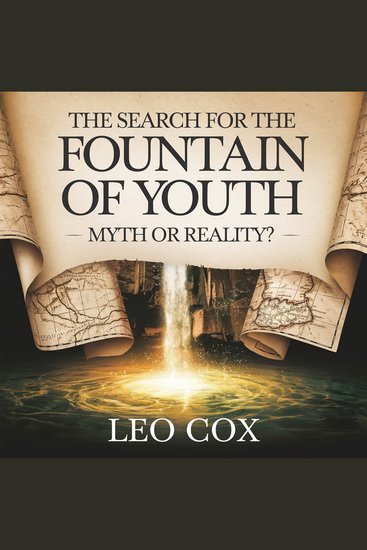
  • The Search for the Fountain of Youth – Myth or Reality? - The History Legends and Expeditions Behind the World’s Most Elusive Secret - cover

    The Search for the Fountain of...

    Leo Cox

    • 0
    • 0
    • 0
    For centuries, legends have spoken of a magical spring that grants eternal youth. From the stories of Herodotus and Alexander the Great to the famous expedition of Juan Ponce de León, the search for the Fountain of Youth has fascinated adventurers, scientists, and dreamers alike. But was it ever real? 
    This audiobook takes you on a thrilling journey through historical records, myths, and modern discoveries, uncovering the truth behind one of the world’s greatest mysteries. Discover: 
    ✅ The ancient origins of the Fountain of Youth myth 
    ✅ How explorers like Ponce de León and Spanish conquistadors searched for it 
    ✅ The scientific search for anti-aging waters in history 
    ✅ Whether the legend was a cover for something else entirely 
    The Search for the Fountain of Youth – Myth or Reality? is a must-listen for history lovers, mystery seekers, and anyone fascinated by the quest for immortality.
    Voir livre
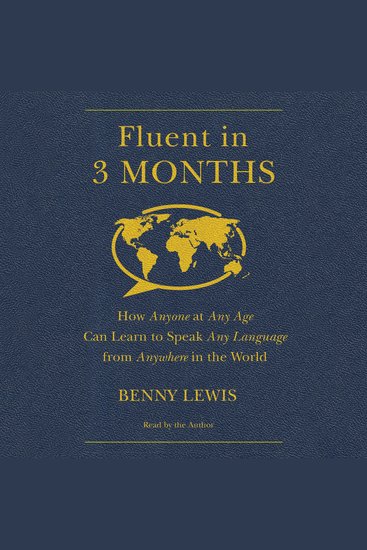
  • Fluent in 3 Months - How Anyone at Any Age Can Learn to Speak Any Language from Anywhere in the World - cover

    Fluent in 3 Months - How Anyone...

    Anonyme

    • 0
    • 0
    • 0
    Benny Lewis, who speaks over ten languages—all self-taught—runs the largest language-learning blog in the world, Fluent In 3 Months. Lewis is a full-time "language hacker," someone who devotes all of his time to finding better, faster, and more efficient ways to learn languages. Fluent in 3 Months: How Anyone at Any Age Can Learn to Speak Any Language from Anywhere in the World is a new blueprint for fast language learning. Lewis argues that you don't need a great memory or "the language gene" to learn a language quickly, and debunks a number of long-held beliefs, such as adults not being as good of language learners as children.
    Voir livre
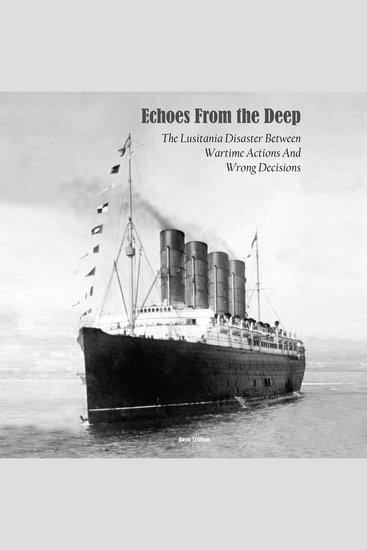
  • Echoes From the Deep - The Lusitania Disaster Between Wartime Actions And Wrong Decisions - cover

    Echoes From the Deep - The...

    Davis Truman

    • 0
    • 0
    • 0
    On May 1, 1915, the majestic RMS Lusitania departed from New York, bound for Liverpool, navigating through the escalating tensions of a war-torn Europe. Just six days later, the Cunard liner met a tragic fate, sinking into the depths of the Atlantic after being struck by a German torpedo. The catastrophe claimed the lives of over a thousand passengers, sending shockwaves across the world and profoundly influencing the American stance on World War I. 
    At the heart of this investigation lies a provocative thesis: the tragic loss of life on the Lusitania was not merely a consequence of wartime hostilities but was exacerbated by decisions and actions that could have been averted. Through detailed analysis, the book questions the accountability of the captain and crew, challenging readers to reconsider the extent to which their actions — or inactions — contributed to the disaster. 
    But this story is not confined to the ill-fated ship alone. "Echoes From the Deep" also examines the broader ramifications of the Lusitania's sinking on American public opinion. The tragedy stirred a powerful emotional response, turning the tide of sentiment and drawing the United States closer to joining the global conflict.  
    Blending historical rigor with compelling storytelling, "Echoes From the Deep" explores tragedy, responsibility, and the complex interplay between individual actions and larger historical forces. This book is essential for history enthusiasts, maritime scholars, and anyone intrigued by the profound impact of the Lusitania disaster on the American war effort.
    Voir livre