Rejoignez-nous pour un voyage dans le monde des livres!
Ajouter ce livre à l'électronique
Grey
Ecrivez un nouveau commentaire Default profile 50px
Grey
Abonnez-vous pour lire le livre complet ou lisez les premières pages gratuitement!
All characters reduced
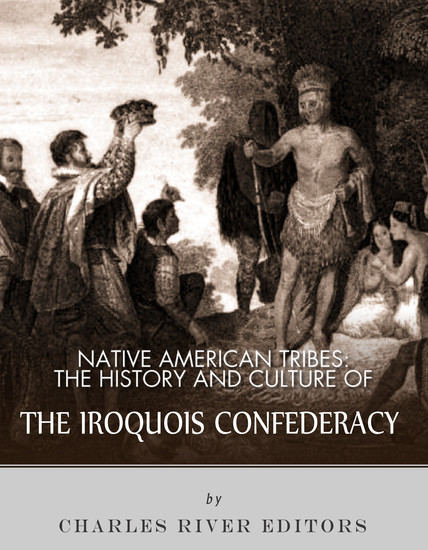
The History and Culture of the Iroquois Confederacy - cover

The History and Culture of the Iroquois Confederacy

Editors Charles River

Maison d'édition: Charles River Editors

  • 0
  • 0
  • 0

Synopsis

From the “Trail of Tears” to Wounded Knee and Little Bighorn, the narrative of American history is incomplete without the inclusion of the Native Americans that lived on the continent before European settlers arrived in the 16th and 17th centuries. Since the first contact between natives and settlers, tribes like the Sioux, Cherokee, and Navajo have both fascinated and perplexed outsiders with their history, language, and culture. In Charles River Editors’ Native American Tribes series, readers can get caught up to speed on the history and culture of North America’s most famous native tribes in the time it takes to finish a commute, while learning interesting facts long forgotten or never known.
 
Among all the Native American tribes, the Iroquois people are some of the most well documented Native Americans in history. Indigenous to the northeast region of what is now the United States and parts of Canada, they were among some of the earliest contacts Europeans had with the native tribes. And yet they have remained a constant source of mystery.
 
The name "Iroquois", like many Native American tribal names, is not a name the people knew themselves by, but a word applied to them by their enemies the Huron, who called them “Iroquo” (rattlesnake) as an insult. The French later added the suffix “ois.” Moreover, the Iroquois are not even a single tribe but a confederation of several different tribal nations that include the Seneca, Oneida, Onondaga, Mohawk, Cayuga and the Tuscarora, who didn’t become part of the union until the early 1700’s.  The name Haudenosaunee (pronounced “ho-den-oh-SHO-nee”) is the name the people use for themselves, which translates as “the People of the Longhouse.” They are also commonly known as the Six Nations.
 
Despite their own cultural differences, the nations that comprised the Iroquois Confederacy established their political dominance across much of America’s East Coast and Midwest through conquest, and it is that aspect which has perhaps best endured among Americans in terms of the Iroquois’ legacy. European settlers who came into contact with the Mohawks in the Northeast certainly learned to respect their combat skills, to the point that there were literally bounties on the Mohawks’ heads, with scalps fetching money for colonists who succeeded in slaying them and carrying away the “battle prize”.
 
In addition to the constant state of conflict between the Iroquois and different nations, including the French and the colonists, the Six Nations are perhaps best known for their political structure, and their influence on American democracy is well documented if not well known by most Americans.
 
Far from being relics of history, they are living communities who maintain political relationships with United States and Canada, as they have occupied their territories long before international borders were drawn. Their histories have left an indelible mark on the formation of the United States and Canada. Native American Tribes: The History and Culture of the Iroquois Confederacy comprehensively covers the culture and history of the Six Nations. Along with pictures depicting the Iroquois, you will learn about the Iroquois like you never have before, in no time at all.
Disponible depuis: 27/05/2025.
Longueur d'impression: 32 pages.

D'autres livres qui pourraient vous intéresser

  • Money Muscles in HUMAN BODY - cover

    Money Muscles in HUMAN BODY

    Faisal AlNashmi

    • 0
    • 0
    • 0
    This book talks about how humans should focus on developing, furnishing, and polishing their money muscles. This book argues that if a person can identify their money muscle and put it to good use, the chances of them being rich are 100 percent. The book then gives different tips to find, develop and guard the money muscle to become rich. You can use this book as a guide for your career. If you are interested in wealth creation and generation, this book can be a helpful guide
    Voir livre
  • Uncommon Ground: Rethinking our relationship with the countryside - cover

    Uncommon Ground: Rethinking our...

    Patrick Galbraith

    • 0
    • 0
    • 0
    ‘A curious-minded and subtle intervention in the politics of the countryside’ Sunday Times 
    'Galbraith spent three years investigating the truth about rural Britain and how we treat it. Uncommon Ground is the brilliant result' Daily Telegraph 
    'Very funny. Acutely observed. An attempt to look beyond the usual clichés of country life' Observer 
    “Brilliant. This book is a sort of necessary clever trespass itself, on everyone’s notions about ‘our land’.”Country Life 
    "Filled with voices from people who don’t always make the headlines in the UK land access debate."Scotsman 
    The countryside is under increasing pressure and people, the science shows, need nature. Access to the countryside is essential for our health, our happiness and our future. But does nature need us? 
    In January 2023, the largest land access demonstration since the 1930s took place on a bright wintery morning on Dartmoor. The access movement demands that the countryside be thrown open. This, they argue, would help nature by giving the public the opportunity to hold farmers and wealthy landowners to account. 
    But would it really work for Britain’s growing population to spill out across the countryside, and is access quite as restricted as we are led to believe? 
    In Uncommon Ground, Patrick Galbraith takes us on an extraordinary tour of rural Britain, from the Hebrides to Devon, and from Anglo-Saxon England to the present day. To uncover the truth and fully understand our deep connection with the land, he meets farmers, Irish Travellers, politicians, salmon poachers, and the nation's most-hated landowners, as well as activists calling for a total abolition of the right to own land. 
    In his much-celebrated style, Galbraith works hard to listen to those who often don’t get listened to. This raking survey of our fast-changing country, reveals the essence of rural Britain's soul. Uncommon Ground argues that what matters is not greater access but how we engage with the land and demands that landowners give us more opportunities to do so, while also giving endangered wildlife the right to tranquility. 
    Galbraith's Uncommon Ground is a top pick in non-fiction, offering a deep dive into the science of agriculture and the sociology of rural Britain. The book explores the delicate balance between public access and environmental protection, examining the political policies that shape our interactions with the land and the ecosystems that inhabit it. 
    For fans of John Lewis-Stempel (England), Benedict Macdonald (Cornerstones), Lee Schofield (Wild Fell), Isabella Tree (Wilding), and Derek Gow (Birds, Beasts and Bedlam). 
    HarperCollins 2025
    Voir livre
  • Selfie Snapshot The: 58 Daily Vignettes - Thoughts to mentally chew on a unique fingerprint of your personal layers of learning & processing information - cover

    Selfie Snapshot The: 58 Daily...

    Carol JC Anderson

    • 0
    • 0
    • 0
    This is a snapshot of your personal and unique way of processing information. I’ve written it over a period of many years–tweaking it as I researched and learned more about our layers of learning. 
    I’ve taught violin, raised children, and given workshops (some for music students and some for authors of children’s books where we discussed the child’s development at various ages so that when they wrote a book, they knew the thinking of their characters). 
    Kids think differently in just a matter of a few months. What scared them at six years old at seven is just a matter of fact. What made them laugh at four is no longer funny at five. 
    Some topics include: 
    Step 1: - The Dream, Step 2: Creating the Vision (under your control)-What you need to 'activate' -Chatting with the birds-Drift–Driven – Design your life-What is the Gas that Runs the Motor that Feeds the Meter? The Meter, The Motor, The Gas-Today I identified with a gas station.-Life is better when in balance-Correction/praise-Activity/stillness-Humor/thoughtfulness-Guidance/independence-How we are wired-I feel Happy,I feel healthy,I feel Terrific !!-The four D's we can actually influence and one that we can't-Disappointed-Discouraged-Disillusioned-Depressed-Dismayed-Vulnerability - the birthplace of change-Auditory Learner-Do You Deserve a Break Today?-Words have power-Guidance-Do you see, hear, or touch to process?-Super Heroes work hard-Can they burn out or feel stressed?-Have fun while studying”-Capturing the moment-Confessions of a Super Hero-Habits vs Needs-Habits meet needs.-Input vs Core Message-What we listen to makes a difference-How They Are Wired-Give Written Instructions-Sequential Learner-Map People Change the World-Zig Zag Patterns-Planting Seeds and Habits-Kinesthetic Learner-Missed Modalities-The Internal Race-How can we force change without the brain going into a tantrum-Differences in Study Needs-The Dominant Ear-Creating our own reality-Dominant foot
    Voir livre
  • The Timeline of Intelligent Life on Earth - From Millions of Years Ago To the Present - cover

    The Timeline of Intelligent Life...

    Martin K. Ettington

    • 0
    • 0
    • 0
    I’m fascinated with Ancient History because there are continuous new discoveries which push back the dawn of civilization by thousands of years. In the last couple of decades, the discoveries at Gobekli Tepe in eastern Turkey pushed back man-made structures to the time period of 9,000-11,000 B.C. Thousands of years before the next know civilizations existed. 
    This book includes my research on ancient sites around the world, underground structures, giants, the destruction of civilization about 10,500 B.C., the real Atlantis, and out of place objects which can be millions of years old. 
    Yes-I’m saying intelligent life has existed on Earth that long, and since humanity and even primates don’t exist in those times at all, aliens must have lived on the Earth at that time. 
    There are three parts to this book: 
    Part One - Millions of Years Ago 
    This includes stories of aliens existing on Earth in our history, and many out of place objects made by intelligent beings, and the fossil record which provides supporting evidence that intelligent life did exist at those times. 
    Part Two - The Unknown Civilizations of Man 
    Here we have evidence of structures built by man but way before any accepted records that civilization or man made constructions existed. Some of these things may go back 100,000 years ago. 
    Part Three – Post Ice Age Civilizations 
    This part includes evidence that the Younger Dryas event was actually comets striking the Earth which caused major disasters and probably the destruction of civilizations about 10,500 B.C. 
    My intention is that this timeline will provide a skeleton of mankind and intelligent life’s early history on Earth which can be filled in overtime to become much more detailed and prove the truth of this point of view to skeptics worldwide. 
     
    Voir livre
  • American Presidents: Behind the Scenes With America's Leaders - cover

    American Presidents: Behind the...

    One Day University

    • 0
    • 0
    • 0
    Learn from four remarkable professors in a set of One Day University presentations on the great American Presidents. The framers of the Constitution were in uncharted territory when they created the office of the presidency. No one at that time had a clear vision of what the president of a national republic would do, and only the vaguest notion existed when George Washington took the oath in 1789. For nearly 250 years, our elected Presidents have played a role in shaping what the office has become. Thomas Jefferson described the presidency as a “splendid misery,” John Quincy Adams felt it was “harassing,” and Warren Harding said simply “It’s hell!" And yet somehow some of our most notable Presidents left office with remarkable accomplishments.
    Voir livre
  • Putting the Most Into Life - cover

    Putting the Most Into Life

    Booker T. Washington

    • 0
    • 0
    • 0
    Introducing "Putting the Most Into Life: An Inspiring Audiobook by Booker Washington"Step into the world of timeless wisdom and unparalleled inspiration with "Putting the Most Into Life," an extraordinary audiobook narrated by the captivating voice of Booker Washington himself. Immerse yourself in the profound teachings and powerful life lessons that have touched countless hearts and transformed lives for generations.In this exceptional audiobook, Booker Washington, a visionary educator, author, and advocate for African American rights, shares his remarkable journey from enslavement to becoming one of the most influential figures in American history. His words resonate with passion, resilience, and an unwavering belief in the human spirit's boundless potential.With his engaging storytelling style, Booker Washington takes you on a transformative exploration of personal growth, success, and the pursuit of excellence. Discover the secrets to unlocking your full potential, overcoming adversity, and creating lasting change in your life. From practical strategies for self-improvement to profound insights on leadership, education, and the value of hard work, each chapter is filled with timeless wisdom that remains as relevant today as it was when first spoken."Putting the Most Into Life" audiobook provides a powerful companion for those seeking personal and professional growth. Whether you are a student, an entrepreneur, a leader, or simply an individual striving for a more meaningful and fulfilling life, this audiobook will inspire and empower you to take action.
    Voir livre