Rejoignez-nous pour un voyage dans le monde des livres!
Ajouter ce livre à l'électronique
Grey
Ecrivez un nouveau commentaire Default profile 50px
Grey
Abonnez-vous pour lire le livre complet ou lisez les premières pages gratuitement!
All characters reduced
The Greatest Battles in History - The Battle of Antietam - cover

The Greatest Battles in History - The Battle of Antietam

Editors Charles River

Maison d'édition: Charles River Editors

  • 0
  • 0
  • 0

Synopsis

"Those in whose judgment I rely tell me that I fought the battle splendidly and that it was a masterpiece of art. ... I feel I have done all that can be asked in twice saving the country. ... I feel some little pride in having, with a beaten & demoralized army, defeated Lee so utterly." - George McClellan
 
The names of history’s most famous battles still ring in our ears today, their influence immediately understood by all. Marathon lent its name to the world’s most famous race, but it also preserved Western civilization during the First Persian War. Saratoga, won by one of the colonists’ most renowned war heroes before he became his nation’s most vile traitor. Hastings ensured the Normans’ success in England and changed the course of British history. Waterloo, which marked the reshaping of the European continent and Napoleon’s doom, has now become part of the English lexicon. In Charles River Editors’ Greatest Battles in History series, readers can get caught up to speed on history’s greatest battles in the time it takes to finish a commute, while learning interesting facts long forgotten or never known.
 
The bloodiest day in American history took place on the 75th anniversary of the signing of the Constitution. On September 17, 1862, Robert E. Lee’s Confederate Army of Northern Virginia fought George McClellan’s Union Army of the Potomac outside Sharpsburg along Antietam Creek. That day, nearly 25,000 would become casualties, and Lee’s army would barely survive fighting the much bigger Northern army.
 
The fighting that morning started with savage fighting on the Confederate left flank near Dunker church, in a corn field and forests. The Confederates barely held the field in the north sector, but even still, Lee’s army may have been saved by the Northern army’s inability to cross the creek near “Burnside’s Bridge”. Ambrose Burnside had been given command of the "Right Wing" of the Army of the Potomac (the I Corps and IX Corps) at the start of the Maryland Campaign for the Battle of South Mountain, but McClellan separated the two corps at the Battle of Antietam, placing them on opposite ends of the Union battle line. However, Burnside continued to act as though he was a wing commander instead of a corps commander, so instead of ordering the IX corps, he funneled orders through General Jacob D. Cox. This poor organization contributed to the corps’s hours-long delay in attacking and crossing what is now called "Burnside's Bridge" on the right flank of the Confederate line.
 
The delay allowed General A.P. Hill's Confederate division to reach the battlefield from Harpers Ferry in time to save Lee’s right flank that afternoon. Fearing that his army was badly bloodied and figuring Lee had many more men than he did, McClellan refused to commit his reserves to continue the attacks. The day ended in a tactical stalemate
 
Although the battle was tactically a draw, it resulted in forcing Lee’s army out of Maryland and back into Virginia, making it a strategic victory for the North and an opportune time for President Abraham Lincoln to issue the Emancipation Proclamation, freeing all slaves in the rebellious states.
 
The Greatest Battles in History: The Battle of Antietam comprehensively covers the fighting, analyzes the decisions made by the battle’s most important leaders, and explains the aftermath of the battle and the legacies that were made and tarnished by the battle. Along with a bibliography, maps of the battle, and pictures of important people and places, you will learn about the Battle of Antietam like you never have before.
Disponible depuis: 02/05/2025.
Longueur d'impression: 50 pages.

D'autres livres qui pourraient vous intéresser

  • Pigeons - The Fascinating Saga of the World's Most Revered and Reviled Bird - cover

    Pigeons - The Fascinating Saga...

    Andrew D. Blechman

    • 0
    • 0
    • 0
    A "quirky, endlessly entertaining" look at the surprising history of the pigeon (Simon Winchester). 


    Domesticated since the dawn of man, pigeons have been used as crucial communicators in war by every major historical superpower from ancient Egypt to the United States and are credited with saving thousands of lives. They have been worshipped as fertility goddesses and revered as symbols of peace. Charles Darwin relied heavily on pigeons to help formulate and support his theory of evolution. Yet today they are reviled as "rats with wings." 


    To research this lively history of the humble pigeon, the author traveled across the United States and Europe to meet with pigeon fanciers and pigeon haters in a quest to find out how we came to misunderstand one of mankind’s most helpful and steadfast companions. Pigeons captures a Brooklyn man's quest to win the Main Event (the pigeon world's equivalent of the Kentucky Derby), as well as a convention dedicated to breeding the perfect bird. The author participates in a live pigeon shoot where entrants pay $150; he tracks down Mike Tyson, the nation's most famous pigeon lover; he spends time with Queen Elizabeth's Royal Pigeon Handler; and he sheds light on a radical "pro-pigeon underground" in New York City. In Pigeons, Andrew D. Blechman reveals for the first time the remarkable story behind this seemingly unremarkable bird.
    Voir livre
  • Respect - The Value of Others - Honoring Every Person's Worth - cover

    Respect - The Value of Others -...

    Esther Jameson

    • 0
    • 0
    • 0
    Respect is a foundational human value that extends beyond simple manners or etiquette. It embodies an acknowledgment of each person’s inherent dignity and worth, regardless of differences in background, beliefs, or experiences. Understanding respect involves recognizing the importance of empathy, fairness, and the willingness to honor the rights and contributions of others. It is a dynamic concept that evolves as societies grow more aware of the diversity and complexity of the human condition. 
    Historically, respect has been central to various cultural, philosophical, and religious traditions. In many ancient civilizations, respect was closely tied to honor and social hierarchy, where individuals were expected to show deference to elders, leaders, and those who possessed wisdom. Over time, however, the meaning of respect has broadened significantly. Modern interpretations emphasize equality, mutual recognition, and the importance of each individual’s unique journey. This evolution reflects a collective shift towards a more inclusive perspective, where every person is seen as deserving of respect simply by virtue of being human. 
    Empathy plays a crucial role in cultivating respect. By seeking to understand the experiences, struggles, and aspirations of others, individuals can overcome prejudices and foster an environment of understanding. This empathetic approach enables people to view interactions from perspectives other than their own, leading to more meaningful and supportive relationships. As empathy deepens, respect becomes a natural outcome of genuine human connection, transcending superficial differences and encouraging compassion in everyday interactions.
    Voir livre
  • The Colonial Legacy - How Colonialism Shaped Modern Political and Economic Landscapes - cover

    The Colonial Legacy - How...

    Arlo Holders

    • 0
    • 0
    • 0
    Colonialism has been a defining force in shaping the modern world, leaving an indelible mark on political systems, economic structures, and cultural identities. At its core, colonialism is the practice of domination, where one nation establishes control over another, often exploiting its resources and people for economic and political gain. While the phenomenon of colonialism spans centuries, its modern form gained momentum during the Age of Exploration in the 15th and 16th centuries, when European powers began venturing across the globe in search of wealth, land, and influence. 
    The roots of colonialism lie in the desire for expansion and power. Early explorers like Christopher Columbus, Vasco da Gama, and Ferdinand Magellan set the stage for European empires to claim vast territories across Africa, Asia, and the Americas. These expeditions were often justified by a mix of economic motives, religious zeal, and a belief in cultural superiority. The promise of lucrative trade routes, access to valuable resources such as spices, gold, and silver, and the opportunity to spread Christianity drove these early ventures. Over time, colonial ambitions evolved into fully-fledged empires, with nations like Britain, Spain, Portugal, France, and the Netherlands establishing global dominance. 
    Colonial rule profoundly altered the political and social structures of the colonized regions. Indigenous governance systems were often dismantled and replaced with centralized administrations that reflected the interests of the colonizing power. This shift not only disrupted traditional ways of life but also laid the foundation for many of the political challenges faced by former colonies today. Economically, colonies were exploited for their resources, creating a system of wealth extraction that enriched the colonizers at the expense of local populations.
    Voir livre
  • The Growing Roots - cover

    The Growing Roots

    Santiago Machain

    • 0
    • 0
    • 0
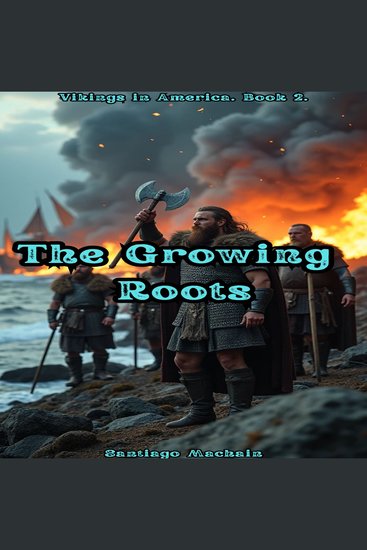
    The Growing Roots continues the multigenerational saga of a family forging their legacy on new land. As the family expands, they face the challenges of blending old traditions with new realities, welcoming newcomers, and navigating the complexities of community, trade, and law. Through shared stories, alliances, and the arrival of missionaries and other settlers, the family learns to adapt, preserve their heritage, and deepen their connection to the land and each other. The narrative explores the evolution of customs, the forging of written laws, and the celebration of unity through festivals, all while confronting the ever-present challenges of distance, change, and cultural exchange. Ultimately, the family's roots grow deeper, anchoring them in a legacy of resilience, cooperation, and hope for future generations.
    Voir livre
  • Emotional Blackmail - Understanding And Dealing With Manipulative People Like A Pro - cover

    Emotional Blackmail -...

    Antony Felix

    • 0
    • 0
    • 0
    Break Free from Manipulation: Reclaim Your Life and Sanity! 
    Have you heard statements like, “If you don’t do this, I will…” (threat) or “You’re the reason this is happening…” (blame)? Are you always the one apologizing, sacrificing, and walking on eggshells to keep the peace? 
    If this sounds familiar, you might be trapped in emotional blackmail—a manipulative tactic that erodes your confidence and happiness. Whether it’s a partner, parent, friend, or colleague, this book is your guide to recognizing, addressing, and ending manipulation for good.What You’ll Learn:How to identify emotional manipulation and know if it’s happening to you.The 4 ingredients and 6 tactics emotional blackmailers use.Subtle signs of manipulation and how to spot them early.Why manipulators target you and how to change that dynamic.Powerful strategies to set boundaries and break free.How to protect yourself from future manipulation. 
    It’s time to reclaim your freedom, rebuild your confidence, and take control of your life. Start your journey to freedom today!
    Voir livre
  • Internal Family Systems Guide to Recovery from Eating Disorders An - Healing Part by Part - cover

    Internal Family Systems Guide to...

    Amy Yandel Grabowski

    • 0
    • 0
    • 0
    Drawing on the evidence-based Internal Family System (IFS) therapy model, An Internal Family Systems Guide to Recovery from Eating Disorders: Healing Part by Part addresses the necessity of healing the eating disorder sufferer's three groups of inner "Parts": the Mentors, the Advocates, and the Kids. In order to reconnect to their sense of Self and to achieve an inner balance necessary for recovery, the listener learns to address the unique needs of each of their "Parts." Written in an accessible style, this book combines compassionate examples from the author's client cases and her own recovery with a step-by-step framework for identifying and healing the listeners' Parts using the IFS model. Each chapter ends with questions for the listener to answer to further enhance their personal recovery. An Internal Family Systems Guide to Recovery from Eating Disorders: Healing Part by Part will be essential to mental health professionals treating clients with eating disorders and to the clients themselves.
    Voir livre