Begleiten Sie uns auf eine literarische Weltreise!
Buch zum Bücherregal hinzufügen
Grey
Einen neuen Kommentar schreiben Default profile 50px
Grey
Jetzt das ganze Buch im Abo oder die ersten Seiten gratis lesen!
All characters reduced
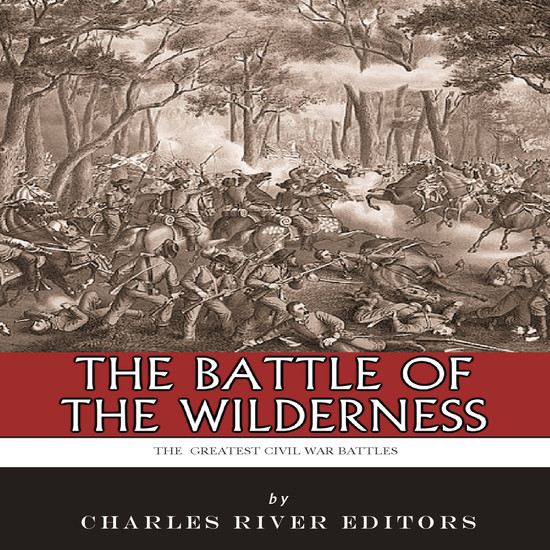
The Battle of the Wilderness - cover

The Battle of the Wilderness

Editors Charles River

Verlag: Charles River Editors

  • 0
  • 0
  • 0

Beschreibung

“Numbers meant little—in fact, they were frequently an encumbrance on the narrow trails. Visibility was limited, making it extremely difficult for officers to exercise effective control. Attackers could only thrash noisily and blindly forward through the underbrush, perfect targets for the concealed defenders.” – Col. Vincent J. Esposito
 
With Robert E. Lee’s Army of Northern Virginia continuing to frustrate the Union Army of the Potomac’s attempts to take Richmond in 1862 and 1863, President Lincoln shook things up by turning command of all the armies of the United States to Ulysses S. Grant in March 1864. , Lee had won stunning victories at battles like Chancellorsville and Second Bull Run by going on the offensive and taking the strategic initiative, but Grant and Lincoln had no intention of letting him do so anymore. Attaching himself to the Army of the Potomac, Grant ordered Army of the Potomac commander George Meade, "Lee's army is your objective point. Wherever Lee goes, there you will go also."


From May 5-7, the two most famous generals of the Civil War squared off for the first time. The 100,000 strong Army of the Potomac was double the size of Lee’s hardened but battered Army of Northern Virginia. It was a similar position to the one George McClellan had in 1862 and Joe Hooker had in 1863, and Grant’s first attack, at the Battle of the Wilderness, followed a similar pattern. Nevertheless, Lee proved more than capable on the defensive.
 
The Battle of the Wilderness was fought so close to where the Battle of Chancellorsville took place a year earlier that soldiers encountered skeletons that had been buried in shallow graves in 1863. Moreover, the  woods were so thick that neither side could actually see who they were shooting at, and whole brigades at times got lost in the forest. Both armies sustained heavy casualties while Grant kept attempting to move the fighting to a setting more to his advantage, but the heavy forest made coordinated movements almost impossible.
 
On May 5 and May 6, both armies attempted desperate attacks and counterattacks to strike a knockout blow, but they were ultimately unable to dislodge each other. Given the terrain and the nature of the fighting, it was one of the most horrendous battles of the war, with some wounded men literally burning to death in fires ignited by the battle that sparked the nearby underbrush and spread rapidly. The defending Confederates technically won a tactical victory by holding their ground, but they did so at a staggering cost, inflicting 17,000 casualties on the Army of the Potomac and suffering 11,000 of their own.
 
On May 7, Grant disengaged his army from the battle. His objective had been frustrated by Lee’s skillful defense, the same position as Hooker at Chancellorsville, McClellan on the Virginian Peninsula, and Burnside after Fredericksburg. His men got the familiar dreadful feeling that they would retreat back toward Washington, as they had too many times before. This time, however, Grant made the fateful decision to keep moving south, inspiring his men by telling them that he was prepared to “fight it out on this line if it takes all Summer.” The Battle of the Wilderness would only be the beginning of the Overland Campaign, not the end of it.
 
The Greatest Civil War Battles: The Battle of the Wilderness comprehensively covers the campaign and the events that led up to the battle, the fighting itself, and the aftermath of the battle. Accounts of the battle by important participants are also included, along with maps of the battle and pictures of important people, places, and events. You will learn about the Wilderness like you never have before, in no time at all.
Verfügbar seit: 02.05.2025.
Drucklänge: 45 Seiten.
Weitere Bücher, die Sie mögen werden

  • The Caledoniad - The Making of Scottish History - cover

    The Caledoniad - The Making of...

    Catriona M.M. MacDonald

    • 0
    • 0
    • 0
    Winner of the 2025 Frank Watson Book Prize
    Why did Scots in the nineteenth and twentieth centuries know so little about their past and even less about those who controlled their history? Is the historical narrative the only legitimate medium through which the past can be made known? Are novelists and historians as far apart as convention has it? In an age when history grounds any claims to national status, these are important questions and they have implications for how Scottish history has evolved, and how Scottish identity has been understood up to the present day.
    Scottish history is not simply the distillation of Scotland's past: authors shape what we know and how we judge our forebears. This book investigates who decided which Scottish voices of the past would be heard in history's pages and which would ultimately be silenced. It sketches a picture of a narrow and privileged cultural elite that responded belatedly to a more democratic age and only slowly embraced women writers and the interests of 'average' Scots. Integrating historical fiction and popular histories in its appreciation of the Scottish historical imaginary, it most importantly tells the story of why, despite the interests of politicians and others, a truly British history has never emerged.
    'A brilliant, scholarly yet highly readable work which enlarges our understanding of what Scottish history is, and reinforces why it really matters' - James Robertson
    Zum Buch
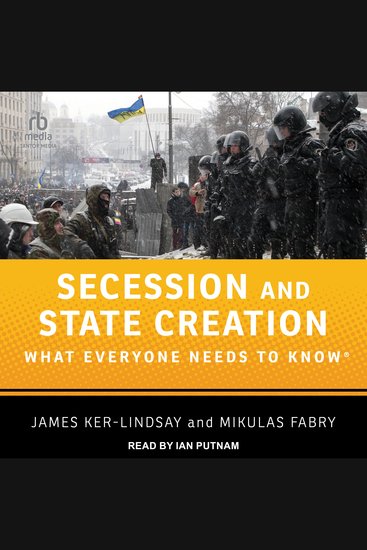
  • Secession and State Creation - What Everyone Needs to Know - cover

    Secession and State Creation -...

    Mikulas Fabry, James Ker-Lindsay

    • 0
    • 0
    • 0
    What makes a state? This question has attracted more and more attention in recent years with Catalan's illegal vote for independence from Spain and Palestine's ongoing search for international recognition. And while Scotland chose to remain with the United Kingdom, discussions of independence have only continued as the ramifications of the Brexit vote begin to set in. Kosovo, South Sudan, and the situation in Ukraine—each in its way reveals the perils of creating a nation separate from neighbors who have dominated it. 


    As James Ker-Lindsay and Mikulas Fabry show in this new addition to the What Everyone Needs to Know® series, the road to statehood never did run smooth. Declaring independence is only the first step; gaining both local and global acceptance is necessary before a state can become truly independent. The prospect of losing territory is usually not welcomed by the parent state. Beyond this immediate conflict, the international community often refuses to accept new states without proof of defined territory, a settled population, and effective government, which frequently translates to a democratic one with demonstrated respect for human rights. Covering the legal, political, and practical issues of secession and state creation, Ker-Lindsay and Fabry provide a sure-footed guide to a complex topic.
    Zum Buch
  • The Unknown - Exploring Infinite Possibilities in a Conformist World - cover

    The Unknown - Exploring Infinite...

    Dan Desmarques

    • 0
    • 0
    • 0
    Embark on a transformative journey with The Unknown: Exploring Infinite Possibilities in the Modern World, a profound and enlightening book that challenges conventional beliefs and offers a fresh perspective on self-discovery and empowerment. This revolutionary guide invites readers to explore the depths of their minds, challenging them to rewire their thought patterns and embrace a new way of living. 
    In this groundbreaking exploration of consciousness and reality, readers are presented with a comprehensive roadmap for navigating the complexities of modern life and tapping into the infinite possibilities that lie within. Combining scientific knowledge, spiritual wisdom, and practical advice, The Unknown empowers readers to unlock their latent potential and manifest their deepest desires. 
    Drawing on a wide range of spiritual traditions, philosophical insights, and scientific discoveries, this book gives readers the tools they need to break free from limiting beliefs and align their reality with their highest aspirations. Join a community of like-minded individuals who have embraced a new way of thinking and being and step into a future of limitless potential. Let The Unknown serve as your compass on the path to self-actualization, empowerment, and transformation.  
    Are you ready to rewrite your story and manifest a life beyond your wildest dreams? Now is the time to embrace The Unknown and unlock the extraordinary potential that lies within you.
    Zum Buch
  • Fear in Consciousness - Malibu 1970 - Small Group Discussion 6 - cover

    Fear in Consciousness - Malibu...

    Jiddu Krishnamurti

    • 0
    • 0
    • 0
    "Fear in consciousness"—22 March 1970 
     
    How does it happen that the deep layers hidden in consciousness can be exposed?Comparison between what is with what has been and what will be, is the process of fear.Can the mind observe without comparison?
    Zum Buch
  • How to Care About Animals - An Ancient Guide to Creatures Great and Small - cover

    How to Care About Animals - An...

    Porphyry

    • 0
    • 0
    • 0
    An entertaining and enlightening anthology of classical Greek and Roman writings on animals—and our vital relationships with them 


    How to Care about Animals is a fascinating menagerie of passages from classical literature about animals and the lives we share with them. Drawing on ancient writers from Aesop to Ovid, classicist and farmer M. D. Usher has gathered a healthy litter of selections that reveal some of the ways Greeks and Romans thought about everything from lions, bears, and wolves to birds, octopuses, and snails—and that might inspire us to rethink our own relationships with our fellow creatures. Presented in lively new translations, these pieces are filled with surprises—anticipating but also offering new perspectives on many of our current feelings and ideas about animals. 


    Here, Porphyry makes a compelling argument for vegetarianism and asserts that the just treatment of animals makes us better people; Pliny the Elder praises the virtuosity of songbirds and the virtuousness of elephants; Plutarch has one of Circe's pigs from the Odyssey make a serio-comic case for the dignity of the beasts of the field; Aristotle puts the study of animals on par with anthropology; we hear timeless Aesopian fables, including "The Hen That Laid the Golden Egg" and "The Fox and the Grapes"; and there is much, much more.
    Zum Buch
  • Suspended Education - School Punishment and the Legacy of Racial Injustice - cover

    Suspended Education - School...

    Aaron Kupchik

    • 0
    • 0
    • 0
    Every year, millions of public school students are suspended. This overused punishment removes students from the classroom, but it does not improve their behavior. Instead, suspension disrupts their education, harming the students, their families, and their schools. Black students suffer most within this broken system, experiencing a far greater risk of school punishment and the significant harms that accompany it. Many activists and scholars have considered how school punishment increases racial inequity, but few have thought to ask why. Why do we punish students the way we do, and why have we allowed this harmful practice to impact the lives of our nation's children? 


    In Supended Education, Aaron Kupchik shows that suspensions were not intended as a behavior management tool. Instead, they were designed to remove unwanted students from the classroom. Through statistical analysis and in-depth case studies of schools in Massachusetts and Delaware, Kupchik reveals how suspension rates skyrocketed after the 1954 Brown v. Board of Education decision, serving as an unofficial means of removing Black children from newly desegregated schools. His groundbreaking research traces the legacy of these segregationist movements, demonstrating that school districts with more desegregation-related legal battles from the 1950s onward suspend more Black students today.
    Zum Buch