Rejoignez-nous pour un voyage dans le monde des livres!
Ajouter ce livre à l'électronique
Grey
Ecrivez un nouveau commentaire Default profile 50px
Grey
Abonnez-vous pour lire le livre complet ou lisez les premières pages gratuitement!
All characters reduced
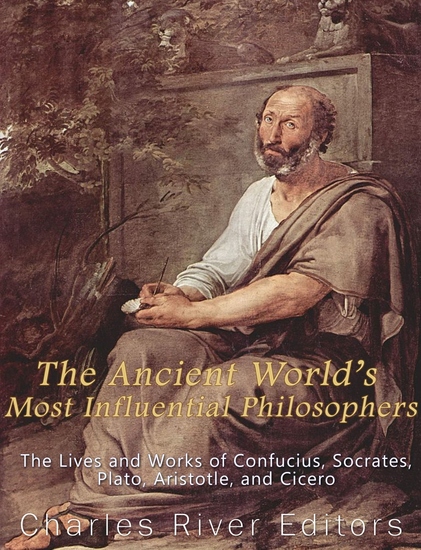
The Ancient World’s Most Influential Philosophers - The Lives and Works of Confucius Socrates Plato Aristotle and Cicero - cover

The Ancient World’s Most Influential Philosophers - The Lives and Works of Confucius Socrates Plato Aristotle and Cicero

Editors Charles River

Maison d'édition: Charles River Editors

  • 0
  • 0
  • 0

Synopsis

Many people argue that Confucius is the most influential person of all time, and if having a significant effect on the greatest number of people is the criterion, he may very well be. China is one of the largest and oldest civilizations on earth, and Confucius has been influential there from almost the beginning: the first Chinese dynasty was founded around 1600 BCE and Confucius lived from 551-479 BCE.
 
Although he is still one of history’s most famous philosophers, Confucius was in many respects an unremarkable man, and even his physical features were said to be unattractive. There is little evidence that he thought of himself as a harbinger of any kind, but shortly after his death, writings, sayings, and theories based on his life and ideas spread throughout China and even took hold of the imperial court of one of the most powerful and important dynasties, the Han (206 BCE-220 CE). It was during the Han Dynasty that Confucianism became closely tied to state affairs, and it would remain so until the fall of the last dynasty in 1912. Confucianism was closely tied to state religious and ritual practice, and naturally, it benefited greatly from this relationship and was able to subsequently exert influence on all aspects of society.[1] As a "state religion", it provided "religious sanction for policy-making, official sacrifices, court ceremonies, royal marriage, funeral and mourning rights" as well as several major sacrifices to gods and ancestors.[2] Confucianism continues to reverberate to the present day; the Chinese Communist Party still discusses Confucius in their official newspapers and references his thought when they think it will help promote a political or social stance.
 
In 427 B.C., the Ancient Greek city-state of Athens was flourishing.  Approximately 80 years earlier, the Athenians had formed the first self-representative democracy in history, the Peloponnesian War against Sparta had only just started, and Socrates was only beginning to lay the foundation of what would become Western philosophy. 
 
None of Socrates’ works survived antiquity, so most of what is known about him came from the writings of his followers, most notably Plato.  What is known about Socrates is that he seemed to make a career out of philosophy, and Plato was intent on following in his footsteps. Yet for all of the influence of Socrates’ life on his followers, it was Socrates’ death around 399 B.C. that truly shaped them.  Plato was so embittered by Socrates’ trial in Athens that he completely soured on Athenian democracy, and Aristotle would later criticize politicians who relied on rhetoric; when Aristotle’s own life was threatened, he fled Greece and allegedly remarked, “I will not allow the Athenians to sin twice against philosophy."
 
Since Socrates wrote nothing down, or at least nothing that survived antiquity, there has been a wealth of scholarship ever since attempting to determine the person to whom the philosophical positions of the various (and genuine) Socratic dialogues of Plato’s should be attributed. Even though Aristotle insisted that Socrates only cared about ethics and held no metaphysical theory of the kind that Plato propounded, the attempt to read the ugly but wise Socrates via the Platonic dialogues continued up to the 20th century. The change of tone, style and philosophical topics seemed to be a big argument that Socratic views are to be found in the early Platonic works, whereas later works bear the stamp of Plato’s personal views. The Platonic scholar Gregory Vlastos introduced a developmentalist position which has almost become an orthodoxy in Platonic studies, by moving the discussion from the historical Socrates to Plato as a philosopher. According to developmentalism, if the views in the dialogue are not spelled out only to be refuted afterward, then the person they should be attributed to is Plato and not Socrates. These philosophical views developed over time.
Disponible depuis: 01/05/2025.
Longueur d'impression: 154 pages.


D'autres livres qui pourraient vous intéresser

  • Could Jo Starting A School For Boys Be A Feminist Act - Little Women Podcast - cover

    Could Jo Starting A School For...

    Niina Niskanen

    • 0
    • 0
    • 0
    Many people wonder why Jo starts a school for boys..even though Little Women mentions how much Jo loves boys many times. In Little Men, we can see how Jo and Friedrich wish that their boys grow to respect women, so could Jo starting a school for boys actually be a feminist act? 
    There are lots of people who say that Friedrich forced Jo to start a school or Friedrich forced Jo to become a teacher. None of that happens in the novel. So have these people even read Little Women? In the book, Jo is the one who says that she wants to start a school. Her exact words are Quote "even before I met my Fritz, I used to think how when I made my fortune and no one needed me at home, I'd hire a big house and pick up some poor fore-long little lads who hadn't any mothers and take care of them and make life jolly for them before it was too late. 
    I see so many of them going to ruin for want of help, and at the right minute. I love them, so to do anything for them, I seem to feel their wants and sympathize with their troubles. I know I should so like to be a mother to them". End quote. In the scene in the book where Jo explains her plans on starting school, she clearly says that what she wants to do is to have a flock of boys that she can nurture, she can take care of them and can be a mother to them and love them. A lot of people erase the maternal elements from Jo's character.
    Voir livre
  • Midnight Cry - A Shooting on Sand Mountain - cover

    Midnight Cry - A Shooting on...

    Lesa Carnes Shaul

    • 0
    • 0
    • 0
    Close to midnight on May 17, 1951, four north Alabama lawmen drove to a bootlegger's home to serve an arrest warrant. Before the clock struck twelve, the bootlegger lay dead in front of the house he shared with his wife and eight children, and three of the four officers were also dead. Afterward, a sixteen-year-old boy would face a series of trials that would divide a county and thrust the state of Alabama into the national spotlight. 


    Lesa Carnes Shaul draws on court documents, trial transcripts, newspaper articles, and personal interviews to weave together a rollicking and illuminating tale of murder and revenge. The narrative explores the cultural shifts that occurred after World War II in the United States, the Deep South, and the state of Alabama in particular. 


    Immediately after the war, many southern states stood poised to advance toward a progressive New South yet struggled with the legacy of race and class inequities, retrograde government policies, and a stubborn resistance to change. Sand Mountain represented a kind of "land that time forgot," even as nearby cities like Huntsville and Birmingham sought to claim a place on the national stage in technology, industry, business, and medicine. Through her investigation of this murder trial, Shaul reveals the backwoods justice at play in this isolated area of the American South.
    Voir livre
  • Russia's War - cover

    Russia's War

    Jade McGlynn

    • 0
    • 0
    • 0
    In the early hours of February 24, 2022, Russian forces attacked Ukraine. The brutality of the Russian assault has horrified the world. But Russians themselves appear to be watching an entirely different war—one in which they are the courageous underdogs and kind-hearted heroes successfully battling a malign Ukrainian foe. 


    Russia analyst Jade McGlynn takes us on a journey into this parallel military and political universe to reveal the sometimes monstrous, sometimes misconstrued attitudes behind Russian majority backing for the invasion. Drawing on media analysis and interviews with ordinary citizens, officials and foreign-policy elites in Russia and Ukraine, McGlynn explores the grievances, lies and half-truths that pervade the Russian worldview. She also exposes the complicity of many Russians, who have invested too deeply in the Kremlin's alternative narratives to regard the war as Putin's foolhardy mission. In their eyes, this is Russia's war—against Ukraine, against the West, against evil—and there can be no turning back.
    Voir livre
  • Folk Myths and Legends - Exploring the Realms of the Dead - cover

    Folk Myths and Legends -...

    Odessa Nightshade

    • 0
    • 0
    • 0
    Since the dawn of civilization, storytelling has been an essential part of human culture. Long before written language, myths and legends were passed down through generations, shaping societies, preserving history, and explaining the mysteries of the world. These tales, often woven with elements of the supernatural, serve not only as entertainment but also as a means of teaching values, reinforcing traditions, and connecting people to their heritage. Whether told around a fire, painted on cave walls, or transcribed into sacred texts, myths and legends offer profound insights into the beliefs and customs of different cultures.  
    One of the most remarkable aspects of folklore is its universality. While each culture has its own unique stories, striking similarities emerge when comparing myths from different parts of the world. Themes of creation, heroism, trickery, love, and the afterlife appear across civilizations, suggesting a shared human experience. The flood myth, for example, exists in various forms in Mesopotamian, biblical, Hindu, and Indigenous traditions, each with its own interpretation but conveying a common theme of destruction and renewal. These recurring motifs highlight how storytelling transcends time and geography, reinforcing the idea that despite cultural differences, people everywhere grapple with similar questions about existence, morality, and destiny.  
    Myths and legends also serve as powerful tools for shaping identity and societal values. Many of history’s greatest civilizations—Greek, Norse, Egyptian, and Chinese, among others—built their cultural foundations upon stories of gods, heroes, and mythical creatures. These tales not only provided explanations for natural phenomena but also established codes of behavior, demonstrating the rewards of courage, loyalty, and wisdom while warning against greed, deceit, and hubris.
    Voir livre
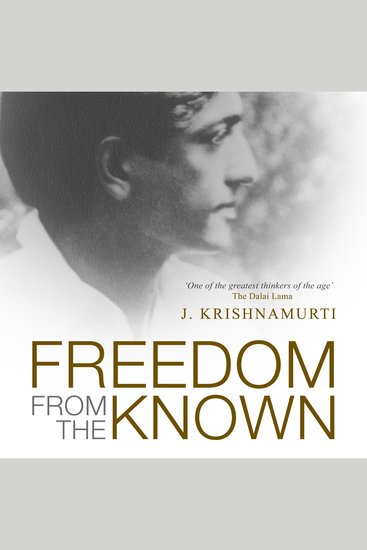
  • Freedom From The Known - cover

    Freedom From The Known

    Jiddu Krishnamurti

    • 0
    • 0
    • 0
    Born in poverty in India, Jiddu Krishnamurti (1895-1986) became a leading spiritual and philosophical thinker whose ideas continue to influence us today. George Bernard Shaw declared that he was the most beautiful human being he had ever seen and Aldous Huxley was one of his close friends. Whether debating politics with Nehru, discussing theories with Rupert Sheldrake and Iris Murdoch, or challenging his students not to take his words at face value, Krishnamurti engaged fully with every aspect of life. He is regarded by many modern religious figures as a great teacher, an extraordinary individual with revolutionary insights; Joseph Campbell, Alan Watts, Eckhart Tolle and Deepak Chopra are all indebted to his writings.
     
    Freedom from the Known is one of Krishnamurti's most accessible works. Here, he reveals how we can free ourselves radically and immediately from the tyranny of the expected. By changing ourselves, we can alter the structure of society and our relationships. The vital need for change and the recognition of its very possibility form an essential part of this important book's message.
    Voir livre
  • Club Connection - cover

    Club Connection

    Rod Mandelli

    • 0
    • 0
    • 0
    Horny Jake cruises a gay club to find the man of his dirty dreams - a blue collar stud with a hairy chest, dark eyes, and something incredibly huge between his legs. Will he bed the guy teasing him with the beer bottle?
    Voir livre