Rejoignez-nous pour un voyage dans le monde des livres!
Ajouter ce livre à l'électronique
Grey
Ecrivez un nouveau commentaire Default profile 50px
Grey
Abonnez-vous pour lire le livre complet ou lisez les premières pages gratuitement!
All characters reduced
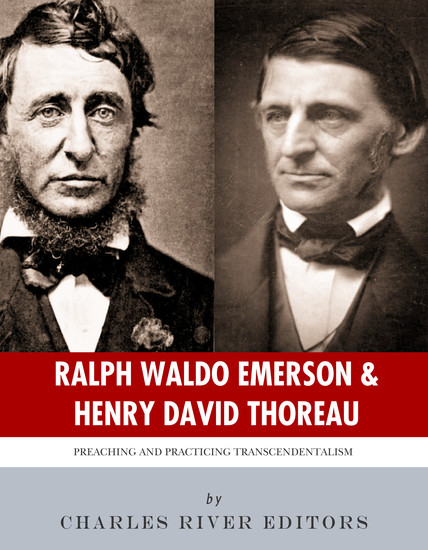
Ralph Waldo Emerson & Henry David Thoreau - Preaching and Practicing Transcendentalism - cover

Ralph Waldo Emerson & Henry David Thoreau - Preaching and Practicing Transcendentalism

Editors Charles River

Maison d'édition: Charles River Editors

  • 0
  • 0
  • 0

Synopsis

In the mid-19th century, Romantic literature was still in full bloom across the West, but some American authors began producing literature that, while still Romantic, was unique enough to be considered a different genre.  This new genre, Transcendentalism, focused on the spirituality of the self and nature, not rejecting religion outright but concentrating on pragmatism and the importance of individuals as the spiritual center of the cosmos.  In addition to drawing upon the Age of Enlightenment, Transcendentalist authors also utilized the philosophy of Plato, who taught that self-fulfillment through attaining knowledge should be an individual’s ultimate goal.
 
The leader of Transcendentalism, and the man who ushered the movement’s practices and literature, was Ralph Waldo Emerson (1802-1883), one of America’s most famous writers and speakers. Whereas Romantic literature typically took the form of poetry, novels and short stories, Emerson often disregarded those traditional structures and wrote essays. Emerson initiated Transcendentalism with the publishing of his essay Nature in 1836, which espoused the virtues of nature and the interconnectedness of all life in nature. With his focus on the environment and natural history, Emerson became the first major American writer whose work was not influenced in any way by European literature. 
 
But Emerson didn’t just write Transcendentalist literature; he practiced what he preached. Now at the forefront of a movement, Emerson established group meetings, gave a series of lectures, and helped produce a Transcendentalist publication in the 1840s, which included his famous essay Self-Reliance. As Emerson’s movement and stature grew, he befriended other authors, including Nathaniel Hawthorne, Louisa May Alcott, and Henry David Thoreau, who became his greatest protégé. 
 
One of the most famous Transcendentalists, and possibly its most ardent practitioner, was Henry David Thoreau (1817-1862). As a protégé of Ralph Waldo Emerson, Thoreau took the values of the movement to heart and was particularly interested in the interconnection between man and nature, writing in Walden, “Most of the luxuries and many of the so-called comforts of life are not only not indispensable, but positive hindrances to the elevation of mankind." That famous work was Thoreau’s account of his experience living for two years in a small cabin in a forest along the shore of Walden Pond in Concord, Massachusetts.
 
In 1846, Thoreau was arrested for failing to pay taxes, which was based on his opposition to slavery and other ways the government spent taxpayers’ money. After being freed, he gave a lecture about the roles of governments and individuals in society, which eventually became the famous essay “Civil Disobedience.” In addition to rejecting any government “which is the slave's government also," Thoreau famously advocated “the majority of one”, calling upon people to break unjust laws. As fate would have it, Thoreau’s message of civil disobedience has resonated more than any of his other Transcendentalist values, and it had a profound influence on the philosophy and nonviolent protests of activists like Mahatma Gandhi and Martin Luther King, Jr.
 
Ralph Waldo Emerson & Henry David Thoreau looks at the life and work of Thoreau, and it examines his ideology and the Transcendentalist movement. Along with pictures of important people and places, you will learn about Thoreau like you never have before, in no time at all.
Disponible depuis: 20/06/2025.
Longueur d'impression: 81 pages.

D'autres livres qui pourraient vous intéresser

  • Om swami - cover

    Om swami

    Vinitha R, Amol Raikar

    • 0
    • 0
    • 0
    That morning, like every other day, he woke up, had his breakfast, got dressed up for work and left. But that evening, instead of returning home, he boarded a train to take him away from all his daily certainties—the people he loved and from the wealth he owned.
    
    Leaving behind a million-dollar business, his favourite Porsche, this chess champion, and sought-after motivational speaker, with no warning and no intimation to his family, simply walked away from it all at the age of 21. Did he know that he was probably walking through the door of no-return, leaving behind a loving and supportive family? Perhaps. It's not that he didn't care about their feelings. Rather it was because he no longer could turn a deaf ear to his inner calling.
    
    "The millions of dollars in my bank account, my cars, my properties are all material wealth and at the end of the day, lifeless. I wasn't born with these possessions and won't take it away with me when I die. So, is it worth the struggle? What is life all about then?"
    
    With one stroke he cast away the labels—son, brother, CEO, MBA-holder—that he felt defined him. He called this new life nakedness, not in physical terms but in being nothing, having nothing, not even an identity or a name, a life of a monk, Om Swami.
    Voir livre
  • The Timeline of Intelligent Life on Earth - cover

    The Timeline of Intelligent Life...

    Martin K. Ettington

    • 0
    • 0
    • 0
    I’m fascinated with Ancient History because there are continuous new discoveries which push back the dawn of civilization by thousands of years. In the last couple of decades, the discoveries at Gobekli Tepe in eastern Turkey pushed back man-made structures to the time period of 9,000-11,000 B.C. Thousands of years before the next know civilizations existed.This book includes my research on ancient sites around the world, underground structures, giants, the destruction of civilization about 10,500 B.C., the real Atlantis, and out of place objects which can be millions of years old.With this collection of a wide variety of information I decided that what is needed is a full timeline of intelligent life on Earth from millions of years ago to the present. There are a lot of gaps in this information but enough records, findings, and discoveries exist to propose an initial timeline of intelligent life on Earth going back hundreds of millions of years.Yes-I’m saying intelligent life has existed on Earth that long, and since humanity and even primates don’t exist in those times at all, aliens must have lived on the Earth at that time. There are three parts to this book:Part One - Millions of Years AgoThis includes stories of aliens existing on Earth in our history, and many out of place objects made by intelligent beings, and the fossil record which provides supporting evidence that intelligent life did exist at those times.Part Two - The Unknown Civilizations of ManHere we have evidence of structures built by man but way before any accepted records that civilization or man made constructions existed. Some of these things may go back 100,000 years ago.Part Three – Post Ice Age CivilizationsThis part includes evidence that the Younger Dryas event was actually comets striking the Earth which caused major disasters and probably the destruction of civilizations about 10,500 B.C.My intention is that this timeline will provide a skeleton to be filled in.
    Voir livre
  • The Beginner's Guide to Stoicism - The Ultimate Beginner’s Guide to Master the Tools for Emotional Resilience & Positivity and to Make Your Everyday Modern Life Calm Confident & Positive - cover

    The Beginner's Guide to Stoicism...

    Marc Salzgeber

    • 0
    • 0
    • 0
    Do you want to find the path to a meaningful and happy life? Have you heard about Stoicism, and do you want to learn more about it? If yes, then keep reading! 
    Bear in mind that happiness is not a moment of glory and it’s not achieved overnight. If you want to control your emotions and have a stress-free life, this step by step guide will help you start in the world of Stoicism. 
    Stoicism is simply a wisdom philosophy. In other words, it is a philosophy that teaches you how to live life well. Every human being desires to live a life of happiness, and Stoicism seeks to increase your happiness. The Stoic philosophy saw all genders, races, and social classes as being equal to one another. This also explains why Stoicism has managed to survive for more than 2300 years. It is acceptable to people of all colors, classes, and cultures. It has evolved together with humanity. 
    In this compelling and practical book, Marc Salzgeber will show you the right path to a happier, calm, and wise life in a chaotic world like ours. This blueprint connects the ancient philosophy with the modern world and helps you overcome your daily life challenges by building mental and emotional strength and lead a life of wisdom, perseverance, and joy. 
    Whether you are a beginner, or you’ve heard about Stoicism before, this book will guide you through your Stoic journey, improving your level of consciousness and helping you to face the challenges of our world in the wisest and practical way. 
    Change your perception, focus on positivity―become the best version of yourself with The Beginner’s Guide to Stoicism, click “Buy Now”
    Voir livre
  • Greek Made Easy - Beginner - Volume 2 of 3 - cover

    Greek Made Easy - Beginner -...

    Lingo Wave

    • 0
    • 0
    • 0
    We broke our new series on learning Greek down into different learning stages. Start with the "Lower Beginner" books followed by the "Beginner" and "Upper Beginner" books. Next, progress to the "Intermediate" series, then test and reinforce your knowledge with the "Conversations" series. 
    This audiobook is divided into units.While it provides different learning patterns and accommodates various needs, this audiobook focuses on helping you improve your ability to understand, speak, and memorise Greek.  
    In Unit 1 you will hear Greek decoded with each syllable spoken very slowly and clearly with repetition. Immediately before each sentence is spoken, you will hear the translation, so you will always understand what is being said. 
    Unit 2 focuses solely on increasing your listening ability, which will improve your abilities to engage in dialogue with a native Greek speaker. This chapter requires you to listen very carefully to nuances in the language. 
    By Unit 3 you will already notice progress in your abilities to speak and understand Greek. The spoken translation is followed by two repetitions in Greek at a completely natural speed. While you are learning to process naturally spoken Greek, Units 3 and 4 will help you memorise new vocabulary and full sentences.  
    In Unit 5 you can test yourself on how much you have learned. If you are having difficulties, we suggest you revisit the listening, speaking, or memorisation section of Units 1, 2 3 or 4, according to what you need more help with. 
    Topics covered in this book: 
    1. Asking about family 
    2. Asking about relationship status 
    3. Expressing frequency 
    4. Talking about spare time activities and hobbies 
    5. Using quantifiers/determiners 
    6. Talking about preference 
    7. Talking about abilities 
    8. Talking about location of places 
    9. Describing appearance 
    10. Talking about personality 
    ...
    Voir livre
  • Portuguese Made Easy - Beginner - Volume 2 of 3 - cover

    Portuguese Made Easy - Beginner...

    Lingo Wave

    • 0
    • 0
    • 0
    We broke our new series on learning Portuguese down into different learning stages. Start with the "Lower Beginner" books followed by the "Beginner" and "Upper Beginner" books. Next, progress to the "Intermediate" series, then test and reinforce your knowledge with the "Conversations" series. 
    This audiobook is divided into units.While it provides different learning patterns and accommodates various needs, this audiobook focuses on helping you improve your ability to understand, speak, and memorise Portuguese.  
    In Unit 1 you will hear Portuguese decoded with each syllable spoken very slowly and clearly with repetition. Immediately before each sentence is spoken, you will hear the translation, so you will always understand what is being said. 
    Unit 2 focuses solely on increasing your listening ability, which will improve your abilities to engage in dialogue with a native Portuguese speaker. This chapter requires you to listen very carefully to nuances in the language. 
    By Unit 3 you will already notice progress in your abilities to speak and understand Portuguese. The spoken translation is followed by two repetitions in Portuguese at a completely natural speed. While you are learning to process naturally spoken Portuguese, Units 3 and 4 will help you memorise new vocabulary and full sentences. 
    In Unit 5 you can test yourself on how much you have learned. If you are having difficulties, we suggest you revisit the listening, speaking, or memorisation section of Units 1, 2 3 or 4, according to what you need more help with. 
    Topics covered in this book: 
    1. Asking about family 
    2. Asking about relationship status 
    3. Expressing frequency 
    4. Talking about spare time activities and hobbies 
    5. Using quantifiers/determiners 
    6. Talking about preference 
    7. Talking about abilities 
    8. Talking about location of places 
    9. Describing appearance 
    10. Talking about personality 
    ...
    Voir livre
  • Web of Lies - The Lure and Danger of Conspiracy Theories - cover

    Web of Lies - The Lure and...

    Aoife Gallagher

    • 0
    • 0
    • 0
    There are many ways to fall down the rabbit-hole – and it may be far easier than you realise.
    Research analyst Aoife Gallagher has spent years investigating the darkest corners of the internet, but what happens when the online world spills into real life? Web of Lies is a fascinating deep dive into the rising threat of conspiratorial thought in Ireland and internationally, and explores how the internet is being used to spread disinformation – polarising society and radicalising people into extremism in the process.
    With balance and fairness, Gallagher connects the worldʼs oldest hatreds to current online cultures, showing how conspiratorial thinking can proliferate during times of crisis and how to recognise its most harmful impacts. Web of Lies is an urgent, provocative but ultimately hopeful call to protect ourselves and our loved ones, before itʼs too late . . . …
    'Ever wondered how good people get trapped in their worst nightmares? Web of Lies is an unforgettable journey through the upside-down world of conspiratorial thinking. Aoife Gallagher has written the definitive account of how global lies have changed Irish lives, in a book full of personal empathy, unrivalled expertise and captivating storytelling. It shines a light on the real-world harm of our darkest online fantasies and it shows how each of us can fight back.' Mark Little
    'At a time of fractious discord in discourse, Gallagher provides a vital context to and education in the strange and alarming world of conspiracy theories. Anyone interested in truth and facts should read this book.' Una Mullally
    'Aoife Gallagher can plumb the depths of the internet and come up to the surface to explain what she's found with levity, empathy and humour. Wise without lecturing; sharp but always maintaining compassion for those caught up in misinformation. A fantastic global overview of trends while having one eye on how these things have come to Ireland.' Brianna Parkins
    Voir livre