Rejoignez-nous pour un voyage dans le monde des livres!
Ajouter ce livre à l'électronique
Grey
Ecrivez un nouveau commentaire Default profile 50px
Grey
Abonnez-vous pour lire le livre complet ou lisez les premières pages gratuitement!
All characters reduced
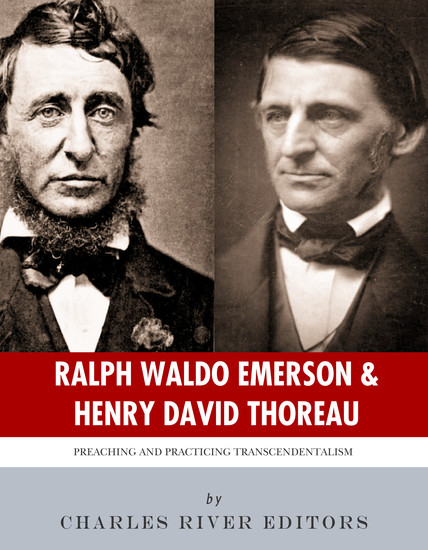
Ralph Waldo Emerson & Henry David Thoreau - Preaching and Practicing Transcendentalism - cover

Ralph Waldo Emerson & Henry David Thoreau - Preaching and Practicing Transcendentalism

Editors Charles River

Maison d'édition: Charles River Editors

  • 0
  • 0
  • 0

Synopsis

In the mid-19th century, Romantic literature was still in full bloom across the West, but some American authors began producing literature that, while still Romantic, was unique enough to be considered a different genre.  This new genre, Transcendentalism, focused on the spirituality of the self and nature, not rejecting religion outright but concentrating on pragmatism and the importance of individuals as the spiritual center of the cosmos.  In addition to drawing upon the Age of Enlightenment, Transcendentalist authors also utilized the philosophy of Plato, who taught that self-fulfillment through attaining knowledge should be an individual’s ultimate goal.
 
The leader of Transcendentalism, and the man who ushered the movement’s practices and literature, was Ralph Waldo Emerson (1802-1883), one of America’s most famous writers and speakers. Whereas Romantic literature typically took the form of poetry, novels and short stories, Emerson often disregarded those traditional structures and wrote essays. Emerson initiated Transcendentalism with the publishing of his essay Nature in 1836, which espoused the virtues of nature and the interconnectedness of all life in nature. With his focus on the environment and natural history, Emerson became the first major American writer whose work was not influenced in any way by European literature. 
 
But Emerson didn’t just write Transcendentalist literature; he practiced what he preached. Now at the forefront of a movement, Emerson established group meetings, gave a series of lectures, and helped produce a Transcendentalist publication in the 1840s, which included his famous essay Self-Reliance. As Emerson’s movement and stature grew, he befriended other authors, including Nathaniel Hawthorne, Louisa May Alcott, and Henry David Thoreau, who became his greatest protégé. 
 
One of the most famous Transcendentalists, and possibly its most ardent practitioner, was Henry David Thoreau (1817-1862). As a protégé of Ralph Waldo Emerson, Thoreau took the values of the movement to heart and was particularly interested in the interconnection between man and nature, writing in Walden, “Most of the luxuries and many of the so-called comforts of life are not only not indispensable, but positive hindrances to the elevation of mankind." That famous work was Thoreau’s account of his experience living for two years in a small cabin in a forest along the shore of Walden Pond in Concord, Massachusetts.
 
In 1846, Thoreau was arrested for failing to pay taxes, which was based on his opposition to slavery and other ways the government spent taxpayers’ money. After being freed, he gave a lecture about the roles of governments and individuals in society, which eventually became the famous essay “Civil Disobedience.” In addition to rejecting any government “which is the slave's government also," Thoreau famously advocated “the majority of one”, calling upon people to break unjust laws. As fate would have it, Thoreau’s message of civil disobedience has resonated more than any of his other Transcendentalist values, and it had a profound influence on the philosophy and nonviolent protests of activists like Mahatma Gandhi and Martin Luther King, Jr.
 
Ralph Waldo Emerson & Henry David Thoreau looks at the life and work of Thoreau, and it examines his ideology and the Transcendentalist movement. Along with pictures of important people and places, you will learn about Thoreau like you never have before, in no time at all.
Disponible depuis: 20/06/2025.
Longueur d'impression: 81 pages.

D'autres livres qui pourraient vous intéresser

  • The Enneagram of Emotional Intelligence - A Journey to Personal and Professional Success - cover

    The Enneagram of Emotional...

    Scott Allender, Ian Cron

    • 0
    • 0
    • 0
    Emotional Intelligence (EQ) is one of the biggest predictors of personal and professional success, and the key to effectively developing your EQ is tying it to your own personality type. In this book, certified EQ coach and Enneagram teacher Scott Allender helps you chart a personality-specific path toward lasting emotional intelligence and health. Allender uses the popular Enneagram framework to illuminate how each of the nine personality types aligns with the five essential skills of emotional intelligence: self-perception, self-expression, interpersonal relationships, decision making, and stress management. You'll discover how to 


    ● break free from the hidden fears that dictate your choices 


    ● make more intentional decisions 


    ● better understand the emotional dynamics of colleagues, friends, and family 


    ● and more 


    In this journey toward radical self-awareness, you'll learn how to combat the self-limiting beliefs that keep you from living the life you were meant to live all along.
    Voir livre
  • 10 Ancient Roman Concepts That Explain the Modern World - cover

    10 Ancient Roman Concepts That...

    D. S. Yvon

    • 0
    • 0
    • 0
    These ancient concepts come from an assortment of wisdom found in the time of the Roman Empire include: 
    The Tacitus Razor: “If you want to know who controls you, see who you’re not allowed to criticize.” This is how comedians accidently reveal a society's hierarchy—they call everyone naked, and soon discover who the king is. 
    The Slavery Syndrome. Roman historian Sallust: “Few men desire liberty; most men wish only for a just master.” Genuine liberty means making decisions 24/7; parsing right from wrong; solving pesky dilemmas using nothing but one’s own mind.  
    The Polybius Warning: 2nd century B.C. historian Polybius warned that a falling birthrate precedes civilizational collapse. Fewer births mean men and women have checked out. Polybius believed the Greek civilization fell due to its “low birth rate…” 
    The Pliny Principle: “It is wonderful how the mind is stirred and quickened into activity by brisk bodily exercise.”  
    The Uses of Folly. Roman historian Herodotus: “If a man insisted always on being serious, and never allowed himself a bit of fun and relaxation, he would go mad.”  
    6. The Vitruvius Rule: Modern architects love asymmetrical structures, but Ancient Roman architect Vitruvius said a building out of proportions is like a deformed body. Nature herself “composed the human body” and the rest of creation using “due proportions.” The Vitruvius Rule: No symmetry? Off to cemetery. 
    And more!
    Voir livre
  • Neverland - cover

    Neverland

    Vanessa Kisuule

    • 0
    • 0
    • 0
    Vanessa Kisuule is a big Michael Jackson fan. This fixation once gave her great joy, but now it keeps her up at night. In her bracingly honest, energetic and lively book she explores the fall-out from that fandom and how, or if, we can hold people to account whilst loving them at the same time. 
     
    Why do famous musicians mean so much to us? How does the pop culture machine both mirror and magnify the worst aspects of human nature? Why is it so hard to accept that the people we love, famous or not, are capable of doing terrible things? 
     
    As debates rage on about abusive public figures, Kisuule asks not just if we should separate the art from the artist, but how this moral conundrum informs the way we shape our relationships, families and notions of social justice. Witty, poetic and with references to R. Kelly, Britney Spears and a host of other famous faces, Neverland is both an ardent love letter to the music we love and an unflinching look at the costs of hero worship.
    Voir livre
  • Game-Changer Secrets: Unleash Success in US History! - "Unlock your potential with Game-Changer Secrets: Elevate your US History success through dynamic audio lessons!" - cover

    Game-Changer Secrets: Unleash...

    Orson Vexley

    • 0
    • 0
    • 0
    Game-Changer Secrets: Unleash Success in U.S. History! 
    ⭐⭐ Simplified Guide & Explanations Included ⭐⭐ 
    Are you eager to advance in your career and solidify your knowledge by excelling in the Master U.S. History Exam 2024-2025? 
    Looking for a thorough resource that covers everything you need to ace the Master U.S. History Exam 2024-2025? 
    Your search stops here! 
    This guide is your ultimate resource for enhancing your understanding, honing your skills, and engaging in practical exercises. With this material, you're set for triumph. 
    Updated for the Master U.S. History 2024-2025 Exam Format. 
    Key features of this comprehensive guide include: 
    - In-depth insights about the Master U.S. History Exam 2024-2025 Certification 
    - Comprehensive explanation of Master U.S. History  
    - Effective strategies for exam preparation and problem-solving 
    Our guide stands out with its rich coverage, which is crucial for your exam success. Topics are not just briefly mentioned; they are explored in detail. 
    Please note that this guide operates independently and is not affiliated with any official Master U.S. History entity. 
    Crafted with clarity and accessible language, our Master U.S. History Exam Guide 2024-2025 ensures seamless transitions between subjects. Say farewell to confusing terminology and embrace clear, accurate, and insightful content. 
    Don't hesitate! Click the BUY NOW button, obtain your guide, and embark on your path to success in the Master U.S. History Exam 2024-2025! 
    Get ready to dive into your journey with all the essential tools at your fingertips!
    Voir livre
  • Hindenburg - Thirty-Second Inferno - cover

    Hindenburg - Thirty-Second Inferno

    P Agrawal

    • 0
    • 0
    • 0
    This audiobook is narrated by an AI Voice.  
    Hindenburg: Thirty-Second Inferno is a clear, human-centered chronicle of the most famous airship in history and the half-minute of fire that ended an era. Spanning twenty immersive chapters, it traces the zeppelin dream from its hopeful beginnings through the Hindenburg’s majestic construction, serene ocean crossings, and refined life aboard—promenades of glass, piano in the lounge, disciplined crews, and a floating world of quiet elegance. With steady, simple prose, it opens the doors of the hangars at Friedrichshafen, walks the reader along duralumin ribs and gas cells, and reveals the teamwork, rituals, and pride that held a giant ship safely in the sky. 
    The narrative narrows to May 6, 1937: the gray New Jersey evening, the slow turn over Lakehurst, the dropped mooring lines, and then the sudden bloom of flame that raced the length of the hull. The book stays close to witnesses and survivors—rescuers running into heat and smoke, passengers finding seconds of courage, and the trembling voice of the famous broadcast that carried grief into homes around the world. It follows the night’s rescue efforts, the solemn roll of names, and the first careful questions asked among wreckage still warm with rain and ash. 
    Beyond the shock, the book examines investigations and debates with calm clarity: hydrogen’s lift against its peril, helium’s safety against its scarcity, static and weather, leak and spark, and the humble truth that complex failures are chains, not single breaks. It shows how the disaster reshaped trust and practice—longer checklists, better materials, clearer cockpit authority—and how airplanes quietly inherited the future as airships slipped into memory.
    Voir livre
  • Wild Journeys - cover

    Wild Journeys

    Bruce Ansley

    • 0
    • 0
    • 0
    Discover a world of wild, mysterious and audacious journeys 
     In Wild Journeys Bruce Ansley retraces the path of the doomed surveyor John Whitcombe across the Southern Alps, follows the raiding party of the northern chief Te Puoho along the West Coast, sails around New Zealand's northern and southern capes; walks through the Valley under the Two Thumb Range to the mythical Mesopotamia; drives from Waiheke to Wanaka (in a hurry), sets off on a hunt for the South Island's Grey Ghost, looks deep into the heart of volcanic New Zealand and tracks our most unlikely hero, the prison escaper George Wilder.
    Voir livre