Rejoignez-nous pour un voyage dans le monde des livres!
Ajouter ce livre à l'électronique
Grey
Ecrivez un nouveau commentaire Default profile 50px
Grey
Abonnez-vous pour lire le livre complet ou lisez les premières pages gratuitement!
All characters reduced
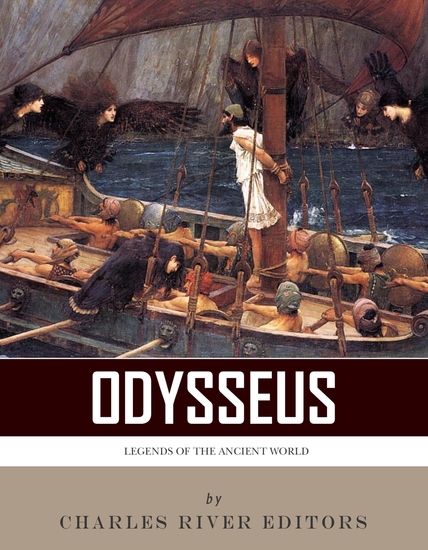
Legends of the Ancient World - Odysseus - cover

Legends of the Ancient World - Odysseus

Editors Charles River

Maison d'édition: Charles River Editors

  • 0
  • 0
  • 0

Synopsis

“You yellow dogs, you thought I'd never make it
 
 home from the land of Troy. You took my house to plunder,
 
 twisted my maids to serve your beds. You dared
 
 bid for my wife while I was still alive.
 
Contempt was all you had for the gods who rule wide heaven,
 
 contempt for what men say of you hereafter.
 
 Your last hour has come. You die in blood.” - Odysseus, The Odyssey
 
Odysseus is without question one of the most fascinating figures in classical mythology. Indeed, despite being an ancillary character in the Iliad, he was so beloved by ancient audiences that he warranted his own spinoff, the Odyssey. He was endemic throughout Greek thought and art, appearing in statues, theatrical pieces, poems and orations, and he was equally prevalent in later Roman culture. Unlike other  notable figures of classical antiquity who were forgotten during the Middle Ages (including a fair few who, unlike Odysseus himself, actually existed outside the realm of legend) Odysseus’s fame endured, and he made regular appearances in Medieval and Renaissance literature, including a memorable turn in Dante’s Inferno. To this day, Odysseus remains a highly popular character, having appeared on both the big and small screen, featuring in a slew of novels, and even making appearances in Japanese anime and video games. Characters inspired by Odysseus and his adventures are a staple of modern fiction, and locations said to match those from the Odyssey are scattered throughout the Mediterranean, particularly in Greece and Italy.
 
The true root of Odysseus’s mass appeal is that he is a figure of startling complexity. Unlike other main characters in the Epic Cycle, Odysseus does not conform to any particular archetype. While Odysseus’s defining characteristic is clearly his intelligence – he was known to the Greeks almost universally as “Cunning Odysseus” – he is no mere schemer, as he was considered also one of the bravest and most renowned warriors to fight in the Trojan War. And though depicted as a hero, he is also capable of acts of breathtaking amorality. Compared to other Greek heroes such as Ajax (all brute strength and no guile), Menelaus (filled with notions of honor and wounded dignity), or even Achilles himself (thirsty for glory at the expense of all else), Odysseus presents a far more nuanced portrait. Reluctant hero, schemer, criminal, warrior, navigator, explorer, loving (yet frequently unfaithful) husband and father, Odysseus is all this and more. Although part of this complexity may derive from the fact that the original stories adapted by Homer into the Iliad and Odyssey featured two different characters (Odysseus and Ulysses respectively), the character which has reached readers today is unique and nuanced enough to have been labeled, with reason, the first modern literary hero.
 
Legends of the Ancient World: Odysseus chronicles the legend of Odysseus’s life, comprehensively covers his role in the Iliad and Odyssey, and analyzes the literary legacy Odysseus left. Along with pictures, a bibliography and Table of Contents, you will learn about Odysseus like you never have before, in no time at all.
Disponible depuis: 02/05/2025.
Longueur d'impression: 34 pages.
D'autres livres qui pourraient vous intéresser

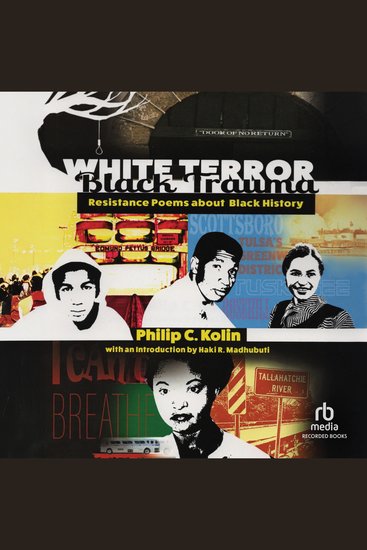
  • White Terror Black Trauma - Resistance Poems About Black History - cover

    White Terror Black Trauma -...

    Philip C. Kolin

    • 0
    • 0
    • 0
    The 61 poems in White Terror Black Trauma concentrate on some of the most traumatic events in Black history from colonial to contemporary times, from the arrival of enslaved Africans in 1619 to Black revolts, Civil War atrocities, incalculable lynchings, the Tulsa massacre, the brave sacrifices of Rosa Parks, the Freedom Riders, the heroes of school desegregation, the murders of Emmet Till, Dr. King, Fred Hampton, Malcolm X, Trayvon Martin, Michael Brown, George Floyd, Breanna Taylor, Eric Garner, and Tyre Nichols. And so many other Black tragedies.  
     
     
    Each poem here carries a brief head note identifying the person, place, time, or event that addresses the historical context of the poem. Some poems are written in a his/her recollection of the historical event. Above all, each poem highlights the topography of Black trauma, be that a Civil War fort, a lynching tree, a prison, a school, an island, a ghetto, a river, a national monument, a church, or city street. These resistance poems are chronicles, laments, petitions, heroic recollections about racial attacks on Black people in America.
    Voir livre
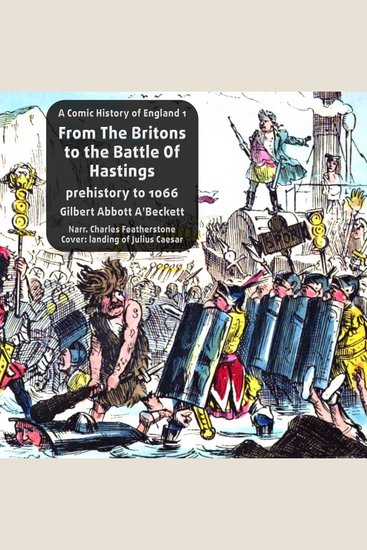
  • From The Britons to the Battle Of Hastings - prehistory to 1066 - cover

    From The Britons to the Battle...

    Gilbert Abbott A'Beckett

    • 0
    • 0
    • 0
    A captivating, uproarious and informative journey through the beginnings of British history.  
    Gilbert Abbott à Beckett was one of the great journalists of his time, being a descendant of Thomas Becket who edited Figaro, was a founder member of Punch, and wrote for The Times, The Morning Herald, and The Illustrated London News.  
    He also wrote around fifty plays, as well as two operas, and is best known for this history of England. 
    This volume covers: 
    The Britons—The Romans—Invasion By Julius Cæsar 
    Invasion By The Romans Under Claudius—Caractacus—Boadicea—Agricola—-Galgacus—Severus—Vortigern Calls In The Saxons. 
    The Saxons—The Heptarchy. 
    The Union Of The Heptarchy Under Egbert. 
    The Danes—Alfred. 
    From King Edward The Elder To The Norman Conquest. 
    Edmund Ironsides—Canute—Harold Harefoot—Hardicanute—Edward The Confessor—Harold—The Battle Of Hastings.
    Voir livre
  • Our Common Cause - Establishing the Political Power We Lack - cover

    Our Common Cause - Establishing...

    Étienne Chouard

    • 0
    • 0
    • 0
    I want to talk to you about democracy. The real one. The one that does not exist, and the one we really need today. My research method is that of Hippocrates, who said, look for the cause of causes. In other words, to cure a disease, to solve a problem, it is useless to attack the consequences, it is useless to attack the different causes. There is always a determining cause (the one that determines all the others)—and that is our common cause.
    The first decisive battle is to push the important words "right side up":
    First. I am not a "citizen" (a citizen is autonomous; he votes himself his laws). I am only a "voter;" that is to say, a political child—because I am subject to the law voted into existence by someone other than me.
    Second. My "parents" in politics, the elected officials, do not want me to emancipate myself from them—they do not allow me to vote for or against the laws to which I have to submit myself.
    We are "the incompetents." They treat us like children. But it is our fault, because children also believe in "Santa Claus," and so voters believe in "universal suffrage," which we accept to call "democracy" (demos kratos, power belongs to the people). The so-called modern "democracy".
    Voir livre
  • Group psychology and the analysis of the Ego - cover

    Group psychology and the...

    Sigmund Freud

    • 0
    • 0
    • 0
    "Group Psychology and the Analysis of the Ego" is a seminal work by Sigmund Freud, first published in 1921. In this book, Freud explores the dynamics of groups and their influence on individual behavior, as well as the interplay between the individual psyche and group dynamics. He delves into topics such as the formation of groups, the role of leaders, the psychology of crowds, and the mechanisms of group identification and conformity. Freud also examines how the ego functions within the context of group dynamics, shedding light on how individuals navigate their identity and desires within social collectives.
    Voir livre
  • Where You'll Find Me - Risk Decisions and the Last Climb of Kate Matrosova - cover

    Where You'll Find Me - Risk...

    Ty Gagne

    • 0
    • 0
    • 0
    On February 15, 2015, Kate Matrosova, an avid mountaineer, set off before sunrise for a traverse of the Northern Presidential Range in New Hampshire's White Mountains. Late the following day, rescuers carried her frozen body out of the mountains amid some of the worst weather ever recorded on these deceptively rugged slopes. 


    At thirty-two, Matrosova was ultra-fit and healthy and had already summited much larger mountains on several continents. Her gear included a rescue beacon and a satellite phone. Yet, despite their best efforts, more than forty expert search and rescue personnel, a New Hampshire Army National Guard Blackhawk helicopter, and a Civil Air Patrol Cessna airplane could not reach her in time to save her. 


    What went wrong? 


    Where You'll Find Me offers possible answers to that question, demonstrating why Matrosova's story—what we know and what we will never know—represents such an intriguing and informative case study in risk analysis and decision-making.
    Voir livre
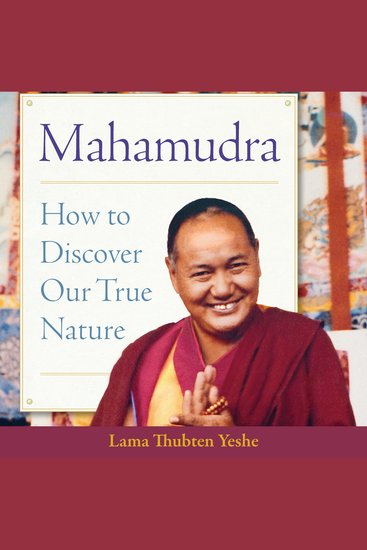
  • Mahamudra - How to Discover Our True Nature - cover

    Mahamudra - How to Discover Our...

    Lama Thubten Yeshe

    • 0
    • 0
    • 0
    Relish these direct, experiential meditation instructions from the author of the bestselling Introduction to Tantra.Lama Yeshe tells us that mahamudra is “the universal reality of emptiness, of nonduality” and its unique characteristic is its emphasis on meditation: “With mahamudra meditation there is no doctrine, no theology, no philosophy, no God, no Buddha. Mahamudra is only experience.”He relies on the First Panchen Lama’s well-known Root Text of Genden Mahamudra, which in a few short pages provides the pith instructions for, first, overcoming distraction and resting in meditative stillness on the clarity of one’s own mind, and then, with subtle awareness, penetrating its ultimate nature, its emptiness.As always, Lama Yeshe’s words are direct, funny, and incredibly encouraging. He gets us to go beyond ego’s addiction to a limited sense of self and to taste the lightness and expansiveness of our own true nature.
    Voir livre