Begleiten Sie uns auf eine literarische Weltreise!
Buch zum Bücherregal hinzufügen
Grey
Einen neuen Kommentar schreiben Default profile 50px
Grey
Jetzt das ganze Buch im Abo oder die ersten Seiten gratis lesen!
All characters reduced
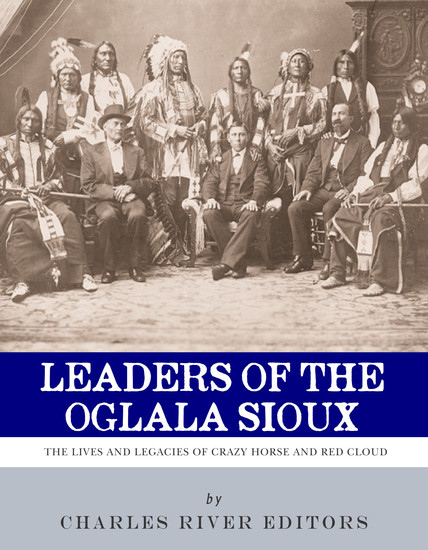
Leaders of the Oglala Sioux - The Lives and Legacies of Crazy Horse and Red Cloud - cover

Leaders of the Oglala Sioux - The Lives and Legacies of Crazy Horse and Red Cloud

Editors Charles River

Verlag: Charles River Editors

  • 0
  • 0
  • 0

Beschreibung

As he lay dying, Tashunke Witco, whose name is literally translated as “His Horse is Spirited” or “His Horse is Crazy,” refused to be placed on an army cot, and he insisted upon being placed on the floor. He had spent his life avoiding white people whenever possible, and after he died, his cousin Touch the Clouds pointed to the blanket covering the dead Chief’s body and said, “This is the lodge of Crazy Horse.”
 
Throughout his life, Tashunke Witco tried to live the life his people had enjoyed for centuries. He never signed a treaty with the U.S. government and was never photographed, largely because he wanted to avoid contact with the settlers encroaching further west upon Native American lands. By staying away from white settlements and military forts, he thus avoided the places where a photographer might be lurking. As the great Lakota leaders surrendered to the U.S. military or were killed, they became symbols of the qualities and character of their people. Red Cloud is often referred to as a symbol of Lakota concession. Sitting Bull is considered symbolic of Lakota spirituality. Crazy Horse, because he delayed surrender and never entered into treaty agreements with the U.S. military, became a symbol of Lakota resistance.
 
Crazy Horse may have fervently wished to avoid white settlers, but he’s a Native American icon today because of the inability to do so. Like Geronimo in the Southwest and Sitting Bull on the Plains, Crazy Horse was a chief who fought in several skirmishes against settlers and U.S. forces during the 1860s, and he became one of the most famous Native Americans in American history because of one fateful confrontation with whites: the legendary Battle of the Little Bighorn, during which an estimated 2,000 Lakota and Cheyenne warriors routed and then annihilated the 7th U.S. Cavalry led by George Custer. That disaster led the American government to double down on its efforts to “pacify” the Plains, and by the end of the decade many of them had surrendered and been moved onto a reservation. Like Sitting Bull, Crazy Horse tried to avoid surrendering for as long as he could, and both suffered a controversial death.  
 
Among the Oglala Lakota, one of the most famous bands of the Native American Tribe known as the Sioux, the longest and most effective leader was Makhpiyaluta, better known as Red Cloud. Though he has not been remembered as vividly as another member of the Oglala Lakota, Crazy Horse, Red Cloud led the group for 40 years, in war, in peace, and on a reservation, becoming so esteemed and influential that Americans began to mistakenly take him for the leader of the entire Sioux tribe.
 
 In the 1860s, Red Cloud was at the forefront of skirmishing among whites and Native Americans along the frontier in Wyoming and Montana, which came to be known as Red Cloud’s War. After that, however, Red Cloud continued to lead his people to reservations first near the Black Hills and later westward after the Battle of the Little Bighorn. Though he was respected as a war chief, it was his political functions as a spokesman of the Oglala that truly allowed Red Cloud to leave his mark over the last several decades of his life. Whereas Sitting Bull and Crazy Horse suffered premature deaths, Red Cloud outlived the other important leaders of the Sioux until dying in 1909 at 87 years old. Near the end of his life, he reportedly said, “They made us many promises, more than I can remember. But they kept but one -- they promised to take our land...and they took it.”
 
 Though Red Cloud was forever embittered by what he and his people had lost, his long leadership and his help in transitioning his people onto reservations has ironically turned him into somewhat of a symbol of conciliation and reconciliation between Native Americans and whites, as opposed to Native American symbols of defiance like Tecumseh, Sitting Bull and Crazy Horse.
Verfügbar seit: 21.06.2025.
Drucklänge: 65 Seiten.


Weitere Bücher, die Sie mögen werden

  • Disgrace - Global Reflections on Sexual Violence - cover

    Disgrace - Global Reflections on...

    Joanna Bourke

    • 0
    • 0
    • 0
    Looking across time and the globe, a critical history of sexual violence—what causes it and how we overcome it. 


    Disgrace is the first truly global history of sexual violence. The book explores how sexual violence varies widely across time and place, from nineteenth-century peasant women in Ireland who were abducted as a way of forcing marriage, to date-raped high-school students in twentieth-century America, and from girls and women violated by Russian soldiers in 1945 to Dalit women raped by men of higher castes today. It delves into the factors that facilitate violence—including institutions, ideologies, and practices—but also gives voice to survivors and activists, drawing inspiration from their struggles. Ultimately, Joanna Bourke intends to forge a transnational feminism that will promote a more harmonious, equal, and rape—and violence-free world.
    Zum Buch
  • Radiolab: Journey Through The Human Body - cover

    Radiolab: Journey Through The...

    Radiolab

    • 0
    • 0
    • 0
    Radiolab invites you to join us on a scientific journey through the body. Our bodies are so complex that many processes can go unnoticed. In this audiobook, not only do we notice, but we explore how our anatomy has shaped the human experience. These five chapters explore your guts, private parts, womb, butt, and brain. We’ll hear stories from scientists, anthropologists, professors, doctors, mothers, fathers, and storytellers. We answer questions like what organ is a baby's best friend and the mother's worst nightmare, what is the evolutionary reason for our butts, and how does your brain know that you, are you?
    Zum Buch
  • Underground and Underwater in World War I: The History and Legacy of the Hidden Fighting during the Great War - cover

    Underground and Underwater in...

    Editors Charles River

    • 0
    • 0
    • 0
    Most books and documentaries about the war focus on the carnage of the trenches, depicting the ceaseless bombardment and sniping, and the assaults and counterattacks that took millions of lives. This was the experience of most frontline soldiers during that great conflict, but it was not the only experience. There was another war going on beneath the trenches, a war of tunnels and mines fought by men who didn’t see sunlight for days at a time and who lived in constant fear of cave-ins and enemy detection. These men, who had mostly been miners in civilian life, lived a twilight existence, working long hours in silence and near darkness while great battles raged overhead. They suffered from fatigue, stress, and the knowledge that they could be killed at any time by an unseen enemy. Despite this, they persevered, and the mines they laid under enemy trench systems turned the tide of at least one major battle.  
    	The sleek hunter-killers lurking beneath the waves, using periscopes to close in unnoticed on their prey, added a new, nerve-wracking element to naval warfare. The mere threat of submarine attack immediately altered naval tactics and strategies employed by both the Western Allies and the Central Powers, shifting them towards a more cautious approach, especially at the war’s start when the submarine threat remained untested. 	During World War I, German U-boats operated solo except on one occasion. Initially, the British and nations supplying England with food and materiel scattered vessels singly across the ocean, making them vulnerable to the lone submarines. However, widespread late war re-adoption of the convoy system tipped the odds in the surface ships' favor.
    Zum Buch
  • The Race to the Future - 8000 Miles to Paris – The Adventure that Accelerated the Twentieth Century - cover

    The Race to the Future - 8000...

    Kassia St. Clair

    • 0
    • 0
    • 0
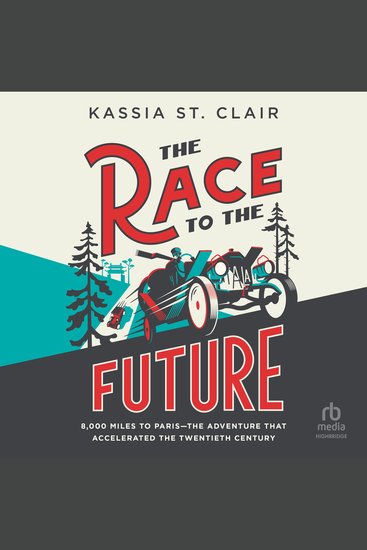
    The racers battle over steep inclines, through narrow mountain passages, and across the arid Gobi Desert. Competitors endure torrential rain and choking dust. There are barely any roads, and petrol is almost impossible to find. 


    More than its many adventures, the Peking-to-Paris Motor Challenge took place on the precipice of a new world. As the twentieth century dawned, imperial regimes in China and Russia were crumbling, paving the way for the rise of communist ones. The electric telegraph was rapidly transforming modern communication, and with it, the news media, commerce, and politics. Suspended between the old and the new, the Peking-to-Paris, as bestselling historian Kassia St. Clair writes, became a critical tipping point. 


    A gripping, immersive narrative of the race, The Race to the Future sets the drivers' derring-do (and occasional cheating) against the backdrop of a larger geopolitical and technological race to the future. Interweaving events from the fall of the Qing dynasty to the departure of the horse economy and the rise of gendered marketing, St. Clair shows how the Peking-to-Paris provided an impetus for profound social, cultural, and industrial change, while masterfully capturing the mounting tensions between nations and empires—all building up to the cataclysmic event that changed everything: the First World War.
    Zum Buch
  • BURNOUT DIARIES - How Work Stress Almost Killed Me - cover

    BURNOUT DIARIES - How Work...

    Janna Donovan

    • 0
    • 0
    • 0
    BURNOUT DIARIES is the gritty, personal account of Janna Donovan, a marketing manager who found herself battling burnout in a foreign country. It details the distrust, shame, and secrecy that eventually led to panic events, depression, and plans for suicide. 
    “Absolutely amazing book.” “I could not put this book down!” “Beautifully written, honest and revealing.” “Gripping read… Donovan's struggle was vivid, yet relatable.” “I couldn't get enough, I devoured this book in an afternoon. It left me wanting more.” 
    The story reads more like a novel than a business book. It’s funny and tragic and “Did she really go there?” rolled into one fascinating true story. Based on Janna Donovan’s personal diaries, it is different from other business stress books. The author outs herself, broken heart and all. 
    Janna is a business manager who has worked for a multinational company, a .com startup, and a retailer. She now helps individuals with high amounts of work stress and worry. She became a therapist, after seeing firsthand what anxiety disorders, depression and burnout do to us. She shares what she went through and answers the question, “Why am I like this?” Her experience can help you break up with anger, resentment, anxiety and guilt. 
    Listeners who would benefit from listening to this book: 
    • Tired professionals who feel like what they do is never enough 
    • Power contributors who take on twice the workload of their peers 
    • People who experience unhealthy work stress in any job worked 
    • Anyone who loves a workaholic 
    “Donovan's formatting had me finishing the book in 72 hours… a fast-paced read.” “So many "self-help" books read as a textbook. This one is relatable, witty, and relevant.” “This book helped me get closure I didn't know I needed.”   
    Zum Buch
  • Thor - An Illustrated Guide to the Thunder God - cover

    Thor - An Illustrated Guide to...

    L. Dean Lee

    • 0
    • 0
    • 0
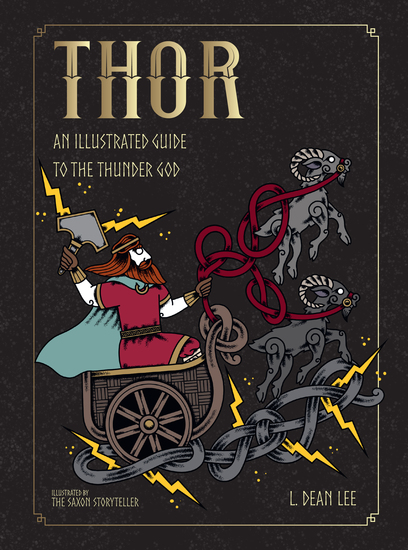
    Learn more about Thor, the revered God of Thunder, and explore the wyrd world of Norse mythology with this beautifully illustrated guide as your companion.   This is a culturally informed introduction to Thor, the hammer-wielding, storm-shaking, fiery-haired son of Odin, and one of the most prominent figures in all of Norse mythology and Nordic folklore.  Discover who Thor is, what his origins as a deity are, his personality, and his associations.  Explore the role of mythology in pre-Christian Viking and Norse life, its survival in folklore, and its continued significance in modern times.  Learn more about the Norse cosmos and gain an understanding of the different beings, realms, and gods that inhabit it.  Dive into the captivating stories surrounding Thor as he battles giants, gains his hammer, and performs impossible feats of strength until the grisly events of Ragnarok.  Receive expert guidance from a practicing Norse Heathen on how to interact with and venerate Thor with offerings and altars.    Thor was popular across all social classes in the Viking Age and is associated with fertility, sacred groves and trees, and the protection of humankind. He is often depicted with his hammer, Mjölnir, which he uses to fight giants and perform stunning feats of strength.   Written by practicing Norse Heathen L. Dean Lee and illustrated by The Saxon Storyteller, this guide covers Thor not only in ancient times, but through the ages, sharing how he became an icon in today’s pop culture.
    Zum Buch