Begleiten Sie uns auf eine literarische Weltreise!
Buch zum Bücherregal hinzufügen
Grey
Einen neuen Kommentar schreiben Default profile 50px
Grey
Jetzt das ganze Buch im Abo oder die ersten Seiten gratis lesen!
All characters reduced
Japan and World War II - The History of the Imperial Japanese Empire during the War - cover

Japan and World War II - The History of the Imperial Japanese Empire during the War

Editors Charles River

Verlag: Charles River Editors

  • 0
  • 0
  • 0

Beschreibung

All Americans are familiar with the “day that will live in infamy.” At 9:30 a.m. on Sunday, December 7, 1941, Pearl Harbor, the advanced base of the United States Navy’s Pacific Fleet, was ablaze. It had been smashed by aircraft launched by the carriers of the Imperial Japanese Navy. All eight battleships had been sunk or badly damaged, 350 aircraft had been knocked out, and over 2,000 Americans lay dead. Indelible images of the USS Arizona exploding and the USS Oklahoma capsizing and floating upside down have been ingrained in the American conscience ever since. In less than an hour and a half the Japanese had almost wiped out America’s entire naval presence in the Pacific.
 
Despite fighting in North Africa and the Atlantic, the United States still had the resources and manpower to fight the Japanese in the Pacific.  Though the Japanese had crippled the American fleet at Pearl Harbor, its distance from Japan made an invasion of Pearl Harbor impossible, and Japan had not severely damaged important infrastructure.  Thus, the United States was able to quickly rebuild a fleet, still stationed at Pearl Harbor right in the heart of the Pacific.  This forward location allowed the United States to immediately push deeply into the Pacific theater.
 
In fact, the turning point in the Pacific theater took place in 1942 near Midway Island.  The Japanese had moved a sizable fleet intending to occupy Midway Island and draw the American navy near.  Instead, American aircraft flying from three aircraft carriers that had been away from Pearl Harbor in December 1941 got a bearing on the Japanese fleet and sunk four Japanese aircraft carriers, permanently crippling Japan’s navy.  The Battle of Midway was one of the first naval battles in history where the enemy fleets never saw or came into contact with each other.
 
Entering 1943, the Allies looked to press their advantage in the Pacific and Western Europe.  The United States was firmly pushing the Japanese back across the Pacific, while the Americans and British plotted a major invasion somewhere in Western Europe to relieve the pressure on the Soviets.  By the time the Allies conducted that invasion, the Soviets had lifted the siege of Stalingrad.  The Allies were now firmly winning the war.
 
Throughout 1944, the Americans kept pushing the Japanese back, but some of the war’s most famous campaigns would come near the end. The Battle of Iwo Jima, code name “Operation Detachment,” is more of a misnomer than anything. It was fought as part of a large American invasion directed by steps toward the Japanese mainland, and it was more like a siege that lasted 36 days from February-March 1945, with non-stop fighting every minute. In fact, the iconic flag-raising photo was taken just four days into the battle, and as that picture suggests, the battle was not a pristine tactical event but an unceasing horror with no haven for protection. As veteran and author James F. Christ put it in the foreword of his exhaustive study of the action, “it is carnage…that is what Iwo was…the Gettysburg of the Pacific.” Iwo Jima defined the classical amphibious assault of the World War II era, as much as the Normandy invasion did, but it came later in the war. In Europe, the Battle of the Bulge had already been won, and German forces would surrender in early May. However, the Japanese Empire was still at a considerable level of strength and state of resolve, and an essential offensive, grinding from island to island with naval unit to naval unit and air to air was met with maniacal resistance by the enemy.
Verfügbar seit: 01.05.2025.
Drucklänge: 620 Seiten.
Weitere Bücher, die Sie mögen werden

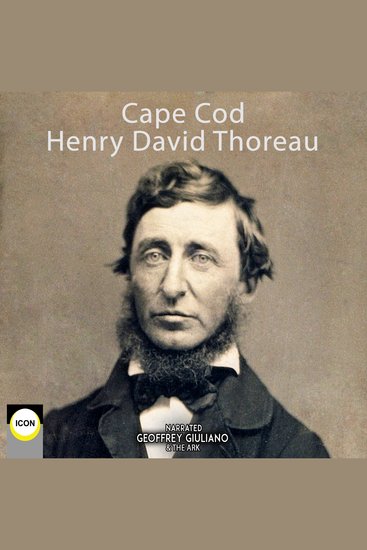
  • Cape Cod - cover

    Cape Cod

    Henry David Thoreau

    • 0
    • 0
    • 0
    Henry David Thoreau was an American naturalist, essayist, poet, and philosopher. A leading transcendentalist, he is best known for his book Walden, a reflection upon simple living in natural surroundings, and his essay "Civil Disobedience" (originally published as "Resistance to Civil Government"), an argument for disobedience to an unjust state. 
      
    Thoreau's books, articles, essays, journals, and poetry amount to more than 20 volumes. Among his lasting contributions are his writings on natural history and philosophy, in which he anticipated the methods and findings of ecology and environmental history, two sources of modernday environmentalism. His literary style interweaves close observation of nature, personal experience, pointed rhetoric, symbolic meanings, and historical lore, while displaying a poetic sensibility, philosophical austerity, and attention to practical detail. He was also deeply interested in the idea of survival in the face of hostile elements, historical change, and natural decay; at the same time he advocated abandoning waste and illusion in order to discover life's true essential needs. 
      
    Thoreau was a lifelong abolitionist, delivering lectures that attacked the fugitive slave law while praising the writings of Wendell Phillips and defending the abolitionist John Brown. Thoreau's philosophy of civil disobedience later influenced the political thoughts and actions of such notable figures as Leo Tolstoy, Mahatma Gandhi, and Martin Luther King Jr. 
      
    Cape Cod chronicles Henry David Thoreau’s journey of discovery along this evocative stretch of Massachusetts coastline, during which time he came to understand the complex relationship between the sea and the shore. He spent his nights in lighthouses, in fishing huts, and on isolated farms. He passed his days wandering the beaches, where he observed the wide variety of life and death offered up by the ocean.
    Zum Buch
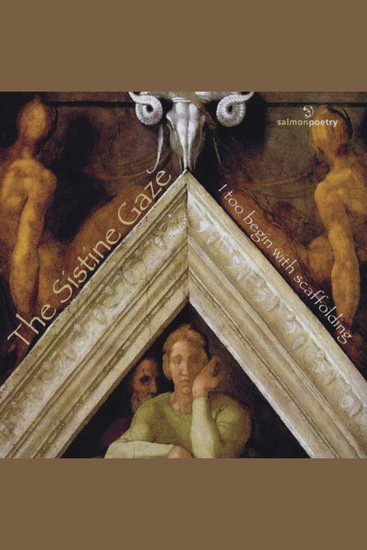
  • The Sistine Gaze - I too begin with scaffolding - cover

    The Sistine Gaze - I too begin...

    Seamus Cashman

    • 0
    • 0
    • 0
    Like the Ceiling and Wall to which the poet is lured by Michelangelo's muse, The Sistine Gaze dances between vision and fantasy in words, images and metaphors that are muscular, tangible, sensuous, erotic or at times cold and questioning. The poem's philosophic currents in rhythmic line and verse are meditations on existence in the swell and fall of activity, of changing lives. 
    The poem's 'gaze' fixes on the creative process as mythologies, the god, the ungodly, and the corporeal luxuriate int he riches of the great Michelangelo's genius. Human certainty, death and the artist at work are central strand, discovering magnificence in the human body and tasting its destiny. 
    This ekphrastic epic is orchestral, impressionistic, thought-provoking and controversial. Indeed its raison d'être seems elegantly framed in an aphoristic line inviting us, 'To balance life with death and venture bravely to be beautiful.'
    Zum Buch
  • Born to Walk - My Journey of Trials and Resilience - cover

    Born to Walk - My Journey of...

    Alpha Nkuranga

    • 0
    • 0
    • 0
    "My grandparents used to tell me Rwanda is a country unlike any other, and I knew they spoke the truth. Blessed with majestic mountains and breathtaking valleys, it is a sacred and spiritual land. And yet Rwandan men drenched the land in blood in acts of hate so horrific that the stains of those three years will not fade in one hundred lifetimes." 


    At the age of eight, Alpha Nkuranga made a fateful decision. With war raging around her, she grabbed the hand of her younger brother, Elijah, and ran from her grandparents' home. When they came to a swamp, they hid until it was safe to escape. Weeks later, they joined a group of refugees, who were fleeing to Tanzania. "If I kept walking," Alpha remembers thinking, "I could tell my story." 


    Nkuranga emigrated to Canada more than a decade later. She now works with women and children who face abuse and homelessness. In Born to Walk, she tells a remarkable story of resistance and survival.
    Zum Buch
  • Middle Ages - European History in the Era of the Dark Ages - cover

    Middle Ages - European History...

    Kelly Mass

    • 0
    • 0
    • 0
    In the history of Europe, the Middle Ages or middle ages time period lasted around from the 5th to the late 15th centuries, likewise to the Post-classical period of worldwide history. It started with the fall of the Western Roman Empire and transitioned into the Renaissance and the Age of Discovery. The Middle Ages is the middle period of the 3 conventional departments of Western history: classical antiquity, the middle ages period, and the contemporary period. The middle ages period is itself partitioned into the Early, High, and Late Middle Ages. 
    Population decrease, counter-urbanization, the collapse of central authority, invasions of countries, and mass moves of tribe, which had started in Late Antiquity, continued into the Early Middle Ages. The massive movements of the Migration Period, including but not limited to numerous Germanic tribes, formed new kingdoms in what stayed of the Western Roman Empire. In the 7th century, North Africa and the Middle East-- once part of the Byzantine Empire-- came under the rule of the Umayyad Caliphate, an Islamic empire, after conquest by Muhammad's followers. 
    Explore more about this long time in history, a dark time when people faced countless challenges to their survival.
    Zum Buch
  • What's Wrong With Socialism - A Biblical Investigation for Everyone - cover

    What's Wrong With Socialism - A...

    Daniel Alan Brubaker

    • 0
    • 0
    • 0
    What’s Wrong With Socialism: A Biblical Investigation For Everyone takes a clear, accessible look at one of the most debated political and economic systems of our time—through the lens of the Bible. 
    Author Daniel Alan Brubaker, PhD explores socialism not just as an abstract theory, but as a lived reality with deep implications for human freedom, justice, wealth, and responsibility. Drawing on Scripture, history, and practical examples, Brubaker asks whether socialism’s promises of equality and fairness hold up when tested against biblical principles and real-world outcomes. 
    This audiobook helps listeners understand:The core ideas of socialism and why they appeal to many.How socialism differs from voluntary sharing and generosity modeled in the Bible.What Scripture teaches about wealth, justice, and the proper use of possessions.The dangers of materialism, state control, and the suppression of personal responsibility.How mercy and justice are often confused in debates about public policy. 
    Written in straightforward, non-technical language, this is a biblical investigation for everyone—students, pastors, church groups, anyone wrestling with the promises and pitfalls of socialism. Brubaker takes the topic seriously, showing where and why socialism ultimately fails the biblical test. 
    Whether you are new to the discussion or already familiar with political and economic debates, this audiobook will equip you with clear categories and biblical grounding to think more deeply about socialism and its alternatives. 
    For Christians seeking clarity in an age of confusion, or for anyone interested in the intersection of faith, economics, and justice, What’s Wrong With Socialism offers a compelling and thought-provoking guide.
    Zum Buch
  • Value Price and Profit - cover

    Value Price and Profit

    Karl Marx

    • 0
    • 0
    • 0
    **Value, Price, and Profit** by Karl Marx is a seminal work that distills the core principles of Marxist economic theory into a concise and accessible format. Originally delivered as a speech to the General Council of the First International in 1865, the text examines the dynamics of labor, wages, and profit within a capitalist system. Marx explains how the value of commodities is rooted in the labor required for their production, and he critiques the mechanisms by which capitalists extract surplus value from workers to generate profit. In doing so, he challenges the notion that raising wages alone can resolve systemic inequality, emphasizing the structural exploitation inherent in capitalism. This work serves as both an introduction to Marx's economic ideas and a call to action for addressing labor exploitation and economic injustice.
    Zum Buch