Begleiten Sie uns auf eine literarische Weltreise!
Buch zum Bücherregal hinzufügen
Grey
Einen neuen Kommentar schreiben Default profile 50px
Grey
Jetzt das ganze Buch im Abo oder die ersten Seiten gratis lesen!
All characters reduced
Ancient Cities - The History of Carthage - cover

Ancient Cities - The History of Carthage

Editors Charles River

Verlag: Charles River Editors

  • 0
  • 0
  • 0

Beschreibung

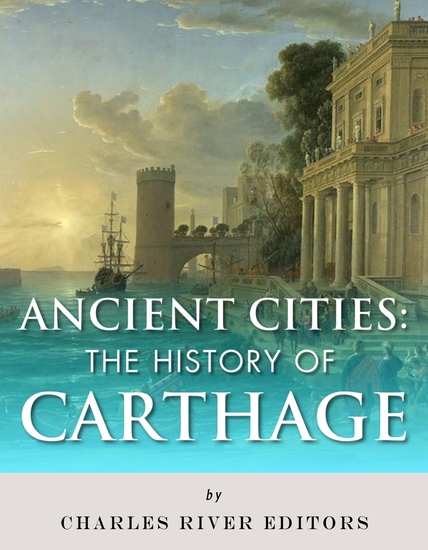
Carthage is, without a doubt, one of the great ancient civilizations. At its peak, the wealthy Carthaginian empire dominated the Mediterranean against the likes of Greece and Rome, with commercial enterprises and influence stretching from Spain to Turkey, and at several points in history it had a very real chance of replacing the fledgling Roman empire or the failing Greek poleis (city-states) altogether as master of the Mediterranean. Although Carthage by far preferred to exert economic pressure and influence before resorting to direct military power (and even went so far as to rely primarily on mercenary armies paid with its vast wealth for much of its history, it nonetheless produced a number of outstanding generals, from the likes of Hanno Magnus to, of course, the great bogeyman of Roman nightmares himself: Hannibal. Through clever use of force projection, both by maintaining a large and very active navy to dominate the seaborne routes along which most of their vast trading empire’s lifeblood flowed and by paying allies with gold or recruiting mercenary armies to fight for them, Carthage was able to go from a minor Phoenician settlement to one of the most powerful trading empires of antiquity.
 
However, the Carthaginians’ foreign policy had one fatal flaw; they had a knack over the centuries of picking the worst enemies they could possibly enter into conflict with. The first serious clash of civilizations which Carthage was involved with was Greece, which rapidly became hostile when the Carthaginians began pushing to spread their influence towards the colonies known as Magna Graecia (“Great Greece”), which had been established in southern Italy and Sicily by several Greek poleis. Much later, Carthage eventually became embroiled in a long series of costly and ultimately unsuccessful wars in Sicily, but they were able to avoid an all-out confrontation with the Greeks mostly because Carthage’s spread across the Mediterranean coincided with the Greeks’ struggle for their very survival against Darius and Xerxes’ Persian invasions. After those, the Peloponnesian War split Greece between Sparta and Athens as the two great cities battled each other for supremacy. Hostilities might have resumed later, but the Greeks were swallowed up by the burgeoning empire of Alexander the Great. The Macedonian himself, after his headlong push to the east had led him onto the plains of India itself, had planned to lead an army West along the coast of North Africa and take Carthage, but he died mysteriously before his dream could ever come to fruition. Thus, more by luck than by design, Carthage had survived a scrap with two of the greatest powers in the Mediterranean.
 
Unfortunately for the Carthaginians, it would not endure the next major confrontation. Certain foreign policy decisions led to continuing enmity between Carthage and the burgeoning power of Rome, and what followed was a series of wars which turned from a battle for Mediterranean hegemony into an all-out struggle for survival, with Hannibal crossing the Alps and threatening Rome itself during the Second Punic War and Roman legions smashing Carthage to rubble at the end of the Third Punic War. As legend has it, the Romans literally salted the ground upon which Carthage stood to ensure its destruction once and for all.
 
Despite having a major influence on the Mediterranean for nearly five centuries, little evidence of Carthage’s past might survives. The city itself was reduced virtually to nothing by the Romans, who sought to erase all physical evidence of its existence, and though its ruins have been excavated they have not provided anywhere near the wealth of archaeological items or evidence as ancient locations like Rome, Athens, Syracuse, or even Troy. Today, Carthage is a largely unremarkable suburb of the city of Tunis.
Verfügbar seit: 02.05.2025.
Drucklänge: 39 Seiten.


Weitere Bücher, die Sie mögen werden

  • Living in Language - International reflections for the practising poet - cover

    Living in Language -...

    Erica Hesketh

    • 0
    • 0
    • 0
    Living in Language brings together reflections on the craft and purpose of poetry, by 21 leading poets from around the world. The lyric essays, fragments, letters and new poems in this groundbreaking anthology shed light on topics as diverse and vital as writing the body, writing in exile, writing as witness, writing as a shamanic act, grappling with traditional forms, discovering your own voice, and even translation and self-translation. This is an essential resource for anyone looking to broaden their horizons and engage with the cutting edge of poetry as it is practised, around the world, in the 21st century.
    Zum Buch
  • Responses to 7 October: Universities - cover

    Responses to 7 October:...

    David Hirsh, Rosa Freedman, Eric...

    • 0
    • 0
    • 0
    One of three volumes responding to the 7 October attack, Universities focuses on the heartland of contemporary antisemitic thinking, which is scholarship; and its reflection in student discourse on campus. 
    Contributions go back to Sartre and to debates of Marx’s time; another looks at the New Left forged in the civil rights movement, and shows how antisemitic responses to the 2023 violence were anticipated by some of the responses to the 1967 Arab League aggression. The feminist movement and ‘progressives’ more generally come under scrutiny, and there is analysis of antisemitism on campus after 7 October, showing how it is tolerated and protected there; including in archaeological attempts to deny that there is an ancient Jewish history in Israel. 
    This work will appeal to scholars, students and activists with an interest in antisemitism, Jewish studies and the politics of Israel.
    Zum Buch
  • Refreshed - Devotions For Your Time Away - cover

    Refreshed - Devotions For Your...

    John Hindley

    • 0
    • 0
    • 0
    Devotions for a vacation that’s refreshing in every way.Vacations often give us an opportunity to rest and reflect. However, when our normal routines and habits are suspended, it can be hard to spend time with God.These 30 devotions have been specifically designed to help you to rest in the Lord’s goodness and glory during your time away so that you can return home feeling refreshed spiritually as well as physically.Author John Hindley, who also wrote Serving without Sinking, says this:“I want to help you find rest, peace, joy, hope, and renewed zeal. We go away to be refreshed. Christ is the one who sets his Spirit in our hearts to cause streams of living water to well up within us and flow from us. Sometimes we rest away from Jesus, but how much better to rest with and in him? He is where our true refreshment is found.”You can pick and choose which devotions to read depending on the type of vacation you are on (for example, city break or beach) and there are optional family activities and questions linked to each devotion giving other family members an opportunity to reflect alongside you.
    Zum Buch
  • Phaedo - Plato - cover

    Phaedo - Plato

    Plato

    • 0
    • 0
    • 0
    Phaedo is one of the dialogues written by the ancient Greek philosopher Plato. It is a philosophical exploration of the nature of the soul, the afterlife, and the concept of knowledge. The dialogue is set on the day of Socrates' execution, and it recounts the conversation between Socrates and his followers, including Phaedo, about his impending death and their beliefs about the soul. 
    Throughout the dialogue, Socrates argues that the soul is immortal and that the pursuit of knowledge is the key to achieving true wisdom. He uses a variety of analogies, including the idea of the soul being like a prisoner trapped in the body, to illustrate his points. Socrates also discusses the theory of Forms, which holds that there is a separate, ideal realm of existence that contains perfect and eternal Forms or Ideas, such as Beauty or Justice, that the physical world merely approximates. 
    Phaedo is considered one of Plato's most influential works, and it continues to be studied and debated by philosophers and scholars today. Its themes of the nature of the soul, the afterlife, and the pursuit of knowledge are central to many philosophical and religious traditions, and its exploration of these concepts continues to be relevant to contemporary discussions in ethics, epistemology, and metaphysics.
    Zum Buch
  • The German Way of War - A Lesson in Tactical Management - cover

    The German Way of War - A Lesson...

    Jaap Jan Brouwer

    • 0
    • 0
    • 0
    The German Army lost two consecutive wars and the conclusion is often drawn that it simply wasn't able to cope with its opponents. This image is constantly reinforced in literature and in the media, where seemingly brainless operating German units led by fanatical officers predominate. Nothing was as far from the truth. The records show that the Germans consistently outfought the far more numerous Allied armies that eventually defeated them: their relative battlefield performance was at least 1.5 and in most cases three times as high as that of its opponents. 


    The central question in this book is why the German Army had a so much higher relative battlefield performance than the opposition. A central element within the Prussian/German Army is Auftragstaktik, a tactical management concept that dates from the middle of the nineteenth century and is still very advanced in terms of management and organization. 


    Using more than fifty examples to illustrate the realities of the battlefield, the author explains why the Prussian/German Army was such an unprecedented powerful fighting force. And why Auftragstaktik—under other guises—is still the basic form of operation for many European armies, with even the US Army introducing certain elements of Auftragstaktik into its organization, more than 150 years after its conception.
    Zum Buch
  • Service - The Act of Helping - Using Your Gifts to Benefit Others - cover

    Service - The Act of Helping -...

    Esther Jameson

    • 0
    • 0
    • 0
    Service is much more than a mere act of giving; it is a transformative experience that intertwines our personal growth with the welfare of others. At its core, service is an expression of compassion, empathy, and responsibility. It calls upon us to use our unique gifts to address the needs of our communities and to create an environment where everyone feels valued and supported. When we engage in service, we recognize that our contributions, no matter how small, have the potential to bring about significant change. 
    Understanding service begins with a deep reflection on our own lives. It requires us to assess our strengths and passions, asking ourselves what we can offer that might alleviate another’s struggle or enhance their quality of life. This process is not solely about what we do for others but also about how these actions enrich our own lives. The act of helping fosters a sense of purpose and fulfillment that can lead to personal development and a more resilient, positive mindset. 
    Service is also a powerful tool for building community. In a world where isolation and disconnection are increasingly prevalent, acts of service serve as a bridge that connects individuals from diverse backgrounds. Whether it is lending a hand to a neighbor, volunteering for a local charity, or engaging in community projects, each act of service contributes to a larger tapestry of collective well-being. These actions remind us that we are part of a larger whole and that every contribution is vital to the strength and success of our communities.
    Zum Buch