Begleiten Sie uns auf eine literarische Weltreise!
Buch zum Bücherregal hinzufügen
Grey
Einen neuen Kommentar schreiben Default profile 50px
Grey
Jetzt das ganze Buch im Abo oder die ersten Seiten gratis lesen!
All characters reduced
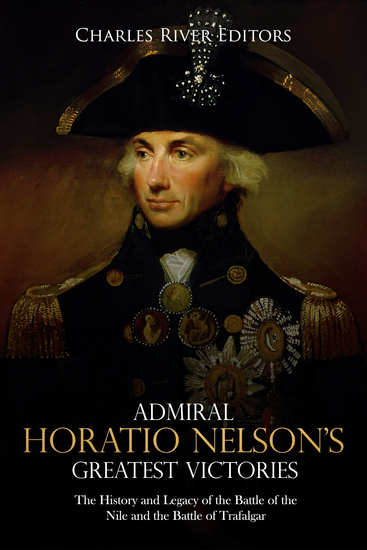
Admiral Horatio Nelson’s Greatest Victories - The History and Legacy of the Battle of the Nile and the Battle of Trafalgar - cover

Admiral Horatio Nelson’s Greatest Victories - The History and Legacy of the Battle of the Nile and the Battle of Trafalgar

Editors Charles River

Verlag: Charles River Editors

  • 0
  • 0
  • 0

Beschreibung

Over the course of its history, England has engaged in an uncountable number of battles, but none of her military heroes has had a greater military legacy than Admiral Lord Horatio Nelson, 1st Viscount Nelson, 1st Duke of Bronté. Whether traveling to Trafalgar Square or one of the hundreds of pubs named after him, seemingly it becomes easy to believe that no Briton has cast as long a shadow.
 
Nelson is known across the world for his decisive victory at Trafalgar, made all the more legendary by the fact that he was mortally wounded at the height of his greatest feat. And it is understandable that any man who could thwart Napoleon’s ambitions as well as Nelson did would earn a place in the history books. But Nelson embodied every virtue of his homeland as a dashing, courageous military officer who was impeccably cultured, and the best at what he did. Indeed, as the personification of the supremacy of the Royal Navy, the man and his life had a powerful resonance well before his death.
 
Before Trafalgar, Nelson had already earned enduring fame for the British victory at the Battle of the Nile. In 1798, he was given command of a small squadron and sent ahead to Gibraltar, and eventually given instructions to hunt down and destroy Napoleon’s fleet.
 
An initial review of France’s naval forces had led Napoleon to conclude his navy could not hope to outfight the power of the Royal Navy, which had been the dominant naval power for centuries, so he was forced to look elsewhere. After months of planning, Napoleon crafted a scheme to attack and conquer Egypt, denying the British easy access to their colonies in India, with the ultimate goal of linking up with the Sultan Tipoo in India itself and defeating the British in the field there. Napoleon sailed with Admiral Brueys and 30,000 troops that June, heading for Egypt. Notionally part of the Ottoman Empire, Egypt was de facto a weak independent regime run by the breakaway Mamelukes. For France, it offered an overland route to India and a chance to beat Britain at her own game via economic strangulation. Nelson however, could only speculate at French intentions. Whatever the destination of the French fleet, he sought a battle of annihilation, the culmination of all he had learned as an officer and admiral. Only by that means could Britain secure the Mediterranean and neutralize the threat of a French army operating overseas. His understanding was icily accurate.
Verfügbar seit: 01.05.2025.
Drucklänge: 87 Seiten.

Weitere Bücher, die Sie mögen werden

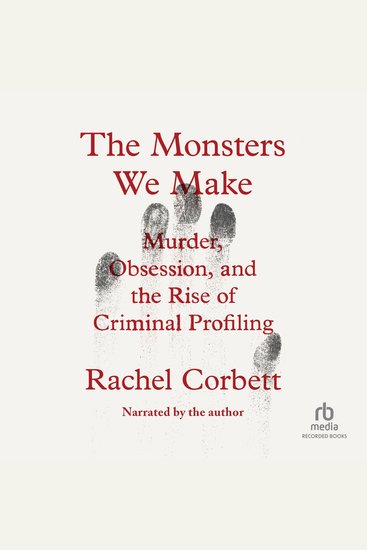
  • The Monsters We Make - Murder Obsession and the Rise of Criminal Profiling - cover

    The Monsters We Make - Murder...

    Rachel Corbett

    • 0
    • 0
    • 0
    A riveting work of true crime that tells the strange story of criminal profiling from Victorian times to our own. 
      
    Criminal profiling—the delicate art of collecting and deciphering the psychological “fingerprints” of the monsters among us—holds an almost mythological status in pop culture. But what exactly is it, does it work, and why is the American public so entranced by it? What do we gain, and endanger, from studying why people commit murder? In The Monsters We Make, author Rachel Corbett explores how criminal profiling became one of society’s most seductive and quixotic undertakings through five significant moments in its history. 
      
    Corbett follows Arthur Conan Doyle through the London alleyways where Jack the Ripper butchered his victims, depicts the tailgate outside of Ted Bundy’s execution, and visits the remote Montana cabin where Ted Kaczynski assembled his antiestablishment bombs. Along the way emerge the people who studied and unraveled these cases. We meet self-taught psychologist Henry Murray, who profiled Adolf Hitler at the request of the U.S. government and later profiled his own students—including the future Unabomber—by subjecting them to cruel humiliation experiments. We also meet the prominent Yale psychiatrist Dorothy Lewis, who ended up testifying that Bundy was too sick to stand trial. Finally, Corbett takes the story into our own time, explaining the rise of modern “predictive policing” policies through a study of one Florida family that the analytics targeted—to devastating effects. 
      
    With narrative intrigue and deft research, Corbett delves deep into the mythology and reality of criminal profilers, revealing how thin the line can be separating those who do harm and those who claim to stop it. 
      
    “Corbett [is] a gifted storyteller … A highly readable, endlessly revealing primer on the homicidal mind.”—Kirkus Reviews (starred review)
    Zum Buch
  • Anger Management: Learn How To Manage Your Anger as a Parent and be better at Parenting With Anger Management - cover

    Anger Management: Learn How To...

    Josh Denver

    • 0
    • 0
    • 0
    Are you wondering whether your child has anger issues or not?  
    Do you think about ways in which you can teach your child about anger management?  
    Do you want to learn about how to prevent anger from getting the best of your kids?  
    Do you want to know how to avoid anger from wearing down your kids?  
    Do you want to talk to your child about anger management, but aren’t sure where to begin?  
    If yes, then this is the perfect book for you. This book is the perfect combination of helpful and practical tips, along with interactive and fun activities for your kids to help teach them about anger management. This book is your go-to guide if you want to prevent anger from turning into an ugly monster which can control your child’s life. 
    In this easy-to-understand guide, you will: 
    - Explore the different types of anger and what triggers them. 
    - Learn how anger affects your physical and mental health. 
    - Discover techniques for managing your anger. 
    - Find out how to build healthier, happier relationships. 
    - Develop an action plan for change. 
    Even if you’ve struggled to get a grip on your anger in the past, and the calming tactics you’ve tried haven’t worked for you, the solution you’re looking for is right at your fingertips. 
    It’s normal to feel angry as parents, and you shouldn’t be suppressing or denying your anger in order to be a better parent. 
    The key is to be aware of your anger, acknowledge and manage it effectively, and keep it from taking over your actions. This book will give you the tools to do all this and more. 
    Scroll up, click on buy now and get your copy today!
    Zum Buch
  • Everyday Leadership - Taking Charge in the Real World - cover

    Everyday Leadership - Taking...

    M.D. Ahron Friedberg, Sandra...

    • 0
    • 0
    • 0
    Everyday Leadership examines how individuals in everyday, relatively small settings can succeed in leadership positions. 


    The book provides tools for tackling the unique psychological and external challenges that everyday leaders face, and offers principles that they can adapt to their own situations. Dr. Ahron Friedberg, who regularly advises leaders and would-be leaders, emphasizes the social aspect of leadership, and explores how those who are new to leadership—and those in established positions—can leverage their support networks and thrive in their roles. The book follows the experience of real people who have faced leadership challenges and learned from them, demonstrating how listeners can learn from these examples and apply them to their own circumstances. Guided by a practical leadership roadmap, chapters examine concepts such as vision, determination, flexibility, planning, organization, and responsibility using extensive case studies, with reflective questions and key takeaways that help the listener consider how to apply these principles to their own leadership challenges. 


    This book is a must-listen for HR professionals, executive coaches, management consultants, leadership trainers, and organizational psychologists as well as those facing leadership challenges in their profession.
    Zum Buch
  • The Sayings of Mencius Book 1 - cover

    The Sayings of Mencius Book 1

    Mencius

    • 0
    • 0
    • 0
    The Sayings of Mencius has been revered for well over 2,000 years, and is arguably the most influential of the Si Shu (Four Books) which form the foundation of traditional Chinese education,'Master Meng' was born during the turbulent Warring States period, and was a tireless advocate of Confucian thought, defending and expanding its tenets as a means of achieving peaceful relations between individuals and competing kingdoms. The sage spent most of his life journeying from court to court, always seeking a Ruler sufficiently principled to apply his teachings. Few were found worthy.According to his philosophy, each of the fundamental Confucian virtues already exist within us as "sprouts" (especially jen (acting compassionately) and yi (doing what is morally correct). The Wise who cultivate these young shoots can achieve harmony, both within themselves, and in relation to their fellow beings. Human societies which follow this path will be fair, just and free of conflict.The Mencius is filled with a stunning variety of philosophical and political subjects. Discussions with warlords, disciples, and philosophical adversaries vie with pronouncements on duty, human nature, society and (a recurring theme) the evils of war. A book to return to again and again.
    Zum Buch
  • Archaic Humans: The History of the Different Prehistoric Species in the Genus Homo - cover

    Archaic Humans: The History of...

    Editors Charles River

    • 0
    • 0
    • 0
    The evolutionary path from the original primates to modern man is a long one and has taken many twists and turns, but naturally, as the fossil record grows, scientists gain a more complete understanding of our own mental and physical history in terms of genetics and anatomy. However, the correct order and relationships of the various specimen types are difficult to pin down. Many representative samples have been found in such minute amounts as to not preclude anomalies. They have been discovered in various stages of wear. Modern features did not occur simultaneously or uniformly, taking millions of years to become manifest in later types. Up to the present day’s Homo sapiens, examples of the main types have been hybrids of older and more modern features. 
    	One of the earliest species of the genus Homo to be discovered is Homo habilis, which basically means “handy man.” The name comes from the belief at the time of its discovery that this species was the first to start using stone tools. The first fossils to be uncovered in Olduvai Gorge were from the same stratigraphic layer as simple stone tools. Fossils of the crania and postcranial skeleton for this species have been found in both eastern and southern Africa and date to around 2.5–1.6 million years ago.  
    	Features of Homo erectus suggest an evolution toward modern humans, and the features which separate Homo erectus from the other Homo species are found in the skull. The size of the brain was approximately 900 cc, making it larger than the brain size of Homo habilis. Homo erectus would not have the largest brain capacity of the Homo genus during its existence, with the emergence of Homo heidelbergensis approximately 800,000 years ago. The larger brain size may not matter much when the size of the brain is considered with the size of the body, which also increased. 
    Zum Buch
  • Persian Empires - Persia's Influence on Civilization Through the Ages (2 in 1) - cover

    Persian Empires - Persia's...

    Kelly Mass

    • 0
    • 0
    • 0
    This title contains two books, which are these: 
    1 - Safavid Empire - The Safavid Empire, often referred to as Safavid Iran or Safavid Persia, stands out as one of the most influential Iranian empires following the Muslim conquest of Persia in the 7th century. Ruling from 1501 to 1736, the Safavid dynasty is regarded as the catalyst for modern Iranian history and is recognized as one of the prominent gunpowder empires of its time. A pivotal moment in Muslim history, the Safavid rulers established the Twelver school of Shia Islam as the empire's official religion, which fundamentally shaped the spiritual and political landscape of Iran. 
    The origins of the Safavid dynasty can be traced back to a Sufi order founded in the Azerbaijani city of Ardabil. Initially a spiritual movement, the Safavid order transformed into a formidable political force. The dynasty, which had Kurdish Iranian roots, became increasingly Turkified through intermarriages with various ethnic groups, including Turkoman, Georgian, Circassian, and Pontic Greek officials. As a result, the Safavid leaders became Turkish-speaking and culturally integrated into the diverse milieu of the region. 
    2 - Sasanian Empire - The Sasanian Empire, often referred to by historians as the Neo-Persian Empire, was the last significant Iranian empire before the Muslim invasions of the 7th and 8th centuries AD. Named after the House of Sasan, this empire lasted nearly four centuries, from 224 to 651 AD, making it the longest-lived Persian imperial dynasty. The Sasanian Empire emerged during late antiquity, succeeding the Parthian Empire and re-establishing Persian prominence in the region, rivaling the Roman Empire (later known as the Byzantine Empire after 395 AD).
    Zum Buch