Rejoignez-nous pour un voyage dans le monde des livres!
Ajouter ce livre à l'électronique
Grey
Ecrivez un nouveau commentaire Default profile 50px
Grey
Abonnez-vous pour lire le livre complet ou lisez les premières pages gratuitement!
All characters reduced
Admiral Horatio Nelson’s Greatest Victories - The History and Legacy of the Battle of the Nile and the Battle of Trafalgar - cover

Admiral Horatio Nelson’s Greatest Victories - The History and Legacy of the Battle of the Nile and the Battle of Trafalgar

Editors Charles River

Maison d'édition: Charles River Editors

  • 0
  • 0
  • 0

Synopsis

Over the course of its history, England has engaged in an uncountable number of battles, but none of her military heroes has had a greater military legacy than Admiral Lord Horatio Nelson, 1st Viscount Nelson, 1st Duke of Bronté. Whether traveling to Trafalgar Square or one of the hundreds of pubs named after him, seemingly it becomes easy to believe that no Briton has cast as long a shadow.
 
Nelson is known across the world for his decisive victory at Trafalgar, made all the more legendary by the fact that he was mortally wounded at the height of his greatest feat. And it is understandable that any man who could thwart Napoleon’s ambitions as well as Nelson did would earn a place in the history books. But Nelson embodied every virtue of his homeland as a dashing, courageous military officer who was impeccably cultured, and the best at what he did. Indeed, as the personification of the supremacy of the Royal Navy, the man and his life had a powerful resonance well before his death.
 
Before Trafalgar, Nelson had already earned enduring fame for the British victory at the Battle of the Nile. In 1798, he was given command of a small squadron and sent ahead to Gibraltar, and eventually given instructions to hunt down and destroy Napoleon’s fleet.
 
An initial review of France’s naval forces had led Napoleon to conclude his navy could not hope to outfight the power of the Royal Navy, which had been the dominant naval power for centuries, so he was forced to look elsewhere. After months of planning, Napoleon crafted a scheme to attack and conquer Egypt, denying the British easy access to their colonies in India, with the ultimate goal of linking up with the Sultan Tipoo in India itself and defeating the British in the field there. Napoleon sailed with Admiral Brueys and 30,000 troops that June, heading for Egypt. Notionally part of the Ottoman Empire, Egypt was de facto a weak independent regime run by the breakaway Mamelukes. For France, it offered an overland route to India and a chance to beat Britain at her own game via economic strangulation. Nelson however, could only speculate at French intentions. Whatever the destination of the French fleet, he sought a battle of annihilation, the culmination of all he had learned as an officer and admiral. Only by that means could Britain secure the Mediterranean and neutralize the threat of a French army operating overseas. His understanding was icily accurate.
Disponible depuis: 01/05/2025.
Longueur d'impression: 87 pages.

D'autres livres qui pourraient vous intéresser

  • Age of Deception - Cybersecurity as Secret Statecraft (Cornell Studies in Security Affairs) - cover

    Age of Deception - Cybersecurity...

    Jon R. Lindsay

    • 0
    • 0
    • 0
    At the heart of cybersecurity is a paradox: Cooperation enables conflict. In Age of Deception, Jon R. Lindsay shows how widespread trust in cyberspace enables espionage and subversion.  
    The dark arts have long been part of global politics, but digital systems expand their scope and scale. Yet success in secret statecraft depends on political context, not just sophisticated technology. Lindsay provides a general theory of intelligence performance—the analogue to military performance in battle—to explain why spies and hackers alike depend on clandestine organizations and vulnerable institutions. 
    Through cases spanning codebreaking at Bletchley Park during WWII to the weaponization of pagers by Israel in 2024, Lindsay reveals continuity and change in secret statecraft. Along the way he explains why popular assumptions about cyber warfare are profoundly misleading. Offense does not simply dominate defense, for example, because the same digital complexity that expands opportunities for deception also creates potential for self-deception and counter-deception. Provocative and persuasive, Age of Deception offers crucial insights into the future of secret statecraft in cyberspace and beyond.
    Voir livre
  • Rise and Fall of the Banate of Bosnia The: The History of Bosnia’s Struggle for Independence in the Middle Ages - cover

    Rise and Fall of the Banate of...

    Editors Charles River

    • 0
    • 0
    • 0
    Much has been written about Western intervention during the breakup of Yugoslavia, and whether it made matters worse, prevented worse atrocities, or was simply ineffective. In early 1992, however, what was clear was that Europe was hopelessly divided over the best course of action to take towards Yugoslavia, and after several years of fighting, the Bosnian War was one of the most violent conflagrations in Europe since the end of World War II.  
    	That war had been the byproduct of centuries of tensions in the Balkans, and an attempt in the wake of World War I to redraw the political boundaries of Europe and the Middle East. That included forming the Kingdom of Yugoslavia, initially known as the Kingdom of Serbs, Croats and Slovenes, a particularly fragile enterprise, and there was almost constant tension between the majority Serbs and the other Yugoslav nationalities, especially the Croats. As a result, the Kingdom was a land of political assassinations, underground terrorist organizations, and ethnic animosities.  
    Depending on the source, many authors have focused on different catalysts for Yugoslavia’s demise, but Vesna Drapac may have succinctly summed the situation up when he wrote that by the end, the state “lacked a reason to exist.” There is certainly something in this sentiment, but the disintegration came at an enormous cost. 
    	Given what happened in Yugoslavia, it should be little surprise that Bosnia did not have its fully-established borders until the 19th century, and even in modern times, in many respects the people distinguished and defined Bosnia as a polity more than its shifting borders, and regardless of whether Bosnia operated as an independent state or kingdom. It was during the Middle Ages that Bosnia’s culture and ethnic makeup truly began to coalesce, despite the politically rocky nature of the era in the Balkans. 
    Voir livre
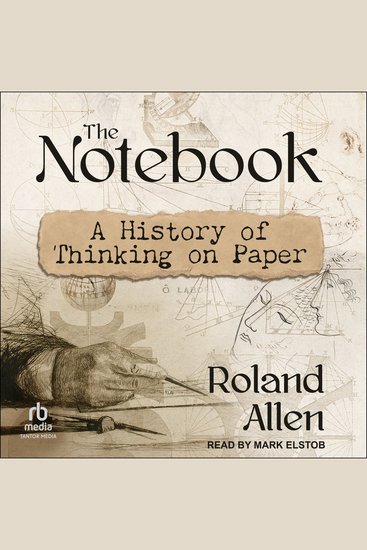
  • The Notebook - A History of Thinking on Paper - cover

    The Notebook - A History of...

    Roland Allen

    • 0
    • 0
    • 0
    A Kirkus Most Anticipated Book of Fall 2024 


    We see notebooks everywhere we go. But where did these indispensable implements come from? How did they revolutionize our lives? And how can using a notebook help change the way you think? In this wide-ranging history, Roland Allen reveals how the notebook became our most dependable and versatile tool for creative thinking. He tells the notebook stories of Leonardo and Frida Kahlo, Isaac Newton and Marie Curie, and writers from Chaucer to Henry James; shows how Darwin developed his theory of evolution in tiny pocket books and Agatha Christie plotted a hundred murders in scrappy exercise books; and introduces a host of cooks, kings, sailors, fishermen, musicians, engineers, politicians, adventurers, and mathematicians, all of whom used their notebooks as a space to think—and in doing so, shaped the modern world. 


    In an age of AI and digital overload, the humble notebook is more relevant than ever. Allen shows how bullet points can combat ADHD, journals can ease PTSD, and patient diaries soften the trauma of reawakening from coma. The everyday act of moving a pen across paper, he finds, can have profound consequences, changing the way we think and feel: making us more creative, more productive—and maybe even happier.
    Voir livre
  • Rome and the Near East - The History of the Different Kingdoms that Fought the Roman Empire in the Region - cover

    Rome and the Near East - The...

    Charles River Editors

    • 0
    • 0
    • 0
    Rome faced many formidable enemies over the course of nearly 1,000 years, but perhaps none were as enigmatic and forgotten as King Mithridates VI of Pontus. Despite numerous ancient sources detailing the life of the foreign monarch and his wars with Rome, and despite being an interesting character who endured years as a fugitive in his youth, enjoyed a fascination with poisons, and held mercy and pragmatic ruthlessness in a delicate balance, very few scholarly books and works have been produced about the king. It may be that his largely unsuccessful military campaigns have contributed to his disappearance from active historical examination, but despite his poor record in engagements against the Romans, the Kingdom of Pontus dominated much of Asia Minor in the 1st century BCE, and the Romans themselves considered the kingdom one of its most dangerous enemies. According to Plutarch, when Mithridates died, the Roman soldiers felt that “in the person of Mithridates ten thousand enemies had died.” By then, it had required three of Rome’s most famous generals - Sulla, Lucullus, and Pompey - to finally subdue his kingdom.   
    	Among all the periods in ancient Egyptian history, the Ptolemaic Kingdom and its most famous ruler, Cleopatra, may be the most well-known today. By the 4th century BCE, it appeared as though ancient Egypt was in its final death throes. It had long ceased to be an influential kingdom in the Near East and Mediterranean regions, and it had been ruled over by a succession of foreign peoples including Libyans, Nubians, Assyrians, and Persians. But just when Egypt seemed doomed to pass forever into obscurity, it was reinvigorated by outsiders, most notably Alexander the Great. While in the process of campaigning to destroy the Achaemenid Persian Empire and conquer the world in 331 BCE, he made a pit stop in Egypt that forever changed the course of Egyptian history.
    Voir livre
  • The Story of the Quilt of Hope - Threads of Unlived Lives: Clerical Child Sexual Abuse - cover

    The Story of the Quilt of Hope -...

    Adrianne Moloney

    • 0
    • 0
    • 0
    The Quilt of Hope holds the threads of unlived lives and joins them together to reveal a dark history in the Catholic Diocese of Ballarat. 
    During a time when unfathomable and gruesome truths were told, the constant denial and dismissal of claims of child sexual abuse brought together a small group of parishioners. The Quilt of Hope was created to reach out to people and provide a canvas for their voices to finally be heard. 
    This is an inspirational story of people who chose to stand up in the face of evil and work together to challenge the collective silence of the Catholic Church and the wider Catholic community. 
    Adrianne Moloney is the daughter of Carmel Moloney, a founding member of MTJ (Moving Towards Justice). She was inspired to compile this book to honour the voices behind the quilt and provide a vehicle for these stories to be shared. 
    Adrianne holds a Masters in Sociology and Anthropology and a Masters in International Community Development. She grew up in Ballarat and attended local Catholic schools.
    Voir livre
  • Embrace the Beautiful Chaos of Life - Dive into life's beautiful chaos! Unlock inspiring audio lessons for navigating life's unpredictable journey - cover

    Embrace the Beautiful Chaos of...

    Orson Barrington

    • 0
    • 0
    • 0
    "Embrace the Beautiful Chaos of Life" 
    ⭐⭐ Simplified Audio Guide with Explanations ⭐⭐ 
    Are you striving to advance in your career and enhance your understanding by successfully navigating the uncertainties of life? 
    Searching for an all-encompassing guide that equips you with everything necessary to find beauty in uncertainty and recognize that growth thrives in chaos? 
    Your search ends here! 
    This audiobook is your ultimate companion for deepening your understanding, honing your skills, and engaging in transformative exercises. With this, you're set for success. 
    Updated to reflect the challenges of embracing life's beautiful chaos. 
    Key features of this enriched guide: 
    - Profound insights about finding beauty in uncertainty 
    - Detailed explanation of embracing chaos for growth 
    - Effective strategies for preparation and overcoming challenges 
    Our guide is set apart by its expansive coverage, which is crucial for your triumph over life's complexities. Concepts are not merely touched upon; they are thoroughly explored with precision. 
    Please note that this guide is not affiliated with any official entity and is an independent resource for your growth. 
    Designed with a clear structure and simple language, our guide ensures a smooth transition between topics. Say goodbye to confusing jargon and embrace clear, precise, and practical content. 
    So, why wait? Click the BUY NOW button, secure your guide, and begin your journey to finding beauty in life's beautiful chaos!
    Voir livre