Rejoignez-nous pour un voyage dans le monde des livres!
Ajouter ce livre à l'électronique
Grey
Ecrivez un nouveau commentaire Default profile 50px
Grey
Abonnez-vous pour lire le livre complet ou lisez les premières pages gratuitement!
All characters reduced
Smarter Than Napoleon Hill's Method: Challenging Ideas of Success from the Book "Smarter Than the Devil" - Volume 13 - The "Positive Thinking" Fallacy: Unmasking the Happiness Industry - cover

Nous sommes désolés! L'éditeur ou l'auteur a retiré ce livre de notre catalogue. Mais ne vous inquiétez pas, vous pouvez toujours choisir les livres que vous souhaitez parmi plus de 500 000 titres!

Smarter Than Napoleon Hill's Method: Challenging Ideas of Success from the Book "Smarter Than the Devil" - Volume 13 - The "Positive Thinking" Fallacy: Unmasking the Happiness Industry

Max Editorial

Maison d'édition: Max Editorial

  • 0
  • 0
  • 0

Synopsis

In a world saturated with "positivity" messages, there is a need for a critical and honest analysis of the power of positive thinking. This ebook sets out to debunk the fallacy of "positive thinking", questioning the simplistic belief that it is enough to have a positive mental attitude to achieve success and happiness, ignoring life's challenges, difficulties and setbacks. 
Questioning the Simplisticity of Positive Thinking 
The book "Smarter Than the Devil", by Napoleon Hill, proposes that persistence and positivity are the keys to success. However, this simplistic view fails to recognize the complex reality of life. Stating that positive thinking is enough to achieve any goal is to deny the influence of external factors, such as the socioeconomic context, social inequalities and individual circumstances. 
Positivity as a Mask for Real Problems 
The happiness industry, with its books, courses and workshops, often promotes positivity as a magical solution to all problems. This approach can be dangerous, as it masks real problems and blames victims for their failures. Instead of encouraging the search for real solutions to difficulties, excessive positivity can lead to self-depreciation and denial of reality. 
Negative Emotions: Learning From Them 
It's important to recognize that negative emotions are a natural part of life. Feeling sadness, anger, frustration and fear is normal and healthy. Denying these emotions or trying to repress them can be harmful to your mental health. The key is learning to deal with them constructively, using them as opportunities for growth and learning. 
A Realistic and Balanced View of Positivity 
Positivity should not be seen as a magical solution to all problems, but rather as a tool that can help overcome challenges. It is important to have a realistic and balanced view, recognizing that success depends on a combination of factors, such as hard work, resilience, intelligence and adaptability. 
Conclusion 
Instead of chasing illusory happiness, it is important to seek an authentic and meaningful life. This means recognizing the complexity of life, dealing with negative emotions constructively, and learning from mistakes. Positivity, when used in a conscious and balanced way, can be a valuable tool on this journey. 
 
Learn Much More...
Disponible depuis: 01/03/2025.
Longueur d'impression: 100 pages.
D'autres livres qui pourraient vous intéresser

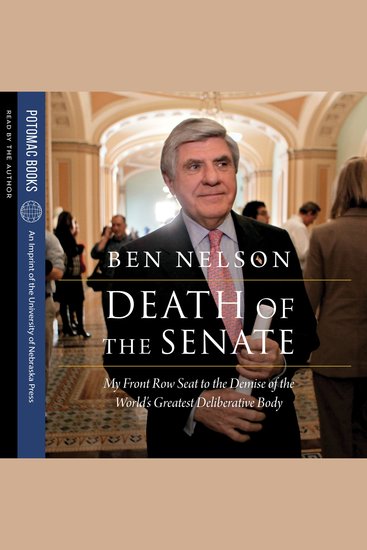
  • Death of the Senate - My Front Row Seat to the Demise of the World's Greatest Deliberative Body - cover

    Death of the Senate - My Front...

    Ben Nelson

    • 0
    • 0
    • 0
    Something is rotten in the U.S. Senate, and the disease has been spreading for some time. But Ben Nelson, former U.S. senator from Nebraska, is not going to let the institution destroy itself without a fight. Death of the Senate is a clear-eyed look inside the Senate chamber and a brutally honest account of the current political reality. 
    In his two terms as a Democratic senator from the red state of Nebraska, Nelson positioned himself as a moderate broker between his more liberal and conservative colleagues and became a frontline player in the most consequential fights of the Bush and Obama years. His trusted centrist position gave him a unique perch from which to participate in some of the last great rounds of bipartisan cooperation, such as the “Gang of 14” that considered nominees for the federal bench—and passed over a young lawyer named Brett Kavanaugh for being too partisan. 
    Nelson learned early on that the key to any negotiation at any level is genuine trust. With humor, insight, and firsthand details, Nelson makes the case that the “heart of the deal” is critical and describes how he focused on this during his time in the Senate. As seen through the eyes of a centrist senator from the Great Plains, Nelson shows how and why the spirit of bipartisanship declined and offers solutions that can restore the Senate to one of the world’s most important legislative bodies.
    Voir livre
  • Not in It to Win It - Why Choosing Sides Sidelines The Church - cover

    Not in It to Win It - Why...

    Andy Stanley

    • 0
    • 0
    • 0
    Read by the author. 
    Is it possible to disagree politically and love unconditionally? The reaction of evangelicals to political and cultural shifts in recent years revealed what they value most. Lurking beneath our Bible-laced rhetoric, faith claims, books, and sermons is a relentless drive to WIN! 
    But the church is not here to win. By every human measure, our Savior lost. On purpose. With a purpose. And we are his body. We are not in it to win anything. We are in it for something else entirely. That something else is what this book is about. 
    You'll discover:How to take a stand the right way. You'll learn how to make your case with a posture of humility and understanding, rather than being fueled by the fear of losing something.How to view politics through the lens of faith. Learn curiously, listen intentionally, and love unconditionally.How the life of Jesus and his teaching applies to modern-day challenges in a fresh way. The "biblical" stand may not be what we've been taught. 
    Jesus never asked his followers to agree on everything. But he did call his followers to obey a new command: to love others in the same way he has loved us. Instead of asserting our rights or fighting for power, we need to begin asking ourselves: what does love require of me?
    Voir livre
  • Treatise of Human Nature A: Book Summary & Analysis - cover

    Treatise of Human Nature A: Book...

    Briefly Summaries

    • 0
    • 0
    • 0
    This is a concise summary and analysis of A Treatise of Human Nature, by David Hume.
    It is not the original book and is not affiliated with or endorsed by David Hume.
    Ideal those seeking a quick and insightful overview.
     
    An Inquiry into Human Nature offers a profound exploration of the foundations of human thought, emotions, and actions. This landmark work examines the principles of knowledge, morality, and human psychology, presenting a revolutionary perspective on reason, perception, and belief. Through sharp analysis and philosophical inquiry, it challenges traditional assumptions about the self, identity, and society, making it an enduring masterpiece in the study of philosophy. Ideal for anyone seeking to understand the origins of modern thought, this treatise delves into the complexities of human experience with unparalleled depth and clarity.
    Voir livre
  • The Magic in Your Genes - Your Personal Path to Ancestor Work (Bringing Together the Science of DNA with the Timeless Power of Ritual and Spellcraft) - cover

    The Magic in Your Genes - Your...

    Cairelle Crow Perilloux

    • 1
    • 0
    • 0
    Combines traditional genealogy with magical practices in a unique guide to deepen your relationship with ancestors.   Have you been searching for a way to find deeper connection with your ancestors? Would you like to infuse some magic into your genealogy? The Magic in Your Genes provides a clear and accessible route enabling both novices and adepts to deepen their ancestor work and genealogy practice.   The book offers a primer on the basics of DNA and genetic genealogy practices, so no prior knowledge is required to put the book to use. Magical tips and techniques are placed throughout to help the reader utilize both technical and magical resources as appropriate to the content in each chapter.   Written in a conversational style, the book is easy to understand by those with limited knowledge of genetics and genealogy, yet the book’s technical aspects on DNA and genetic testing are based on current standards as set forth by professional associations.   Included are: Real-life stories and insights from a variety of Pagans, Wiccans, and witches who have done genetic genealogy testing and have used their personal results to explore their own magical identity and deepen their relationship with their ancestors The author’s own experiences with DNA testing and genealogy and how it is utilized by her in various forms of art, writing, and her own spiritual and magical practice Correspondences, recipes, rituals, and spellsRecommended resources, a glossary of terms, and information regarding major genealogical groups and societies   The Magic in Your Genes is geared to those with a known recent genealogical history (parents, grandparents) but is also appropriate for those who are adopted or who have other situations, such as a misattributed parentage event.
    Voir livre
  • Luminous Darkness - An Engaged Buddhist Approach to Embracing the Unknown - cover

    Luminous Darkness - An Engaged...

    Deborah Eden Tull

    • 0
    • 0
    • 0
    A resonant call to explore the darkness in life, in nature, and in consciousness through teachings, embodied meditations, and mindful inquiry that provide us with a powerful path to healing. 


    Darkness is deeply misunderstood in today's world; yet it offers powerful medicine, serenity, strength, healing, and regeneration. All insight, vision, creativity, and revelation arise from darkness. It is through learning to stay present and meet the dark with curiosity rather than judgment that we connect to an unwavering light within. Welcoming darkness with curiosity, rather than fear or judgment, enables us to access our innate capacity for compassion and collective healing. 


    Dharma teacher, shamanic practitioner, and deep ecologist Deborah Eden Tull addresses the spiritual, ecological, psychological, and interpersonal ramifications of our bias towards light. 


    Tull shows us how the labeling of darkness as "negative" becomes a collective excuse to justify avoiding everything that makes us uncomfortable: racism, spiritual bypass, environmental destruction. We can only find the radical path to wholeness by learning to embrace the interplay of both darkness and light.
    Voir livre
  • Wired for Connection - The counterintuitive lessons a therapist learned from her clients - cover

    Wired for Connection - The...

    Carolyn Klassen

    • 0
    • 0
    • 0
    Wired for Connection are the lessons clients taught a therapist over a career about love, courage, vulnerability, shame and authenticity 
    Therapists learn and grow from therapy with clients--and now you can too!  
    Carolyn graduated from counselling school with a ton of head knowledge. Carolyn read 1000’s of pages and written hundreds more and learned the models and the approaches in the books. Did this therapist know enough to actually help people? 
    Turns out she didn’t. 
    That’s where her clients come in. They taught her about life, about therapy, and about relationships. 
    So much of what clients taught her was paradoxical. Actually, they didn’t teach her—the most important lessons in life are better caught than taught. The lessons were counterintuitive to conventional relationship wisdom. 
    Together they learned the way to real relationships was messiness, mistakes and discomfort. They noticed the route to acceptance was authenticity, that tears make life better, and that raw courage is often about tender things like saying, “I’m sorry” and “I love you”. And so much more. 
    Relationships are hard—but we are wired for them. We are wired for struggle and growth. Watching people struggle with their own lives has inspired her to struggle and grow in hers. 
    Relationships are hard for us all. But if we show up to connect, and we do it anything like right, we learn from each other. We learn from each other in ways that surprise and delight us. 
    We are wired for connection.
    Voir livre