Junte-se a nós em uma viagem ao mundo dos livros!
Adicionar este livro à prateleira
Grey
Deixe um novo comentário Default profile 50px
Grey
Assine para ler o livro completo ou leia as primeiras páginas de graça!
All characters reduced
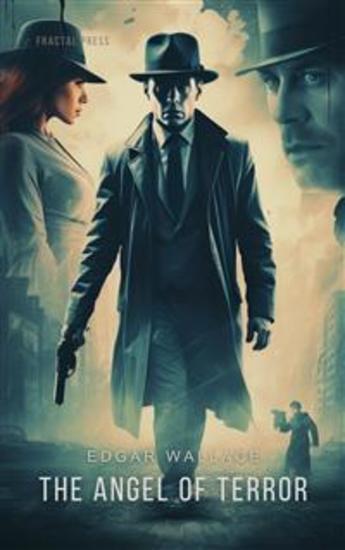
The Angel of Terror - cover
LER

The Angel of Terror

Edgar Wallace

Editora: Interactive Media

  • 0
  • 0
  • 0

Sinopse

"The Angel of Terror" by Edgar Wallace unfolds a gripping tale of crime and suspense. As the mysterious "Angel" masterminds a criminal empire, Detective Cleek endeavors to unravel the enigma. Wallace weaves a narrative of intrigue, betrayal, and unexpected alliances, keeping readers on the edge. The story navigates through the shadowy underworld, revealing the complexities of justice and the elusive nature of the "Angel." With a blend of suspense and cunning, Wallace crafts a riveting thriller that explores the fine line between criminality and retribution.
Disponível desde: 25/11/2023.
Comprimento de impressão: 230 páginas.

Outros livros que poderiam interessá-lo

  • A Rich Woman - From their pens to your ears genius in every story - cover

    A Rich Woman - From their pens...

    Katharine Tynan

    • 0
    • 0
    • 0
    Katharine Tynan was born on 23rd January 1859 into a large family in Clondalkin, County Dublin. 
    The family business was cattle rearing and the farmhouse, set with the mountains for a backdrop, was a wonderful world for a young mind to learn and imagine. 
    She was educated at the convent school, St Catherine of Sienna, in Drogheda.  A stubborn streak inhibited her ability to learn as easily as the school wished. However she did learn on her own terms and soon began to take her ‘forbidden literature’, hidden in her clothing, to her loft in a stable hideaway.  
    Until she turned seventeen nothing appeared to point to a literary career.  But some verse printed in a Dublin newspaper changed everything. It led to a sonnet being printed in the Spectator.  Thereafter the Graphic published several others and even paid a half guinea for the privilege.   
    In 1884 Katharine dispatched herself to London and made an abiding friendship in Alice Meynell.  Alice was an established poet and helped, with her husband Wilfred, to publish many poets. The following year it was arranged for the publication of her first poetry volume, ‘Louise de la Vallière’.  
    She formed valuable friendships with the poets Gerard Manley Hopkins, William Butler Yeats and later Francis Ledwidge.  
    As she gathered friends and contacts into her life her literary output began to gather pace. Katharine had begun to write prose for the Speaker and for the Scots and National Observer.  
    In 1892 she married Henry Albert Hinkson, a fellow writer and a barrister.  They moved to England and had five children although two were to tragically die in infancy.   
    By now her output was prolific and ranged from poetry to novels to short stories.  It would later include a biography and further extend to editing and reviewing.   
    In 1912 the family returned to Claremorris, County Mayo, when her husband was appointed magistrate, a post he held until his early death in 1919.     
    Tynan is sometimes grouped amongst the War Poets of the First World War. Her experience was not direct but as a Mother with one son serving in France and another in Palestine, the emotions, fears and doubts are expressed in a beautiful and heart-felt way.  
    Involved in the Irish Literary Revival, Tynan expressed concern for feminist causes, the poor, and the effects of World War I in her work. She also meditated on her Catholic faith. 
    She is said to have written over 100 novels, 12 collections of short stories, plays and many volumes of enduring poetry as well as five volumes of autobiography. 
    Katharine Tynan Hinkson died at age 72 on 2nd April 1931 in London and is buried in Kensal Green Cemetery.
    Ver livro
  • West-Running Brook - cover

    West-Running Brook

    Robert Frost

    • 0
    • 0
    • 0
    "West-Running Brook" is a collection of poetry by the renowned American poet Robert Frost, first published in 1928. The title poem serves as the centerpiece of the collection, with the overarching theme of the flow of time and the interconnectedness of past, present, and future. 
    In "West-Running Brook," Frost uses the metaphor of a brook that flows contrary to the usual direction, symbolizing the poet's own journey against the current of conventional wisdom and tradition. The brook becomes a powerful symbol of resilience and individuality, as well as a reflection of the poet's own introspection and exploration of the human experience. 
    Throughout the collection, Frost's signature style of writing in accessible yet profound language is evident. His poetry often explores themes of nature, rural life, and the complexities of human existence. With vivid imagery and keen observation, Frost invites readers to contemplate the beauty and mystery of the natural world, as well as the deeper truths and universal truths that lie beneath the surface. 
    Among the notable poems in the collection are "Spring Pools," which reflects on the cyclical nature of life and the passage of time; "The Silken Tent," a metaphor for the delicate balance between strength and flexibility in human relationships; and "Desert Places," which explores themes of isolation and existential despair amidst the vastness of the natural world. 
    "West-Running Brook" showcases Frost's mastery of form and language, as well as his ability to capture the complexities of the human condition with depth and nuance. Through its exploration of timeless themes and its lyrical beauty, the collection remains a testament to Frost's enduring legacy as one of America's most beloved poets.
    Ver livro
  • Vision of Hell The - The Divine Comedy 1 (Unabridged) - cover

    Vision of Hell The - The Divine...

    Dante Alighieri

    • 0
    • 0
    • 0
    Dante's Inferno by Dante Alighieri. The first part of Dante's Divine Comedy , the "Inferno" (or "Hell") begins on the night before Good Friday in the year 1300, "halfway along our life's path". Dante is thirty-five years old, half of the biblical life expectancy of 70, lost in a dark wood, assailed by beasts he cannot evade, and unable to find the straight way to salvation. Conscious that he is ruining himself and that he is falling into a deep place where the sun is silent, Dante is at last rescued by Virgil, and the two of them begin their journey to the underworld. Each sin's punishment in Inferno is a contrapasso, a symbolic instance of poetic justice.
    Ver livro
  • The House Of The Arrow - cover

    The House Of The Arrow

    A. E. W. Mason

    • 0
    • 0
    • 0
    A young English girl is accused in Dijon of murdering her French aunt. Hanaud to the rescue! Inspector Hanaud is a member of the French Sûreté. He is said to have been the model for Agatha Christie’s Hercule Poirot, as well as the opposite of Conan Doyle’s Sherlock Holmes. In 1910, Mason undertook to create a fictional detective as different as possible from Sherlock Holmes, who had recently been resuscitated after his supposed death by Arthur Conan Doyle in 1903. Inspector Gabriel Hanaud was stout, not gaunt like Holmes; a professional policeman, not a gentleman amateur; from the French Sûreté, not Victorian England; and relying on psychological insights rather than physical evidence. His "Watson" is a retired London banker named Mr. Julius Ricardo, though he appears only briefly in this novel.
    Ver livro
  • His General Line of Business (Unabridged) - cover

    His General Line of Business...

    Charles Dickens

    • 0
    • 0
    • 0
    Charles Dickens was a writer and social critic who created some of the world's best-known fictional characters and is regarded as the greatest novelist of the Victorian era. His works enjoyed unprecedented popularity during his lifetime, and by the twentieth century critics and scholars had recognised him as a literary genius. His novels and short stories enjoy lasting popularity.
    HIS GENERAL LINE OF BUSINESS: No landlord is my friend and brother, no chambermaid loves me, no waiter worships me, no boots admires and envies me.
    Ver livro
  • Haunter of the Dark The (Unabridged) - cover

    Haunter of the Dark The...

    H. P. Lovecraft

    • 0
    • 0
    • 0
    The Haunter of the Dark" is a horror short story by American author H. P. Lovecraft, written between 5-9 November 1935 and published in the December 1936 edition of Weird Tales. It was the last written of the author's known works, and is part of the Cthulhu Mythos. The epigraph to the story is the second stanza of Lovecraft's 1917 poem "Nemesis".
    Ver livro