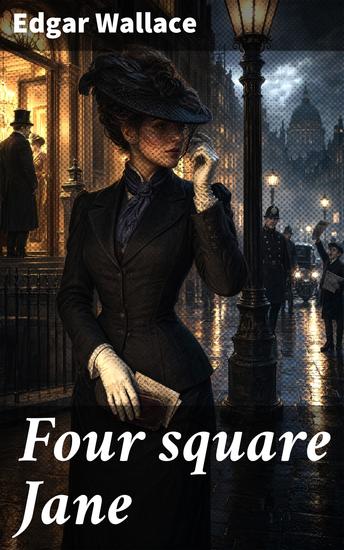
Four square Jane
Edgar Wallace
Editora: Good Press
Sinopse
Edgar Wallace's Four-Square Jane is a brisk Edwardian crime novel built around the elusive figure of a female thief whose daring exploits unsettle both respectable society and the law. Structured through pursuit, disguise, and revelation, the book combines sensation fiction, detective intrigue, and the popular thriller idiom that Wallace helped define. Its prose is swift and economical, privileging suspense, clever plotting, and theatrical reversals over psychological density, while its fascination with criminal glamour and public scandal places it firmly within the early twentieth-century tradition of metropolitan popular fiction. Wallace, one of Britain's most prolific thriller writers, drew on his experience as a journalist and war correspondent to produce fiction marked by topicality, narrative urgency, and a sharp sense of urban life. His intimate knowledge of newspapers, policing, and the public appetite for sensation clearly informs this novel's rhythm and subject matter. In Four-Square Jane, Wallace's recurring interest in charismatic lawbreakers and the porous boundary between order and disorder finds especially entertaining expression. This book is highly recommended to readers interested in the evolution of the modern thriller, the genealogy of crime fiction, and the representation of female criminality in popular literature. It remains an engaging, historically revealing example of Wallace at his most agile and inventive.
Disponível desde: 29/06/2026.
Comprimento de impressão: 86 páginas.