
Begleiten Sie uns auf eine literarische Weltreise!
Buch zum Bücherregal hinzufügen
Grey
Einen neuen Kommentar schreiben Default profile 50px
Grey
Jetzt das ganze Buch im Abo oder die ersten Seiten gratis lesen!
All characters reduced
The People That Time Forgot - cover

The People That Time Forgot

Edgar Rice Burroughs

Verlag: Interactive Media

  • 0
  • 0
  • 0

Beschreibung

The People That Time Forgot by Edgar Rice Burroughs is a gripping adventure sequel to The Land That Time Forgot. Set in the lost polar continent of Caprona, it follows journalist Thomas Billings, who leads a rescue mission to find survivors of a previous expedition, including his friend Bowen Tyler. Billings crash-lands in the prehistoric land of Alptrapa, inhabited by primitive tribes, warring factions, and ancient creatures. Captured and enslaved, he struggles to survive while uncovering the mysteries of a forgotten world. With courage and ingenuity, he fights to escape and reveal the truth. A thrilling tale of survival, evolution, and heroism, it captures Burroughs’ signature blend of action, lost worlds, and timeless adventure.
Verfügbar seit: 11.05.2022.
Drucklänge: 100 Seiten.

Weitere Bücher, die Sie mögen werden

  • Another Freak - From their pens to your ears genius in every story - cover

    Another Freak - From their pens...

    Mary Angela Dickens

    • 0
    • 0
    • 0
    The bookshelves of British literature are incredible collections that have gathered together centuries of very talented authors.  From these Isles their fame spread and whilst among their number many are now forgotten or neglected their talents endure.  Among them is Mary Angela Dickens.
    Zum Buch
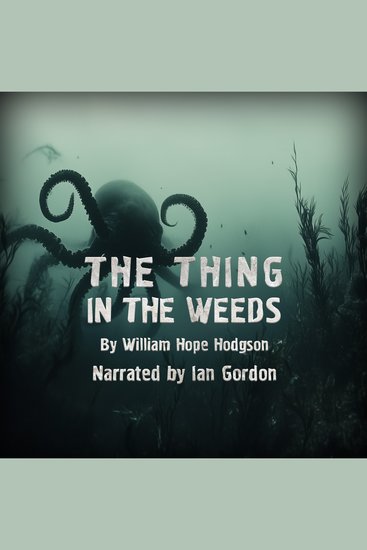
  • The Thing in the Weeds - cover

    The Thing in the Weeds

    William Hope Hodgson

    • 0
    • 0
    • 0
    William Hope Hodgson's "The Thing in the Weeds" is a short horror tale of the Sargasso Sea, in which a ship and her crew venture near a mysterious, weed-choked waterway where an unseen, malevolent presence lurks. The story first appeared in the magazine The Storyteller, in its January 1913 edition.
    Zum Buch
  • Arthur Conan Doyle - Six of the Best - Their legacy in 6 classic stories - cover

    Arthur Conan Doyle - Six of the...

    Arthur Conan Doyle

    • 0
    • 0
    • 0
    Six has always been a number we group things around – Six of the best, six of one half a dozen of another, six feet under, six pack, six degrees of separation and a sixth sense are but a few of the ways we use this number. 
     
    Such is its popularity that we thought it is also a very good way of challenging and investigating an author’s work to give width, brevity, humour and depth across six of their very best. 
     
    In this series we gather together authors whose short stories both rivet the attention and inspire the imagination to visit their gems in a series of six, to roam across an author’s legacy in a few short hours and gain a greater understanding of their writing and, of course, to be lavishly entertained by their ideas, their narrative and their way with words. 
     
    These stories can be surprising and sometimes at a tangent to what we expected, but each is fully formed and a marvellous adventure into the world and words of a literary master. 
     
     1 - Six of the Best - Arthur Conan Doyle - An Introduction 
    2 - Arthur Conan Doyle - An Introduction 
    3 - The Adventure of the Speckled Band by Arthur Conan Doyle 
    4 - The Leather Funnel by Arthur Conan Doyle 
    5 - The Story of B 24 by Arthur Conan Doyle 
    6 - A Pastoral Horror by Arthur Conan Doyle 
    7 - The Horror of the Heights by Arthur Conan Doyle 
    8 - The Final Problem by Arthur Conan Doyle
    Zum Buch
  • Mansfield Park - cover

    Mansfield Park

    Jane Austen

    • 0
    • 0
    • 0
    Mansfield Park is the third published novel by Jane Austen, first published in 1814 by Thomas Egerton. A second edition was published in 1816 by John Murray, still within Austen's lifetime. The novel did not receive any public reviews until 1821.
    The novel tells the story of Fanny Price, starting when her overburdened family sends her at age ten to live in the household of her wealthy aunt and uncle and following her development into early adulthood. From early on critical interpretation has been diverse, differing particularly over the character of the heroine, Austen's views about theatrical performance and the centrality or otherwise of ordination and religion, and on the question of slavery. Some of these problems have been highlighted in the several later adaptations of the story for stage and screen.
    Zum Buch
  • The Tempest - cover

    The Tempest

    William Shakespeare

    • 0
    • 0
    • 0
    The Tempest is a play by English playwright William Shakespeare, probably written in 1610-1611, and thought to be one of the last plays that Shakespeare wrote alone. After the first scene, which takes place on a ship at sea during a tempest, the rest of the story is set on a remote island, where the sorcerer Prospero, a complex and contradictory character, lives with his daughter Miranda, and his two servants: Caliban, a savage monster figure, and Ariel, an airy spirit. The play contains music and songs that evoke the spirit of enchantment on the island. It explores many themes, including magic, betrayal, revenge, and family. In Act IV, a wedding masque serves as a play-within-a-play, and contributes spectacle, allegory, and elevated language.
    Although The Tempest is listed in the First Folio as the first of Shakespeare's comedies, it deals with both tragic and comic themes, and modern criticism has created a category of romance for this and others of Shakespeare's late plays. The Tempest has been put to varied interpretations, from those that see it as a fable of art and creation, with Prospero representing Shakespeare, and Prospero's renunciation of magic signaling Shakespeare's farewell to the stage, to interpretations that consider it an allegory of Europeans colonizing foreign lands.
    Zum Buch
  • A Society - From their pens to your ears genius in every story - cover

    A Society - From their pens to...

    Virginia Woolf

    • 0
    • 0
    • 0
    Adeline Virginia Woolf was born on the 25th January 1882 in South Kensington in London. 
    Although lauded as a founder of modernist writing with such classics as ‘Orlando’, ‘Mrs Dalloway’ and ‘To the Lighthouse’ and, of course, many classic short stories, her background is filled with elements of tragedy that she somehow overcame to become such a revered writer.   Her mother died when she was 13, her half-sister Stella two years later and with it her first of several nervous breakdowns.  Appallingly it was later found that three of her half-brothers had sexually abused her so darkness must have seemed ever present.   
    She began writing professionally at age 20 but her father’s death two years later brought a complete mental collapse and she was briefly institutionalised.  Somehow she found within herself a literary career and with it great innovations in writing; she was a pioneer of “stream of consciousness”.    
    Her tight circle of friends were the founders of the Bloomsbury Group, a movement whose legacy still influences across the arts and society in many way to this day.   
    Whilst the dark periods continued to interrupt her emotional state her rate of work never ceased.  Until, on 28th March 1941, Woolf put on her overcoat, filled up its pockets with stones, and walked into the River Ouse, in Lewes, East Sussex and drowned herself.  Her body was not recovered until the 18th April.  She was 59. 
    She left behind a note which read in part “Dearest, I feel certain that I am going mad again.  I feel we can't go through another of those terrible times.  And I shan't recover this time.  I begin to hear voices, and I can't concentrate.  So I am doing what seems the best thing to do”.
    Zum Buch