Rejoignez-nous pour un voyage dans le monde des livres!
Ajouter ce livre à l'électronique
Grey
Ecrivez un nouveau commentaire Default profile 50px
Grey
Abonnez-vous pour lire le livre complet ou lisez les premières pages gratuitement!
All characters reduced
The Moon Maid - cover

The Moon Maid

Edgar Rice Burroughs

Maison d'édition: Interactive Media

  • 0
  • 0
  • 0

Synopsis

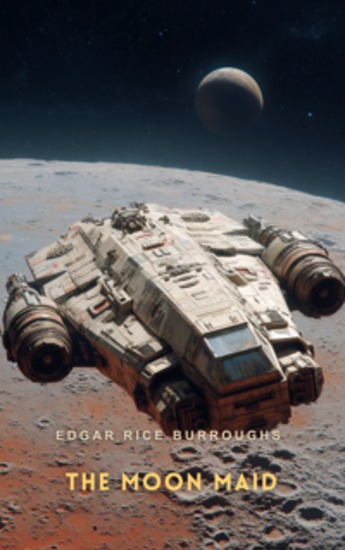
The Moon Maid by Edgar Rice Burroughs is a daring science fiction saga blending adventure, romance, and interplanetary conflict. Set in a future where Earth discovers a hidden lunar civilization, the story follows Julian, a daring aviator who crash-lands on the Moon and uncovers a world of warring factions, ancient cities, and strange inhabitants. Captured and enslaved, he rises as a leader among the oppressed, fights for freedom, and wins the love of a lunar princess. The novel spans generations, chronicling humanity’s struggle for survival on the Moon and its eventual return to a transformed Earth. With bold imagination and thrilling escapades, The Moon Maid explores empire, rebellion, and the enduring spirit of exploration.
Disponible depuis: 12/05/2022.
Longueur d'impression: 148 pages.
D'autres livres qui pourraient vous intéresser

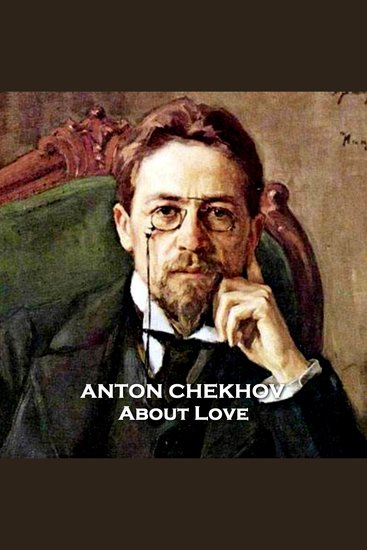
  • About Love - From their pens to your ears genius in every story - cover

    About Love - From their pens to...

    Anton Chekhov

    • 0
    • 0
    • 0
    Anton Pavlovich Chekhov was born on 29th January 1860 in Taganrog, on the south coast of Russia.  
    His family life was difficult; his father was strict and over-bearing but his mother was a passionate story-teller, a subject Chekhov warmed to. As he later said; ‘our talents we got from our father, but our soul from our mother’.  
    At school Chekhov was distinctly average. At 16 his father mis-managed his finances and was declared bankrupt. His family fled to Moscow. Chekhov remained and eked out a living by various means, including writing and selling short sketches to newspapers, to finish his schooling. That completed and with a scholarship to Moscow University obtained he rejoined his family. 
    He was able to help support them by selling satirical sketches and vignettes of Russian lifestyles and gradually obtained further commissions. In 1884, he qualified as a physician and, although it earned him little, he often treated the poor for free, he was fond of saying ‘Medicine is my lawful wife, and literature is my mistress.’ 
    His own health was now an issue as he began to cough up blood, a symptom of tuberculosis.  Despite this his writing success enabled him to move the family into more comfortable accommodation.  
    Chekhov wrote over 500 short stories which included many, many classics including ‘The Kiss’ and ‘The Lady with a Dog’.  His collection ‘At Dusk’ won him the coveted Pushkin Prize when was only 26.  
    He was also a major playwright beginning with the huge success of ‘Ivanov’ in 1887.   
    In 1892 Chekhov bought a country estate north of Moscow. Here his medical skills and money helped the peasants tackle outbreaks of cholera and bouts of famine. He also built three schools, a fire station and a clinic.  It left him with less time for writing but the interactions with real people gained him detailed knowledge about the peasantry and their living conditions for his stories.  
    His most famous work, ‘The Seagull’ was received disastrously at its premiere in St Petersburg. It was later restaged in Moscow to highlight its psychological aspects and was a huge success. It led to ‘Uncle Vanya’, ‘The Three Sisters’ and ‘The Cherry Orchard’.  
    Chekhov suffered a major lung hemorrhage in 1897 while visiting Moscow. A formal diagnosis confirmed tuberculosis and the doctors ordered changes to his lifestyle.  
    Despite a dread of weddings the elusive literary bachelor quietly married the actress Olga Knipper, whom he had met at rehearsals for ‘The Seagull’, on 25th May 1901. 
    By May 1904 with his tuberculosis worsening and death imminent he set off for the German town of Badenweiler writing cheerful, witty letters to his family and assuring them his health was improving.  
    On 15th July 1904 Anton Chekhov died at Badenweiler.  He was 44.
    Voir livre
  • To-- (1836) - cover

    To-- (1836)

    Edgar Allan Poe

    • 0
    • 0
    • 0
    To–– (1836): Edgar Allan Poe was an American writer, poet, editor, and literary critic who is best known for his poetry and short stories.
    
    The bowers whereat, in dreams, I see
    The wantonest singing birds
    Are lips—and all thy melody
    Of lip-begotten words—
    Voir livre
  • A Fight with a Cannon - From their pens to your ears genius in every story - cover

    A Fight with a Cannon - From...

    Victor Hugo

    • 0
    • 0
    • 0
    Victor Marie Hugo was born on 26th February 1802 in Besançon, France.   
    There can be no doubt that Hugo is ranked as the greatest of French authors and poets. In addition to this he fought against social injustice throughout his life and from his frequent elections to the French Assembly. 
    Hugo published his first novel, Han d’Islande (1823), the year after his marriage and so began an immense canon of fiction and poetry not only for France but to World literature.  
    He was elected to the Académie Française in 1841 and the same year came a peerage and entrance to the Higher Chamber as a pair de France, where he spoke against the death penalty, social injustice and in favour of press freedom.  
    In the years leading up to the Revolution of 1848 Hugo began to lean towards Republicanism and greater freedoms.  With the formation of the Second Republic, he was again elected to the Assembly. 
    When Napoleon III seized power in 1851, and established an anti-parliamentary constitution, Hugo openly declared him a traitor to France. This, of course, meant exile where he remained until 1870.  In exile he published his greatest work ‘Les Misérables’, and further widely honoured collections of poetry. 
    Returning home he was again elected to the National Assembly and the Senate.  It was the time of the Franco-Prussian war and with Paris under siege and food ever more scarce, he wrote in his diary that he was now "eating the unknown". 
    Later he was instrumental in strengthening the rights of artists and copyright, steps which led to the international protections of the Berne Convention.  
    Victor Hugo died on 22nd May 1885, aged 83.
    Voir livre
  • The Happy Prince and other Tales - cover

    The Happy Prince and other Tales

    Oscar Wilde

    • 0
    • 0
    • 0
    A collection of short stories by Oscar Wilde first published in May 1888. It contains the five stories: "The Happy Prince," "The Nightingale and the Rose," "The Selfish Giant," "The Devoted Friend," and "The Remarkable Rocket."  
    Narrated by Michael Ward
    Voir livre
  • New Machiavelli The - Book the Second: Margaret (Unabridged) - cover

    New Machiavelli The - Book the...

    H. G. Wells

    • 0
    • 0
    • 0
    Herbert George "H. G." Wells (1866 - 1946) was an English writer.
    He was prolific in many genres, including the novel, history, politics, social commentary, and textbooks and rules for war games. Wells is now best remembered for his science fiction novels and is called a "father of science fiction"
    BOOK THE SECOND: MARGARET: I must go back a little way with my story. In the previous book I have described the kind of education that happens to a man of my class nowadays, and it has been convenient to leap a phase in my experience that I must now set out at length.
    Voir livre
  • Historic Doubts on the Life and Reign of King Richard the Third - cover

    Historic Doubts on the Life and...

    Anonyme

    • 0
    • 0
    • 0
    A provocative and influential reassessment of one of England’s most maligned monarchs. Challenging the traditional Tudor narrative—popularized by Shakespeare and chroniclers like Thomas More—Walpole argues that Richard III has been unfairly vilified as a tyrant and murderer. Through meticulous examination of historical sources, he questions the evidence behind accusations such as the murder of the Princes in the Tower and Richard’s physical deformities, suggesting bias and propaganda shaped his dark legacy. While not a full exoneration, Walpole’s work pioneered revisionist history and sparked debate about historical objectivity. Written with wit and scholarly rigor, Historic Doubts reflects Enlightenment skepticism and remains a landmark in the re-evaluation of medieval English history.
    Voir livre