Rejoignez-nous pour un voyage dans le monde des livres!
Ajouter ce livre à l'électronique
Grey
Ecrivez un nouveau commentaire Default profile 50px
Grey
Abonnez-vous pour lire le livre complet ou lisez les premières pages gratuitement!
All characters reduced
The Sot-weed Factor: or A Voyage to Maryland A Satyr - cover

The Sot-weed Factor: or A Voyage to Maryland A Satyr

Ebenezer Cooke

Maison d'édition: e-artnow

  • 0
  • 0
  • 0

Synopsis

The Sot-Weed Factor is a satirical poem written by Ebenezer Cooke. It depicts America and its settlers, and presents a mockery of the leaflets that touted colonization as simple and profitable.
Disponible depuis: 25/11/2023.
Longueur d'impression: 128 pages.

D'autres livres qui pourraient vous intéresser

  • The Big Change - America Transforms Itself 1900-1950 - cover

    The Big Change - America...

    Frederick Lewis Allen

    • 0
    • 0
    • 0
    During the first fifty years of the twentieth century, the United States saw two world wars, a devastating economic depression, and more social, political, and economic changes than in any other five-decade period before. Frederick Lewis Allen, former editor of Harper's Magazine, recounts these years—spanning World War I, the Progressive Era, the Great Depression, World War II, and the early Cold War—in vivid detail, from the fashions and customs of the times to major events that changed the course of history. 


    Politically, the United States grew into its own as a global superpower during these years, even as domestic developments altered the everyday lives of its citizens. The introduction of the automobile, mass production, and organized labor changed the way Americans lived and worked, while innovations like penicillin and government regulation of food safety contributed to an increase in average life expectancy from forty-nine years in 1900 to sixty-eight years in 1950. With the development of a strong, centralized government, a thriving middle class, and widespread economic prosperity, the nation emerged from the Second World War transformed in virtually every way. 


    Richly informative, The Big Change is an indispensable volume charting the many changes that ushered in our contemporary age.
    Voir livre
  • The Apothecary's Wife - The Hidden History of Medicine and How it Became a Commodity - cover

    The Apothecary's Wife - The...

    Karen Bloom Gevirtz

    • 0
    • 0
    • 0
    The running joke in Europe for centuries was that anyone in a hurry to die should call the doctor. As far back as ancient Greece, physicians were notorious for administering painful and often fatal treatments—and charging for the privilege. For the most effective treatment, the ill and injured went to the women in their lives. This system lasted hundreds of years. It was gone in less than a century. 


    Contrary to the familiar story, medication did not improve during the Scientific Revolution. Yet somehow, between 1650 and 1740, the domestic female and the physician switched places in the cultural consciousness: she became the ineffective, potentially dangerous quack, he the knowledgeable, trustworthy expert. The professionals normalized the idea of paying them for what people already got at home without charge, laying the foundation for Big Pharma and today's global for-profit medication system. A revelatory history of medicine, The Apothecary's Wife challenges the myths of the triumph of science and instead uncovers the fascinating truth. Drawing on a vast body of archival material, Karen Bloom Gevirtz depicts the extraordinary cast of characters who brought about this transformation. She also explores domestic medicine's values in responses to modern health crises, such as the eradication of smallpox, and what benefits we can learn from these events.
    Voir livre
  • Mothercare - On Obligation Love Death and Ambivalence - cover

    Mothercare - On Obligation Love...

    Lynne Tillman

    • 0
    • 0
    • 0
    Brilliantly original novelist and cultural critic Lynne Tillman became one of nearly 53 million Americans who care for a sick family member when her mother developed an unusual and little understood condition called Normal Pressure Hydrocephalus. 


    Instantly, Tillman's independent and spirited mother went from someone she knew to someone else, a woman entirely dependent on her children—an eleven-year process through which her mother underwent many surgeries and some misdiagnoses, while the family navigated consultations and confrontations with doctors, adjusting to the complexity of her cognitive issues, including memory loss. 


    With her notoriously exquisite writing style and reputation as a "rich noticer of strange things" (Colm Toíbín), Tillman describes, without flinching, the unexpected, heartbreaking, and frustrating years of caring for a sick parent. 


    Mothercare is both a cautionary tale and sympathetic guidance for anyone who suddenly becomes a caregiver, responsible for the life of another—a parent, loved or not, or a friend. This story may be helpful, informative, consoling, or upsetting, but it never fails to underscore how impossible it is to get the job done completely right.
    Voir livre
  • The Life Of Buddha - cover

    The Life Of Buddha

    Sripad Jagannatha Dasa

    • 0
    • 0
    • 0
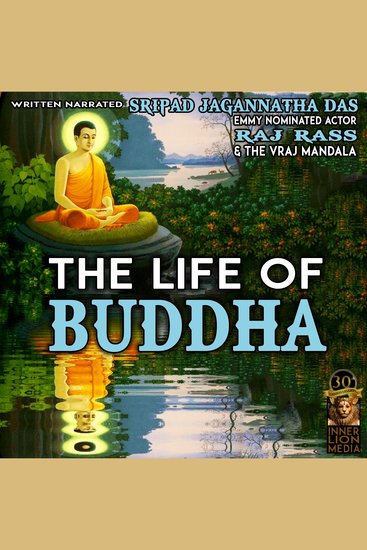
    Gautama Buddha, also known as Siddhartha Gautama, was a spiritual teacher who lived in ancient India between the 6th and 4th centuries BCE. He is the founder of Buddhism, one of the major religions of the world. Buddha was born into a royal family, but he renounced his luxurious lifestyle at the age of 29 to seek the truth about life and the nature of suffering. He spent six years as a wandering ascetic before attaining enlightenment at the age of 35. The Buddha's teachings, known as the Dharma, revolve around the Four Noble Truths, which explain the nature of suffering and the path to its cessation. The core message of Buddhism is that suffering arises from craving and attachment, and that liberation can be attained through the practice of the Eightfold Path, which includes meditation, mindfulness, ethical conduct, and wisdom. 
     
    The Buddha's teachings have had a profound impact on the spiritual and cultural history of Asia and beyond. His teachings spread rapidly throughout India and other parts of Asia, and they continue to inspire millions of people today. The Buddha's emphasis on non-violence, compassion, and the importance of the present moment has also resonated with many in the West. In addition to his spiritual teachings, the Buddha also provided practical guidance on social and ethical issues. He advocated for the abolition of caste distinctions, the treatment of animals with compassion, and the importance of community and social harmony. 
     
    Buddha's teachings continue to be relevant and inspiring today. His teachings on the nature of suffering, impermanence, and the importance of self-awareness are particularly relevant in today's fast-paced and materialistic world.
    Voir livre
  • Famous Landmarks of Ancient Rome - cover

    Famous Landmarks of Ancient Rome

    Editors Charles River

    • 0
    • 0
    • 0
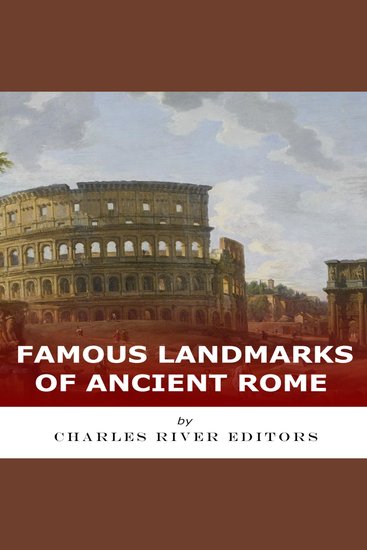
    When the Colosseum was built in the late 1st century A.D., the Romans, who were known for their architectural acumen, managed to amaze themselves. Martial, a Roman poet writing during the inauguration of the Colosseum, clearly believed the Colosseum was so grand a monument that it was even greater than the other Wonders of the Ancient World, which had been written about and visited endlessly by the Romans and Greeks in antiquity. Indeed, although the Wonders were wondrous to behold, the Colosseum was a spectacular achievement in architecture, something new and innovative, and therefore an amazing “Wonder” in its own way.  
    For well over a thousand years, the Forum was the scene of intense construction, as well as social, political, and commercial activity, making the Forum a boon for the study of Roman history, even though some buildings in the Forum are of such importance that they cannot be disassembled in order to discover the older layers underneath and thus find more evidence about the origins of this area. Ultimately, the Forum transformed from being a backwater used for grazing livestock into the religious and political center of Roman life, and it has long been an inspiration for subsequent generations, influencing the Renaissance, Romanticism, and even Fascism.  
    	Although Roman roads may not have attained the glamorous status of other inventions, their influence is just as profound; roads provide essential communication and transport lines for any country – throughout the hundreds of years when Rome was ascendant in the ancient world, the roads they built held together first their republic and then their empire into a cohesive unit. Since the Appian Way was first built in 312 BC, it has inspired poets, slaves, and conquerors, and Mark Antony, Spartacus, Hannibal, and Horace are just a few of the notable historical personalities who travelled on the Appian Way. 
    Voir livre

  • The Divine Comedy Paradise - cover

    The Divine Comedy Paradise

    Dante Alighieri

    • 0
    • 0
    • 0
    Paradiso (Italian: [paraˈdiːzo]; Italian for "Paradise" or "Heaven") is the third and final part of Dante's Divine Comedy, following the Inferno and the Purgatorio. It is an allegory telling of Dante's journey through Heaven, guided by Beatrice, who symbolises theology. In the poem, Paradise is depicted as a series of concentric spheres surrounding the Earth, consisting of the Moon, Mercury, Venus, the Sun, Mars, Jupiter, Saturn, the Fixed Stars, the Primum Mobile and finally, the Empyrean. It was written in the early 14th century. Allegorically, the poem represents the soul's ascent to God.While the structures of the Inferno and Purgatorio were based around different classifications of sin, the structure of the Paradiso is based on the four cardinal virtues (Prudence, Justice, Temperance, and Fortitude) and the three theological virtues (Faith, Hope, and Charity).
    Voir livre