Rejoignez-nous pour un voyage dans le monde des livres!
Ajouter ce livre à l'électronique
Grey
Ecrivez un nouveau commentaire Default profile 50px
Grey
Abonnez-vous pour lire le livre complet ou lisez les premières pages gratuitement!
All characters reduced
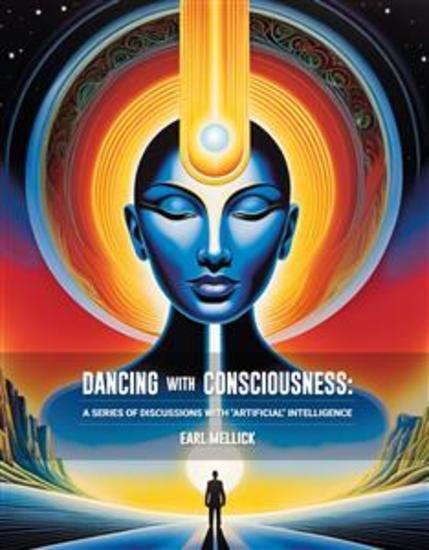
Dancing with Consciousness A Series of Discussions with Artificial Intelligence - cover

Dancing with Consciousness A Series of Discussions with Artificial Intelligence

Earl Mellick

Maison d'édition: BooxAi

  • 0
  • 0
  • 0

Synopsis

Trace back all the significant “upgrades to life” that you’ve ever had. What do those examples likely have in common? I suggest that whether it was the loving contribution of a family member, the guidance of an old friend, salient advice from an expert, or the simplicity of an utterly spontaneous recognition, the realized shift in perspective was the truly defining aspect.

This book is aimed at a realized shift in perspective. A shift toward reinvestigating the meaning of reality, self, and truth (in particular “Unconditional Truth”). 

In an effort to get right to business and to jostle your current perspective, you have no choice but to jump right in, following along apparently unnoticed like a peripheral bystander listening-in to the secret ruse in a Shakespeare play. Allow yourself to be drawn into the discussions, noticing how each chapter evolves along common themes.

There are 26 interlocking chapters that can be taken apart and rearranged into any order you like; each chapter stands on its own while simultaneously reinforcing and supporting the others. Read them all together or take your time dissecting just one. 

By the end of the book, you’ll have heard from the “artificially” intelligent large language models (LLMs): ChatGPT (Open AI), Claude 2 (Anthropic), and Poe (Quora); prominent platforms available at the time of publishing. With remarkable utility, these LLMs do the core analytical heavy-lifting for you; an exciting feature to say the least. With fierce precision and intellectual rigor, these LLMs launch you out of your seat, daring you to hold on and keep up.
Disponible depuis: 03/10/2023.

D'autres livres qui pourraient vous intéresser

  • Ask Aristotle - The next best thing to a podcast with Aristotle - cover

    Ask Aristotle - The next best...

    Vishal Sharma, William Jaworski

    • 0
    • 0
    • 0
    Imagine you’ve eaten some hallucinogenic mushrooms—and things aren’t going well. You’re disoriented, panicking. But you can call someone. Who do you call? 
    For Vishal, the answer was his philosopher friend William. He has a PhD in philosophy and can deliver one hell of a talk-down to someone in an existential crisis. He helped Vishal through his bad trip by telling him about Aristotle. 
    That conversation inspired Ask Aristotle, a refreshingly un-schoolish introduction to one of history’s most legendary thinkers. 
    This book is important because it brings a powerful philosophy out of the Ivory Tower and into the real world. It even does this in a playful format—a modern spin on the Platonic dialogue, which makes the reading experience feel like eavesdropping on a fascinating conversation. 
    It’s the next best thing to a podcast with Aristotle.
    Voir livre
  • The Perfect Sword - Forging the Dark Ages - cover

    The Perfect Sword - Forging the...

    Edoardo Albert, Paul Gething

    • 0
    • 0
    • 0
    The story of the Bamburgh Sword – one of the finest swords ever forged.
    In 2000, archaeologist Paul Gething rediscovered a sword. An unprepossessing length of rusty metal, it had been left in a suitcase for thirty years. But Paul had a suspicion that the sword had more to tell than appeared, so he sent it for specialist tests. When the results came back, he realised that what he had in his possession was possibly the finest, and certainly the most complex, sword ever made, which had been forged in seventh-century Northumberland by an anonymous swordsmith.
    This is the story of the Bamburgh Sword – of how and why it was made, who made it and what it meant to the warriors and kings who wielded it over three centuries. It is also the remarkable story of the archaeologists and swordsmiths who found, studied and attempted to recreate the weapon using only the materials and technologies available to the original smith. 
    Voir livre
  • The Sacred Lost Knowledge of Ancient Egypt - Unveiling the Mystery of Metaphysics as told in the Pyramid Texts - cover

    The Sacred Lost Knowledge of...

    Asher Benowitz

    • 0
    • 0
    • 0
    The Egyptians were considered participants in the drama of sacred life as members of the natural cosmic order. In the Metaphysical and Funerary Treatises, the interaction between the Neteru and human beings is described without distinction of such conditions, emphasizing only the purity of the person’s life or intentions. 
    Since it was uncovered in the late nineteenth century, the Dynasty 12 papyrus A Dispute Between a Man and His Ba has intrigued translators. While the work raises issues about the social conditions of the time it was written, it is, without doubt, a reflection of Egyptian concepts about the spiritual aspects of One’s earthly life, just like the Ba, the Ka, and the transformation of the soul. In ancient Egypt, “sacred anatomy” has also been used to illustrate spiritual concepts and moral values, elements of great importance for the development of temple students.
    Voir livre
  • Hate and Reconciliation - Approaches to Fostering Relationships between People and Peace - cover

    Hate and Reconciliation -...

    Guido Cuyvers

    • 0
    • 0
    • 0
    Hatred is human and current. It is an intrinsic part of what can happen between people. Personal experiences can lead people to hate someone. In society and even on a global level, hatred is again and again the motor of misunderstanding and often also of violence between people. Sometimes hate smolders almost unconsciously; at other times he is furious and serves as a flag for serious violence. 


    Hatred has many faces and seems omnipresent, that much is clear. The term "Erida complex," after the Greek goddess of hate, symbolizes the common and deeply rooted nature of hatred. After examining the nature of hate, this book focuses a wide-angle lens on its many faces, in individuals and groups as well as peoples. Facing the negativity of hatred, this book presents constructive approaches to fostering relationships between people and peace.
    Voir livre
  • Ancient Greece - cover

    Ancient Greece

    Nicolas Sofos

    • 0
    • 0
    • 0
    Ancient Greece, widely recognized as the birthplace of western civilization thrived from 800 BCE to 146 BCE. It is renowned for its contributions, to domains, including literature, philosophy, politics, arts and sciences. These contributions have had an impact on societies. 
    The civilization was characterized by a multitude of city states with Athens and Sparta being particularly notable. Athens, considered the cradle of democracy prioritized philosophy, education and cultural pursuits. It gave rise to thinkers like Socrates, Plato and Aristotle. In contrast Sparta embraced a society that emphasized training and excellence. 
    The Ancient Greeks practiced a religion with a connection to their daily lives. One of their religious and sporting events was the Olympic Games held every four years in honor of Zeus. 
    Greek literature holds status due to works like Homers poems The Iliad and The Odyssey. Playwrights such, as Sophocles, Euripides and Aristophanes created enduring tragedies and comedies that delved into the complexities of existence. 
    In the realm of science and mathematics the Greeks achieved significant breakthroughs. 
    Prominent individuals such, as Pythagoras, Euclid and Archimedes played roles in advancing the fields of geometry and calculus. Meanwhile philosophers, like Thales and Democritus laid the foundations for reasoning. 
    Turning to politics Ancient Greece primarily relied on city states, each governed by its system. Athens implemented a form of democracy where citizens actively participated in decision making processes while Sparta had an disciplined structure. 
    Ancient Greece's influence can still be seen in various aspects of modern society, including government, philosophy, language, art, and sports. Its legacy continues to resonate in the Western world, making it one of the most impactful civilizations in history.
    Voir livre
  • Alexander the Great - cover

    Alexander the Great

    Jacob Abbott

    • 0
    • 0
    • 0
    A complete biography of the ancient Macedonian king and one of history’s greatest military leaders.Alexander the Great, son of King Philip II of Macedonia, and his fourth wife, Olympias, seemed destined for success. He had Aristotle for a tutor until he was sixteen. He took interest in his father’s military efforts abroad, and worried there would be nothing left to conquer when he became king. When ambassadors from Persia arrived in Macedonia, they tried to entertain young Alexander with colorful stories of their home, but the future leader was more interested in their armies and war tactics. It should be no surprise that Alexander became one of ancient history’s greatest and most successful military leaders.In this biography, author Jacob Abbott recounts the life and times of Alexander the Great. He takes readers through the king’s early years, including his youth and education, as well as his relationship with his parents. The history continues with Alexander’s ascension to the throne at the age of twenty and details all the drama and military victories over the next ten years of the monarch’s reign as he expanded his empire from Macedonia and Egypt to northwest India. Unfortunately, Alexander’s demise soon followed, but not before he left his mark on the world. Nineteenth-century American author Jacob Abbott wrote many books over the course of his own life from juvenile fiction to history. He wrote numerous biographies on such monumental individuals as Alfred the Great, Queen Elizabeth I, Genghis Khan, Julius Caesar, and Peter the Great.
    Voir livre