Begleiten Sie uns auf eine literarische Weltreise!
Buch zum Bücherregal hinzufügen
Grey
Einen neuen Kommentar schreiben Default profile 50px
Grey
Jetzt das ganze Buch im Abo oder die ersten Seiten gratis lesen!
All characters reduced
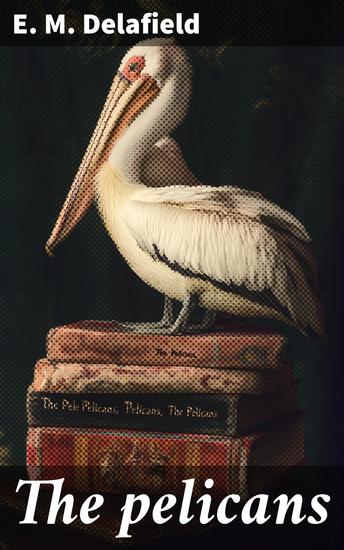
The pelicans - cover

The pelicans

E. M. Delafield

Verlag: Good Press

  • 0
  • 0
  • 0

Beschreibung

In E. M. Delafield's "The Pelicans," a poignant exploration of societal norms interlaces with a keen observation of human relationships, inviting readers into the intricacies of family dynamics and personal aspirations. Set against the backdrop of the early 20th century, Delafield employs her characteristic blend of wit and irony, deftly illustrating the tension between individual desires and societal expectations. Each character is meticulously crafted, revealing the nuances of their struggles, as the narrative unfolds with a delicate balance of humor and introspection, marking a significant contribution to feminist literature of its time. E. M. Delafield, born Edmée Elizabeth Monica Delafield, was a novelist and journalist whose works often reflect her own experiences navigating societal roles as a woman. Her literary career was shaped by her extensive education and her insightful critique of early feminist issues. "The Pelicans" showcases her ability to illuminate the contradictions of her era, perhaps inspired by her own journey of self-discovery and the subtleties of her contemporaries' lives. For readers seeking a rich, thought-provoking exploration of personal identity versus societal duty, "The Pelicans" is a stunning choice. With its sharp dialogue and relatable characters, this novel invites readers to reflect upon their own lives while becoming engrossed in the delicate interplay of longing and conformity that defines human experience.
Verfügbar seit: 02.03.2025.
Drucklänge: 140 Seiten.
Weitere Bücher, die Sie mögen werden

  • Tales of Mean Streets - Lizerunt - From their pens to your ears genius in every story - cover

    Tales of Mean Streets - Lizerunt...

    Arthur Morrison

    • 0
    • 0
    • 0
    Arthur Morrison was born on November 1st, 1863, in Poplar, in the East End of London. From the age of 8, after the death of his father, he was brought up, along with two siblings, by his mother, Jane. 
    Morrison spent his youth in the East End. In 1879 he began as an office boy in the Architect's Department of the London School Board and, in his spare time, visited used bookstores in Whitechapel Road. He first published, a humorous poem, in the magazine Cycling in 1880. 
    In 1885 Morrison began writing for The Globe newspaper. In 1886, he switched to the People's Palace, in Mile End and, in 1888, published the Cockney Corner collection, about life in Soho, Whitechapel, Bow Street and other areas of London.  
    By 1889 he was an editor at the Palace Journal, reprinting some earlier sketches, and writing commentaries on books and articles on the life of the London poor. 
    By 1890 he was back at The Globe and published ‘The Shadows Around Us’, a supernatural collection of stories.  Also at this time he began to develop a keen interest in Japanese Art. 
    In October 1891 his short story A Street appeared in Macmillan's Magazine. The following year he married Elizabeth Thatcher and then befriended publisher and poet William Ernest Henley for whom he wrote stories of working-class life in Henley's National Observer between 1892-94.  
    In 1894 came his first detective story featuring Martin Hewitt, described as "a low-key, realistic, lower-class answer to Sherlock Holmes”. 
    Morrison published A Child of the Jago in 1896 swiftly followed by The Adventures of Martin Hewitt. 
    In 1897 Morrison wrote seven stories about Horace Dorrington, a deeply corrupt private detective, described as "a cheerfully unrepentant sociopath who is willing to stoop to theft, blackmail, fraud or cold-blooded murder to make a dishonest penny."  
    To London Town, the final part of a trilogy including Tales of Mean Streets and A Child of the Jago was published in 1899. Following on came a wide spectrum of works, including novels, short stories and one act plays.  
    In 1911 he published his authoritative work Japanese Painters, illustrated with art from his own collection.  
    Although he retired from journalistic work in 1913 he continued to write about Art.  
    In his last decades Morrison served as a special constable, and reported on the first Zeppelin raid on London. Tragically in 1921 his son, Guy, who had survived the war, died of malaria.  
    The Royal Society of Literature elected him as a member in 1924 and to its Council in 1935.   
    In 1930 he moved to Chalfont St Peter, Buckinghamshire. Here he wrote the short story collection Fiddle o' Dreams and More. 
    Arthur Morrison died on the 4th December 1945.  He was 82 years.
    Zum Buch
  • The Man Without a Body - From their pens to your ears genius in every story - cover

    The Man Without a Body - From...

    Edward Page Mitchell

    • 0
    • 0
    • 0
    Edward Page Mitchell was born in Bath, Maine on 24th March 1852 into a wealthy family.  When he was eight the family moved to a house on New York’s famed Fifth Avenue. 
    In 1863 he witnessed the Draft Riots and in the aftermath Mitchell's father moved the family to Tar River, North Carolina. It was there, at the age of fourteen, that his letters were first published in the local newspaper The Bath Times. 
    In 1872, at age twenty, whilst on a train journey to Bath, Maine, a hot cinder from the engine's smokestack flew in through the window blinding his left eye.  After several weeks, while doctors attempted to restore his sight, his uninjured right eye underwent sympathetic blindness.  He was now completely blind. His burnt left eye eventually regained its sight, but his uninjured right eye remained blind and was later replaced with a prosthetic glass eye. While recovering from this surgery, Mitchell wrote his dazzling story ‘The Tachypomp’. 
    Mitchell’s influence on science fiction writing is incredible and pre-dated many major themes. He wrote about a man made invisible, a time-travel machine, a thinking computer, teleportation, superior mutants and mind transfer. Add to this other stories which predicted travel by pneumatic tube, electrical heating, newspapers printed at home, food-pellet concentrates, international broadcasts, and suspended animation through cryogenics and they amount to talents that are not as publicly lauded as they should be. 
    Edward Page Mitchell died of a cerebral hemorrhage in New London, Connecticut on 22nd January 1927.  He was 76.
    Zum Buch
  • Robinson Crusoe - cover

    Robinson Crusoe

    Daniel Defoe

    • 0
    • 0
    • 0
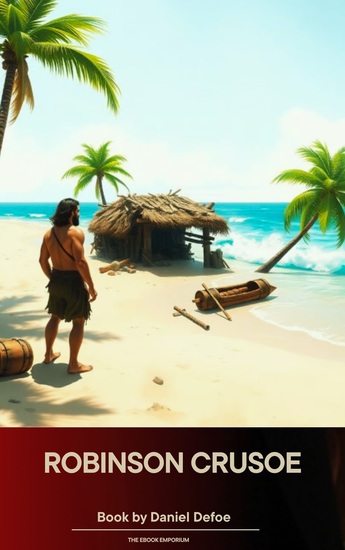
    "One man, one island, and twenty-eight years of impossible survival."
    
    Against the advice of his father, young Robinson Crusoe sets out to sea in search of adventure. His journey ends in disaster when a violent storm shipwrecks him on a remote, uninhabited island off the coast of South America. Armed with only the meager supplies he can salvage from the wreck, Crusoe must reinvent civilization from scratch. From building a fortified home and taming wild goats to the psychological battle against utter loneliness, his story is a gripping account of how the human spirit triumphs over isolation. But when he discovers a single footprint in the sand, Crusoe realizes he may not be as alone as he thought.
    
    The Master of Realism: Daniel Defoe's writing was so detailed and "journalistic" that many original readers believed it was a true autobiography. His meticulous descriptions of how Crusoe makes pottery, bakes bread, and sews clothes from goatskins turned the struggle for survival into a fascinating technical achievement.
    
    A Complex Partnership: The arrival of Friday, a man Crusoe rescues from cannibals, marks a turning point in the novel. Their relationship explores themes of language, culture, and companionship, even as it reflects the colonial perspectives of the 18th century. Together, they transform the island from a prison into a home.
    
    Why It Is a Global Icon: Robinson Crusoe created the "Robinsonade" genre, inspiring everything from Swiss Family Robinson to modern survival films. It is a profound meditation on faith, the value of hard work, and the incredible things a human being can accomplish when forced to rely solely on their own mind and hands.
    
    Embark on the original castaway adventure. Purchase "Robinson Crusoe" today.
    Zum Buch
  • Witch's Loaves - From their pens to your ears genius in every story - cover

    Witch's Loaves - From their pens...

    O Henry

    • 0
    • 0
    • 0
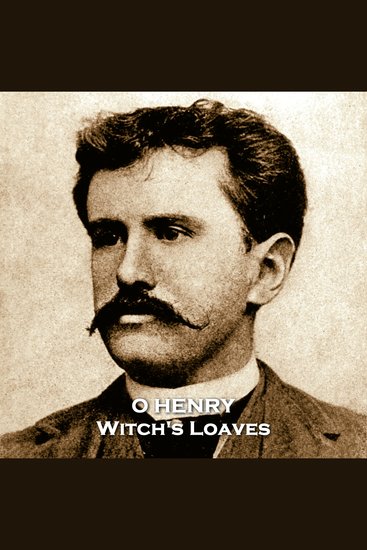
    William Sydney Porter was born on 11th September 1862 in Greensboro, North Carolina. At age 3 his mother died from tuberculosis. From an early age it was clear Porter had a large appetite for reading as he absorbed the world around him. 
    He first attended at a school run by his aunt before enrolling at the Lindsey Street High School and then worked at his uncle’s drugstore and gained a pharmacists’ license in 1881.  
    A persistent cough took him to Texas in the hope that a change of climate would help his symptoms. He took on various types of work, initially from ranch hand and cook and then as varied as pharmacist, draftsman, bank teller and journalist. He also began to write, though for now, purely as a hobby. 
    He was a member of several singing and dramatic groups when he met 17 year old Athol Estes, daughter of a wealthy Austin family. Despite her mother’s objection owing to Athol’s tuberculosis, they began courting and in July 1887, they eloped and soon married. 
    Athol, impressed by his writing, encouraged him to get them published. A job as a draftsman at the Texas General Land Office paid a healthy $100 dollars per month and life was good. 
    But then life turned cruel. His son died a few hours after birth although a daughter, Margaret, came the following year.  His job had to be vacated but another was found at the First National Bank of Austin. The bank operated informally and Porter was careless in keeping the books. He lost that job but began writing for the humourous weekly The Rolling Stone and the Houston Post. Some time later the federal Bank auditors went through his former accounts and he was arrested on charges of embezzlement. 
    Porter fled the day before his trial to Honduras. Holed up for several months he began to write.  Athol had become too ill to travel to meet him and learning that her health was deteriorating he surrendered to the court in February 1897.  Bail was obtained so that he could stay with Athol during her final days.  
    Porter was sentenced to five years at the Ohio Penitentiary in Columbus. His pharmacy qualifications got him the job of night druggist.  His sentence also gave him time to write and publish fourteen short stories. In December 1899 in McClure’s Magazine he published a short story as O Henry.  
    He was released two years early in July 1901, and reunited with Margaret, now 11, in Pittsburgh.  He now began his most prolific period of writing; a short story per week for the New York World, while also publishing works in other magazines.  Eventually over 600 of his short stories were published. 
    Porter was a heavy drinker and in 1908 his health, which had deteriorated for several years, took a dramatic turn for the worse, as did his writing.  
    O Henry died of cirrhosis of the liver complicated by diabetes and an enlarged heart on 5th June 1910.
    Zum Buch
  • Emma - Volume 2 - The ultimate Classic Fiction comedy of manners continues! Follow a trail of high society gossip unexpected engagements and fierce rivalries as dazzling new faces arrive in Highbury - cover

    Emma - Volume 2 - The ultimate...

    Jane Austen

    • 0
    • 0
    • 0
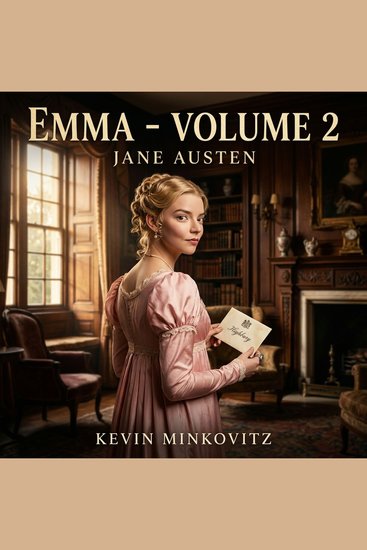
    A tranquil English village is about to be turned upside down by shocking engagements, mysterious gifts, and dashing new arrivals. 
    In Emma - Volume 2, the quiet social equilibrium of Highbury is thrillingly disrupted. Emma Woodhouse—handsome, clever, and rich—finds her matchmaking supremacy challenged when the enigmatic Jane Fairfax and the charming, long-awaited Frank Churchill finally arrive in town. Even worse, shocking news of Mr. Elton's hasty marriage sends ripples through her social circle, threatening to break her devoted friend Harriet's heart all over again. As winter thaws and invitations to exclusive dinner parties and balls are sent out, Emma begins to unravel a tangled web of secret affections, jealousies, and hidden motives. But amidst the swirling gossip, she might just be blinding herself to the true intentions of those closest to her—including the ever-watchful and intensely rational Mr. Knightley. 
    Why you will love this audiobook:Lovers of Classic Fiction will be utterly swept away by this quintessential Regency era comedy of manners. Rich with razor-sharp social satire, captivating romantic tension, and exquisite witty banter, Austen's masterpiece brilliantly dissects human nature and class dynamics. It is an absolute must-listen for fans of historical fiction, slow-burn love stories, and fierce, flawed heroines who chart their own defiant courses in a rigid patriarchal world. 
    About the Author:Jane Austen was an English novelist known primarily for her six major novels, which famously interpret, critique, and comment upon the British landed gentry. Her brilliant use of free indirect speech, biting irony, and profound emotional realism cemented her legacy as one of the greatest and most beloved writers in English literary history.
    Zum Buch
  • Revelations - A Classic Psychological Short Story of Self-Deception Judgment and Emotional Awakening - cover

    Revelations - A Classic...

    Katherine Mansfield

    • 0
    • 0
    • 0
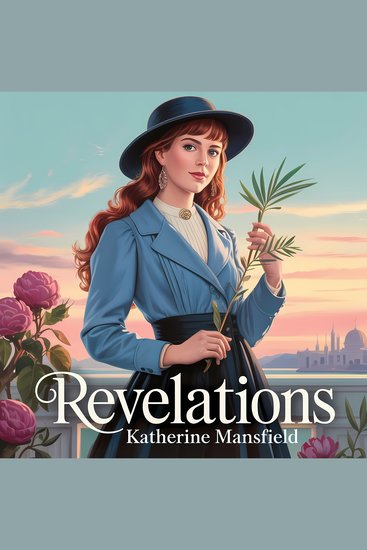
    What if a single day could strip away every comforting illusion? In “Revelations” by Katherine Mansfield, a woman’s carefully constructed sense of self is quietly undone as she moves through a series of encounters that force her to confront truths she would rather avoid. Set against the routines of social obligation and polite interaction, the story follows an emotional shift that unfolds not through dramatic action, but through subtle perception and inward reckoning. As familiar roles begin to feel hollow, moments of discomfort accumulate, revealing the tension between appearance and inner reality. Mansfield exposes how moral certainty, self-image, and social performance can crumble when confronted with an unfiltered view of others - and of oneself. With psychological precision, “Revelations” explores self-deception, judgment, and the unsettling clarity of emotional awakening. Press play and step into a quietly devastating short story whose insight lingers long after the final moment.
    Zum Buch