Begleiten Sie uns auf eine literarische Weltreise!
Buch zum Bücherregal hinzufügen
Grey
Einen neuen Kommentar schreiben Default profile 50px
Grey
Jetzt das ganze Buch im Abo oder die ersten Seiten gratis lesen!
All characters reduced
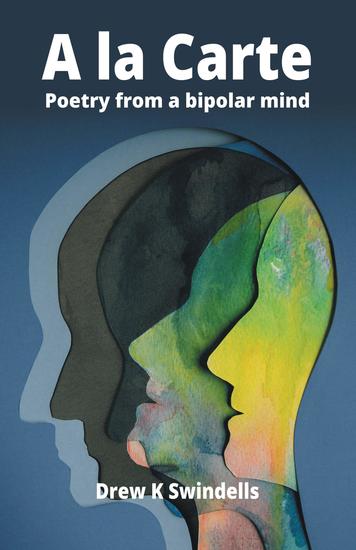
A la Carte - Poetry from a bipolar mind - cover

A la Carte - Poetry from a bipolar mind

Drew K Swindells

Verlag: Grosvenor House Publishing

  • 0
  • 0
  • 0

Beschreibung

A la Carte, poetry from a bipolar mind. This is a debut collection of poetry, thoughtful, deep sometimes humorous I write mainly about mental health, love, and lost love. I especially like emotional dark pieces that pack a punch and somewhat old-fashioned romance! I use a pen name sometimes 'the manic poet' I also introduce the semi colon into my work, it's a mental health symbol meaning survival, i e an author could have used a full stop but decided to carry on instead. 'Gold and silver' another metaphor also make some appearances.
Verfügbar seit: 04.07.2024.
Drucklänge: 123 Seiten.

Weitere Bücher, die Sie mögen werden

  • The Theogony - cover

    The Theogony

    Hesiod

    • 0
    • 0
    • 0
    The Theogony "the genealogy or birth of the gods" is a poem by Hesiod (8th – 7th century BC) describing the origins and genealogies of the Greek gods, composed c. 730–700 BC. It is written in the Epic dialect of Ancient Greek and contains 1022 lines. 
    Hesiod's Theogony is a large-scale synthesis of a vast variety of local Greek traditions concerning the gods, organized as a narrative that tells how they came to be and how they established permanent control over the cosmos. It is the first known Greek mythical cosmogony. The initial state of the universe is chaos, a dark indefinite void considered a divine primordial condition from which everything else appeared. Theogonies are a part of Greek mythology which embodies the desire to articulate reality as a whole; this universalizing impulse was fundamental for the first later projects of speculative theorizing.
    Hesiod appropriates to himself the authority usually reserved to sacred kingship. The poet declares that it is he, where we might have expected some king instead, upon whom the Muses have bestowed the two gifts of a scepter and an authoritative voice (Hesiod, Theogony 30–3), which are the visible signs of kingship. It is not that this gesture is meant to make Hesiod a king. Rather, the point is that the authority of kingship now belongs to the poetic voice, the voice that is declaiming the Theogony.
    Zum Buch
  • Matters Of Urgency (Biz) - cover

    Matters Of Urgency (Biz)

    Mike Blake

    • 0
    • 0
    • 0
    Matters Of Urgency (Biz)  
    A poem about the cut and thrust of the Business world.  
    How businesses in the boardroom deal with the aspects of promotion, and denigrate those who fail to  
    meet the grade. It mentions some of the tools used to sift out the doers from the  
    non-doers. The movers and shakers from the chaffs and fakers. 
    The boardroom is a tense place to be, when your egging for your promotion. 
    On the edge of your dreams in your business schemes. 
    *NO A.I. has been used in the creation of this Poem. Purely 100% inspirational from the Author. 
    * As for all my poems.* 
    To see more other Poems by the same Author please click the Link HERE: 
    https://www.amazon.com/-/e/B00SG40RM8 
    Instagram: wild_poetrys     //    wild.poetry.webs 
    TikTok:   @Wild_Poetrys
    Zum Buch
  • The Elk in the Glade - The World of Pioneer and Painter Jennie Hicks - cover

    The Elk in the Glade - The World...

    Bruce E. Whitacre

    • 0
    • 0
    • 0
    “Bruce E. Whitacre’s ability to capture this support network and the extraordinary efforts of Jennie Hicks in a manner that reaches beyond the usual literary or arts reader makes her story appealing to a much wider audience” —Diane Donovan, Midwest Book Review 
    “Side by side with the paintings, Whitacre’s book serves as a deeply personal yet relatable account of one woman’s life and turn-of-the-century lifestyle—and clearly demonstrates why this talented painter and pioneer stands as someone to remember.” —BookLife by Publishers Weekly 
    “Bruce E. Whitacre’s collection, The Elk in the Glade, is a lovely and loving celebration of his remarkable great grandmother, Jennie Hicks, life and art, and an inspiring example of how a woman's artistic discipline gave her the courage and insight to transcend the hardships of the Nebraska frontier.” —Ladette Randolph, Editor in Chief, Ploughshares 
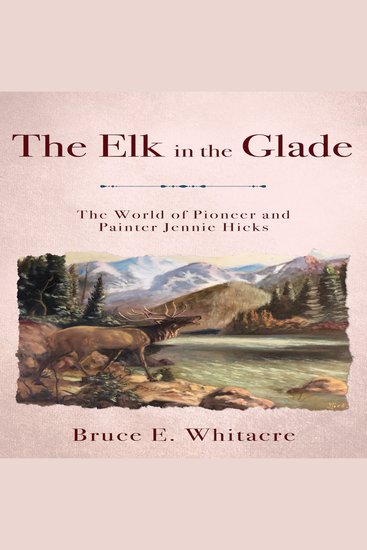
    Based on personal memories and family oral history, Whitacre’s debut collection of sixteen poems traces the life and legacy of a family matriarch, his paternal great-grandmother, Jennie Hicks. The daughter of American pioneers, she marries a successful farmer, bearing him three girls, seeing them all married, only to outlive him and the farm. Once again alone and facing hardship, she transforms an almost forgotten hobby, her young girl dream, into a brilliant thirty-year career as a successful landscape painter, the future pride of her hometown, Farnam, Nebraska, and an important figure in American art. Lovers of American history, art, and strong female characters will enjoy these chronicles in verse.
    Zum Buch
  • Cortne Robinson Presents: Spokken Word By Diane - cover

    Cortne Robinson Presents:...

    Anonym

    • 0
    • 0
    • 0
    This audiobook is narrated by an AI Voice.   
    This audiobook is a collection of self reflective speeches performed by Diane. 
    For more like minded works, visit: 
    https://www.lulu.com/spotlight/wwwlulucomspotlightcortnerobinson
    Zum Buch
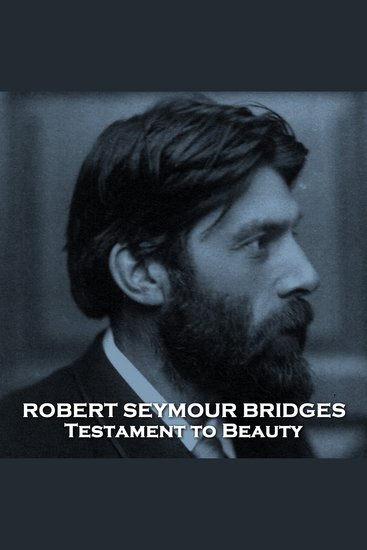
  • Testament to Beauty - A former Poet Laureate demonstrates his poetic talents in this tender and beautiful verse - cover

    Testament to Beauty - A former...

    Robert Seymour Bridges

    • 0
    • 0
    • 0
    Robert Seymour Bridges, OM was born on 23rd October 1844 at Walmer in Kent where he spent his early childhood in a house overlooking the anchoring ground of the British fleet.  
    His father died aged only 47 in 1853. A year later his mother remarried and the family relocated to Rochdale, where his stepfather was the vicar.  
    In 1854 Bridges was sent to Eton College and attended until 1863.  After Eton he went to Corpus Christi College at Oxford. There he became good friends with Gerard Manley Hopkins and would later compile an edition of his poems that is now considered a major contribution to English literature. 
    He graduated from Oxford, in 1867, with a second-class degree in literae humaniores.  Initially he planned to join the Church of England and travelled to the Middle East to broaden his religious horizons.  However, he soon decided that life as a physician would be a better path and, after 8 months studying German (that being the language of many scientific papers at the time) he began his study of medicine at St. Bartholomew's Hospital in 1869.  His long-term ambition was that by the age of forty he could retire from medicine to devote himself to writing. 
    Unfortunately Bridges failed his final medical examinations in 1873 and, as unable to immediately retake the papers, spent six months in Italy learning Italian as well as immersing himself in its art. In July 1874 he went to Dublin to continue his medical studies. Re-examined in December he passed and became a house physician at St Bartholomew's Hospital. It was whilst here that he engaged in a series of highly critical remarks about the Victorian medical establishment. One such was his claim that whilst working as a young doctor he saw a staggering 30,940 patients in one year. 
    A bout of severe pneumonia and lung disease forced his retirement from the medical profession in 1882 and so, slightly ahead of schedule, he began his literary career in earnest.  He already been writing for several years and had published his first poetry collection in 1873.  
    After his illness and a trip to Italy, Bridges moved, with his mother, to Yattendon in Berkshire.  It was during this time, from 1882 to 1904, that Bridges wrote most of his best-known lyrics as well as eight plays and two masques, all in verse.  
    It was also here, in 1884, that he married Monica Waterhouse. They would go on to have three children and spend the rest of their lives in rural seclusion, in an idyllic marriage, first at Yattendon, then at Boars Hill, Oxford. 
    Bridges made an important contribution to hymnody with the publication in 1899 of his Yattendon Hymnal. This collection of hymns became a bridge between the Victorian hymnody of the late 19th century and the modern hymnody of the early 20th century. He was also a chorister at Yattendon church for 18 years. 
    In 1902 Monica and his daughter Margaret became seriously ill with tuberculosis, and a move from Yattendon to a healthier climate was in order. After several temporary homes they moved abroad to spend a year in Switzerland before returning to settle again in England at Chilswell House, which Bridges had designed, and built on Boar's Hill overlooking Oxford University.   
    His greatest achievement though was still some years ahead of him.  The office of Poet Laureate was held by Alfred Austin but with his death it was offered first to Rudyard Kipling, who refused it, and then to Bridges. He was appointed Poet Laureate in 1913 by George V, the only medical graduate to have ever held the office. Bridges, at this time, was neither highly regarded nor well known but a safe pair of hands in a World rapidly being overshadowed by the storms about to erupt over Europe and the First World War. 
    The events of this War, including the wounding of his son, Edward, had a sobering effect on Bridges' poetry. His work became fiercely patriotic. In 1915 edited a volume of prose and poetry, The Spirit of Man, intended to appeal to readers living in war time
    Zum Buch

  • The Dublin Fosterling - cover

    The Dublin Fosterling

    Thomas Kennedy

    • 0
    • 0
    • 0
    This novel is an engaging, witty blend of comic fantasy, Irish mythology, romance and taut modern-day thriller, located mainly in Dublin, Ireland.Following the suicide of her teenage mother, baby Fiona is put into State care. Fiona doesn’t know her absent father was the disgraced God of Love. Growing up, she suffers abuse and bullying and begins to see Otherworld creatures such as trolls and faeries, and worries for her sanity. Fiona discovers she has a physical strength beyond what is normal, and can fight the bullies, but is branded as violent and held in an Institution for the criminally insane. She is released on her eighteenth birthday into a hostel in Dublin City, Ireland.Joey, one of the bullies who made her past miserable, is now a Dublin gang member. They meet but agree to forget the past and romance blossoms. But someone is killing his friends, former bullies, now gang members, and Joey fears he is next. Meanwhile, the Celtic Goddess Danu of Otherworld has discovered Fiona’s existence and wants her dead. The Drimnagh Witches are tasked to find her and Wizard Drowe is released from Otherworld prison tasked to kill her. Fiona survives his initial attempt to murder her and befriends him before entering a strange, mystical Otherworld beyond her current reality. She has to figure out how to survive in both worlds, on the tough streets of Dublin and in Otherworld.
    Zum Buch