Begleiten Sie uns auf eine literarische Weltreise!
Buch zum Bücherregal hinzufügen
Grey
Einen neuen Kommentar schreiben Default profile 50px
Grey
Jetzt das ganze Buch im Abo oder die ersten Seiten gratis lesen!
All characters reduced
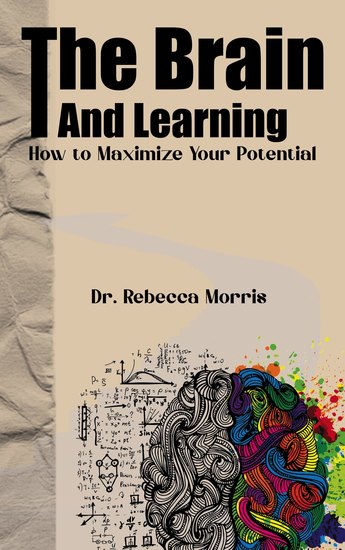
The Brain and Learning - How to Maximize Your Potential - cover

The Brain and Learning - How to Maximize Your Potential

Dr. Rebecca Morris

Verlag: Publishdrive

  • 0
  • 0
  • 0

Beschreibung

Unlock the incredible power of your brain to enhance learning and personal growth. In "The Brain and Learning - How to Maximize Your Potential," you’ll explore the science behind how the brain works and how you can harness its capabilities to improve memory, learning, and problem-solving skills.
 
This book dives deep into neuroscience, offering practical strategies to optimize cognitive function, boost creativity, and accelerate skill acquisition. Learn how factors like neuroplasticity, focus, and emotional intelligence play a vital role in learning, and discover techniques to apply this knowledge in your everyday life.
 
Whether you're a student, a professional, or someone looking to continuously improve, "The Brain and Learning" will provide you with the tools you need to unlock your brain’s full potential and achieve success in any area you choose to pursue.
Verfügbar seit: 07.09.2024.
Drucklänge: 88 Seiten.


Weitere Bücher, die Sie mögen werden

  • America Last - The Right's Century-Long Romance with Foreign Dictators - cover

    America Last - The Right's...

    Jacob Heilbrunn

    • 0
    • 0
    • 0
    In America Last, Jacob Heilbrunn, a highly respected observer of the American Right, demonstrates that the infatuation of American conservatives with foreign dictators is not a new phenomenon. It dates to WWI, when some conservatives, enthralled with Kaiser Wilhelm II, openly rooted for him to defeat the forces of democracy. In the 1920s and 1930s, this affinity became even more pronounced as Hitler and Mussolini attracted a variety of American admirers. Throughout the Cold War, the Right evinced a fondness for autocrats such as Francisco Franco and Augusto Pinochet, while some conservatives wrote apologias for the Third Reich and for apartheid South Africa. The habit of mind is not really about foreign policy, however. As Heilbrunn argues, the Right is drawn to what it perceives as the impressive strength of foreign dictators, precisely because it sees them as models of how to fight against liberalism and progressivism domestically. 


    America Last is a guide for the perplexed, identifying and tracing a persuasion—or the "illiberal imagination"—that has animated conservative politics for a century now. Since the 1940s, the Right has railed against communist fellow travelers in America. Heilbrunn finally corrects the record, showing that dictator worship is an unignorable tradition within modern American conservatism—and what it means for us today.
    Zum Buch
  • It's Okay to Talk About Adoption - An Invitation for Change Awareness and Belonging - cover

    It's Okay to Talk About Adoption...

    Marcy Bursac

    • 0
    • 0
    • 0
    Adoption isn’t a secret. 
    But it often stays quiet—held back by fear, uncertainty, or not knowing what to say. It’s part of our neighborhoods, our classrooms, our workplaces, our faith communities, and our lives. Yet too often, it remains invisible. 
    This book is a conversation starter. It shines a light on what adoption really looks like today: complex, layered, and deeply human. 
    Whether you’re an adoptee, adoptive parent, birth parent, kinship caregiver, teacher, employer, spiritual leader, policymaker, or simply someone who wants to be an ally or advocate, this book offers the language, insight, and practical steps to make adoption a visible and respected part of how we live and relate to one another. 
    Featuring real voices and stories from people with lived experience and those working to support them. Because when we break the silence and move beyond stigma, we make space for truth, healing, and belonging.
    Zum Buch
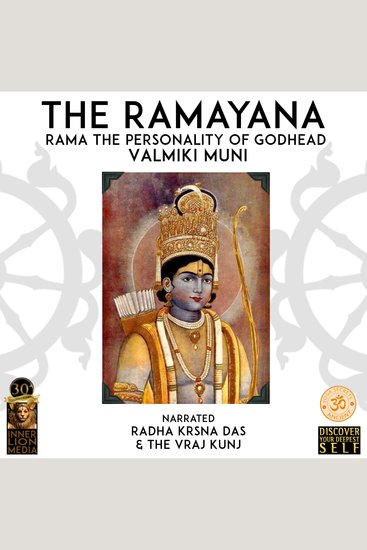
  • The Ramayana - Rama The Personality Of Godhead - cover

    The Ramayana - Rama The...

    Valmiki Muni

    • 0
    • 0
    • 0
    "What Rama says once he carries out; there is no looking back.” Rama to Kaikeyi “Only the timid and the weak leave things to destiny but the strong never bank on destiny or luck.” Lakshmana to Rama  
     
    The epic poem, by Maharishi Valmiki Muni, narrates the life of Lord Rama, a legendary prince of Ayodhya city in the kingdom of Kosala. The epic follows his fourteen-year exile to the forest urged by his father King Dasharatha, on the request of Rama's stepmother Kaikeyi. He traveled across forests in the Indian subcontinent with his wife Sita and brother Lakshmana. Rama endured the kidnapping of Sita by Ravana – the demon king of Lanka, which resulted in a great war; and Rama's eventual return to Ayodhya to be crowned king amidst jubilation and celebration. The Ramayana is one of the ancient epics in world literature consisting of nearly 24,000 verses. It is considered to be the Adi-kavya (first poem) depicting the duties of relationships, portraying ideal characters like the ideal father, ideal servant, ideal brother, ideal husband and ideal king. The Ramayana was an important influence on later Sanskrit poetry and Vedic life and culture. There are many versions of Ramayana in Indian languages, besides Buddhist, Sikh, and Jain adaptations. There are also Cambodian (Reamker), Indonesian, Filipino, Thai (Ramakien), Lao, Burmese and Malay versions of the iconic tale.
    Zum Buch
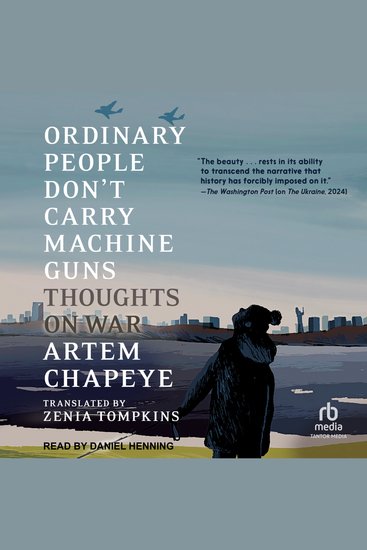
  • Ordinary People Don't Carry Machine Guns - Thoughts on War - cover

    Ordinary People Don't Carry...

    Artem Chapeye

    • 0
    • 0
    • 0
    In Ordinary People Don't Carry Machine Guns, Artem Chapeye reveals his war, intimate and senseless, withholding nothing about his motivations, his nightmares, his new relationship with the world. Here one man, a pacifist turned fighter, a story writer turned soldier considers the reasons for and reactions to war on a very personal level. 


    Chapeye investigates his role in the Ukrainian people's defense against the Russian army and his responsibilities as a father, a writer, a soldier, and a man of conviction. An avowed pacifist until 2022, Chapeye joined the Ukrainian army in the first days of the invasion. He tries to understand the large-scale decision-making that has a defining impact on both individual citizens and society-at-large: many of his fellow soldiers never considered enlisting before finding themselves at war; others fled the country. He wonders what his young children at home are doing and what they're feeling. 


    The book has three parts, offering historical analogies and literary references throughout. Deeply thought-provoking, intelligent, and heartbreaking, this is an essential book for anyone who wants to understand the ways that war can change everything.
    Zum Buch
  • Break the Chains of Transgenerational Parenting - And Learn How to Reparent Yourself - cover

    Break the Chains of...

    Dorothy Husen

    • 0
    • 0
    • 0
    In this second of a three-book series, Dorothy Husen gives readers a plan of action to stop the march of transgenerational trauma through their family, heal the emotional issues that keep them stuck, and free themselves to live the life they want to live--the one they were meant to live. Using a process that combines re-parenting therapy with mind-body techniques--a process Husen herself designed and uses successfully in her therapy practice--readers learn to expose and then repair misbeliefs formed in childhood that continue to rule their thinking and obstruct their progress in life. Chapter by chapter, step by step, readers will discover how to set their life on a course of radical self-acceptance and self-love that allows them to live life with curiosity and for the adventure it is.
    Zum Buch
  • Democracy Under Fire - Donald Trump and the Breaking of American History - cover

    Democracy Under Fire - Donald...

    Lawrence R. Jacobs

    • 0
    • 0
    • 0
    Before Trump even ran for President, his disdain for the rules, procedures, and norms of American democracy and the US Constitution was well-known and led prominent Republicans to repudiate him as "unfit" for the GOP nomination. Given the clear-eyed assessment of candidate Trump, why did the Republican Party nominate him as its presidential candidate in 2016 and then stand by him during the next four years? 


    Much of the attention paid to Trump's rise to power has focused on his corrosive personality and divisive style of governing. But he alone is not the problem. The vulnerability is much broader and deeper. The ascendance of Trump is the culmination of nearly 250 years of political reforms that gradually ceded party nominations to small cliques of ideologically-motivated party activists, interest groups, and donors. 


    In Democracy under Fire, Lawrence Jacobs provides a highly engaging history of political reforms since the late-eighteenth century that over time dangerously weakened democracy, widened political inequality as well as racial disparities, and rewarded toxic political polarization. Jacobs's searing indictment of political reformers concludes with recommendations to restrain the unbridled ambition of politicians who thrive on division and instead generate broad citizen engagement with tangible policy making.
    Zum Buch