Rejoignez-nous pour un voyage dans le monde des livres!
Ajouter ce livre à l'électronique
Grey
Ecrivez un nouveau commentaire Default profile 50px
Grey
Abonnez-vous pour lire le livre complet ou lisez les premières pages gratuitement!
All characters reduced
Some Power Electronics Case Studies Using Matlab Simpowersystem Blockset - cover

Some Power Electronics Case Studies Using Matlab Simpowersystem Blockset

Dr. Hedaya Mahmood Alasooly

Maison d'édition: BookRix

  • 0
  • 0
  • 0

Synopsis

Matlab SimPowerSystems is a modern design tool that allows scientists and engineers to rapidly and easily build models that simulate power systems. Not only can you draw the circuit topology rapidly, but your analysis of the circuit can include interactions with mechanical, thermal, control, and other disciplines. The paper covers some case studies that provide detailed, realistic examples of how to use SimPowerSystems in power system analysis. The following types of studies are covered on the paper:1. Thyristor-Based Static Var Compensator: Study the steady-state and dynamic performance of a static var compensator (SVC) on a transmission system.2. Transient Stability of a Power System with SVC and PSS: Study of the application of static var compensator (SVC) and power system stabilizers (PSS) to improve transient stability and power oscillation damping of the system. 3. GTO-Based STATCOM: Study the steady-state and dynamic performance of a static synchronous compensator (STATCOM) on a transmission system.  4. Control of load flow using UPFC: Study the steady-state and dynamic performance of a unified power flow controller (UPFC).5. Variable-frequency Induction Motor Drive: Study of a PWM inverter is used as a variable-voltage, variable-frequency source to drive an induction motor in variable-speed operation.6. Chopper-Fed DC Motor Drive: Study of a DC motor drive with armature voltage controlled by a GTO thyristor chopper.7. VSC-Based HVDC Link: Modeling of a forced-commutated voltage-sourced converter high-voltage direct current (VSC-HVDC) transmission link.
Disponible depuis: 21/12/2023.
Longueur d'impression: 22 pages.
D'autres livres qui pourraient vous intéresser

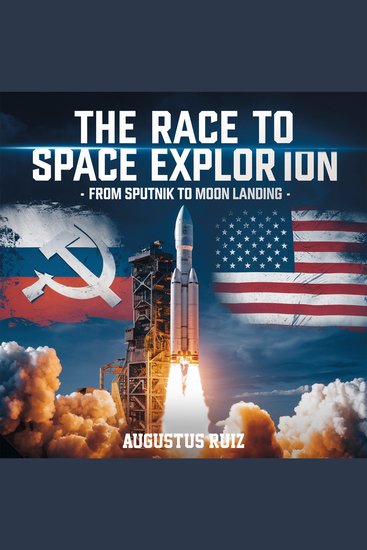
  • The Race to Space Exploration – From Sputnik to Moon Landing - How the US and Soviet Union Competed to Conquer Space - cover

    The Race to Space Exploration –...

    Augustus Ruiz

    • 0
    • 0
    • 0
    The Space Race defined an era—one of innovation, rivalry, and exploration. The Cold War superpowers, the United States and the Soviet Union, competed to achieve what no one had done before: reach beyond Earth’s atmosphere and into the vast unknown of space. 
    This audiobook takes you deep into the history of space exploration, uncovering the missions, risks, and scientific breakthroughs that shaped the modern world. Discover: 
    ✅ How Sputnik 1’s launch changed global politics overnight 
    ✅ The challenges of the first human spaceflights from Gagarin to Apollo 
    ✅ The hidden dangers and failures that nearly ended space exploration 
    ✅ How the Apollo 11 Moon landing became a defining moment for humanity 
    The Race to Space Exploration – From Sputnik to Moon Landing is a must-listen for history lovers, space enthusiasts, and anyone fascinated by the greatest adventure ever undertaken by humankind.
    Voir livre
  • Planta Sapiens - The New Science of Plant Intelligence - cover

    Planta Sapiens - The New Science...

    Paco Calvo, Natalie Lawrence

    • 0
    • 0
    • 0
    An astonishing window into the inner world of plants, and the cutting-edge science in plant intelligence. 


    Decades of research document plants' impressive abilities: they communicate with one another, manipulate other species, and move in sophisticated ways. Lesser known, however, is the new evidence that plants may actually be sentient. Although plants may not have brains, their microscopic commerce exposes a system not unlike the neuronal networks running through our own bodies. They can learn and remember, possessing an intelligence that allows them to behave in adaptive, flexible, anticipatory, and goal-directed ways. 


    A leading figure in the philosophy of plant signaling and behavior, Paco Calvo offers an entirely new perspective on plant biology. In Planta Sapiens, he shows for the first time how we can use tools developed in animal cognition studies in a quest to deeply understand plant intelligence. He illuminates how plants inspire technological advancements: from robotics and AI to tackling the ecological crisis. Most importantly, he demonstrates that plants are neither objects nor resources; they are agents in themselves, and for themselves.
    Voir livre
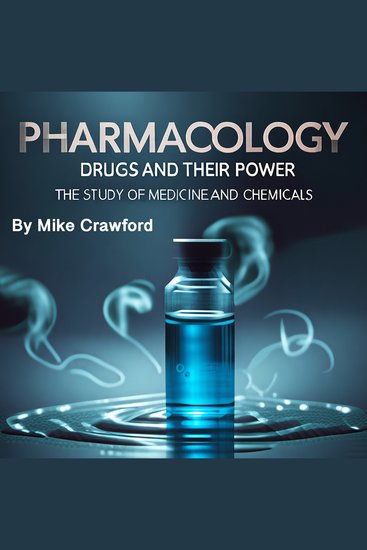
  • Pharmacology - Drugs and Their Power: The Study of Medicine and Chemicals - cover

    Pharmacology - Drugs and Their...

    Mike Crawford

    • 0
    • 0
    • 0
    The study of pharmacology has a rich and complex history that dates back thousands of years. Ancient civilizations relied on plants, minerals, and animal-derived substances to treat various ailments, laying the foundation for modern drug development. The evolution of pharmacology is a testament to human ingenuity and the ongoing quest for medical advancement. 
    In early human societies, medicine was largely based on trial and error. Traditional healers and shamans experimented with natural substances to alleviate pain, heal wounds, and cure diseases. Ancient Egyptian, Chinese, and Greek civilizations made significant contributions to early pharmacology by documenting medicinal plants and their effects. The Ebers Papyrus, an Egyptian medical text from around 1550 BCE, provides one of the earliest records of pharmacological knowledge, listing hundreds of remedies derived from herbs and minerals. Similarly, the works of Hippocrates and Dioscorides in ancient Greece emphasized the importance of observation and classification in medicine. 
    The transition from natural remedies to synthesized drugs gained momentum during the Renaissance and Enlightenment periods. With the development of the scientific method, researchers began isolating active compounds from plants and studying their effects in controlled settings. The 19th century saw groundbreaking discoveries, such as the isolation of morphine from opium and the synthesis of aspirin. These advancements paved the way for the pharmaceutical industry, leading to the development of more effective and standardized treatments.
    Voir livre
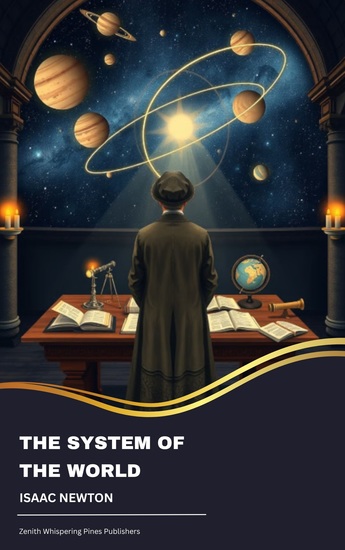
  • The System of the World - cover

    The System of the World

    Isaac Newton

    • 0
    • 0
    • 0
    What if the universe could be explained by a few elegant laws?
    In The System of the World, Isaac Newton presents a clear and powerful vision of how the cosmos works—revealing the principles behind motion, gravity, and the structure of the heavens. Written to illuminate the ideas of the Principia, this work makes Newton's revolutionary thinking accessible, showing how simple forces govern planets, tides, and the very fabric of nature.
    
    Regarded as "one of the cornerstones of modern science," this classic bridges mathematics, physics, and philosophy, shaping how humanity understands the universe. Newton's clarity and ambition continue to inspire scientists, thinkers, and curious minds centuries later.
    
    If you're fascinated by the laws that rule reality and the ideas that launched the scientific age, this essential work belongs in your library.
    
    Open the book—and discover the system that revealed how the world truly moves.
    Voir livre
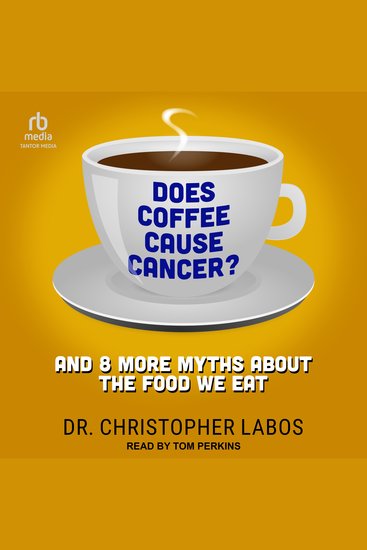
  • Does Coffee Cause Cancer? - And 8 More Myths About the Food We Eat - cover

    Does Coffee Cause Cancer? - And...

    Dr. Christopher Labos

    • 0
    • 0
    • 0
    In this fascinating, refreshingly clarifying book about food, food myths, and how sloppy science perpetuates misconceptions about food, a medical doctor on his way to a conference gets drawn into conversations that answer the following questions: Does vitamin C prevent the common cold? And if it works, why does it only work in Canadian soldiers, ultramarathon runners, and skiers? Was red meat really declared a carcinogen by the WHO? Does that mean I should become a vegetarian? And who decides what gets labeled as red meat and white meat? Is salt really not that bad for you and did a group of researchers really want to experiment on prisoners to prove the point? Does coffee cause cancer or heart attacks? Why did a California court say coffee needed a warning label? Is red wine really good for your heart, and what makes the French Paradox such a paradox? Why did the New England Journal of Medicine link eating chocolate with winning a Nobel Prize? Why were eggs once bad for you but now good for you again? Does that mean I don't need to worry about cholesterol? Should I be taking vitamin D?
    Voir livre
  • Psychiatry - Mental Health and Behavioral Disorders - cover

    Psychiatry - Mental Health and...

    Ava Westwood

    • 0
    • 0
    • 0
    Psychiatry is a branch of medicine dedicated to the study, diagnosis, treatment, and prevention of mental, emotional, and behavioral disorders. It plays a crucial role in modern healthcare by addressing conditions that affect cognition, mood, and perception, impacting overall well-being and functionality. Mental health disorders range from common conditions such as anxiety and depression to severe illnesses like schizophrenia and bipolar disorder. Psychiatrists, as medical professionals specializing in this field, assess and manage these conditions through a combination of psychotherapy, medication, and emerging therapeutic approaches. 
    The historical development of psychiatry has evolved significantly over centuries. Ancient civilizations, including the Greeks and Romans, attributed mental illness to supernatural forces, while Hippocrates introduced the concept of imbalance in bodily humors as a possible cause. During the Middle Ages, mental illness was often misunderstood and associated with demonic possession, leading to inhumane treatments. The emergence of asylums in the 18th and 19th centuries marked a shift toward institutionalized care, though conditions in these facilities were often poor. The 20th century brought advancements in psychopharmacology, neuroscience, and psychological theories, leading to a more scientific and humane approach to mental health care. Today, psychiatry integrates biological, psychological, and social factors to provide comprehensive treatment. 
    Psychiatry differs from other medical disciplines in its focus on both the mind and the brain. Unlike neurology, which primarily deals with structural disorders of the nervous system, psychiatry examines functional disturbances affecting thought, emotion, and behavior. While psychology also explores mental health, psychiatrists, as medical doctors, are uniquely qualified to prescribe medications and provide medical treatments alongside therapy.
    Voir livre