¡Acompáñanos a viajar por el mundo de los libros!
Añadir este libro a la estantería
Grey
Escribe un nuevo comentario Default profile 50px
Grey
Suscríbete para leer el libro completo o lee las primeras páginas gratis.
All characters reduced
Fairies - cover

Fairies

Dominic Connolly

Editorial: Amber Books Ltd

  • 0
  • 0
  • 0

Sinopsis

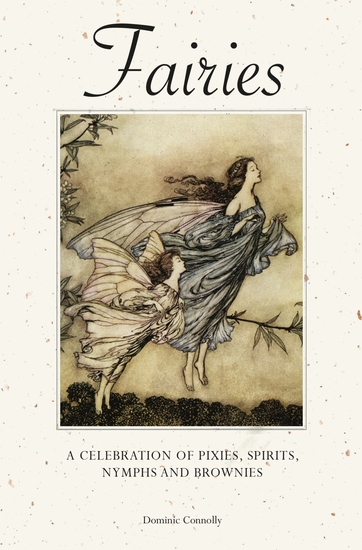
For centuries we have been fascinated with fairies, mythical beings often possessing intriguing magical powers to curse, trick or heal humans. The label of 'fairy' has at times applied only to specific magical creatures with human appearance, magical powers, and a penchant for trickery. At other times it has been used to describe any magical creature, such as goblins and gnomes. In Fairies, discover the charming story behind our best loved magical characters, including the Fairy Godmother, Shakespeare’s Titania and the beloved Tinker Bell. Myths and stories about fairies do not have a single origin, but are rather a collection of folk beliefs from disparate sources. Various folk theories about the origins of fairies include casting them as either demoted angels or demons in a Christian tradition, as deities in Pagan belief systems, as spirits of the dead, as prehistoric precursors to humans, or as spirits of nature. Fairies is a pocketful of delight, packed with beautiful images and full of fascinating tales.
Disponible desde: 14/05/2024.
Longitud de impresión: 160 páginas.

Otros libros que te pueden interesar

  • Scotland's Democracy Trail - cover

    Scotland's Democracy Trail

    Donald Smith

    • 0
    • 0
    • 0
    The trail follows the emergence of democratic thought and action in Scotland from the 16th century onwards, linking pivotal events to locations along the way. It is a story of ups and downs, triumphs and tragedies, borne along by a stubborn, persistent advance.
    
    
    The evolution of democracy in Scotland is a fascinating story. Join Stuart McHardy and Donald Smith as they tell this story via a guided tour of the landmarks and monuments of Edinburgh, leading you from Edinburgh Castle to the Scottish Parliament, and through over 500 years of political development.


    From the antics of the Edinburgh Mob and the cruelties of Henry Dundas, to the more recent Vigil for a Scottish Parliament and the 2014 referendum on Scottish independence, this book will show you the democratic and historic significance of the places, people and ideas on the route.


    A comprehensive timeline, detailed map and photographs throughout make it easy to follow the route and discover the story of Scottish democracy. Scotland's Democracy Trail brings the key political events in Scotland's history to life, demonstrating just how relevant they remain today.
    Ver libro
  • How to Write a Sentence - And How to Read One - cover

    How to Write a Sentence - And...

    Stanley Fish

    • 0
    • 0
    • 0
    New York Times Bestseller 
    “Both deeper and more democratic than The Elements of Style” —Adam Haslett, Financial Times 
    “A guided tour through some of the most beautiful, arresting sentences in the English language.” —Slate 
    In this entertaining and erudite gem, world-class professor and New York Times columnist Stanley Fish offers both sentence craft and sentence pleasure, skills invaluable to any writer (or reader).  
    Like a seasoned sportscaster, Fish marvels at the adeptness of finely crafted sentences and breaks them down into digestible morsels, giving readers an instant play-by-play. Drawing on a wide range of great writers, from Philip Roth to Antonin Scalia to Jane Austen, How to Write a Sentence is much more than a writing manual—it is a spirited love letter to the written word, and a key to understanding how great writing works. It is a book that will stand the test of time.
    Ver libro
  • Marshall Field's - The Store that Helped Build Chicago - cover

    Marshall Field's - The Store...

    Gayle Soucek

    • 0
    • 0
    • 0
    Anyone who has waited in a Christmas line for the Walnut Room's Great Tree can attest that Chicago's loyalty to Marshall Field's is fierce. 


    Dayton-Hudson even had to take out advertising around town to apologize for changing the Field's hallowed green bags. And with good reason—the store and those who ran it shaped the city's streets, subsidized its culture, and heralded its progress. The resulting commercial empire dictated wholesale tradeterms in Calcutta and sponsored towns in North Carolina, but its essence was always Chicago. So when the Marshall Field name was retired in 2006 after the stores were purchased by Macy's, protest slogans like "Field's is Chicago" and "Field's: as Chicago as it gets" weren't just emotional hype. Many still hope that name will be resurrected like the city it helped support during the Great Fire and the Great Depression. Until then, fans of Marshall Field's can celebrate its history with this warm look back at the beloved institution.
    Ver libro
  • Tibet Was Never A Part of China Since Antiquity - Using China’s Official Authoritative Documents as Proof - cover

    Tibet Was Never A Part of China...

    Professor Hon-Shiang Lau

    • 0
    • 0
    • 0
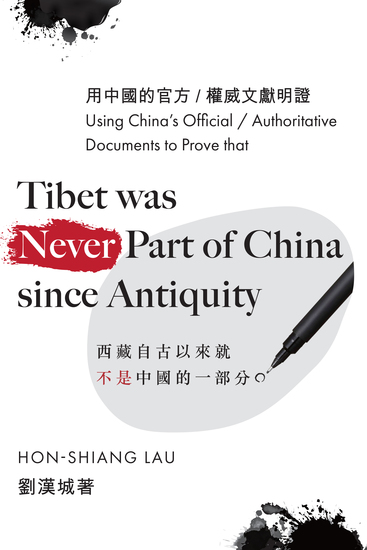
    As a signatory to the League of Nations and United Nations covenants, China promised not to conquer new territories after 1919. Therefore, after the People’s Republic of China (PRC) conquered Tibet in 1950, she saw the necessity of lying to the world that Tibet has always been an inseparable part of China. In this groundbreaking work, Dr. Hon-Shiang Lau, Ph.D., dismantles that narrative with clarity and precision. Drawing on official Chinese sources, imperial records, treaties, and eyewitness accounts, Lau demonstrates that Tibet’s relationship with China was neither one of continuous subjugation nor sovereign control. Instead, he reveals a far more complex and independent Tibetan history that stands apart from Beijing’s propaganda.
    		 
    With meticulous scholarship and accessible prose, Lau takes readers on a journey through centuries of contested borders, political maneuvering, and shifting alliances. The result is a compelling account that restores historical truth to the Tibetan people and dispels the many lies and fabrications propagated by the PRC. This book is not only a critical resource for historians and policymakers but also an essential work for anyone seeking to understand Tibet’s rightful place in world history.
    Ver libro
  • Being the Change - A Guide for Advocates and Activists on Staying Healthy Inspired and Driven - cover

    Being the Change - A Guide for...

    PhD Jamie Sue Bodenlos, PhD Dara...

    • 0
    • 0
    • 0
    Being the Change is written for activists who work in organizations with social missions, and those who are involved in social change outside of their jobs. This book is a practical guide that helps listeners maintain and enhance their ability to be effective agents of change. 


    You can't take care of the world without taking care of yourself. Although therapy can often help alleviate anxiety or depression, activists can also apply therapy-based strategies as part of their self-care. This book provides empirically supported strategies from cognitive behavior therapies and other psychological interventions for coping with the challenges of difficult, yet meaningful work. 


    Listeners will learn how to clarify their values, identify their strengths, manage their emotions and relationships, and incorporate self-care as part of their personal and professional development. A rich catalog of case examples, exercises, and actionable ideas make this book a comprehensive toolkit for people who want to take their social engagement to the next level in a healthy and productive way.
    Ver libro
  • Chandogya Upanishad - cover

    Chandogya Upanishad

    Unknown

    • 0
    • 0
    • 0
    The word Upanishad (upa-ni-shad) consists of, "Upa" means "near;" "ni" means "down;" "shad" means "to sit." Thus, Upanishad is to sit down near the teacher to discuss, learn, practice, and experience. There are some 200 or more Upanishads. Some are lost and are only known about because of being referenced in other Upanishads. The Chandogya-upanishad belongs to the Sama-veda. It ranks among the oldest Upanishads, dating to the Brahmana period of Vedic Sanskrit (before the 8th century BC). It figures as number 9 in the Muktika canon of 108 Upanishads. It is part of the Chandogya Brahmana, which has ten Prapathakas (Parts). The first two Prapathakas of the Brahmana deal with sacrifices and other forms of worship. The other eight Prapathakas and their Khandas (Chapters) constitute the Chandogya Upanishad. The 11 principal Upanishads to which Sankara appeals in his great commentary on the Vedanta-Surtras are: Chandogya, Talavakara or Kena, Aitareya, Kaushitaki, Vajasaneyi or Isha, Katha, Mundaka, Taittirtiyaka or Taittiriya, Brihadaranyaka, Svetasvatara, and Prasna. They are also called the 11 classical Upanishads or the fundamental Upanishads of the Vedanta Philosophy. The Upanishadic literature is not a religious scripture and is free from dogma and doctrines. It is not a part of any religion but is a philosophy for all times and for all. German philosopher Arthur Schopenhauer, impressed by the Upanishads, called the texts "the production of the highest human wisdom". (Summary by Jothi)
    Ver libro