Rejoignez-nous pour un voyage dans le monde des livres!
Ajouter ce livre à l'électronique
Grey
Ecrivez un nouveau commentaire Default profile 50px
Grey
Abonnez-vous pour lire le livre complet ou lisez les premières pages gratuitement!
All characters reduced
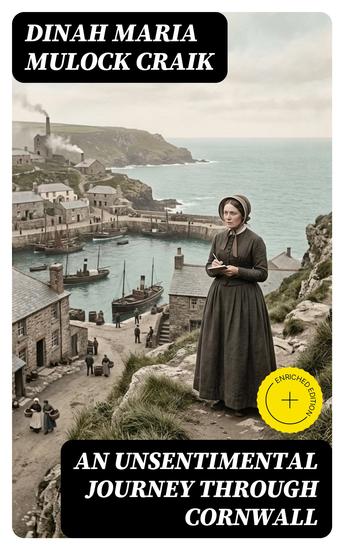
An Unsentimental Journey through Cornwall - Enriched edition - cover

An Unsentimental Journey through Cornwall - Enriched edition

Dinah Maria Mulock Craik

Maison d'édition: DigiCat

  • 0
  • 0
  • 0

Synopsis

In "An Unsentimental Journey through Cornwall," Dinah Maria Mulock Craik presents a vivid and contemplative exploration of the Cornish landscape, characterizing her travels with a strikingly pragmatic lens. Through a combination of descriptive prose and keen social observations, Craik dismantles romanticized notions of the countryside, opting instead for a portrayal enriched with realism and authenticity. The work, published during the mid-19th century, reflects the burgeoning interest in regional tourism and the tension between industrialization and pastoral life, situating itself within the wider context of Victorian literature that sought to examine the complexities of English identity and place. Craik, a notable figure of her time, was deeply influenced by her experiences as a travel writer, poet, and novelist. Her literary career was marked by an engagement with social issues, particularly concerning women and the working class, which likely inspired her candid approach in "An Unsentimental Journey." Having lived through significant societal changes, Craik's journey through Cornwall offers unique insights into not only the regional landscape but also the human condition, informed by her own struggles and observations. This book is a must-read for anyone interested in travel literature, regional studies, or Victorian social history. Craik's articulate narratives challenge preconceived notions while inviting readers to engage with Cornwall's rich heritage and contemporary life. Her blend of realism and empathy makes for an enriching journey that resonates with both modern travel enthusiasts and literary scholars alike.

In this enriched edition, we have carefully created added value for your reading experience:
- A succinct Introduction situates the work's timeless appeal and themes.
- The Synopsis outlines the central plot, highlighting key developments without spoiling critical twists.
- A detailed Historical Context immerses you in the era's events and influences that shaped the writing.
- A thorough Analysis dissects symbols, motifs, and character arcs to unearth underlying meanings.
- Reflection questions prompt you to engage personally with the work's messages, connecting them to modern life.
- Hand‐picked Memorable Quotes shine a spotlight on moments of literary brilliance.
- Interactive footnotes clarify unusual references, historical allusions, and archaic phrases for an effortless, more informed read.
Disponible depuis: 01/08/2022.
Longueur d'impression: 121 pages.
D'autres livres qui pourraient vous intéresser

  • Once a Stooge Always a Stooge: The Autobiography of Hollywood's Most Prolific Funnyman - cover

    Once a Stooge Always a Stooge:...

    Joe Besser, Jeff Lenburg, Greg...

    • 0
    • 0
    • 0
    This audiobook is narrated by a digital voice. 
    REVISED AND EXPANDED AND BESSER THAN EVER! 
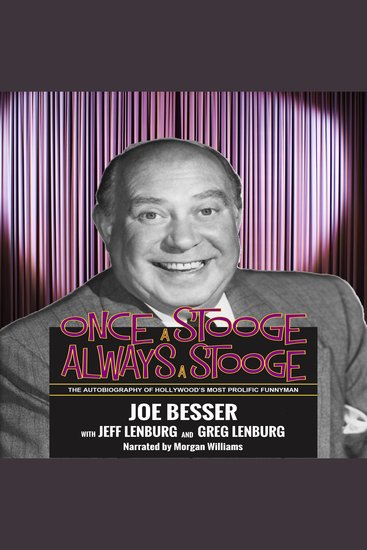
    For more than six decades, Joe Besser brought gales of laughter to millions—in vaudeville, on Broadway, on radio, in motion pictures, and on television. From his days working as a bumbling assistant to the world-famous Thurston the Magician, he carved out success with his own act—that of a childlike sissy who brandished his foils with a flick of the wrist and such hilarious verbal assaults as “Ooh, you crazy you!” and “Not so f-a-s-t!” From stage to film and television screens, the famed roly-poly comedian left an indelible mark–from starring in his own feature films and short-subject series for Columbia Pictures, to dishing out huge laughs on scores of popular programs of the day, most notably as the malevolent brat “Stinky” on The Abbott and Costello Show, to stepping in to replace Shemp Howard after his death as a member of Three Stooges comedy team. Followed by countless more laugh out-loud performances in movies and on television, from playing the frustrated superintendent, Jillson, on The Joey Bishop Show to voicing Saturday morning cartoons, his legacy still lives on today, thanks to reruns of his classic work. Illustrating a passing age of American humor, ONCE A STOOGE, ALWAYS A STOOGE tells the whole story. Jam-packed with timeless remembrances, Besser vividly recounts it all–the personal ups and downs, the classic skits and routines that became his hallmark, and behind-the-scenes stories of show business icons who enriched his life and career, including Abbott and Costello, Fred Allen, Jack Benny, Milton Berle, Sammy Davis, Jr., Jerry Lewis, Olsen and Johnson, and many others, in this charming and thoughtfully written memoir.
    Voir livre
  • The Age of Enlightened Despots - Reform and Reaction - cover

    The Age of Enlightened Despots -...

    Nova Ashford

    • 0
    • 0
    • 0
    The Age of Enlightened Despotism was a period in European history during the 18th century when absolute monarchs, inspired by the ideas of the Enlightenment, sought to combine their centralized power with reforms aimed at improving the welfare of their subjects. These rulers, often referred to as "enlightened despots," were influenced by the rationalist philosophy that emphasized reason, science, and progress. However, they did not embrace the democratic principles of the Enlightenment, opting instead to preserve their absolute authority while implementing select reforms to improve governance, society, and the economy. 
    At the heart of enlightened despotism was the belief that monarchs could act as benevolent rulers who used their absolute power to guide their countries towards prosperity and progress. These monarchs saw themselves as enlightened figures, tasked with leading their nations in line with the principles of the Enlightenment but without relinquishing control over the state. In contrast to traditional autocratic rulers, enlightened despots were often receptive to new ideas about governance, education, legal systems, and the treatment of their subjects. They embraced reforms that were designed to modernize their societies, often implementing policies that reflected Enlightenment thinkers such as Voltaire, Montesquieu, and Rousseau. 
    Frederick the Great of Prussia, Catherine the Great of Russia, and Joseph II of Austria were the most prominent examples of enlightened despots. Each of these rulers used their power to implement a range of reforms. Frederick, for instance, was known for his military prowess and his efforts to modernize the Prussian state, introducing reforms that improved the legal system, promoted education, and supported religious tolerance.
    Voir livre
  • Mafia Murders - 100 Kills that Changed the Mob - cover

    Mafia Murders - 100 Kills that...

    M. A. Frasca

    • 0
    • 0
    • 0
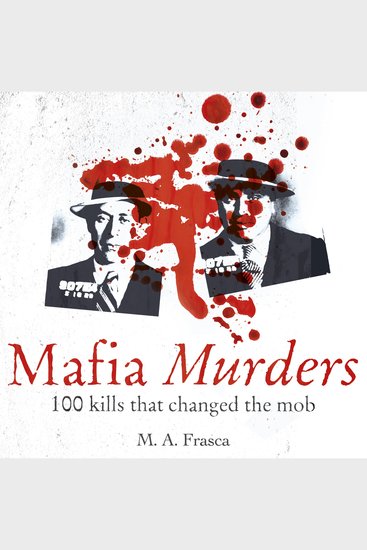
    Revenge killings, gangland shootouts, brutal executions and drownings - there was no escape from the Mob's hitmen. Featuring historical photographs, Mafia Murders details the bloody ends of these infamous gangsters. 
     
     
    Since the late 19th century, the Mafia has used intimidation and worse to exert its control over organized crime. Mafia Murders recalls the 100 most important executions by the Mob. In a world where family, turf wars and crime were big business, the relentless murders of rival bosses, stool pigeons, snitches, good cops, and dirty cops became part of everyday life. 
     
    Discover the stories of the hit-men who lived and died by the gun in this fascinating tale of the American underworld.
    Voir livre
  • Beryl the Croucher and the Rest of England - From their pens to your ears genius in every story - cover

    Beryl the Croucher and the Rest...

    Thomas Burke

    • 0
    • 0
    • 0
    Thomas Burke was born Sydney Thomas Burke on November 29th, 1886 in Eltham, London (at the time it was part of Kent). 
    An author in the early years of the 20th Century Burke brought his skills of pen and eye to parts of London, specifically the Limehouse district of the East End, to write with drive and vigour about the characters he met and the places that he knew.  Whether he turned that material into fiction or non-fiction the words seep quality.  His publications ranged from these wonderful vignettes of down-at-heel London to writings on homosexuality and the English Countryside. 
    Thomas Burke died in the Homeopathic Hospital in Queens Square, Bloomsbury on 22 September 1945.
    Voir livre
  • Worthy of the Event - An Essay - cover

    Worthy of the Event - An Essay

    Vivian Blaxell

    • 0
    • 0
    • 0
    A trans essayist with a checkered past takes on the big questions of human existence 
     
    Move over Michel de Montaigne, there's a new girl in town 
     
    An ABA Indie Next Pick • A San Francisco Chronicle Women's History Month Book Pick • An Allstora Queer History 101 Book Club Pick 
     
    Set against a backdrop of trans life that begins with her own transition in the 1960s, Vivian Blaxell takes us on a witty and expansive sweep through history, from Australia to Japan, to Hawai'i to Mexico, to heretofore unmapped regions of the mind. In seven devastatingly intelligent parts, her essay covers a vast range in time and space—from the arson of a Japanese temple to a transformative encounter with a coral reef, from Nietzsche and Hegel to Indigenous metaphysics, from a perplexing relationship with a beautiful man to the unknowable minds of animals. Fleshy and philosophical, searching and exalted, utterly distinctive and assured, Worthy of the Event belatedly establishes Vivian Blaxell as one of the major writers of her generation.
    Voir livre
  • Zeno - Greek Philosophy and the Paradoxes of Motion - cover

    Zeno - Greek Philosophy and the...

    Hector Davidson

    • 0
    • 0
    • 0
    Zeno of Elea, a philosopher from ancient Greece, is best known for his paradoxes, which have intrigued thinkers for over two millennia. These paradoxes, particularly those dealing with motion, challenge fundamental concepts of space, time, and the nature of infinity. While Zeno's ideas emerged within the context of ancient philosophical debates, their relevance persists today in various fields of study, from physics to mathematics and philosophy. 
    One of the most striking aspects of Zeno's paradoxes is their ability to question assumptions that many take for granted. The Paradox of Achilles and the Tortoise, for example, suggests that a faster runner (Achilles) could never overtake a slower one (the tortoise) if the tortoise has a head start. At first glance, this seems absurd, as we know that Achilles would inevitably pass the tortoise in a real race. However, Zeno’s argument raises deeper questions about how we understand infinite divisions in space and time. Today, this paradox invites reflection on the nature of infinity, a concept that remains central in modern mathematics and the study of calculus. 
    Zeno’s paradoxes also raise critical questions about the nature of motion itself. His Arrow Paradox, for instance, claims that an arrow in flight is always at rest at any given moment in time, suggesting that motion is an illusion. While this may seem like a mere abstract thought experiment, it has significant implications for how we perceive the passage of time and the continuum of motion. In modern physics, the concept of time and motion is constantly reexamined, especially in the context of relativity theory, where time can bend and stretch depending on an object's velocity and position in space. Zeno’s paradoxes, thus, offer an early philosophical precursor to these scientific discussions.
    Voir livre