Begleiten Sie uns auf eine literarische Weltreise!
Buch zum Bücherregal hinzufügen
Grey
Einen neuen Kommentar schreiben Default profile 50px
Grey
Jetzt das ganze Buch im Abo oder die ersten Seiten gratis lesen!
All characters reduced
Vitamin D - A Novel Therapy for Chronic Diseases? - cover

Vitamin D - A Novel Therapy for Chronic Diseases?

Dimitrios Papandreou

Verlag: Bentham Science Publishers

  • 0
  • 0
  • 0

Beschreibung

Vitamin D – A Novel Therapy for Chronic Diseases? This comprehensive book explores the vital role of vitamin D in human health, with a focus on its potential impact on various chronic diseases. Starting with the history and general information of vitamin D, the book covers various topics, including its effects on immunity, gut health, insulin resistance, cardiovascular disease, irritable bowel syndrome, depression, melanoma, and pregnancy. It provides clear and evidence-based insights into how vitamin D influences the body and its role in preventing or managing specific conditions.This book is a valuable resource for dietitians, healthcare professionals, and anyone seeking to enhance their understanding of vitamin D and its therapeutic potential.Key Features:- Covers the role of vitamin D in chronic diseases- Explores vitamin D’s impact on immunity, gut health, and insulin resistance- Provides evidence-based recommendations for healthcare professionals- Accessible explanations for non-expert readersReadership: Dietitians, doctors, nurses, healthcare professionals, and general readers interested in health and wellness.
Verfügbar seit: 29.10.2024.
Drucklänge: 270 Seiten.

Weitere Bücher, die Sie mögen werden

  • Body Safety for Young Children - Empowering Caring Adults - cover

    Body Safety for Young Children -...

    Kimberly King

    • 0
    • 0
    • 0
    Talking about sexual abuse is the key to preventing it. Avoiding talking about body safety and sexual-abuse prevention is what abusers want. Body Safety for Young Children: Empowering Caring Adults gives parents, guardians, caregivers, and teachers the information, resources, tools, and helpful real-life tips to help keep children safe. This book takes the fear out of sexual-abuse prevention and makes it approachable by making a partnership between parents and teachers.  
    Zum Buch
  • The Capitalized Retirement - How to Ensure You Won't Outlive Your Savings - cover

    The Capitalized Retirement - How...

    Matthew P. Johnson

    • 0
    • 0
    • 0
    As someone who has been advising clients in the financial services industry since 1999, Matthew Johnson knows what he is talking about. For over two decades, he has practiced the discipline of putting his clients first—a belief he inherited from his father who was also a financial advisor. Avoiding the cliches found in many financial planning books, Johnson cuts to the chase and offers readers a clear plan of action.Knowing how challenging the prospect of retirement can be for many individuals, Johnson takes on the role of a personal advisor and walks readers through several practical ways they can maximize their retirement savings. The key to retirement investing, according to Johnson, is to switch from growth-oriented to income-oriented investment strategies.
    Zum Buch
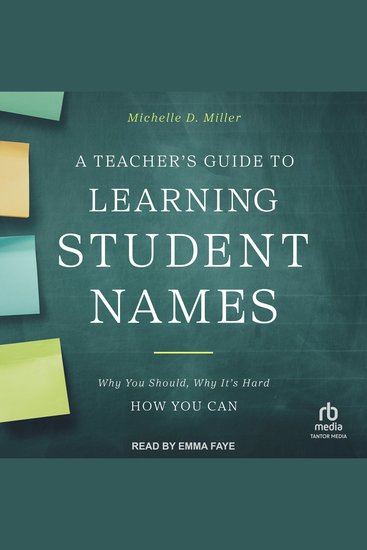
  • A Teacher's Guide to Learning Student Names - Why You Should Why It’s Hard How You Can - cover

    A Teacher's Guide to Learning...

    Michelle D. Miller

    • 0
    • 0
    • 0
    If teachers want an inclusive, engaging classroom, they must learn their students' names. Sound advice, but rarely does it come with practical guidance—which is precisely what this book offers. Eschewing the random tips and mnemonic tricks that invariably fall short, Michelle D. Miller offers teachers a clear explanation of what is really going on when we learn a name, and a science-based approach for using this knowledge to pedagogical advantage. 


    Drawing on a background in the psychology of language and memory, Miller gives a lively overview of the surprising science of learning proper names, along with an account of why the practice is at once so difficult and yet so critical to effective teaching. She then sets out practical techniques for learning names. In her discussion of certain factors that can make learning names especially challenging, Miller pays particular attention to neurodivergence and the effects of aging on this form of memory. A Teacher's Guide to Learning Student Names lays out strategies for putting these techniques into practice, suggests technological aids and other useful resources, and explains how to make name learning a core aspect of one's teaching practice. 


    This concise guide provides teachers of all disciplines and levels an invaluable tool for creating a welcoming and productive learning environment.
    Zum Buch
  • The Enneagram of Emotional Intelligence - A Journey to Personal and Professional Success - cover

    The Enneagram of Emotional...

    Scott Allender

    • 0
    • 0
    • 0
    Emotional Intelligence (EQ) is one of the biggest predictors of personal and professional success, and the key to effectively developing your EQ is tying it to your own personality type. In this book, certified EQ coach and Enneagram teacher Scott Allender helps you chart a personality-specific path toward lasting emotional intelligence and health. Allender uses the popular Enneagram framework to illuminate how each of the nine personality types aligns with the five essential skills of emotional intelligence: self-perception, self-expression, interpersonal relationships, decision making, and stress management. You'll discover how to 
    · break free from the hidden fears that dictate your choices 
    · make more intentional decisions 
    · better understand the emotional dynamics of colleagues, friends, and family 
    · and more 
     
    In this journey toward radical self-awareness, you'll learn how to combat the self-limiting beliefs that keep you from living the life you were meant to live all along.
    Zum Buch
  • How We Think - cover

    How We Think

    John Dewey

    • 0
    • 0
    • 0
    How We Think is a seminal work by the American philosopher and educator John Dewey, first published in 1910. The book explores the process of human thought and inquiry, examining how we develop ideas and knowledge, and how we use critical thinking and problem-solving to make sense of the world around us. 
    Dewey's approach emphasizes the importance of experience and reflection in the process of learning and thought. He argues that our thinking is influenced by our past experiences and that we must reflect on those experiences in order to form new ideas and perspectives. He also advocates for a scientific approach to inquiry, emphasizing the importance of observation, experimentation, and testing in the development of knowledge. 
    In How We Think, Dewey also introduces his ideas on experimentalism and pragmatism, arguing that knowledge must be grounded in experience and that theories and ideas must be tested through practical application. He discusses the role of logic and critical thinking in this process, and the importance of education in fostering these skills. 
    How We Think is a groundbreaking work in the fields of philosophy, education, and psychology, and remains relevant today for its insights into the nature of human thought and learning
    Zum Buch
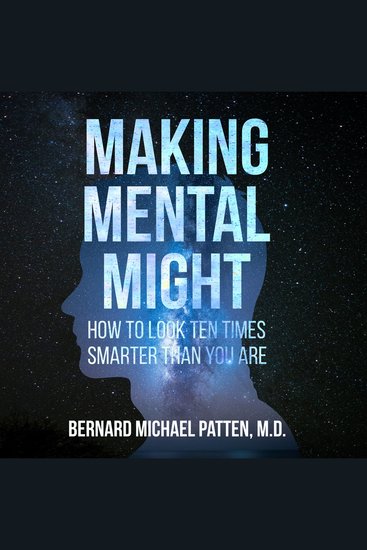
  • Making Mental Might - How to Look Ten Times Smarter Than You Are - cover

    Making Mental Might - How to...

    Bernard Patten

    • 0
    • 0
    • 0
    Doctor Bernard Patten―erstwhile Memory Fellow of the New York Academy of Medicine, founder of the first memory clinic at the Neurological Institute of New York, and author of scientific papers on memory therapy and memory problems―wants to help you to a better mind, a better memory, and, consequently, a better life. 
    Memory degradation happens to everyone. Even people in good health forget where they park their cars or leave their reading glasses. Some draw a blank entering their PIN. Is the stove off? Cat fed? Door locked? Did you take your medication? Not sure? How come? These memory problems only get worse as we get older unless we employ mental exercises to improve memory now. 
    Mountains of scientific research prove that mental exercise benefits the brain as much as physical exercise benefits the body. Mental gymnastics boosts brainpower, augments memory, and (in some cases) actually increases brain size. It can help prevent dementia, mental decline, and the much-feared Alzheimer's disease. 
    Making Mental Might does not aim to increase your IQ or show you how to get smarter. It offers the proper mental training to look, sound, and perform worlds better. These techniques have helped hundreds of students at Rice University's School of Continuing Studies under Doctor Patten improve their working memory. They can do the same for you.
    Zum Buch