Begleiten Sie uns auf eine literarische Weltreise!
Buch zum Bücherregal hinzufügen
Grey
Einen neuen Kommentar schreiben Default profile 50px
Grey
Jetzt das ganze Buch im Abo oder die ersten Seiten gratis lesen!
All characters reduced
Professional Perspectives - cover

Professional Perspectives

Digital World

Verlag: Publishdrive

  • 0
  • 0
  • 0

Beschreibung

This comprehensive and up-to-date e-book delves into the world of pedagogy, exploring its contemporary challenges and the diverse career opportunities available to professionals in the field. Covering everything from theoretical foundations to the most innovative practices, the book offers a comprehensive guide for students, teachers, entrepreneurs, and anyone interested in transforming education.
Verfügbar seit: 14.09.2025.
Drucklänge: 125 Seiten.

Weitere Bücher, die Sie mögen werden

  • The Human Condition - Exploring the Intricacies of Human Nature (4 in 1) - cover

    The Human Condition - Exploring...

    John Harpoon

    • 0
    • 0
    • 0
    This book contains the following four titles: 
    - The Cereal Killer: The invention of breakfast cereal marked a turning point in modern eating habits, blending health-conscious innovation with industrial progress. During the late 19th century, many Americans consumed heavy, meat-based breakfasts, which were criticized by health reformers for contributing to widespread digestive issues and lethargy. It was against this backdrop that breakfast cereal was born—a light, convenient, and nutritious alternative that would revolutionize morning meals. 
    - The Millennial Methuselah: The story of the woman destined for a millennium begins in an unassuming town, far removed from the glare of the modern world. Born in an era where tradition met the dawn of technological innovation, her arrival into the world was marked by a profound sense of wonder. Family and friends often recalled the unusual calmness that surrounded her birth, as if the universe had whispered its secrets into her soul. 
    - Perplexing Passings: Unsolved mysteries hold a unique and enduring fascination, inviting us into a world where questions linger and definitive answers seem perpetually out of reach. These enigmas, spanning unexplained deaths, puzzling disappearances, and baffling phenomena, captivate our imagination by defying the order and logic we strive to impose on life. Each unresolved case becomes more than a story; it transforms into a puzzle that teases the intellect and stirs the emotions. 
    - The Unreachable Riches: Throughout history, the allure of hidden treasure has captured the human imagination like few other pursuits. Tales of vast riches buried beneath shifting sands, concealed within uncharted jungles, or locked away in remote mountain fortresses have been passed down through generations.
    Zum Buch
  • Egyptian Military Leaders - Generals and Their Campaigns - cover

    Egyptian Military Leaders -...

    Omar Khalil

    • 0
    • 0
    • 0
    The military strength of ancient Egypt was a defining factor in its ability to expand and sustain one of the most enduring civilizations in history. From its early beginnings, Egypt developed a structured and disciplined military that evolved to meet the challenges posed by both internal conflicts and foreign threats. The foundation of this power lay in the organization of its armed forces, the strategic leadership of its rulers, and the continual advancement of its weaponry and tactics. 
    In the early periods, Egypt's military was primarily a defensive force, focused on protecting the fertile Nile Valley from nomadic raiders. The unification of Upper and Lower Egypt under Narmer marked a crucial turning point, as military conquest became a tool for political consolidation. The pharaohs not only ruled as divine monarchs but also acted as supreme military commanders, leading their armies into battle and overseeing large-scale campaigns. This dual role reinforced their authority and ensured that military success translated into political stability. 
    One of the key factors in Egypt’s military rise was its ability to adapt to new technologies and strategies. During the Second Intermediate Period, Egypt faced the Hyksos, a foreign power that introduced advanced chariot warfare and superior composite bows. Instead of being permanently subdued, the Egyptians learned from their enemies, incorporating these innovations into their own forces. This adaptation played a crucial role in the expulsion of the Hyksos and the rise of the New Kingdom, during which Egypt became an empire with far-reaching influence.
    Zum Buch
  • The Witch of Pungo - Grace Sherwood in Virginia History and Legend - cover

    The Witch of Pungo - Grace...

    Scott O. Moore

    • 0
    • 0
    • 0
    The authoritative cultural history of Virginia's most famous accused witch 


    In 1706, Grace Sherwood was "ducked" after her neighbors in Princess Anne County accused her of witchcraft. Binding and throwing her into the Lynnhaven River, they waited to see whether she would float to the top (evidence of her guilt) or sink (proof of her innocence). Incredibly, she survived. This bizarre spectacle became an early piece of Virginia folklore as stories about Sherwood, the "Witch of Pungo," spread. Her legend still looms large in Tidewater. In 2006, Governor Tim Kaine even issued an informal pardon of Sherwood, read aloud by the mayor of Virginia Beach before the annual reenactment of Sherwood's ducking. 


    This is the first book to explore Grace Sherwood's life and cultural impact in depth. Anyone interested in colonial Virginia, American folklore, and the history and legacy of witch trials will find much to enjoy in this spellbinding book.
    Zum Buch
  • Reclaim - understanding complex trauma and those who abuse - cover

    Reclaim - understanding complex...

    Dr. Ahona Guha

    • 0
    • 0
    • 0
    The relationship between trauma and mental health is becoming better recognized, but survivors and professionals alike remain confused about how best to understand and treat it. In Reclaim, through a series of case studies and expert analysis, Dr. Ahona Guha explores complex traumas, how survivors can recover and heal, and the nature of those who abuse. She shines a light on the "difficult" trauma victims that society often ignores, and tackles vital questions such as, "Why are psychological abuse and coercive control so difficult to spot?" and "Why do some people harm others, and how do we protect ourselves from them?" 


    As a clinical and forensic psychologist, Dr. Guha has had extensive experience in working with those who perpetrate harm—including stalkers, sex offenders, violent offenders, and those who threaten, bully, and harass—and she has a deep understanding of the psychological and social factors that cause people to abuse others. In turn, her clinical work in the trauma treatment field has led her to recognize the enormous impacts of complex trauma, and the failures of systems when working with those who have been victimized. 


    By emphasizing compassion above all, Dr. Guha calls for us to become better informed about perpetrators and the needs of victims, so we might reclaim a safer, healthier society for everyone.
    Zum Buch
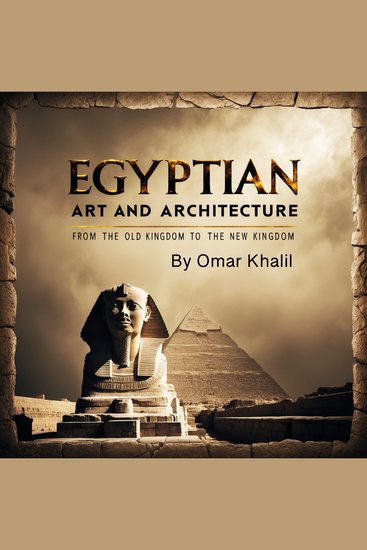
  • Egyptian Art and Architecture - From the Old Kingdom to the New Kingdom - cover

    Egyptian Art and Architecture -...

    Omar Khalil

    • 0
    • 0
    • 0
    The art and architecture of ancient Egypt are deeply intertwined with the civilization’s religious beliefs and cultural practices. Spanning over three millennia, these artistic expressions were not merely decorative but held profound symbolic meanings, reflecting the Egyptians’ worldview and their connection with the divine. The foundations of Egyptian art and architecture were laid during the early dynastic period, evolving through distinct stages that shaped the visual language of one of history’s most iconic civilizations. 
    Religion played a central role in shaping the aesthetic and thematic aspects of Egyptian art. Temples, tombs, and monuments were designed as sacred spaces, serving as a bridge between the human and divine realms. The concept of Ma’at, representing order and harmony, influenced the geometric precision and symmetrical layouts seen in temple complexes and pyramid construction. Deities were depicted with specific attributes, emphasizing their powers and roles within the cosmos. This symbolic representation extended to Pharaohs, who were portrayed as divine intermediaries, blending human and godly features to signify their sacred status. 
    Symbolism permeated every facet of Egyptian art, from monumental statues to delicate jewelry. Hieroglyphs and pictorial motifs were not merely decorative; they conveyed narratives, prayers, and genealogies. The ankh, symbolizing life, and the scarab, representing transformation and rebirth, are recurring motifs that held spiritual significance. Colors also played a symbolic role: red signified vitality, blue denoted divinity, and gold represented eternity. This symbolic language was meticulously maintained across centuries, creating a consistent artistic identity despite historical changes.
    Zum Buch

  • History of New Zealand: A Captivating Guide to the History of the Land of the Long White Cloud from the Polynesians Through the Māori Musket Wars to the Present - cover

    History of New Zealand: A...

    Captivating History

    • 0
    • 0
    • 0
    Did you know New Zealand was the first country to offer universal suffrage? 
    Many people today only started dreaming of visiting New Zealand after discovering it was the beautiful filming place of the Lord of the Rings series. However, ignoring the two islands in the Pacific Ocean is not a modern thing. The remote lands of New Zealand were the last large, livable lands to be discovered, inhabited, and colonized. 
    Since the Polynesians (the first humans in New Zealand who would become known as the Māori) were the most modern humans to settle in an uninhabited land, it is no surprise New Zealand has always been ahead of its time. Despite its late settlement, New Zealand has been one of the most rapidly modernizing nations in the world. New Zealand was the first country to introduce full democracy, women’s suffrage, state pensions, and state housing. New Zealand has a history unlike any other nation, from its late inhabitation to its unusually respectful colonization, involving hundreds of Māori chiefs signing an agreement to allow European settlement. 
    Although New Zealand was the last inhabited country and one of the most isolated developed regions in the world, it has been significantly involved in historical events, adding even more interest to its complex and rich history. 
    Intrigued? Pick up this audiobook to learn more about the following:Extinct animals that used to call New Zealand home;The arrival of the Polynesians and what that meant for the region;The early European explorations and who is credited with discovering the island nation;Colonization efforts and their impact on the Māori;How New Zealand was run under European control;The progressive changes that took place;And so much more! 
    Scroll up and click the “add to cart” button to begin learning about New Zealand!
    Zum Buch