Begleiten Sie uns auf eine literarische Weltreise!
Buch zum Bücherregal hinzufügen
Grey
Einen neuen Kommentar schreiben Default profile 50px
Grey
Jetzt das ganze Buch im Abo oder die ersten Seiten gratis lesen!
All characters reduced
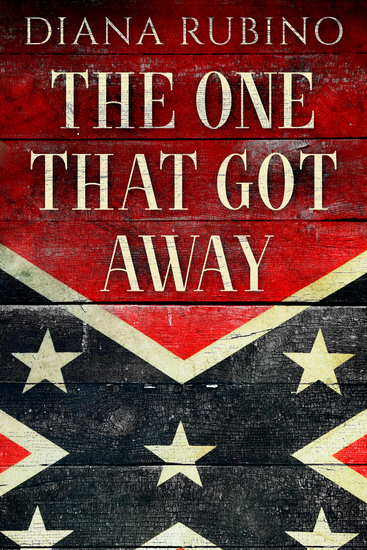
The One That Got Away - John Surratt the conspirator in John Wilkes Booth's plot to assassinate President Lincoln - cover

The One That Got Away - John Surratt the conspirator in John Wilkes Booth's plot to assassinate President Lincoln

Diana Rubino

Verlag: Next Chapter

  • 0
  • 0
  • 0

Beschreibung

A loyal Southerner embroiled in John Wilkes Booth’s plot to kill President Lincoln struggles with a dilemma that is tearing him apart. But should he avenge the South as a hero, or back out as a coward and avoid an unforgiveable sin?
 
We know about Mary Surratt, “the conspirator” who helped John Wilkes Booth launch his insane plot to assassinate President Lincoln. But Mary wasn’t the only conspirator in the Surratt family. Her son John is a mere footnote in history, but he was also one of John Wilkes Booth’s most trusted followers.
 
Whether he joined Booth out of need for approval or recognition as a war hero, we may never know. Becoming Booth's cohort, he took numerous risks for this beloved South. But as Booth’s plan to abduct Lincoln changed to assassination, a question arises: was John Surratt there in Washington to assist Booth in the murder, or was he in New York? No one knows for sure, as witnesses claim to have seen him in both places.
 
The One That Got Away explores the possibilities; did Surratt have an attack of conscience or cowardice, or did he just promise to obey Booth, without any intention to carry out the deed? And what ultimately caused John Harrison Surratt, Jr. to get involved in John Wilkes Booth's plan in the first place?
Verfügbar seit: 06.02.2022.

Weitere Bücher, die Sie mögen werden

  • Lesbian Obsessions: Tales of Unbridled Passion BOX SET - An alluring descent into forbidden lesbian desire where every touch ignites hidden passions and leads to a seductive dance of transgression and self-discovery - cover

    Lesbian Obsessions: Tales of...

    Lolita Grey

    • 0
    • 0
    • 0
    Step into a world where every glance is charged with untamed desire, and every touch becomes a symphony of forbidden pleasure. "Lesbian Obsessions: Tales of Unbridled Passion" invites you to surrender to the magnetic pull of secret longings, where love and lust entwine in a seductive dance of temptation.In this tantalizing collection, powerful women cast off the shackles of restraint, yielding to the raw intensity of their deepest cravings. Each whispered confession and stolen kiss teeters on the edge of ecstasy, revealing the intoxicating beauty of passion unfurled in all its vulnerability and fire.From fleeting moments of irresistible attraction to the slow unraveling of long-buried desires, these stories will lead you through a labyrinth of erotic possibilities, where boundaries blur, and pleasure reigns supreme. Here, in this world of insatiable yearning, every embrace tells a tale of unquenchable hunger, and love dares to break every rule. 
    Lose yourself in "Lesbian Obsessions," where sensuality becomes art, and desire is celebrated in its most exquisite, unrelenting form. Click now and unlock a journey into the heart of pure, unbridled passion
    Zum Buch
  • World War 2 for Kids: A Captivating Guide to the Second World War - cover

    World War 2 for Kids: A...

    Captivating History

    • 0
    • 0
    • 0
    Have you ever wondered what life was like over seventy-five years ago during World War 2? Was everyone in the world fighting? And why?  
    In this audiobook, you’ll discover all about WWII, including who was involved and why it started, a timeline of events, what life was like at the time, the major battles, who some of the main heroes and villains were, and the lasting impact the war left behind. There are also interesting facts and a bonus interesting facts chapter to finish things off! There are even pronunciation tips and helpful explanations for those new, tricky words. To keep things fun and engaging, each chapter has an activity and answer section—from quizzes and word searches to creative drawing and writing challenges!  
    Here are just a few of the incredible things you’ll discover:Why were children in Britain sent to live hundreds of miles away with strangers?Could you budget and enjoy your favorite foods on wartime rations?Why the first atomic bomb was used and how it ended the war for good.How one fifteen-year-old girl’s diary won a Pulitzer Prize and has sold over 30 million copies.Why some people had no choice but to fight, even if they didn’t want to. Being a dictator wasn’t Adolf Hitler’s first choice of career. What do you think he first tried (and failed) to be?Why you couldn’t say “hamburger” in the United States during WWII.Could you make a great escape from a prison camp?Thirty years later—the soldiers who refused to believe the war was over!Girl power! How women helped the war effort.The brave individuals who stood up for what was right.The bear that joined the army! 
    Scroll up and click the “add to cart” button to learn more about World War 2!
    Zum Buch
  • Great Powers Club The: The History of the Kingdoms that Dominated the Near East in the Late Bronze Age - cover

    Great Powers Club The: The...

    Charles River Editors

    • 0
    • 0
    • 0
    By the time of Egypt’s Nineteenth Dynasty, the Egyptians had created a vast empire that stretched from what would be the modern region of northern Sudan in the south to southern Syria in the north (Kuhrt 2010, 1:185). With control of such a vast empire, the Egyptians were able to export valuable minerals such as gold and silver, which were much rarer in the other Near Eastern kingdoms, and imported horses, timber, and chariots that they used to build their impressive military. A chronological examination of ancient Egypt during the New Kingdom reveals the process in which Egypt transitioned from a regional kingdom to an international empire. The examination will demonstrate that the New Kingdom was a fairly complex system that brought about several changes in pharaonic culture before ultimately collapsing.  
    Compared to some of their contemporaries – including the Egyptians, Assyrians, and Babylonians – the Hittites were somewhat distant both culturally and geographically. The Hittites were an Indo-European speaking in an ocean of Afro-Asiatic and Semitic groups, their homeland was to the north of Mesopotamia, and it contained no major river like the Nile, Tigris, or Euphrates Rivers. The Hittite empire was also far less enduring than its neighbors, as it only existed from about 1800-1200 BCE (van de Mieroop 2007, 156), which was considerably shorter than most of the other major kingdoms of the Near East.  
    Like a number of ancient individuals and empires in that region, the negative perception of ancient Assyrian culture was passed down through Biblical accounts, and regardless of the accuracy of the Bible’s depiction of certain events, the Assyrians clearly played the role of adversary for the Israelites. Indeed, Assyria (Biblical Shinar) and the Assyrian people played an important role in many books of the Old Testament and are first mentioned in the book of Genesis.
    Zum Buch
  • Small Medium Large - How Government Made the US into a Manufacturing Powerhouse - cover

    Small Medium Large - How...

    Colleen A. Dunlavy

    • 0
    • 0
    • 0
    We live in a world of seemingly limitless consumer choice. Yet, as every shopper knows without thinking about it, many everyday goods—from beds to batteries to printer paper—are available in a finite number of "standard sizes." What makes these sizes "standard" is an agreement among competing firms to make or sell products with the same limited dimensions. But how did firms—often hotly competing firms—reach such collective agreements? 


    In exploring this question, Colleen Dunlavy puts the history of mass production and distribution in an entirely new light. She reveals that, despite the widely publicized model offered by Henry Ford, mass production techniques did not naturally diffuse throughout the US economy. On the contrary, formidable market forces blocked their diffusion. It was only under the cover of collectively agreed-upon, industry-wide standard sizes—orchestrated by the federal government—that competing firms were able to break free of market forces and transition to mass production and distribution. Without government promotion of standard sizes, the twentieth-century American variety of capitalism would have looked markedly less "Fordist." 


    Small, Medium, Large will make all of us think differently about the everyday consumer choices we take for granted.
    Zum Buch
  • The Great Betrayal - The Great Siege of Constantinople - cover

    The Great Betrayal - The Great...

    Ernle Bradford

    • 0
    • 0
    • 0
    An engrossing chronicle of the Fourth Crusade and the fall of the Holy Roman Empire, from the bestselling author of Thermopylae. 


    At the dawn of the thirteenth century, Constantinople stood as the bastion of Christianity in Eastern Europe. The capital city of the Byzantine Empire, it was a center of art, culture, and commerce that had commanded trading routes between Asia, Russia, and Europe for hundreds of years. But in 1204, the city suffered a devastating attack that would spell the end of the Holy Roman Empire. 


    The army of the Fourth Crusade had set out to reclaim Jerusalem, but under the sway of their Venetian patrons, the crusaders diverted from their path in order to lay siege to Constantinople. With longstanding tensions between the Roman Catholic and Eastern Orthodox churches, the crusaders set arms against their Christian neighbors, destroying a vital alliance between Eastern and Western Rome. 


    In The Great Betrayal, historian Ernle Bradford brings to life this powerful tale of envy and greed, demonstrating the far-reaching consequences this siege would have across Europe for centuries to come.
    Zum Buch
  • The Lands in Between - Russia vs the West and the New Politics of Hybrid War - cover

    The Lands in Between - Russia vs...

    Mitchell A. Orenstein

    • 0
    • 0
    • 0
    Russia's stealth invasion of Ukraine and its assault on the US elections in 2016 forced a reluctant West to grapple with the effects of hybrid war. While most citizens in the West are new to the problems of election hacking, state-sponsored disinformation campaigns, influence operations by foreign security services, and frozen conflicts, citizens of the frontline states between Russia and the European Union have been dealing with these issues for years. 


    The Lands in Between contends that these "lands in between" hold powerful lessons for Western countries. For Western politics is becoming increasingly similar to the lands in between, where hybrid warfare has polarized parties and voters into two camps: those who support a Western vision of liberal democracy and those who support a Russian vision of nationalist authoritarianism. Paradoxically, while politics increasingly boils down to a zero sum "civilizational choice" between Russia and the West, those who rise to the pinnacle of the political system in the lands in between are often non-ideological power brokers who have found a way to profit from both sides, taking rewards from both Russia and the West. Increasingly, the political pathologies of these small, vulnerable, and backwards states in Europe are our problems too. In this deepening conflict, we are all lands in between.
    Zum Buch